Diclovit
Poland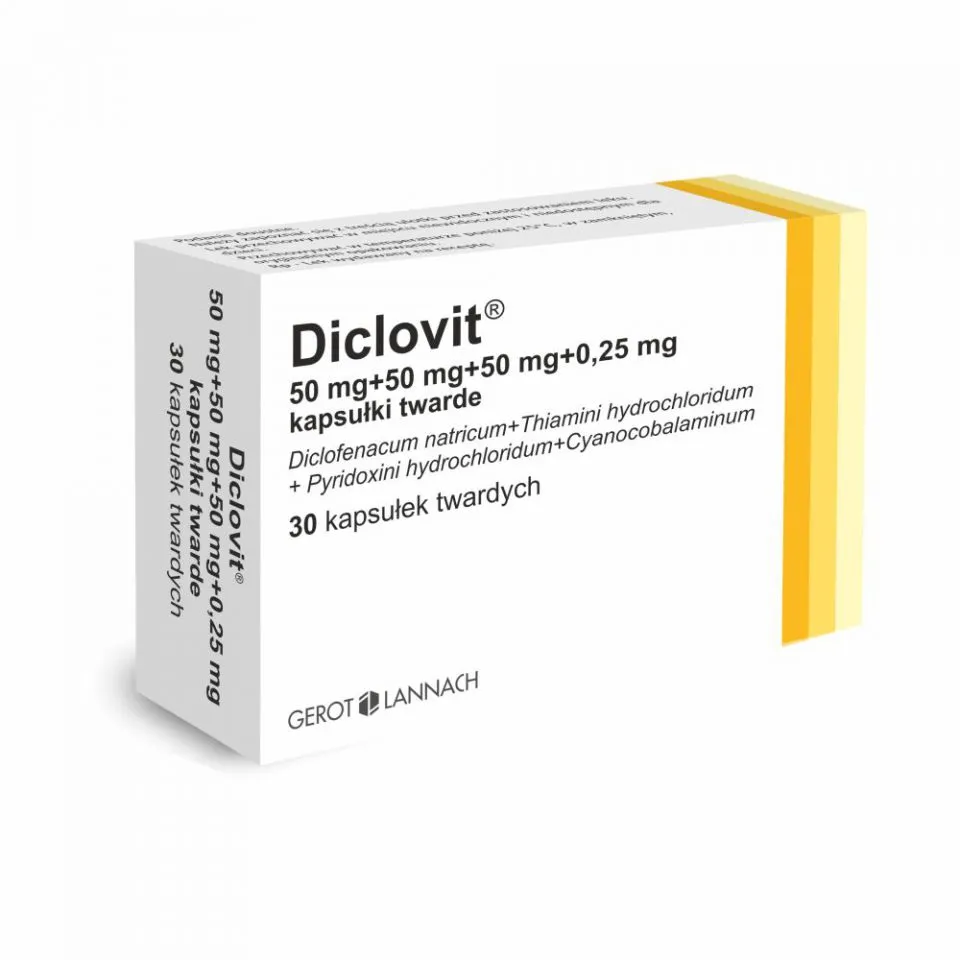
Table of Contents
Patient Information Leaflet: Included in the Package
Diclovit, 50 mg + 50 mg + 50 mg + 0.25 mg, hard capsules
Diclofenacum natricum + Thiamini hydrochloridum (vitamin B₁) + Pyridoxini hydrochloridum (vitamin B₆) + Cyanocobalaminum (vitamin B₁₂)
Please read carefully the entire leaflet before taking the medicine, as it contains important information for the patient.
- Keep this leaflet, as you may need to read it again.
- If you have any doubts or questions, please consult your doctor or pharmacist.
- This medicine has been prescribed for a specific individual. Do not pass it on to others. The medicine may harm someone else, even if their symptoms are similar.
- If you experience any adverse reactions, including any not listed in this leaflet, inform your doctor or pharmacist. See section 4.
Table of Contents
- What is Diclovit and what is it used for
- Important information before taking Diclovit
- How to take Diclovit
- Possible side effects
- How to store Diclovit
- Contents of the package and other information
1. What is Diclovit and what is it used for
Diclovit contains a combination of active substances – sodium diclofenac and vitamins B₁, B₆, and B₁₂.
Diclofenac belongs to a group of medicines called non-steroidal anti-inflammatory drugs (NSAIDs).
Diclofenac has analgesic, anti-inflammatory, and antipyretic properties.
Like all vitamins, the B-group vitamins contained in this medicine are essential dietary components that cannot be synthesized by the body itself.
In the treatment of nervous system disorders, B-group vitamins act by correcting vitamin B deficiencies.
Diclovit is used in adults and adolescents aged 18 years and older for the treatment of:
- Pain in inflammatory conditions not associated with rheumatoid arthritis
- Rheumatoid inflammatory conditions
- Symptoms of degenerative joint and spinal diseases
- Neuralgias, e.g. in the neck or shoulder area, lumbago, sciatica
2. Important information before using Diclovit
When not to use Diclovit
- if the patient is allergic to diclofenac, thiamine (vitamin B_), pyridoxine (vitamin B_), cyanocobalamin (vitamin B_) or any of the other ingredients of this medicine (listed in section 6);
- if the patient has experienced an asthma attack, sudden runny nose, rash or chest pain after taking acetylsalicylic acid or other pain-relieving or anti-rheumatic medicines, or if the patient suffers from asthma and these medicines cause or worsen breathing difficulties;
- if the patient has gastric or duodenal ulcer disease, gastrointestinal bleeding or perforation;
- if the patient has a history of recurrent gastric or duodenal ulcer disease, bleeding (two or more episodes of gastric or peptic ulcer in the past);
- if the patient has previously experienced gastrointestinal bleeding or perforation following the use of NSAIDs;
- in case of blood disorders (blood formation disorders, bone marrow damage, impaired red blood cell production, increased tendency to bleeding or blood clotting disorders);
- if the patient has current or past circulatory disorders (peripheral vascular disease);
- if the patient has had or currently has bleeding into the brain;
- if the patient currently has severe bleeding;
- in cases of severe liver or kidney dysfunction;
- in women during the last three months of pregnancy (see section 2. "Pregnancy, breastfeeding and fertility");
- if the patient has been diagnosed with heart disease and/or cerebrovascular disease, e.g. after myocardial infarction, stroke, transient ischaemic attack (TIA), or arterial embolism in the heart or brain, or following a procedure to unblock or bypass blocked blood vessels;
- in children and adolescents under 18 years of age.
Warnings and precautions
Before starting treatment with Diclovit, discuss the following with your doctor:
- if the patient smokes tobacco,
- if the patient has diabetes,
- if the patient experiences chest pain (angina), thrombosis, hypertension, elevated cholesterol or triglyceride levels.
Special caution is required in the following cases:
-
if the patient is in the first six months of pregnancy or is breastfeeding (see section 2. "Pregnancy, breastfeeding and fertility"). The use of Diclovit is not recommended during the first 6 months of pregnancy or while breastfeeding. During the last 3 months of pregnancy, this medicine must not be taken.
-
if the patient suffers from porphyria (a disorder of haemoglobin production): Diclovit should be taken with special caution, as it may exacerbate the disease.
-
in elderly patients (over 65 years of age): ensure that the doctor has prescribed the lowest possible dose for the shortest possible duration, as the risk of adverse effects increases with dose and duration of treatment, and side effects may be more severe in these patients (see section 3).
-
if the patient has a history of stomach or intestinal disorders: gastrointestinal bleeding, peptic ulcer disease and perforation have been reported with all NSAIDs, sometimes leading to fatal outcomes. These events may occur at any time during treatment, with or without warning symptoms, or in patients with a history of serious gastrointestinal events.
The risk of gastrointestinal bleeding, peptic ulcer or perforation increases with higher doses of NSAIDs, particularly in patients with a prior history of peptic ulcer disease, especially if complications such as bleeding or perforation have occurred (see section 2. "When not to use Diclovit"), and in elderly patients. In such patients, treatment should be initiated with the lowest available dose. In such cases, the doctor may also recommend additional therapy with a gastric mucosal protective agent. This is also recommended if the patient is already taking low-dose acetylsalicylic acid. If the patient has previously experienced gastrointestinal adverse effects, particularly in elderly patients, inform the doctor immediately if any unusual symptoms occur (especially bleeding), particularly during the initial phase of treatment. Particular caution is required if the patient is also taking medications that may increase the risk of ulceration or bleeding, such as corticosteroids, anticoagulants or certain antidepressants (so-called SSRIs – selective serotonin reuptake inhibitors) (see also section 2 "Diclovit and other medicines").
If gastrointestinal bleeding or peptic ulcer disease occurs during treatment with Diclovit, the drug should be discontinued immediately. The medicine should be used with caution in patients with inflammatory bowel disease (ulcerative colitis, Crohn's disease), as the patient's condition may worsen (see section 4).
-
if the patient has impaired liver function: Use of this medicine may lead to worsening of liver function. Therefore, inform the doctor about any current or past liver disease. Strictly follow the doctor's recommendations regarding required control tests. Rare cases of hepatitis have been reported. Be alert for any symptoms of liver dysfunction, such as deterioration in general condition, fatigue, or loss of appetite, and report them immediately to the doctor.
-
if the patient has impaired kidney function, heart problems, high blood pressure or oedema.
-
if the patient is scheduled for surgery: If the patient is taking diclofenac, consult the doctor before any surgical or dental procedure. Diclovit may temporarily inhibit platelet aggregation and thus impair blood clotting. After major surgical procedures, Diclovit should only be used under strict medical supervision. Before taking Diclovit, inform the doctor if the patient has recently undergone or is scheduled for stomach or gastrointestinal surgery, as Diclovit may sometimes impair intestinal wound healing after surgery.
-
if the patient has heart disease, blood vessel narrowing, diabetes, brain disorders, elevated lipid levels ("cholesterol"), or if the patient smokes tobacco. Use of Diclovit is associated with a small increased risk of heart attack (myocardial infarction) or stroke. The risk is higher with higher doses and prolonged use. Do not exceed the recommended dose or duration of treatment. If the patient has heart disease or suspects being at risk (e.g. due to high blood pressure, diabetes, high cholesterol levels or smoking), discuss this with the doctor or pharmacist.
-
if the patient develops skin symptoms during treatment with Diclovit: Very rarely, severe skin reactions with blistering and peeling have occurred during treatment with NSAIDs such as diclofenac, most often within the first month of treatment. If the patient notices a rash, blisters on the skin or mucous membranes (e.g. in the mouth), or other signs of hypersensitivity, contact the doctor immediately.
-
if the patient has systemic lupus erythematosus or mixed connective tissue disease (immune system disorders):
In patients with these coexisting conditions, symptoms of meningitis (neck stiffness, headache, nausea, vomiting, fever and altered consciousness) have very rarely occurred during treatment with NSAIDs such as diclofenac.
-
if the patient has epilepsy, Parkinson's disease or severe mental disorders. If unusual sensations occur in the hands or legs (possible signs of nerve disorders known as peripheral neuropathy), Diclovit should be discontinued immediately. This type of nerve damage has been observed in patients taking high doses of vitamin B_ (more than 50 mg daily) for prolonged periods (over 6 to 12 months).
General recommendations
Avoid using Diclovit together with other NSAIDs (including so-called COX-2 inhibitors).
Adverse effects can be minimized by using the lowest effective dose for the shortest possible duration.
Hypersensitivity reactions
If the first signs of allergic reactions occur, such as facial swelling, swelling of the airways (e.g. throat swelling), breathing difficulties, asthma attack, chest pain, rapid heartbeat, skin reactions (e.g. itching, redness, rash, urticaria) and/or drop in blood pressure, discontinue Diclovit immediately and seek medical help without delay.
In patients with asthma, allergic rhinitis (e.g. hay fever), nasal mucosa swelling (e.g. nasal polyps) or certain chronic respiratory disorders associated with breathing difficulties, allergic reactions to NSAIDs occur more frequently than in other patients; however, such reactions may also occur in individuals who have not previously experienced allergic reactions.
Treatment of pain and associated conditions
If the patient's general condition does not improve after taking Diclovit, or if pain, fever, fatigue or other symptoms persist, consult a doctor. Painkillers, by relieving pain and reducing inflammation, may mask symptoms of another underlying disease. The patient may require additional treatment beyond pain management.
Medication-overuse headache
If painkillers are used for prolonged periods, they may cause headaches, which should not be treated by increasing the dose. Consult a doctor if frequent headaches occur during treatment with Diclovit.
Kidney disorders caused by painkillers
Regular long-term use of certain painkillers may lead to permanent kidney damage and risk of kidney failure.
If any of the above conditions apply to the patient or have applied in the past, discuss this with the doctor.
Laboratory tests
The doctor may recommend tests including blood morphology, blood coagulation, kidney and liver function tests.
With long-term use of vitamin B_ doses exceeding 50 mg per day, or short-term use of doses exceeding 1 g, sensations of tingling and numbness in the hands or feet (symptoms of peripheral neuropathy or paraesthesia) have been observed. If the patient experiences tingling or numbness, contact the doctor, who will determine the appropriate dosage and, if necessary, recommend discontinuation of the medicine.
Diclovit and other medicines
Inform the doctor or pharmacist about all medicines currently or recently taken by the patient, as well as any medicines the patient plans to take. It is particularly important to inform the doctor if the patient is taking any of the following medicines:
| Concomitant use of Diclovit with: | Possible adverse effects: |
| Other analgesics or anti-rheumatic drugs (NSAIDs) | Increased risk of adverse effects (combination not recommended) |
| Acetylsalicylic acid ("aspirin" – used for pain and inflammatory conditions) | Increased risk of gastrointestinal damage (combination not recommended) |
| Cardiac glycosides, e.g. digoxin (used in heart disease treatment) | Possible enhancement of effect – appropriate monitoring recommended and, if necessary, adjustment of glycoside dose |
| Certain antibiotics (quinolones) | Seizures reported (combination not recommended) |
| Certain antiviral drugs for HIV infections (zidovudine) | Increased risk of blood count abnormalities |
| Corticosteroids (cortisol) | Increased risk of peptic ulcer disease or gastrointestinal bleeding |
| Anticoagulants, antiplatelet drugs | Increased risk of gastrointestinal bleeding |
| Phenytoin (used in treatment of certain central nervous system disorders) | Possible increase in phenytoin blood levels – appropriate monitoring recommended and, if necessary, dose adjustment |
| Certain antidepressants and anxiolytics (selective serotonin reuptake inhibitors – SSRIs) | Increased risk of gastrointestinal bleeding |
| Moclobemide (used in depression treatment) | Enhanced effect of diclofenac |
| Lithium (used in depression treatment) | Enhanced effect of lithium – monitoring recommended and, if necessary, dose adjustment |
| Certain drugs affecting liver function (e.g. antifungal agents such as voriconazole) | Increased blood levels of diclofenac due to inhibition of metabolism (dose reduction and monitoring recommended) |
| Drugs used in gout | Delayed elimination of diclofenac from the body |
| Diuretics | Possible reduction of diuretic effect and risk of blood disorders, possible kidney damage (increased fluid intake and blood pressure monitoring required) |
| Antihypertensive drugs | Reduced antihypertensive effect (blood pressure monitoring recommended) |
| Methotrexate (used in cancer or certain rheumatoid diseases) | If diclofenac is administered less than 24 hours before or after methotrexate, it may lead to increased methotrexate blood levels and consequently increased adverse effects of this substance (such combination should be avoided, or careful monitoring of blood count and kidney and liver function is recommended) |
| Cyclosporine (a drug used to suppress immune reactions) | Possible increase in blood potassium levels; increased risk of stomach and intestinal damage or kidney and/or liver damage (such combination should be avoided or a lower dose of diclofenac used; monitoring of liver and kidney function recommended) |
| Tacrolimus (a drug used to prevent organ rejection after transplantation) | Possible increase in blood potassium levels; kidney failure (this combination should be avoided) |
| Cholestyramine, colestipol (used to lower blood cholesterol levels) | Delayed or reduced absorption of diclofenac; diclofenac should be taken 1 hour before or 4 to 6 hours after administration of these agents |
| Trimethoprim (used in treatment of infections) | Possible increase in blood potassium levels (monitoring recommended) |
| Antidiabetic drugs | Possible changes in blood glucose levels (more frequent glucose monitoring recommended) |
Vitamin B loses its properties if used together with the cytostatic agent 5-fluorouracil (a drug used in cancer treatment).
Antacids (medicines that neutralize gastric acid) reduce the absorption of vitamin B.
Long-term use of certain diuretics, such as furosemide, may lead to a decrease in vitamin B levels in the body, as vitamin B is excreted in urine.
If vitamin B is used together with L-dopa (a drug used in Parkinson's disease), it may reduce the effectiveness of L-dopa.
If drugs that lower vitamin B levels (so-called pyridoxine antagonists, such as isoniazid, hydralazine, cycloserine, or D-penicillamine) are used together with Diclovit, the requirement for vitamin B may increase.
Diclovit, food, drink, and alcohol
Consuming alcohol during treatment with diclofenac increases the risk of gastrointestinal bleeding, and therefore alcohol consumption should be avoided.
Alcohol and tea reduce the absorption of vitamin B.
If vitamin B is taken with drinks containing sulfites (e.g. wine), it may break down too quickly and thereby lose its properties.
Pregnancy, breastfeeding, and effects on fertility
If a patient is pregnant or breastfeeding, suspects she may be pregnant, or is planning to have a child, she should consult her doctor before using this medicine.
Pregnancy
The amount of vitamins B, B, and B contained in Diclovit exceeds the daily requirement for these vitamins during pregnancy; therefore, Diclovit should not be used during pregnancy.
Diclovit should not be taken if the patient is in the last 3 months of pregnancy, as it may harm the unborn child or cause complications during delivery. Diclovit may cause kidney and heart function disorders in the unborn child. It may increase the tendency for bleeding in both the mother and the child and may delay or prolong labor. Diclovit should not be used during the first 6 months of pregnancy unless the doctor considers its use absolutely necessary. If treatment is required during this period or when trying to conceive, the lowest possible dose for the shortest possible time should be used. From week 20 of pregnancy, Diclovit may cause kidney function disorders in the unborn child if taken for longer than several days. This may lead to low levels of amniotic fluid surrounding the child (oligohydramnios) or narrowing of a blood vessel (ductus arteriosus) in the child's heart. If treatment for longer than several days is required, the doctor may recommend additional monitoring.
Breastfeeding
Small amounts of the active substance, diclofenac, pass into breast milk. Although adverse effects on the infant are not known, breastfeeding should be temporarily discontinued during short-term use of this substance. If long-term use of diclofenac or use of high doses is necessary, breastfeeding should be discontinued.
Vitamins B, B, and B pass into human milk. High doses of vitamin B may reduce milk secretion. For this reason, Diclovit should not be used during breastfeeding.
Fertility
Like other NSAIDs, diclofenac may affect female fertility and therefore is not recommended for women who are planning pregnancy. In women who have difficulty becoming pregnant or who are undergoing fertility investigations, use of diclofenac should be reconsidered.
Driving and operating machinery

This medicine may slow reaction time and the ability to drive vehicles.
If the patient experiences adverse effects such as visual disturbances, dizziness, or increased fatigue, activities requiring heightened concentration (e.g. driving vehicles, operating machinery) should be avoided.
Diclovit contains sodium
The medicine contains less than 1 mmol (23 mg) of sodium per capsule, meaning the medicine is considered "sodium-free".
3. How to use Diclovit
This medicine should always be taken exactly as directed by the physician. In case of doubt,
consult a doctor or pharmacist.
The dose of Diclovit will depend on the type and severity of the disease, therefore it is essential to
carefully follow the doctor's instructions.
If the doctor does not advise otherwise, the dose should be as low as possible and the duration of
treatment as short as possible. The total daily dose is usually divided into two or three single doses.
Recommended dose:
Adults and adolescents aged 18 years and over
Do not exceed the maximum dose of 3 capsules per day (150 mg of sodium diclofenac).
At the beginning of treatment, a dose of 2 to 3 capsules per day is recommended. In milder
cases or during long-term treatment, a dose of 1 to 2 capsules per day is usually sufficient.
Patients with impaired kidney function
Diclofenac must not be used in patients with severe renal impairment (see section 2).
Patients with impaired liver function
Diclofenac must not be used in patients with severe hepatic impairment (see section 2).
Elderly patients (over 65 years of age)
Particular caution should be exercised in elderly patients due to the possibility of concomitant
diseases or low body weight. In particular, the lowest possible dose should be used in elderly
patients and in patients with low body weight (see section 2).
Use in children and adolescents
Due to the high content of vitamin B group, Diclovit should not be used in children and adolescents
under 18 years of age.
Method of administration
This medicine is for oral use.
The capsules should be swallowed whole before a meal, without chewing, with sufficient amount of
water.
Use of more than the recommended dose of Diclovit
Contact a doctor or go to hospital if an excessive dose of Diclovit has been taken.
Symptoms of overdose:
Overdose may cause disturbances of the nervous system with symptoms such as headache,
dizziness, drowsiness, loss of consciousness and convulsions. In addition, tinnitus, abdominal
pain, nausea and vomiting may occur. Bleeding from the gastrointestinal tract, impaired liver or
kidney function, drop in blood pressure, breathing difficulties and bluish discoloration of the skin
due to low oxygen levels in the blood may also occur. If overdose is suspected, immediate
consultation with a doctor is required, who will decide on further management depending on the
severity of poisoning.
Missed dose of Diclovit
Do not take a double dose to make up for a missed dose. Take the missed dose as soon as
possible or, if it is almost time for the next dose, take the next dose as recommended.
If you have any further doubts regarding the use of this medicine, consult your doctor or
pharmacist.
4. Possible adverse effects
Like all medicines, this medicine can cause adverse effects, although not everyone experiences them.
The occurrence of adverse effects can be minimised by using the lowest effective dose for the shortest duration necessary.
The most commonly observed adverse effects involve the gastrointestinal system. Gastric and intestinal ulcers, perforation or gastrointestinal bleeding have occurred – sometimes resulting in death, particularly in elderly patients. After administration of NSAIDs, nausea, vomiting, diarrhoea, flatulence, constipation, dyspepsia, abdominal pain, blood in stool (black stools indicate gastrointestinal bleeding), haematemesis (vomiting blood), ulcerative stomatitis, exacerbation of ulcerative colitis and Crohn’s disease (a type of inflammatory bowel disease) have been reported (see also section 2, "Warnings and precautions"). Less frequently, gastric mucositis (inflammation of the stomach lining) has been observed.
Treatment with NSAIDs has also been associated with oedema (fluid retention), hypertension and heart failure.
The use of medicines such as Diclovit is associated with an increased risk of myocardial infarction or stroke.
Unusual sensations in the hands and feet (possible signs of a nerve disorder called peripheral neuropathy) have been observed following long-term use (more than 6 to 12 months) of daily doses exceeding 50 mg of vitamin B.
If any of the following symptoms occur, stop taking Diclovit immediately and contact your doctor without delay:
- Abdominal or stomach pain, heartburn
- Vomiting blood, black or bloody stools, blood in urine
- Severe allergic skin reaction, which may present as widespread red and/or dark patches, skin swelling, blisters and rash (generalised fixed bullous drug eruption)
- Breathing difficulties, shortness of breath, swelling of the face, head or neck
- Yellowing of the whites of the eyes or skin (jaundice)
- Severe fatigue or loss of appetite
- Persistent sore throat, mouth lesions, severe fatigue or fever
- Nosebleeds, skin bleeding
- Swelling of the face, legs or feet
- Reduced urine output accompanied by severe fatigue
- Severe headache or neck stiffness
- Chest pain, which may be a symptom of a potentially serious allergic reaction known as Kounis syndrome
- Disturbances in consciousness
The following adverse effects may occur after short- or long-term use of the medicine:
-
Very common (affects more than 1 in 10 people)
- Nausea, vomiting, diarrhoea
-
Common (may affect up to 1 in 10 people)
- Skin allergic reactions (rash, itching)
- Headache, dizziness, restlessness or fatigue, drowsiness
- Dyspepsia, abdominal pain, flatulence, loss of appetite
- Liver function abnormalities (increased activity of certain liver enzymes)
- Rash
-
Uncommon (may affect up to 1 in 100 people)
- Fluid accumulation in certain parts of the body (oedema), particularly in patients with high blood pressure or impaired kidney function
-
Rare (may affect up to 1 in 1,000 people)
- Asthma (including breathing difficulties)
- Gastritis (inflammation of the stomach lining), haematemesis, gastrointestinal bleeding, bloody stools (indicated by black stool colour), peptic ulcers (with or without bleeding or perforation)
- Acute hepatitis with or without jaundice, liver damage
- Urticaria (hives)
-
Very rare (may affect up to 1 in 10,000 people)
- During NSAID use, worsening of inflammatory conditions associated with infections has been reported
- Anaemia due to red blood cell destruction, blood formation disorders with reduced numbers of certain or all blood cells (platelets, red and/or white blood cells)
- Severe allergic reactions with facial, tongue and/or airway swelling, accompanied by breathing difficulties, rapid heartbeat, low blood pressure and shock symptoms
- Sensory disturbances and taste alterations, memory disorders, confusion, seizures, meningitis (symptoms: neck stiffness, headache, nausea, vomiting, fever, disturbances in consciousness), irritability
- Disturbances in perception and thinking, depression, anxiety, nightmares
- Visual disturbances (blurred vision, double vision)
- Transient hearing disturbances, tinnitus
- Heart failure, myocardial infarction, palpitations
- High blood pressure, allergic vasculitis
- Allergic pneumonia
- Colitis (with bleeding or worsening of colitis and intestinal ulceration), constipation, inflammation and damage to the mucous membranes of the mouth and oesophagus, glossitis, intestinal spasm (after tablet use), pancreatitis
- Acute hepatitis, necrosis leading to liver failure (also without warning symptoms)
- Rash, erythema, increased photosensitivity, skin bleeding, severe skin reactions with blistering and peeling of the skin (bullous skin reactions, Lyell’s syndrome), hair loss, skin allergic reactions (Stevens-Johnson syndrome), itching
- Acute kidney failure, abnormal urine test results such as blood or protein in urine (haematuria, proteinuria), nephritis, kidney function disorders
-
Frequency unknown (frequency cannot be estimated from available data)
- Long-term use (more than 6 to 12 months) of daily vitamin B doses exceeding 50 mg may lead to peripheral neuropathy (nerve damage causing tingling or numbness).
- Allergic skin reaction which may present as round or oval red patches with skin swelling, blisters and rash (fixed erythema). The affected skin areas may also appear darker, and this discolouration may persist after healing. Upon re-administration of the medicine, fixed erythema usually reappears in the same locations.
Reporting of adverse effects
If you experience any adverse effects, including any not listed in this leaflet, inform your doctor or pharmacist. Adverse effects can be reported directly to the Department of Monitoring Adverse Drug Reactions, Office for Registration of Medicinal Products, Medical Devices and Biocidal Products
Al. Jerozolimskie 181 C
02-222 Warsaw
Phone: +48 22 49 21 301
Fax: +48 22 49 21 309
Website: https://smz.ezdrowie.gov.pl
Adverse effects may also be reported to the marketing authorisation holder.
Reporting adverse effects helps to provide more information on the safety of this medicine.
5. How to store Diclovit
Keep the medicine out of sight and reach of children.
Store below 25°C, in a tightly closed, original packaging.
Do not use this medicine after the expiry date stated on the box after: EXP. The expiry date refers to the last day of the stated month.
Medicines must not be disposed of via wastewater or household waste. Ask your pharmacist how to dispose of medicines no longer in use. This will help protect the environment.
6. Contents of the packaging and other information
What Diclovit contains
- The active substances in the medicine are sodium diclofenac, thiamine hydrochloride (vitamin B), pyridoxine hydrochloride (vitamin B), and cyanocobalamin (vitamin B). Each capsule contains 50 mg of sodium diclofenac, 50 mg of thiamine hydrochloride (vitamin B), 50 mg of pyridoxine hydrochloride (vitamin B), and 0.25 mg of cyanocobalamin (vitamin B).
- The excipients are: povidone, methacrylic acid-ethyl acrylate copolymer (1:1), 30% dispersion, triethyl citrate, talc, red iron oxide (E 172), yellow iron oxide (E 172), titanium dioxide (E 171), gelatin.
What Diclovit looks like and contents of the pack
Hard capsules with an ivory-colored body and an orange cap.
Pack sizes: 30 and 50 capsules.
Marketing authorisation holder and manufacturer
G.L. Pharma GmbH
Schlossplatz 1, 8502 Lannach
Austria
For further information, please contact the representative of the marketing authorisation holder:
G.L. PHARMA POLAND Sp. z o.o.
Sienna 75 Street, 00-833 Warsaw, Poland
Tel: 022 636 52 23; 022 636 53 02
[email protected]