Diclofenac teva
Poland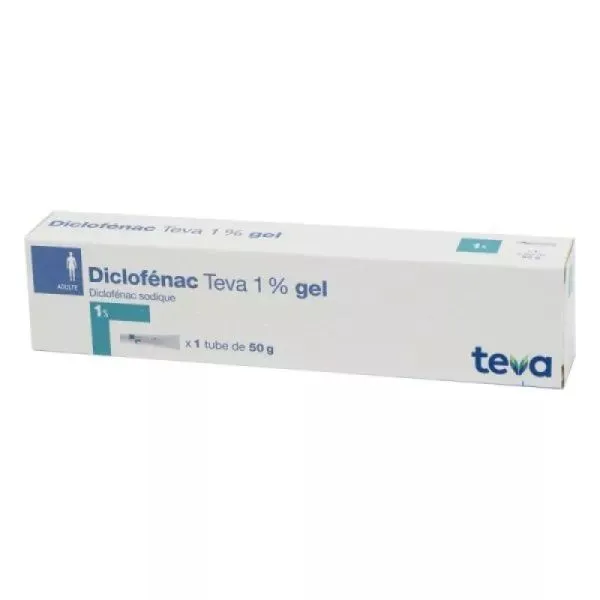
Table of Contents
Package leaflet: Information for the user
Diclofenac Teva, 10 mg/g (1%) gel
Diclofenacum natricum
Please read all of this leaflet carefully before using this medicine, because it contains
important information for the patient.
This medicine should always be used exactly as described in this patient leaflet, or as directed by the
doctor, pharmacist, or nurse.
- Keep this leaflet, so that you can read it again if necessary.
- If you need advice or further information, please consult your pharmacist.
- If you experience any adverse reactions, including any not listed in this leaflet, inform your doctor, pharmacist, or nurse. See section 4.
- If there is no improvement after 7 days, or if you feel worse, consult your doctor.
Contents of the leaflet:
- What Diclofenac Teva is and what it is used for
- What you need to know before using Diclofenac Teva
- How to use Diclofenac Teva
- Possible side effects
- How to store Diclofenac Teva
- Contents of the pack and other information
1. What Diclofenac Teva is and what it is used for
Diclofenac Teva is a colourless gel for topical application to the skin. The gel should not be rubbed in, but allowed to absorb. The active substance, diclofenac, belongs to a group of medicines known as non-steroidal anti-inflammatory drugs (NSAIDs). Due to its water-alcohol base, Diclofenac Teva also has a soothing and cooling effect.
Diclofenac Teva is indicated for use in adults and adolescents aged above 14 years.
The product has analgesic, anti-inflammatory and anti-oedematous effects.
It is used locally for the treatment of:
Adults and adolescents above 14 years of age:
- Traumatic inflammatory conditions of tendons, ligaments, muscles and joints (e.g. resulting from sprains, strains or contusions)
- Back pain
- Localised soft tissue inflammatory conditions such as tendinitis, tennis elbow, bursitis, periarthritis.
Adults (aged above 18 years):
- Localised and mild forms of osteoarthritis
2. Important information before using Diclofenac Teva
When not to use Diclofenac Teva
- if the patient is allergic to diclofenac or to any of the other ingredients of this medicine (listed in section 6)
- if the patient has ever previously experienced an allergic reaction (e.g. rash, breathing difficulties, or coughing fit) after taking medicines containing acetylsalicylic acid, ibuprofen, or other medicines used to treat joint and muscle pain
- if the patient is in the last three months of pregnancy
- in children and adolescents under 14 years of age.
When to exercise special caution when using Diclofenac Teva
- do not apply the gel on damaged skin, open wounds, or rashes
- avoid contact of the gel with eyes. If the medicine gets into the eyes, rinse thoroughly with clean water and contact a doctor
- do not swallow the gel
- avoid contact of the gel with mucous membranes (e.g. oral cavity).
The possibility of systemic adverse effects cannot be ruled out when using Diclofenac Teva over large skin areas or during prolonged treatment. Use with caution in patients with active gastric or duodenal ulcer disease, severe liver or kidney impairment, especially if long-term treatment is required.
Discontinue treatment if skin rash develops after application of the medicine.
Use under occlusive dressings is not recommended.
The duration of treatment depends on the indication and the response to therapy.
In adults and adolescents over 14 years of age, for soft tissue injuries and rheumatic conditions, do not use the medicine for longer than 14 days without consulting a doctor.
In adults (over 18 years of age) for pain associated with degenerative joint disease, do not use the medicine for longer than 21 days without consulting a doctor.
Medical evaluation is recommended after 7 days of gel use if there is no improvement in symptoms or if symptoms worsen.
Use in children and adolescents (under 14 years of age)
There is insufficient data on the efficacy and safety of using this medicine in children and adolescents under 14 years of age.
Use in adolescents (over 14 years of age)
In adolescents over 14 years of age, if treatment longer than 7 days is required for pain, or if symptoms worsen, the patient should consult a doctor.
Diclofenac Teva and other medicines
Inform your doctor or pharmacist about all medicines you are currently taking, have recently taken, or plan to take.
Pregnancy, breastfeeding, and fertility
If the patient is pregnant or breastfeeding, suspects she may be pregnant, or is planning to have a child, she should consult a doctor or pharmacist before using this medicine.
Do not use Diclofenac Teva during the last three months of pregnancy. During the first six months of pregnancy, do not use Diclofenac Teva unless necessary and recommended by a doctor. If use is necessary, the lowest effective dose should be used for the shortest possible duration.
When oral formulations of diclofenac (e.g. tablets) are administered, adverse effects on the unborn child may occur. It is unknown whether the same risk applies to Diclofenac Teva when applied to the skin.
Breastfeeding
Use of Diclofenac Teva is not recommended during breastfeeding. If use is medically necessary during lactation, avoid applying the medicine to the breast area, large skin areas, or for prolonged periods.
Driving and operating machinery
Use of this medicine does not affect the ability to drive or operate machinery.
3. How to use Diclofenac Teva
Diclofenac Teva should be applied topically to the skin three or four times daily.
The amount of gel should be adjusted according to the size of the affected area: 2 g to 4 g of
Diclofenac Teva (an amount corresponding to the size of a cherry to a walnut) is
sufficient for treating an area of approximately 400 cm² to 800 cm². After applying the gel,
hands should be washed unless they are the area being treated.
Method of administration
Diclofenac Teva is intended for topical use only.
Apply a thin layer of gel to the affected area of the body and gently massage into the skin. After
application, wipe hands with a paper towel and then wash them, unless the hands are the area to be
treated.
If too much gel has been accidentally applied, wipe off the excess with a paper towel.
Used paper towels should be disposed of in a household waste container to prevent unused
medication from entering the aquatic environment.
Wait a few minutes after application to allow the gel to dry before applying a bandage.
To enhance absorption of the active substance, hydroxypropylcellulose has been included in the
gel, which forms a thin film on the skin as it dries.
Do not use the medicine for longer than:
- in adults and adolescents over 14 years of age: 14 days for sprains and soft tissue rheumatism,
- in adults (over 18 years of age): 21 days for pain associated with osteoarthritis, unless otherwise directed by a physician.
If pain and swelling do not improve within 7 days or if symptoms worsen, consult a
physician.
Use of more than the recommended dose of Diclofenac Teva
Seek immediate medical advice if an overdose of Diclofenac Teva has been used or if the gel has
been accidentally swallowed.
Missed dose of Diclofenac Teva
Do not apply a double dose to make up for a missed dose.
If you have any further questions about the use of this medicine, consult your
physician, pharmacist, or nurse.
4. Possible adverse effects
Like any medicine, Diclofenac Teva may cause adverse effects, although not everyone experiences them.
Some adverse effects occurring rarely or very rarely may be serious.
If any of the following symptoms occur, which may be signs of hypersensitivity, discontinue use of the medicine immediately, contact a doctor or go to the nearest hospital:
- Skin rash with blisters; urticaria. These symptoms may occur in less than 1 in 1,000 people. (Rare)
- Wheezing, shortness of breath or feeling of pressure in the chest (asthma), swelling of the face, lips, tongue or throat. These symptoms may occur in less than 1 in 10,000 people. (Very rare)
Other adverse effects
Other adverse effects that may occur during treatment with Diclofenac Teva are usually mild, harmless and transient. If any of the listed symptoms occur, inform your doctor or pharmacist as soon as possible:
- Skin rash, itching, redness or burning of the skin are commonly observed after application of the medicine. These symptoms may occur in no more than 1 in 10 people.
- Very rarely, increased sensitivity to sunlight may occur. Symptoms of photosensitivity include sunburn with itching, swelling and blistering. These symptoms may occur in less than 1 in 10,000 people.
- Burning sensation at the site of application, dry skin. Frequency of occurrence is unknown and cannot be estimated from available data.
After topical application of diclofenac, systemic absorption is very low compared to plasma concentrations of the active substance achieved after oral administration. Therefore, the likelihood of systemic adverse effects (such as gastrointestinal disorders, liver or kidney function disturbances, bronchospasm) is very small following topical use, compared to the frequency of adverse effects associated with oral administration of diclofenac. Nevertheless, if diclofenac is applied over a large skin surface area and for prolonged periods, systemic adverse effects may occur.
Reporting of adverse effects
If any adverse effects occur, including any adverse effects not listed in this leaflet, inform your doctor, pharmacist or nurse.
Adverse effects can be reported directly to the Department of Monitoring Adverse Drug Reactions, Office for Registration of Medicinal Products, Medical Devices and Biocidal Products, Al. Jerozolimskie 181C, 02-222 Warsaw
Tel.: + 48 22 49 21 301
Fax: + 48 22 49 21 309
Website: https://smz.ezdrowie.gov.pl
Adverse effects can also be reported to the responsible entity.
Reporting adverse effects helps to provide more information on the safety of the medicine.
5. How to store Diclofenac Teva
Keep this medicine out of the sight and reach of children.
There are no special storage instructions for this medicine.
Do not use Diclofenac Teva after the expiry date stated on the packaging.
The expiry date refers to the last day of the stated month.
Medicines must not be disposed of via wastewater or household waste. Ask your pharmacist
what to do with medicines no longer required. Such measures help protect the environment.
6. Contents of the packaging and other information
What Diclofenac Teva contains
- The active substance in this medicine is sodium diclofenac.
- The other ingredients of the medicine are diisopropyl adipate, hydroxypropylcellulose, lactic acid, sodium metabisulfite, isopropyl alcohol, purified water. 1 g of gel contains 10 mg of sodium diclofenac and excipients.
What Diclofenac Teva looks like and contents of the pack
Diclofenac Teva is a colourless, transparent gel with a characteristic odour, available in 40 g and 100 g tubes.
Marketing Authorisation Holder:
Teva Pharmaceuticals Polska Sp. z o.o.
Emilii Plater 53
00-113 Warsaw
Tel: +48 223459300
Manufacturer:
Merckle GmbH
Ludwig-Merckle-Strasse 3
89143 Blaubeuren
Germany