Dicloabak
Poland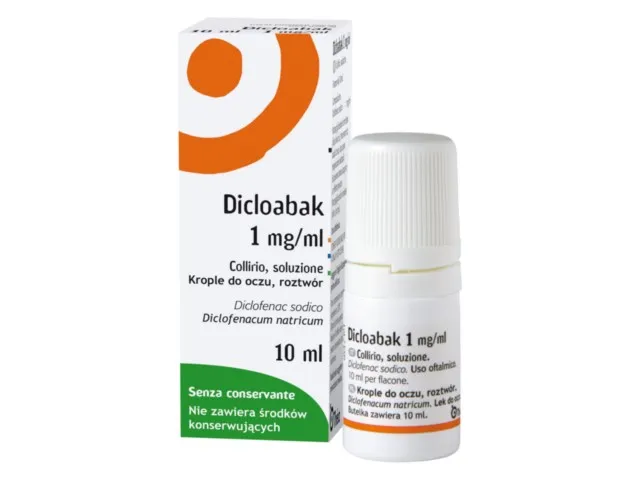
Table of Contents
Package leaflet: Information for the user
DICLOABAK, 1 mg/ml, eye drops, solution
Diclofenacum natricum
Please read all of this leaflet carefully before using this medicine, because it contains
important information for the patient.
- Keep this leaflet so that you can read it again if necessary.
- If you have any further questions, please consult your doctor, pharmacist or nurse.
- This medicine has been prescribed for a specific individual. Do not pass it on to others. This medicine may harm other people, even if their symptoms are the same.
- If any side effects occur in the patient, including any side effects not listed in this leaflet, inform your doctor, pharmacist or nurse. See section 4.
Contents of the leaflet
- What Dicloabak is and what it is used for
- Important information before using Dicloabak
- How to use Dicloabak
- Possible side effects
- How to store Dicloabak
- Contents of the pack and other information
1. WHAT DICLOABAK IS AND WHAT IT IS USED FOR
This medicinal product contains a non-steroidal anti-inflammatory drug ( NSAID ) intended for ocular administration.
It is used during and after certain eye surgeries for the following purposes:
- preventing constriction (reduction in diameter) of the pupil during cataract surgery,
- preventing inflammatory conditions associated with cataract surgery and anterior segment of the eye,
- relieving pain in the eyeball following photorefractive keratectomy (a corneal corrective procedure for myopia) within the first 24 hours after the procedure.
2. IMPORTANT INFORMATION BEFORE USING DICLOABAK
When not to use Dicloabak
- if the patient is allergic to sodium diclofenac or any of the other ingredients of this medicine (listed in section 6);
- if the patient has previously experienced allergy, urticaria (itchy rash), acute inflammation of the nasal mucosa (swelling and irritation inside the nose), or asthma triggered by the use of these eye drops or similar medicines such as aspirin and other NSAIDs.
Warnings and precautions
Before starting treatment with Dicloabak, discuss this with your doctor, pharmacist, or
nurse.
- Use Dicloabak with caution:
- Like other NSAIDs, Dicloabak may rarely cause allergic reactions, including anaphylactic reactions (a severe allergic reaction causing difficulty in breathing or dizziness), even without prior exposure to the drug.
- If hypersensitivity reactions or symptoms of allergy to the drug occur, especially an asthma attack or sudden swelling of the face and neck, discontinue treatment immediately and contact your doctor or emergency services without delay.
- Inform your doctor if you have asthma associated with chronic rhinitis, chronic sinusitis, and/or nasal polyposis.
- Local use of anti-inflammatory drugs may mask acute eye infection. Non-steroidal anti-inflammatory drugs do not have antibacterial activity. In case of eye infection, careful consideration should be given to using them together with one or more antibacterial agents.
- Concomitant use of topical NSAIDs and topical corticosteroids (e.g. dexamethasone) may increase the risk of complications during treatment.
- NSAIDs may delay corneal healing.
- In cases of predisposition to bleeding or when undergoing anticoagulant therapy (medicines that reduce blood clotting).
- Prolonged topical use of NSAIDs in high doses may lead to keratitis.
- Patients who have undergone repeated eye surgeries in a short time, patients with diabetes, ocular surface disease (e.g. dry eye syndrome), or rheumatoid arthritis may be at increased risk of corneal adverse effects.
- Wearing contact lenses after cataract surgery is not recommended. Your treating physician will advise when it may be safe to resume wearing contact lenses.
- If there is no improvement or if symptoms worsen, consult your doctor.
Dicloabak and other medicines
If using other eye drops at the same time as Dicloabak, wait 15 minutes between instillations.
Inform your doctor about all medicines currently used or recently used, including those planned for use and those available without prescription.
Pregnancy, breastfeeding, and fertility
If the patient is pregnant or breastfeeding, suspects she may be pregnant, or is planning to have a child, she should consult her doctor or pharmacist before using this medicine.
Pregnancy
Dicloabak should not be used from the beginning of the 6th month of pregnancy (from week 24 of amenorrhea) until the end of pregnancy. During the first 5 months of pregnancy (up to week 24 of amenorrhea), Dicloabak should not be used unless necessary and recommended by a doctor. If use is necessary, the lowest possible dose for the shortest possible duration should be administered.
Adverse effects on the unborn child have been reported following oral administration of diclofenac (e.g. tablets). It is unknown whether the same risk applies to Dicloabak when administered to the eye.
Breastfeeding
Dicloabak may be used during breastfeeding.
Fertility
Like all non-steroidal anti-inflammatory drugs (NSAIDs), this medicine may affect female fertility and make conception more difficult. This effect reverses upon discontinuation of treatment. Inform your doctor if you are planning pregnancy or experiencing difficulties conceiving.
Driving and operating machinery
For a short period after instillation, visual disturbances may occur. During this time, do not drive or operate hazardous machinery.
Dicloabak contains macrogolglycerol ricinoleate
Dicloabak contains macrogolglycerol ricinoleate, which may cause contact dermatitis (skin reactions).
3. HOW TO USE DICLOABAK MEDICINAL PRODUCT
This medicinal product must always be used as directed by the physician. In case of doubt, consult
your doctor or pharmacist.
Dosage
The recommended doses for adults and elderly patients are as follows:
Inhibition of pupillary constriction during cataract surgery:
- Before surgery: 1 drop up to 5 times within 3 hours before surgery;
Anterior segment ophthalmic surgery:
- Before surgery: 1 drop up to 5 times within 3 hours before surgery;
- After surgery: 1 drop 3 times immediately after surgery, followed by 1 drop 3–5 times daily, usually for no longer than 4 weeks.
Ocular pain associated with photorefractive keratectomy (corneal refractive surgery for
myopia):
- Before surgery: 2 drops within one hour before surgery;
- After surgery: 2 drops within one hour after surgery, followed by 4 drops within 24 hours after surgery.
Do not exceed the recommended dose.
Use in children
No specific studies have been conducted.
Method of administration
This medicinal product is intended for ocular use (instillation into the eye).
This product must not be injected or taken orally.
Do not inject this product into the eyeball or periocularly.
If the patient is using this medicinal product together with other ophthalmic products, at least 15 minutes
should elapse between consecutive instillations.
This medicinal product is an eye drop solution, preservative-free. Avoid touching the eye or surrounding
areas with the tip of the [dropper] multi-dose bottle. The dropper tip may become contaminated and
may lead to a risk of eye infection. To avoid possible contamination of the multi-dose bottle, avoid contact
between the dropper tip and any surface.
To administer Dicloabak eye drops, follow the instructions below:
For the bottle (PE) (ABAK):
Wash hands thoroughly before use.
Unscrew the cap to open the multi-dose bottle. Take care not to touch the eye or eyelids with the
dropper tip.
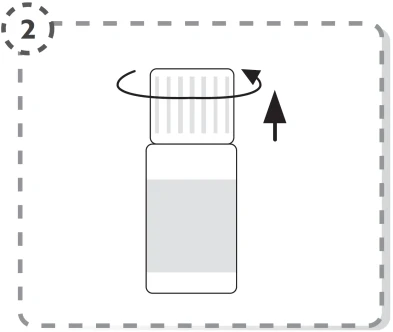
Tilt the head slightly backward and hold the bottle vertically over the eye with one hand. With the
index finger of the other hand, gently pull down the lower eyelid. The space formed is called the
lower conjunctival sac. Squeeze the bottle firmly to instill one drop into the lower conjunctival sac of
the affected eye(s).
If the drop missed the eye, try instilling the drop again.
Wipe away excess drops flowing down the cheek.
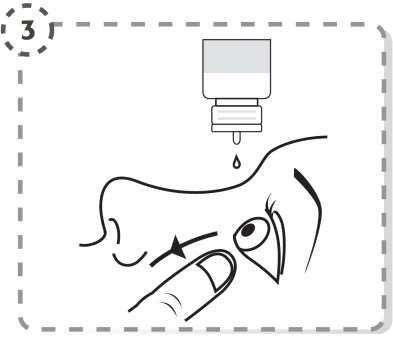
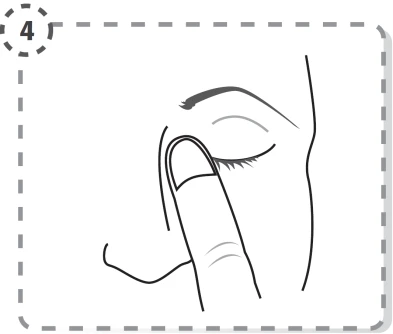
After instillation, press gently with a finger on the inner corner of the eye near the nose and gently close
the eyelids for 2 minutes. This prevents Dicloabak from being absorbed into the systemic circulation.
Repeat these steps for the other eye if affected.
Close the bottle after use.
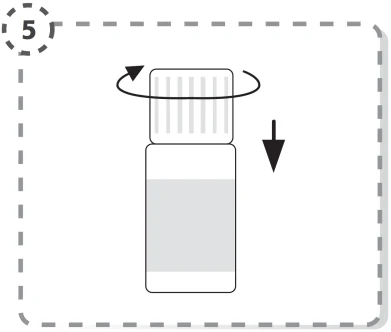
For the bottle (LDPE) (Novelia):
Wash hands thoroughly before use.
Unscrew the cap to open the multi-dose bottle. Take care not to touch the eye or eyelids with the
dropper tip.
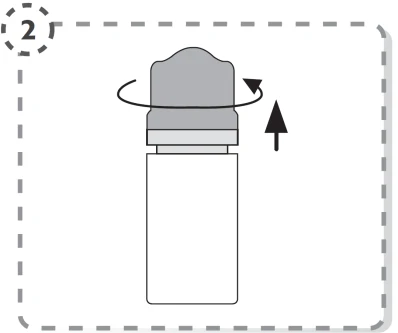
Tilt the head slightly backward and hold the bottle vertically over the eye with one hand. With the
index finger of the other hand, gently pull down the lower eyelid and look upward. The space formed
is called the lower conjunctival sac. Squeeze the bottle firmly to instill one drop into the lower
conjunctival sac of the affected eye(s).
If the drop missed the eye, try instilling the drop again.
Wipe away excess drops flowing down the cheek.
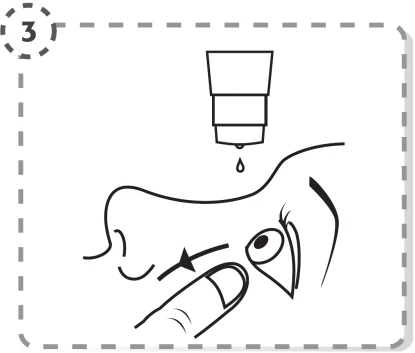
After instillation, press gently with a finger on the inner corner of the eye near the nose and gently close
the eyelids for 2 minutes. This prevents Dicloabak from being absorbed into the systemic circulation.
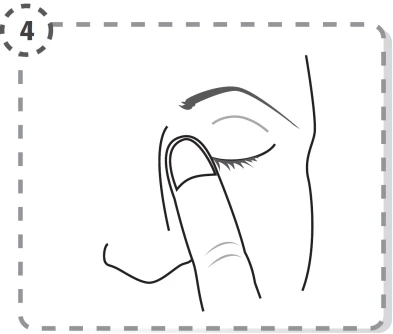
Repeat these steps for the other eye if affected.
After administration and before recapping the bottle, shake the bottle once without touching the
dropper tip. This will remove any residual liquid from the tip. This step is necessary to ensure proper
dosing of subsequent drops.
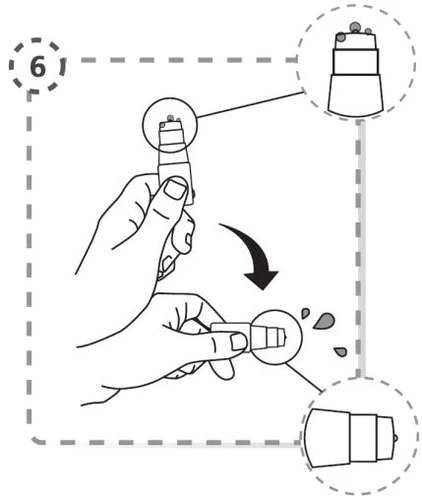
Close the bottle after use.
Missed dose of Dicloabak
Do not use a double dose to make up for a missed dose.
If you have any doubts concerning the use of this medicinal product, consult your doctor or pharmacist.
4. POSSIBLE ADVERSE REACTIONS
Like any medicine, this medicine may cause adverse reactions, although not everyone will experience them.
The following adverse reactions have been reported:
Uncommon: may affect up to 1 in 100 people
- Burning sensation after instillation
- Visual disturbances after instillation
Rare: may affect up to 1 in 1,000 people
- Hypersensitivity reactions, itching and redness
- Phototoxic reaction (allergic reaction following exposure to sunlight)
- Punctate keratitis (corneal changes), corneal ulceration, decreased corneal thickness
- Dyspnea (difficulty breathing)
- Worsening of asthma
Not known: frequency cannot be estimated from available data
- Rhinitis (swelling and irritation inside the nose)
- Conjunctival hyperemia (eye redness), allergic conjunctivitis (inflammation of the eye surface), eyelid edema
- Cough
- Urticaria (itching), rash, contact dermatitis
Due to the presence of macrogolglycerol ricinoleate, there is a risk of contact dermatitis.
If any of the adverse reactions worsen or if any other adverse reactions not listed in this leaflet occur, inform your doctor or pharmacist.
Reporting of adverse reactions
If any adverse reactions occur, including those not listed in this leaflet, inform your doctor or pharmacist.
Adverse reactions can be reported directly to the Department of Monitoring of Adverse Drug Reactions at the Office for Registration of Medicinal Products, Medical Devices and Biocidal Products: Al. Jerozolimskie 181C, 02-222 Warsaw, tel.: +48 22 49 21 301, fax: +48 22 49 21 309, website: https://smz.ezdrowie.gov.pl
Adverse reactions can also be reported to the marketing authorization holder.
Reporting adverse reactions helps to provide more information on the safety of this medicine.
5. HOW TO STORE DICLOABAK
Keep this medicine out of sight and reach of children.
Do not use this medicine after the expiry date stated on the bottle and carton. The expiry date refers to the last day of the stated month.
Store below 25°C.
Period of use after first opening the bottle: 8 weeks.
Medicines should not be disposed of via wastewater or household waste. Ask your pharmacist how to dispose of medicines no longer required. This will help protect the environment.
6. CONTENTS OF THE PACKAGE AND OTHER INFORMATION
What Dicloabak contains
- The active substance is sodium diclofenac at a concentration of 1 mg/ml.
- Other ingredients: macrogol glycerol ricinoleate, trometamol, boric acid, water for injections.
What Dicloabak looks like and contents of the pack
Dicloabak is a slightly yellow liquid supplied in bottles with dropper containing 10 ml of eye drop solution.
Marketing Authorisation Holder and Manufacturer
Marketing Authorisation Holder
Laboratoires THEA
12, rue Louis Blériot
63017 CLERMONT-FERRAND Cedex 2
France
Manufacturer
EXCELVISION
27, rue de la Lombardière
ZI la Lombardière
07100 Annonay
France
For further information, please contact the representative of the Marketing Authorisation Holder:
Thea Polska Sp. z o.o.
ul. Cicha 7
00-353 Warsaw
Tel.: +48 22 642 87 77
This medicinal product is authorised in the following names in the European Economic Area countries:
Austria, Norway ..................................................................................... VOLTAREN OPHTA ABAK
Belgium, Bulgaria, Czech Republic, Finland, Greece, Luxembourg, Netherlands,
Poland, Portugal, Spain, Sweden ........................................................ DICLOABAK
Denmark .................................................................................................. VOLTABAK
France ...................................................................................................... VOLTARENOPHTABAK
Italy .......................................................................................................... VOLTAREN OFTA ABAK