Diclac 150 duo
Poland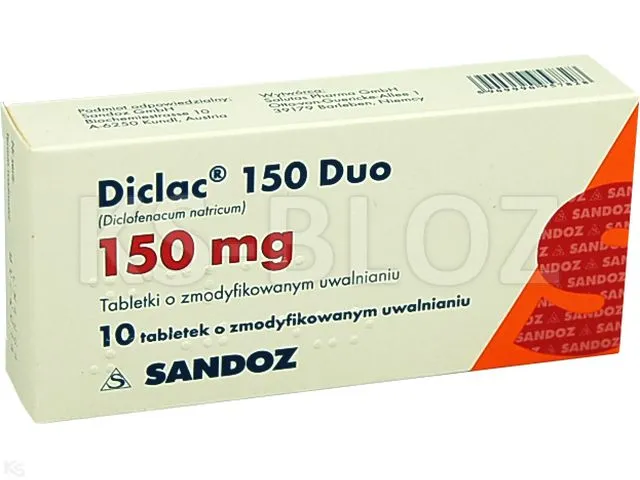
Table of Contents
Patient Information Leaflet
Warning! Keep this leaflet! Information on the immediate packaging is in a foreign language.
Diclac 150 Duo ( Diclac ID 150 mg) , 150 mg, modified-release tablets
Diclofenacum natricum
Diclac 150 Duo and Diclac ID 150 mg are different trade names for the same medicine.
Please read this leaflet carefully before taking the medicine, as it contains
important information for the patient.
- Keep this leaflet, so that you can read it again if necessary.
- If you have any doubts, please consult your doctor or pharmacist.
- This medicine has been prescribed for a specific individual. Do not share it with others. The medicine may harm another person, even if their symptoms are the same.
- If you experience any adverse effects, including any not listed in this leaflet, inform your doctor or pharmacist. See section 4.
Table of Contents
- What Diclac 150 Duo is and what it is used for
- Important information before taking Diclac 150 Duo
- How to take Diclac 150 Duo
- Possible side effects
- How to store Diclac 150 Duo
- Contents of the pack and other information
1. What Diclac 150 Duo is and what it is used for
Diclac 150 Duo contains sodium diclofenac, which belongs to a group of medicines called non-steroidal anti-inflammatory drugs (NSAIDs), with anti-rheumatic, anti-inflammatory, analgesic, and antipyretic effects. The mechanism of action of Diclac 150 Duo involves the inhibition of prostaglandin biosynthesis, which plays a key role in the pathogenesis of inflammation, pain, and fever.
Diclac 150 Duo is used to treat:
- inflammatory or degenerative forms of rheumatic disease: rheumatoid arthritis, ankylosing spondylitis, osteoarthritis, spinal joint inflammation, painful syndromes associated with spinal changes, and extra-articular rheumatism;
- pain caused by post-traumatic and postoperative inflammatory conditions and swelling, e.g. after dental or orthopedic procedures;
- painful and/or inflammatory conditions in gynecology, e.g. primary dysmenorrhea or adnexitis.
Monitoring during treatment with Diclac 150 Duo
In patients diagnosed with heart disease or significant risk factors for heart disease, the treating physician will periodically assess the patient's need for symptomatic treatment and response to the medicine, especially if treatment lasts longer than 4 weeks.
During treatment, the doctor will order regular blood tests to monitor liver function (aminotransferase activity), kidney function (creatinine concentration), and blood cell counts (white and red blood cells and platelets). Based on test results, the doctor will decide whether to discontinue treatment with Diclac 150 Duo or adjust the dose.
2. Important information before taking Diclac 150 Duo
When not to use Diclac 150 Duo:
- if the patient is allergic to diclofenac or any of the other ingredients of this medicine (listed in section 6),
- if the patient has ever experienced an allergic reaction after taking anti-inflammatory or analgesic medicines (e.g. acetylsalicylic acid, diclofenac, or ibuprofen). Reactions may include asthma, rhinitis, skin rash, urticaria, or facial, lip, tongue, throat, and/or limb swelling (symptoms of angioedema). If the patient suspects allergy, they should consult a doctor.
- if the patient has active or a history of peptic ulcer disease of the stomach and/or duodenum, gastrointestinal bleeding, or perforation; if the patient previously experienced stomach discomfort or heartburn after taking anti-inflammatory medicines,
- if the patient is in the third trimester of pregnancy,
- if the patient has hepatic insufficiency,
- if the patient has renal insufficiency,
- if the patient has been diagnosed with heart disease and/or cerebrovascular disease, e.g. after myocardial infarction, stroke, transient ischemic attack (TIA), or arterial embolism in the heart or brain, or after a procedure to unblock or bypass obstructed vessels,
- if the patient has current or past circulatory disorders (peripheral vascular disease).
Inform the doctor if any of these conditions apply.
Warnings and precautions
Before taking Diclac 150 Duo, discuss with your doctor if:
- the patient has diagnosed cardiovascular disease (see above) or significant risk factors such as high blood pressure, abnormally elevated blood lipid levels (cholesterol, triglycerides), or is a smoker, as in such cases the dose should not exceed 100 mg per day if treatment lasts longer than 4 weeks;
- the patient has a history of gastrointestinal ulceration or is elderly. Diclofenac use may cause gastrointestinal bleeding, ulceration, or perforation (which may be fatal). These effects may be particularly dangerous when high doses are used. If any unusual abdominal symptoms (especially gastrointestinal bleeding) occur during treatment with Diclac 150 Duo, the medicine should be discontinued immediately and the patient should contact their doctor;
- the patient has ulcerative colitis or Crohn's disease, as diclofenac may worsen the disease course;
- the patient has asthma, allergic rhinitis, nasal mucosal edema (e.g. due to nasal polyps), chronic obstructive pulmonary disease, or chronic respiratory infections, as they are at higher risk of allergic reactions to diclofenac (worsening of asthma, Quincke's edema, or urticaria). This warning also applies to patients allergic to other substances (e.g. those with skin reactions, itching, or urticaria). The medicine should be taken with particular caution (preferably under medical supervision);
- the patient has impaired liver function, as diclofenac may worsen the disease course. Strictly follow the doctor's recommendations regarding liver function monitoring tests;
- the patient has hepatic porphyria, as diclofenac may trigger an attack of porphyria.
Before taking diclofenac, inform the doctor if:
- the patient smokes,
- the patient has diabetes,
- the patient has angina pectoris, thrombosis, hypertension, elevated cholesterol, or elevated triglycerides.
Use the lowest effective dose of Diclac 150 Duo that relieves pain and/or swelling, and use it for the shortest possible duration to minimize the risk of adverse effects.
If at any time during treatment with Diclac 150 Duo the patient experiences symptoms indicating heart or blood vessel problems, such as chest pain, shortness of breath, weakness, or slurred speech, they should contact their doctor or emergency department immediately.
Diclofenac use may, in very rare cases (especially at the beginning of treatment), cause life-threatening skin reactions (e.g. exfoliative dermatitis, Stevens-Johnson syndrome with widespread rash, high fever, and joint pain, or toxic epidermal necrolysis with skin and mucous membrane lesions, high fever, and severe general condition). At the first signs of rash, mucosal changes, or other symptoms of allergic reaction, discontinue the medicine and contact a doctor.
The medicine may mask signs of infection (e.g. headache, elevated body temperature) and complicate accurate diagnosis. Inform the doctor about medicine use during medical examinations.
Do not take Diclac 150 Duo simultaneously with other systemic non-steroidal anti-inflammatory drugs (NSAIDs), including selective cyclooxygenase-2 (COX-2) inhibitors.
Inform the doctor or pharmacist if any of the above-mentioned conditions apply.
Taking medicines such as Diclac 150 Duo may be associated with a small increased risk of myocardial infarction or stroke. This risk increases with long-term use of high doses. Do not use higher doses or longer treatment durations than recommended.
If the patient has heart problems, has had a stroke, or suspects risk of these conditions (e.g. high blood pressure, diabetes, elevated cholesterol, smoking), discuss treatment options with the doctor or pharmacist.
The medicine may transiently inhibit platelet aggregation.
Children and adolescents
Diclac 150 Duo should not be used in children and adolescents due to the dose strength.
Elderly patients (aged 65 years and older)
Elderly individuals may be more sensitive to the medicine's effects than other adults. Follow the instructions in this leaflet, use the lowest effective dose as recommended by the doctor, and report all adverse effects occurring during treatment to the doctor.
Diclac 150 Duo with other medicines
Inform your doctor about all medicines currently or recently taken, as well as any medicines you plan to take.
Especially inform the doctor if taking any of the following medicines:
- lithium or antidepressants (selective serotonin reuptake inhibitors)
- digoxin – a medicine used in heart disease treatment
- diuretics – medicines that increase urine output
- angiotensin-converting enzyme (ACE) inhibitors, beta-blockers – a group of medicines used to treat hypertension and heart failure
- non-steroidal anti-inflammatory drugs (e.g. acetylsalicylic acid or ibuprofen) and corticosteroids (a group of medicines used to relieve inflammatory conditions)
- anticoagulants and antiplatelet medicines
- antidiabetic medicines except insulin
- methotrexate – a medicine used in treating certain cancers or joint inflammation
- cyclosporine and tacrolimus – medicines used in organ transplant recipients
- trimethoprim – a medicine used to prevent and treat urinary tract infections
- antibacterial quinolones – medicines used to treat infections
- colestipol and cholestyramine – medicines that lower blood cholesterol levels
- voriconazole – a medicine used to treat fungal infections
- phenytoin – a medicine used to treat epileptic seizures
Taking Diclac 150 Duo with food and drink
Tablets should be swallowed whole, with water, preferably during a meal.
Pregnancy, breastfeeding, and fertility
If a woman is pregnant or breastfeeding, suspects she may be pregnant, or is planning to have a child, she should consult her doctor before using this medicine.
Diclac 150 Duo should not be used during the first two trimesters unless the doctor considers its use absolutely necessary.
As with other anti-inflammatory medicines, Diclac 150 Duo should not be used during the last three months of pregnancy, as it may seriously harm the unborn child or adversely affect delivery.
Diclac 150 Duo may cause kidney and heart problems in the unborn child. It may increase the tendency to bleeding in both the mother and the child and may delay or prolong labor.
From week 20 of pregnancy, Diclac 150 Duo may cause impaired kidney function in the unborn child if taken for longer than a few days. This may lead to low levels of amniotic fluid surrounding the child (oligohydramnios). If treatment for longer than a few days is required, the doctor may recommend additional monitoring.
Diclac 150 Duo should not be used in breastfeeding women, as it may harm the infant.
The doctor will discuss with the patient the potential risks of using Diclac 150 Duo during pregnancy and breastfeeding.
Taking Diclac 150 Duo may make it more difficult to become pregnant. If the patient plans to become pregnant or has difficulty becoming pregnant, she should inform her doctor.
Driving and operating machinery
The effect of Diclac 150 Duo on the ability to drive, operate machinery, or perform other tasks requiring special attention is unlikely.
Diclac 150 Duo contains lactose monohydrate and sodium
If the patient has previously been diagnosed with intolerance to certain sugars, consult a doctor before taking this medicine.
The medicine contains less than 1 mmol (23 mg) of sodium per tablet, meaning it is considered "sodium-free".
3. How to use Diclac 150 Duo
This medicine should always be used as directed by a physician. If in doubt, consult a doctor or pharmacist.
Do not exceed the recommended doses. If Diclac 150 Duo is used for longer than several weeks, regular medical check-ups should be performed to rule out undetected adverse effects.
The dosage is determined individually by the physician for each patient. The general principle is to use the lowest effective dose for the shortest possible duration.
If the effect of the medicine seems too strong or too weak, consult a doctor.
Adults
1 tablet of Diclac 150 Duo (150 mg of sodium diclofenac) once daily. Do not exceed the daily dose of 150 mg.
Use in children and adolescents
Due to the dosage strength, Diclac 150 Duo should not be used in children and adolescents under 18 years of age.
Elderly patients (aged 65 years and older)
This medicine should be used with caution in elderly patients. In elderly patients and in patients with low body weight, it is recommended to use the lowest effective dose.
Diagnosed cardiovascular disease or significant cardiovascular risk factors
Patients with diagnosed cardiovascular disease or significant risk factors for cardiovascular events should take diclofenac only after a physician’s individual assessment and only at a dose ≤100 mg per day if treatment lasts longer than 4 weeks.
Renal function disorders
The use of Diclac 150 Duo is contraindicated in patients with renal insufficiency. Specific studies in patients with renal function disorders have not been conducted; therefore, appropriate dosage adjustment recommendations cannot be provided. Caution is advised in patients with mild to moderate renal function impairment.
Hepatic function disorders
The use of Diclac 150 Duo is contraindicated in patients with hepatic insufficiency. Specific studies in patients with hepatic function disorders have not been conducted; therefore, appropriate dosage adjustment recommendations cannot be provided. Caution is advised in patients with mild to moderate hepatic function impairment.
Method of administration
If symptoms are most pronounced at night or in the early morning, Diclac 150 Duo should be taken in the evening hours. Tablets should be swallowed whole with water, preferably during a meal. Tablets must not be divided or chewed.
How long to use Diclac 150 Duo
Diclac 150 Duo should always be used as directed by a physician.
If Diclac 150 Duo is used long-term, regular contact with the physician is necessary to ensure that no adverse effects have occurred.
If in doubt about how long to use the medicine, consult a doctor or pharmacist.
Overdose of Diclac 150 Duo
Overdose of Diclac 150 Duo does not produce characteristic symptoms, but the following may occur: vomiting, gastrointestinal bleeding, diarrhea, dizziness, tinnitus, or convulsions. In cases of severe poisoning, acute renal failure and liver damage may occur.
If an overdose is accidentally taken, contact a doctor, pharmacist, or go immediately to a hospital emergency department.
Missed dose of Diclac 150 Duo
If a patient misses a dose, it should be taken as soon as remembered. However, if more than half of the interval between two doses has passed, the missed dose should not be taken; instead, the next tablet should be taken according to the previous dosing schedule. Do not take a double dose to make up for a missed dose.
4. Possible adverse effects
Like all medicines, this medicine can cause adverse effects, although not everyone will experience them.
The adverse effects listed below relate to diclofenac in modified-release tablets and to diclofenac in other pharmaceutical forms, used either short-term or long-term.
Adverse effects
Common (may occur in fewer than 1 in 10 people taking the medicine):
- headache, dizziness,
- nausea, vomiting, diarrhoea, indigestion, abdominal pain, bloating, decreased appetite,
- increased aminotransferase activity,
- rash.
Uncommon (may occur in fewer than 1 in 100 people taking the medicine):
- myocardial infarction, heart failure, palpitations, chest pain.
Rare (may occur in fewer than 1 in 1000 people taking the medicine):
- hypersensitivity, anaphylactic and pseudoanaphylactic reactions (including sudden drop in blood pressure and shock),
- somnolence,
- asthma (including breathlessness),
- gastric mucosal inflammation, gastrointestinal bleeding, haematemesis, bloody diarrhoea, melaena,
- peptic ulcer of the stomach and (or) duodenum (with or without bleeding and perforation),
- hepatitis, jaundice, liver function disorders,
- urticaria,
- oedema.
Very rare (may occur in fewer than 1 in 10,000 people taking the medicine):
- thrombocytopenia (reduced platelet count), leukopenia (reduced white blood cell count), anaemia (including haemolytic and aplastic anaemia), agranulocytosis (reduced number or absence of white blood cells – neutrophil granulocytes),
- angioedema (including facial swelling),
- disorientation, depression, insomnia, nightmares, irritability, psychotic disorders,
- paraesthesia, memory disturbances, convulsions, anxiety, tremor, aseptic meningitis, taste disturbances, stroke,
- visual disturbances, blurred vision, diplopia,
- tinnitus, hearing disturbances,
- hypertension, vasculitis,
- pneumonia,
- colitis (including haemorrhagic colitis and exacerbation of ulcerative colitis, Crohn's disease), constipation, oral mucosal inflammation (including oral ulcerative stomatitis), glossitis, oesophageal disorders, membranous intestinal stricture, pancreatitis,
- fulminant hepatitis, hepatic necrosis, liver failure,
- bullous rash, eczema, erythema, erythema multiforme, Stevens-Johnson syndrome, toxic epidermal necrolysis (Lyell's syndrome), exfoliative dermatitis, alopecia, photosensitivity reactions, purpura, Schönlein-Henoch disease, pruritus,
- acute renal failure, haematuria, proteinuria, nephrotic syndrome, interstitial nephritis, renal papillary necrosis.
Adverse effects with unknown frequency (frequency cannot be estimated from available data):
- concurrent occurrence of chest pain and allergic reaction (symptoms of Kounis syndrome).
Taking medicines such as Diclac 150 Duo may be associated with a small increased risk of heart attack (myocardial infarction) or stroke.
Other adverse effects may occur in some people during treatment with Diclac 150 Duo. If any of the adverse effects worsen or if any adverse effects not listed in this leaflet occur, inform your doctor or pharmacist.
If any of the following adverse effects occur, stop taking Diclac 150 Duo immediately and contact your doctor:
- stomach discomfort, heartburn or upper abdominal pain
- vomiting blood, blood in stool, blood in urine
- skin reactions such as rash or itching
- wheezing or shortness of breath
- yellowing of the skin or whites of the eyes
- persistent sore throat or high body temperature
- swelling of the face, feet or legs
- severe migraine
- chest pain associated with cough
- mild but painful abdominal cramps and tenderness beginning shortly after starting Diclac 150 Duo, followed by rectal bleeding or bloody diarrhoea, usually within 24 hours of onset of abdominal pain (frequency unknown).
Some adverse effects may be serious
These uncommon adverse effects may occur in 1 to 10 patients out of 1000, especially when high daily doses (150 mg) are used for a prolonged period:
- sudden, constricting chest pain (symptoms of myocardial infarction),
- breathlessness, difficulty breathing when lying down, swelling of feet or legs (symptoms of heart failure).
If the patient takes Diclac 150 Duo for longer than a few weeks, they should regularly consult their doctor to ensure that no adverse effects have occurred.
Reporting of adverse effects
If any adverse effects occur, including any not listed in this leaflet, inform your doctor or pharmacist. Adverse effects can be reported directly to the Department for Monitoring of Adverse Drug Reactions, Office for Registration of Medicinal Products, Medical Devices and Biocidal Products, Al. Jerozolimskie 181C, 02-222 Warsaw, tel.: +48 22 49 21 301, fax: +48 22 49 21 309; website: https://smz.ezdrowie.gov.pl.
Reporting adverse effects helps provide more information on the safety of the medicine.
5. How to store Diclac 150 Duo
- Keep the medicine out of the sight and reach of children.
- No special storage conditions required.
- Do not use this medicine after the expiry date stated on the packaging. The expiry date refers to the last day of the specified month.
- Medicines must not be disposed of via wastewater or household waste. Ask your pharmacist what to do with medicines no longer required. This will help protect the environment.
6. Contents of the packaging and other information
What Diclac 150 Duo contains
- The active substance is sodium diclofenac. One modified-release tablet contains 150 mg of sodium diclofenac.
- Other ingredients are: lactose monohydrate, calcium hydrogen phosphate dihydrate, microcrystalline cellulose, magnesium stearate, sodium carboxymethyl starch (type A), colloidal anhydrous silica, maize starch, iron oxide red (E 172), hypromellose.
What Diclac 150 Duo looks like and contents of the pack
Diclac 150 Duo tablets are two-layered, pink and white.
They are packed in PP/Aluminium blisters within a cardboard box. The packs contain 10 or 20 modified-release tablets.
For further information, please contact the responsible party or the parallel importer.
Marketing Authorisation Holder in Latvia, country of export:
Sandoz d.d.
Verovškova 57
1000 Ljubljana
Slovenia
Manufacturer:
Salutas Pharma GmbH
Otto-von-Guericke-Allee 1
D-39179 Barleben
Germany
LEK S.A.
ul. Domaniewska 50 C
02-672 Warsaw
Poland
Parallel importer:
InPharm Sp. z o.o.
ul. Strumykowa 28/11
03-138 Warsaw
Repackaged in:
InPharm Sp. z o.o. Services sp. k.
ul. Chełmżyńska 249
04-458 Warsaw
Marketing Authorisation Number in Latvia, country of export: 99-0828
Parallel Import Authorisation Number: 57/22