Dexmedetomidine farmak
Poland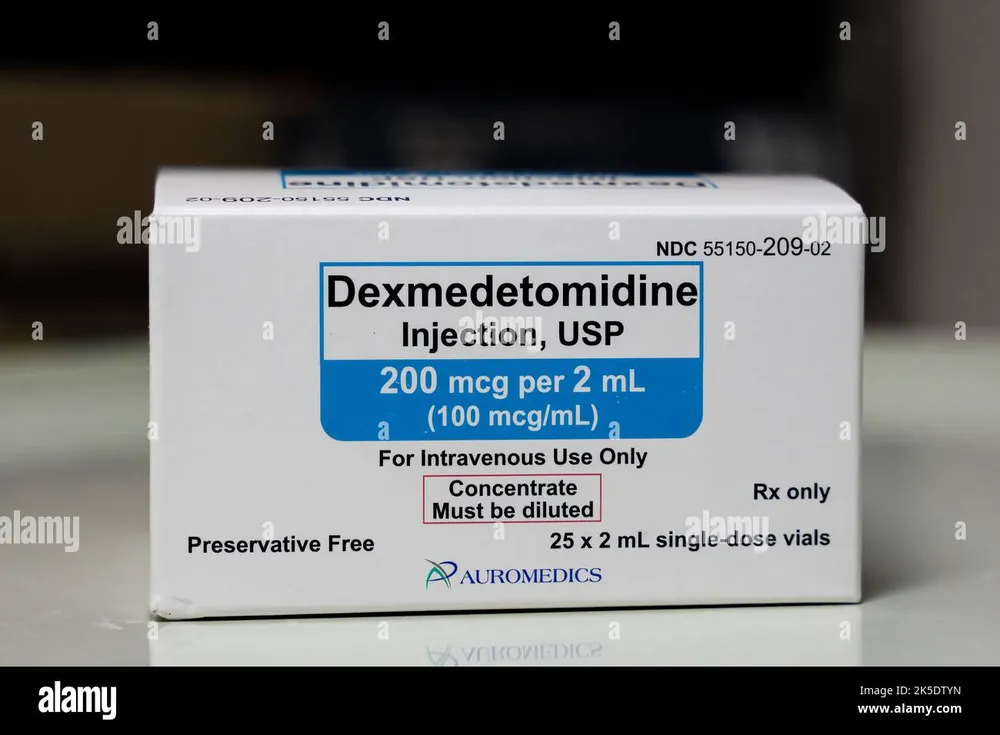
Table of Contents
Karolina
Fabiańska
Package leaflet: Information for the user
Dexmedetomidine Farmak, 100 micrograms/mL, concentrate for solution for infusion
Dexmedetomidinum
Please read all of this leaflet carefully before the medicine is administered, because it contains
important information for the patient.
- Keep this leaflet, as you may need to read it again.
- If you have any questions, please consult your doctor or nurse.
- If the patient experiences any side effects, including any not listed in this leaflet, inform the doctor. See section 4.
Table of contents
- What Dexmedetomidine Farmak is and what it is used for
- Important information before using Dexmedetomidine Farmak
- How to use Dexmedetomidine Farmak
- Possible side effects
- How to store Dexmedetomidine Farmak
- Contents of the pack and other information
1. What Dexmedetomidine Farmak is and what it is used for
Dexmedetomidine Farmak contains an active substance called dexmedetomidine, which belongs to
a group of medicines known as sedatives. The medicine is used to provide sedation (a state of calmness,
drowsiness or sleep) in adult patients in an intensive care unit in hospital or during various diagnostic procedures and surgical interventions performed with preserved consciousness.
2. Information before using Dexmedetomidine Farmak
When not to use Dexmedetomidine Farmak
- if the patient is allergic to dexmedetomidine or any of the other ingredients of this medicine (listed in section 6)
- if the patient has heart rhythm disorders (2nd or 3rd degree heart block)
- if the patient has very low blood pressure that is resistant to treatment
- if the patient has recently suffered a stroke or other serious condition affecting blood supply to the brain.
Warnings and precautions
Before using this medicine, tell the doctor or nurse if any of the following situations apply to the patient, because Dexmedetomidine Farmak must be used with caution:
- if the patient has abnormally slow heart rate (due to illness or high physical fitness), as this may increase the risk of cardiac arrest
- if the patient has low blood pressure
- if the patient has low blood volume, e.g. following bleeding
- if the patient has certain cardiac disorders
- if the patient is elderly
- if the patient has a neurological disorder (e.g. head or spinal injury or stroke)
- if the patient has severe liver disease
- if the patient has ever experienced severe fever after receiving certain medicines, particularly anaesthetic agents.
This medicine may cause excessive urination and excessive thirst. If these symptoms occur, contact the doctor. For further information, see section 4.
An increased risk of death has been observed in patients aged 65 years and younger who were treated with this medicine, particularly in patients admitted to intensive care units in more severe condition and for reasons other than post-surgical recovery, and in younger patients.
The doctor will decide whether this medicine remains appropriate for the patient. The doctor will consider the benefits and risks associated with using this medicine compared to treatment with other sedative medicines.
Dexmedetomidine Farmak and other medicines
Tell the doctor or nurse about all medicines the patient is currently taking or has recently taken, as well as any medicines the patient plans to take.
The following medicines may enhance the effect of Dexmedetomidine Farmak:
- medicines that help induce sleep or cause sedation (e.g. midazolam, propofol)
- strong painkillers (e.g. opioids such as morphine, codeine)
- anaesthetic medicines (e.g. sevoflurane, isoflurane).
If the patient is taking medicines that lower blood pressure and slow heart rate, concomitant administration of Dexmedetomidine Farmak may intensify these effects. Dexmedetomidine Farmak must not be used with medicines causing temporary paralysis.
Pregnancy and breastfeeding
Dexmedetomidine Farmak must not be used during pregnancy or breastfeeding unless absolutely necessary.
Before using this medicine, consult the doctor.
Driving and operating machinery
Dexmedetomidine Farmak has a major influence on the ability to drive and operate machinery. After receiving Dexmedetomidine Farmak, the patient must not drive, operate machinery, or work in hazardous conditions until the effects of the medicine have completely worn off. Ask the doctor when it is safe to resume these activities and return to work.
Dexmedetomidine Farmak contains sodium
Dexmedetomidine Farmak contains less than 1 mmol (23 mg) of sodium per 1 mL, meaning the medicine is considered "sodium-free".
3. How to use Dexmedetomidine Farmak
Intensive Care Unit
Dexmedetomidine Farmak is administered to the patient by a doctor or nurse in the intensive care unit.
Procedural sedation / sedation with preserved consciousness
Dexmedetomidine Farmak is administered to the patient by a doctor or nurse before or during diagnostic procedures or surgical interventions requiring sedation, so-called procedural sedation / sedation with preserved consciousness.
The doctor will determine the dose appropriate for the patient. The dose of Dexmedetomidine Farmak depends on the patient's age, body size, general health condition, required level of sedation, and the body's response to the drug. If necessary, the doctor may adjust the dose and will monitor heart function and blood pressure during treatment.
Dexmedetomidine Farmak is diluted and administered intravenously as an infusion (drip).
After sedation / after waking up
- The doctor will supervise the patient for several hours after sedation to ensure the patient feels well.
- The patient should not return home alone.
- For some time after receiving Dexmedetomidine Farmak, the patient should not take medications that facilitate falling asleep, cause sedation, or strong painkillers. The patient should consult the doctor regarding the use of these medications and alcohol consumption.
In case of administration of a higher than recommended dose of Dexmedetomidine Farmak
If an excessive dose of Dexmedetomidine Farmak has been administered to the patient, it may lead to increased or decreased blood pressure, slowed heart rate, slowed breathing, and drowsiness. The doctor knows how to treat the patient appropriately according to their health status.
If you have any further doubts regarding the use of this medicine, please consult your doctor.
4. Possible adverse reactions
Like all medicines, this medicine can cause adverse reactions, although not everybody will get them.
Very common (may occur in more than 1 in 10 people):
- Slowing of heart rate
- Low or high blood pressure
- Changes in breathing pattern or breathing stop
Common (may occur in up to 1 in 10 people):
- Chest pain or heart attack
- Fast heart rate
- Low or high blood sugar levels
- Nausea, vomiting, dry mouth
- Restlessness
- High temperature
- Withdrawal symptoms
Uncommon (may occur in up to 1 in 100 people):
- Heart function disorders, cardiac arrest
- Stomach swelling
- Increased thirst
- Acid-base balance disturbance
- Low blood albumin levels
- Shortness of breath
- Hallucinations
- Insufficient effectiveness of the medicine
Unknown (frequency cannot be estimated from the available data):
- Excessive urine production and excessive thirst – may be symptoms of a hormonal disorder called diabetes insipidus. Contact a doctor if these symptoms occur.
Reporting of adverse reactions
If any adverse reactions occur, including any not listed in this leaflet, inform a doctor or nurse.
Adverse reactions can be reported directly to the Department of Monitoring Adverse Drug Reactions at the Office for Registration of Medicinal Products, Medical Devices and Biocidal Products: Al. Jerozolimskie 181C, 02-222 Warsaw, tel.: 22 49-21-301, fax: 22 49-21-309, website: https://smz.ezdrowie.gov.pl .
Adverse reactions can also be reported to the marketing authorization holder. Reporting adverse reactions helps provide more information on the safety of the medicine.
5. How to store Dexmedetomidine Farmak
Keep the medicine out of the sight and reach of children.
Do not use this medicine after the expiry date stated on the label and carton following "EXP".
There are no special storage temperature requirements. Store ampoules or vials in the outer packaging to protect from light.
6. Contents of the pack and other information
What Dexmedetomidine Farmak contains
- The active substance is dexmedetomidine. One mL of concentrate contains dexmedetomidine hydrochloride equivalent to 100 micrograms of dexmedetomidine.
- The other ingredients are sodium chloride and water for injections.
One 2 mL ampoule contains 200 micrograms of dexmedetomidine (as hydrochloride).
One 2 mL vial contains 200 micrograms of dexmedetomidine (as hydrochloride).
One 4 mL vial contains 400 micrograms of dexmedetomidine (as hydrochloride).
One 10 mL vial contains 1000 micrograms of dexmedetomidine (as hydrochloride).
The concentration of the ready-to-use solution after dilution should be either 4 micrograms/mL or 8 micrograms/mL.
What Dexmedetomidine Farmak looks like and contents of the pack
Concentrate for solution for infusion.
The concentrate is a clear, colourless solution.
Containers
Glass ampoules with a capacity of 2 mL.
Glass vials with a capacity of 3, 6 or 10 mL (with fill volume of 2, 4 mL or 10 mL), with a rubber stopper, aluminium seal and plastic cap.
Pack sizes
1 ampoule x 2 mL
25 ampoules x 2 mL
1 vial x 2 mL
5 vials x 2 mL
25 vials x 2 mL
1 vial x 4 mL
4 vials x 4 mL
1 vial x 10 mL
4 vials x 10 mL
Not all pack types may be marketed.
Marketing Authorisation Holder
Farmak International Sp. z o.o.
ul. Koszykowa 65
00-667 Warszawa
tel. +48 22 822 93 06
e-mail: [email protected]
Importer
Farmak International Sp. z o.o.
ul. Chełmżyńska 249
04-458 Warszawa
This medicinal product is authorised in the European Economic Area countries under the following names:
Portugal: Dexmedetomidina Farmak
Poland: Dexmedetomidine Farmak