Dexamethasone krka
Poland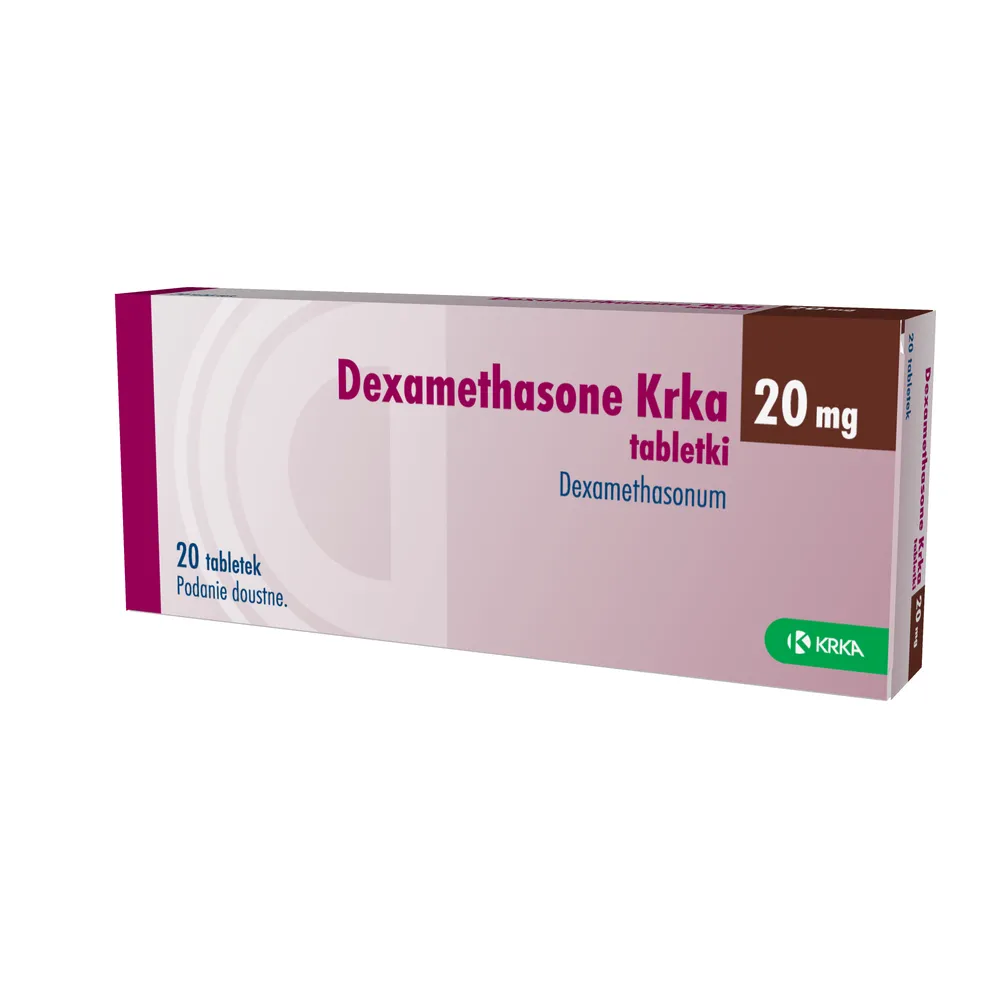
Table of Contents
Package leaflet: Information for the user
Warning! Keep the package leaflet. Information on the immediate packaging is in a foreign language.
Dexamethasone Krka (Dexamethason HCS 20 mg)
20 mg, tablets
Dexamethasonum
Dexamethasone Krka and Dexamethason HCS 20 mg are different trade names for the same
medicinal product.
Please read the entire leaflet carefully before using the medicine, as it contains
important information for the patient.
- Keep this leaflet for future reference.
- If you have any further questions, consult your doctor or pharmacist.
- This medicine has been prescribed for a specific individual. Do not pass it on to others. It may harm someone else, even if their symptoms are the same.
- If you experience any adverse reactions, including any not listed in this leaflet, inform your doctor, pharmacist or nurse. See section 4.
Table of contents
- What Dexamethasone Krka is and what it is used for
- What you need to know before taking Dexamethasone Krka
- How to take Dexamethasone Krka
- Possible side effects
- How to store Dexamethasone Krka
- Contents of the pack and other information
1. What Dexamethasone Krka is and what it is used for
Dexamethasone Krka is a synthetic glucocorticoid. Glucocorticoids are hormones produced by the adrenal cortex. This medicine has anti-inflammatory, analgesic, antiallergic and immunosuppressive properties.
Dexamethasone Krka is indicated for the treatment of rheumatic and autoimmune diseases (e.g. dermatomyositis), skin disorders (e.g. pemphigus vulgaris), blood disorders (e.g. idiopathic thrombocytopenic purpura in adults), symptomatic multiple myeloma, acute lymphoblastic leukemia, Hodgkin's disease and non-Hodgkin's lymphoma in combination with other medicinal products, metastatic spinal cord compression (nerve compression of the spinal cord caused by a tumour), and for the prevention and treatment of nausea and vomiting induced by chemotherapy, in combination with antiemetic medicines.
2. Important information before using Dexamethasone Krka
Do not use Dexamethasone Krka:
- if you are allergic to dexamethasone or any of the other ingredients of this medicine (listed in section 6);
- if you have a systemic infection (unless already being treated);
- if you have peptic ulcer of the stomach or duodenum;
- if you are due to receive a live vaccine.
Warnings and precautions
Before using Dexamethasone Krka, consult your doctor or pharmacist:
- if you have ever had severe depression or bipolar affective disorder (manic-depressive illness); this means having experienced depression before or during treatment with corticosteroid medicines such as dexamethasone;
- if any of your close family members have had these conditions.
Psychiatric problems may occur while taking corticosteroids such as Dexamethasone Krka.
- These disorders may be serious.
- They usually appear within a few days or weeks after starting treatment.
- They occur more frequently with higher doses of the medicine.
- Most of these problems disappear when the dose is reduced or treatment is stopped. However, if such problems occur, they may require treatment.
You should consult your doctor if you experience any symptoms of psychiatric problems while taking this medicine. This is particularly important in the case of depression or suicidal thoughts. In some cases, psychiatric problems have occurred after reducing the dose or stopping treatment.
Consult your doctor before using this medicine if you have:
- kidney or liver disease (liver cirrhosis or chronic liver failure),
- pheochromocytoma (adrenal gland tumour) or suspected pheochromocytoma,
- high blood pressure, heart disease or recent heart attack (cases of cardiac rupture have occurred),
- diabetes or a family history of diabetes,
- osteoporosis (loss of bone mass), especially in postmenopausal women,
- previous muscle weakness caused by this or another corticosteroid medicine,
- glaucoma (increased pressure in the eyeball) or a family history of glaucoma or cataracts (clouding of the eye lens leading to vision loss),
- myasthenia gravis (a disease causing muscle weakness),
- bladder or stomach ulcer,
- psychiatric disorders or mental illness that has worsened due to use of this type of medicine,
- epilepsy (a condition characterised by recurrent loss of consciousness or seizures),
- migraine,
- hypothyroidism,
- parasitic infection,
- tuberculosis, sepsis or fungal eye infection,
- cerebral malaria,
- herpes virus (of the mouth, genital organs or eye, due to possible corneal perforation),
- asthma,
- ongoing treatment for blood vessel blockage by clots (thromboembolic disease),
- corneal ulceration or corneal injury.
Taking this medicine may trigger a pheochromocytoma crisis, which can be fatal. Pheochromocytoma is a rare tumour of the adrenal gland. A crisis may present with the following symptoms: headache, sweating, palpitations and high blood pressure. If any of these symptoms occur, contact your doctor immediately.
Corticosteroid treatment may weaken the body's ability to fight infection. This may sometimes lead to infections caused by microorganisms that normally rarely cause infection (called opportunistic infections). If you develop any infection during treatment with this medicine, consult your doctor immediately. This is particularly important in case of signs of pneumonia: cough, fever, shortness of breath and chest pain. Disorientation may also occur, especially in elderly patients. You should also inform your doctor about any previous tuberculosis or exposure to areas where parasitic infections are common.
While taking this medicine, it is important to avoid contact with people who have chickenpox, shingles or measles. If you suspect possible exposure to any of these diseases, contact your doctor immediately. You should also inform your doctor about any previous infectious diseases such as measles or chickenpox, and vaccinations against these diseases.
Contact your doctor if the patient experiences any of the following: tumour lysis syndrome symptoms such as muscle cramps, muscle weakness, confusion, visual disturbances or loss of vision, and shallow breathing, especially if the patient has a haematological malignancy.
If the patient experiences blurred vision or other visual disturbances, contact a doctor.
Treatment with this medicine may cause chorioretinopathy, an eye disease causing decreased visual acuity or visual disturbances. This usually affects one eye.
Treatment with this medicine may cause tendon inflammation. In extremely rare cases, tendon rupture may occur. This risk increases when combined with certain antibiotics or kidney problems. Contact your doctor if you experience pain, stiffness or swelling of joints or tendons.
Taking Dexamethasone Krka may lead to a condition known as adrenal insufficiency. This may affect the effectiveness of the medicine during stress or injury, surgical procedures, childbirth or illness, and the body may not be able to respond naturally to serious physical stress associated with accidents, surgery, childbirth or disease.
If an accident, illness or other physically stressful situation occurs during or after treatment with Dexamethasone Krka, when surgery (even dental) or vaccination (especially with live virus vaccines) is required, inform the treating doctor about steroid use.
If suppression tests (detecting hormone levels in blood), skin allergy tests or bacterial infection tests are performed, inform the person conducting the tests that you are taking dexamethasone, as it may affect test results.
During treatment, your doctor may also recommend limiting salt intake and potassium supplementation.
In elderly patients, some side effects of this medicine may be more serious, particularly decreased bone density (osteoporosis), high blood pressure, low potassium levels, diabetes, susceptibility to infections and skin thinning. Your doctor will closely monitor the patient during treatment.
Children and adolescents
When using this medicine in children, it is important that the doctor carefully monitors the child's growth and development at regular intervals. Dexamethasone should not be routinely used in premature infants with respiratory insufficiency.
Dexamethasone Krka and other medicines
Tell your doctor about all medicines you are currently taking or have recently taken, as well as any medicines you plan to take.
- Anticoagulants (e.g. warfarin)
- Acetylsalicylic acid or similar (non-steroidal anti-inflammatory drugs), e.g. indomethacin
- Medicines used to treat diabetes
- Medicines used to treat high blood pressure
- Medicines used to treat heart disease
- Diuretics (water tablets)
- Amphotericin B administered by injection
- Phenytoin, carbamazepine, primidone (medicines used to treat epilepsy)
- Rifabutin, rifampicin (antibiotics used to treat tuberculosis)
- Medicines that neutralise gastric acid, particularly those containing magnesium trisilicate
- Barbiturates (medicines used to aid sleep and reduce anxiety)
- Aminoglutethimide (an anticancer medicine)
- Carbenoxolone (a medicine used to treat stomach ulcers)
- Ephedrine (a medicine used to constrict blood vessels in inflammatory conditions of nasal mucous membranes)
- Acetazolamide (a medicine used to treat glaucoma and epilepsy)
- Hydrocortisone, cortisone and other corticosteroids
- Ketoconazole, itraconazole (medicines used to treat fungal infections)
- Ritonavir (HIV)
- Antibiotics including erythromycin, fluoroquinolones
- Medicines that enhance muscle movement in myasthenia (e.g. neostigmine)
- Cholestyramine (a medicine used in cases of elevated cholesterol)
- Oestrogen hormones including oral contraceptives
- Tetracosactide (used in tests assessing adrenal cortex function)
- Sulpiride used as a calming medicine
- Cyclosporine used to prevent transplant rejection
- Thalidomide used, among others, in the treatment of multiple myeloma
- Praziquantel (a medicine used to treat parasitic infections)
- Live vaccinations
- Chloroquine, hydroxychloroquine, mefloquine (medicines used to treat malaria)
- Growth hormone
- Protirelin
Tell your doctor about all medicines you are currently taking or have recently taken, including
medicines obtained without a prescription. You may be at increased risk of adverse effects when
taking dexamethasone with the following medicines:
- Some medicines may increase the effect of Dexamethasone Krka, and your doctor may wish to monitor you if you are taking these medicines (including some HIV medicines: ritonavir, cobicistat)
- Acetylsalicylic acid or similar (non-steroidal anti-inflammatory drugs), e.g. indomethacin
- Medicines used to treat diabetes
- Medicines used to treat heart disease
- Diuretics (water tablets)
- Amphotericin B administered by injection
- Acetazolamide (a medicine used to treat glaucoma and epilepsy)
- Tetracosactide (used in tests assessing adrenal cortex function)
- Carbenoxolone (a medicine used to treat stomach ulcers)
- Chloroquine, hydroxychloroquine, mefloquine (medicines used to treat malaria)
- Medicines used to treat high blood pressure
- Thalidomide used, among others, in the treatment of multiple myeloma
- Live vaccinations
- Medicines that enhance muscle movement in myasthenia (e.g. neostigmine)
- Antibiotics including erythromycin, fluoroquinolones
Before starting treatment with Dexamethasone Krka, read the patient information leaflets of all
medicines you will be taking in combination with Dexamethasone Krka to obtain information about
those medicines. If you are taking thalidomide, lenalidomide or pomalidomide, pay special attention
to pregnancy testing and the need for pregnancy prevention.
Dexamethasone Krka with food, drink and alcohol
Dexamethasone should be taken during or after a meal to reduce gastrointestinal irritation. Avoid drinks containing alcohol or caffeine. It is recommended to eat small, frequent meals and, if advised by your doctor, possibly use antacids.
Pregnancy and breastfeeding
If you are pregnant or breastfeeding, think you may be pregnant or are planning to have a baby, you should consult your doctor or pharmacist before using this medicine.
Dexamethasone Krka should be used during pregnancy, particularly in the first trimester, only if, in the opinion of the doctor, the benefit to the mother outweighs the potential risk to the foetus.
If you become pregnant while taking Dexamethasone Krka, do not stop taking it, but inform your doctor immediately that you are pregnant.
Corticosteroids may pass into breast milk. Risk to newborns or infants cannot be excluded. The decision whether to continue or discontinue breastfeeding or to continue or discontinue treatment with dexamethasone should be made taking into account the benefits of breastfeeding for the child and the benefits of dexamethasone treatment for the woman.
Driving and operating machinery
Do not drive, operate machinery or perform any hazardous tasks if you experience adverse effects such as disorientation, hallucinations, dizziness, fatigue, drowsiness, fainting or blurred vision.
Dexamethasone Krka contains monohydrate lactose
If you have previously been diagnosed with intolerance to certain sugars, you should contact your doctor before taking this medicine.
3. How to use Dexamethasone Krka
This medicine should always be used as directed by the physician. If in doubt, consult a doctor or pharmacist.
Dexamethasone Krka is available as 4 mg, 8 mg, 20 mg, and 40 mg tablets. The tablets can be divided into halves, providing additional strengths of 2 mg and 10 mg and making it easier for the patient to swallow the tablet.
Please note that this is a high-dose medicinal product.
It is recommended to use Dexamethasone Krka at the lowest effective dose.
Dexamethasone is usually administered in doses ranging from 0.5 mg to 10 mg per day, depending on the disease being treated. In more severe conditions, doses exceeding 10 mg per day may be necessary. The dose should be adjusted according to individual patient response and disease severity. To minimize side effects, the lowest effective dose should be used.
Unless otherwise directed by a physician, the following doses are recommended:
The dosing recommendations listed below are for informational purposes only.
Initial and daily doses must always be determined based on individual patient response and disease severity.
- Pemphigus: initial dose of 300 mg for three days, followed by dose reduction according to clinical needs.
- Polymyositis: 40 mg for four days per cycle.
- Idiopathic thrombocytopenic purpura: 40 mg for four consecutive days per cycle.
- Metastatic spinal cord compression: initial dose and duration of treatment depend on the cause and severity of the disease. In palliative care, very high doses may be used, up to a maximum of 96 mg. For optimal dosing and to reduce the number of
tablets, lower-strength tablets (4 mg and 8 mg) can be combined with higher-strength tablets (20 mg or 40 mg).
- Prevention and treatment of nausea and vomiting caused by cytotoxic chemotherapy, emetogenic chemotherapy, in combination with other antiemetic medicines: 8–20 mg (one 20 mg tablet or half a 40 mg tablet) before chemotherapy, followed by 4–16 mg per day on the second and third days of therapy.
- Treatment of symptomatic multiple myeloma, acute lymphoblastic leukemia, Hodgkin's disease, and non-Hodgkin's lymphoma, in combination with other medicines: the usual dose is 40 mg or 20 mg once daily.
The dose and frequency of administration vary depending on the treatment regimen and concomitant medications. Dexamethasone administration should follow the dosing guidelines for dexamethasone specified in the summary of product characteristics of the concomitant medicine, if provided. If not, national or international dosing protocols and guidelines should be followed. The prescribing physician should carefully assess the appropriate dose in each individual case, taking into account the patient's condition and disease.
Long-term treatment
In long-term treatment of certain diseases, after initial therapy, the glucocorticoid should be switched from dexamethasone to prednisone or prednisolone to reduce the suppressive effect on the adrenal cortex.
Children and adolescents
When using this medicine in children, it is important that the physician carefully monitor the child's growth and development at regular intervals.
Taking more Dexamethasone Krka than recommended
If too many tablets are taken, contact a doctor immediately or go to the nearest hospital.
Missing a dose of Dexamethasone Krka
If a dose is missed, take it as soon as possible. If it is almost time for the next dose, take only one dose. Do not take a double dose to make up for a missed dose.
Stopping Dexamethasone Krka
If treatment needs to be discontinued, follow the physician's instructions. These may include gradually reducing the dose until treatment is completely stopped. Symptoms that may occur after stopping treatment too quickly include low blood pressure and, in some cases, recurrence of the original disease.
A corticosteroid withdrawal syndrome may also occur, including fever, muscle and joint pain, nasal mucosal inflammation (rhinitis), weight loss, skin itching, and eye inflammation (conjunctivitis). If the medicine is stopped too quickly and any of these symptoms occur, contact a doctor immediately.
If you have any further questions about the use of this medicine, consult your doctor or pharmacist.
4. Possible adverse effects
Like all medicines, this medicine can cause adverse reactions, although not everyone will experience them.
You should immediately inform your doctor if serious psychiatric problems occur.
Such problems may affect approximately 5 out of 100 people taking medicines such as dexamethasone. These problems include:
- feelings of depression, including suicidal thoughts,
- feelings of euphoria (mania) or mood swings,
- feelings of anxiety, insomnia, difficulty thinking clearly, or feelings of confusion and memory loss,
- experiencing, perceiving or hearing things that are not there; unusual or frightening thoughts affecting behaviour or feelings of isolation.
You should immediately inform your doctor if the following occur:
- severe abdominal pain, nausea, vomiting, diarrhoea, significant muscle weakness and fatigue, extremely low blood pressure, weight loss and fever, as these may indicate adrenal insufficiency;
- sudden abdominal pain, tenderness, nausea, vomiting, fever and blood in the stool, as these may be symptoms of intestinal perforation, especially in patients with existing bowel disease.
This medicine may worsen pre-existing heart conditions. If shortness of breath or ankle swelling occurs, you should contact your doctor immediately.
Other adverse reactions (frequency unknown) include:
- Increased susceptibility to infections, including viral and fungal infections (e.g. aspergillosis), reactivation of tuberculosis or other infections (e.g. previously diagnosed eye infections).
- Decreased or increased number of white blood cells, coagulation disorders.
- Allergic reactions to the medicine, including severe, life-threatening allergic reactions (which may present as rash, swelling of the throat or tongue, and in severe cases, difficulty breathing or dizziness).
- Disorders of the body's hormonal regulation, oedema and weight gain, moon-shaped face (Cushingoid state), altered endogenous secretion in response to stress and trauma, surgical procedures, childbirth or illness; the body may be unable to respond adequately in situations of severe stress, such as accidents, surgery, childbirth or illness; growth suppression in children and adolescents, irregular menstrual cycle or amenorrhoea (absence of menstruation), development of excessive hair growth (particularly in women).
- Weight gain, negative calcium and protein balance, increased appetite, electrolyte imbalance, fluid retention in the body, potassium loss which may lead to cardiac arrhythmias, increased need for antidiabetic medicines, manifestation of latent diabetes, elevated blood cholesterol and triglyceride levels (hypercholesterolaemia and hypertriglyceridaemia).
- Extreme mood swings, schizophrenia (mental disorder) may worsen, depression, insomnia.
- Severe atypical headaches with visual disturbances related to discontinuation of the medicine, seizures and worsening of epilepsy, dizziness.
- Increased intraocular pressure, eye oedema, thinning of the epithelium of the eye surface, worsening of pre-existing viral, fungal and bacterial eye infections, exophthalmos, cataract, visual disturbances, loss of vision, blurred vision.
- Congestive heart failure in susceptible patients, cardiac rupture following recent myocardial infarction, heart failure.
- Hypertension, blood clots, thrombus formation which may block blood vessels, for example in the legs or lungs (thromboembolic complications).
- Hiccups.
- Nausea, vomiting, gastric discomfort and abdominal distension, inflammation and ulcers in the oesophagus, gastric ulcers which may perforate and bleed, pancreatitis (which may present as back and abdominal pain), intestinal gas, oesophageal candidiasis.
- Thin, delicate skin, unusual skin lesions, bruising, redness and skin inflammation, striae, visible capillary dilation, acne, excessive sweating, rash, swelling, hair loss, abnormal fat deposits, excessive body hair growth, fluid retention, pigmentary disorders, capillary fragility evident as subcutaneous bleeding (increased capillary fragility), perioral dermatitis (inflammation of the skin around the mouth).
- Decreased bone density with increased risk of fractures (osteoporosis), bone disorders, tendonitis, tendon rupture, muscle atrophy, myopathy, muscle weakness, premature cessation of bone growth (premature closure of epiphyses).
- Changes in sperm count and motility, impotence.
- Impaired response to vaccination and skin tests, delayed wound healing, discomfort, malaise.
- Corticosteroid withdrawal syndrome may also occur, including fever, muscle and joint pain, rhinitis (nasal inflammation), weight loss, painful and itchy skin nodules, eye inflammation (conjunctivitis).
Reporting of adverse reactions
If any adverse reactions occur, including any not listed in this leaflet, you should inform your doctor, pharmacist or nurse. Adverse reactions can be reported directly to the Department of Monitoring of Adverse Drug Reactions of the Office for Registration of Medicinal Products, Medical Devices and Biocidal Products
Al. Jerozolimskie 181C
02-222 Warsaw
Tel.: + 48 22 49 21 301
Fax: + 48 22 49 21 309
Website: https://smz.ezdrowie.gov.pl
Reporting adverse reactions helps to provide more information on the safety of the medicine.
5. How to store Dexamethasone Krka
Keep the medicine out of the sight and reach of children.
Do not use this medicine after the expiry date stated on the packaging. The expiry date refers to the last day of the stated month.
There are no special temperature storage requirements.
Store in the original packaging to protect from light and moisture.
Medicines must not be disposed of via wastewater or household waste. Ask your pharmacist how to dispose of medicines no longer required. Such measures help protect the environment.
6. Contents of the package and other information
What Dexamethasone Krka contains
- The active substance is dexamethasone. Each tablet contains 20 mg of dexamethasone.
- The other ingredients are monohydrate lactose, pregelatinized maize starch, colloidal anhydrous silicon dioxide, and magnesium stearate (E 470b). See section 2. "Dexamethasone Krka contains monohydrate lactose".
What Dexamethasone Krka looks like and contents of the pack
White or almost white, round tablets with bevelled edges, marked with a score line and engraved with the number "20" on one side (thickness: 4.0–6.0 mm; diameter: 10.7–11.3 mm). The tablet can be divided into equal doses.
OPA/Al/PVC/Al blister pack in a cardboard box.
Pack sizes: 20 tablets.
For further information, please contact the responsible party or the parallel importer.
Marketing Authorisation Holder in Austria, country of export:
HCS bvba
H. Kennisstraat 53
2650 Edegem
Belgium
Manufacturer:
TAD Pharma GmbH
Heinz-Lohmann-Str. 5
27472 Cuxhaven
Germany
Krka, d.d., Novo mesto
Šmarješka cesta 6
8501 Novo mesto
Slovenia
Parallel Importer:
Delfarma Sp. z o.o.
ul. Św. Teresy od Dzieciątka Jezus 111
91-222 Łódź
Poland
Repackaged by:
Delfarma Sp. z o.o.
ul. Św. Teresy od Dzieciątka Jezus 111
91-222 Łódź
Poland
Austrian Marketing Authorisation Number, country of export: 138042
Parallel Import Authorisation Number: 234/22