Devikap
Poland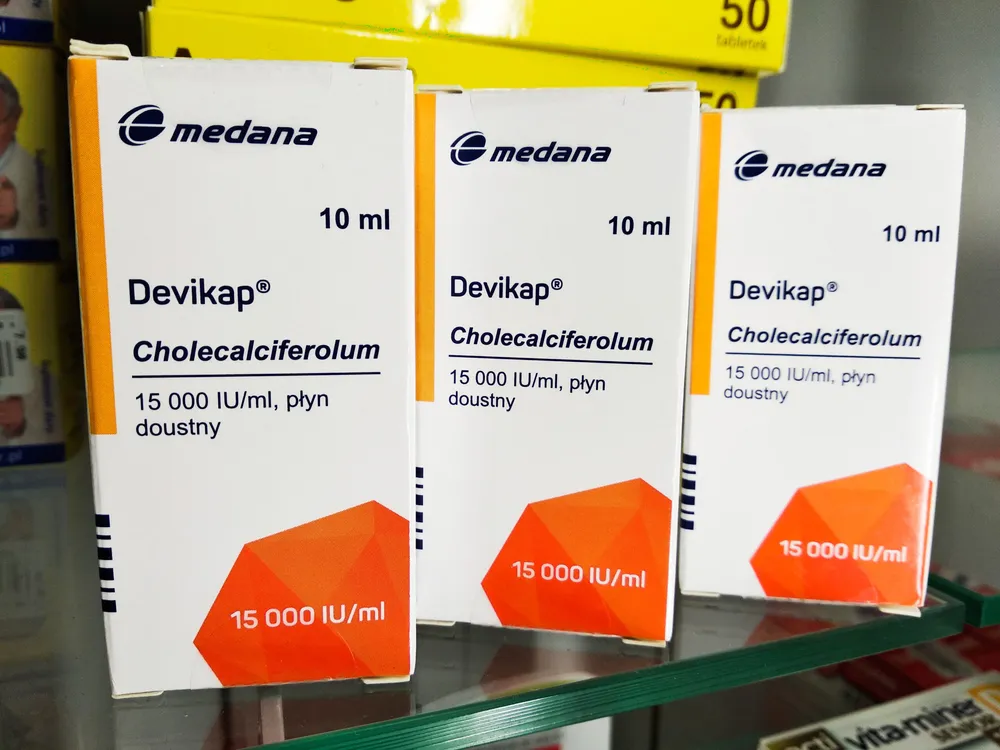
Table of Contents
Patient Information Leaflet
DEVIKAP 15,000 IU/mL, oral drops, solution
Cholecalciferolum
Please read all of this leaflet carefully before taking this medicine, because it contains
important information for you.
- Keep this leaflet, as you may need to read it again.
- If you have any further questions, please ask your doctor or pharmacist.
- This medicine has been prescribed for a specific individual. Do not pass it on to others. It may harm someone else even if their symptoms are the same.
- If you experience any side effects, including any not listed in this leaflet, tell your doctor, pharmacist, or nurse. See section 4.
Leaflet Contents
- What Devikap is and what it is used for
- Important information before taking Devikap
- How to take Devikap
- Possible side effects
- How to store Devikap
- Contents of the pack and other information
1. What Devikap is and what it is used for
Devikap is a vitamin preparation containing cholecalciferol (vitamin D). Vitamin D is
produced in the skin under the influence of UV light and can also be supplied to the body
through diet.
Vitamin D enhances the absorption of calcium and phosphates in the gastrointestinal tract and kidneys, and facilitates bone mineralization.
In vitamin D deficiency, impaired bone calcification (rickets) or loss of calcium from bones (osteomalacia) may occur.
Devikap is indicated:
- for the prevention of rickets and osteomalacia in children and adults;
- for the prevention of rickets in premature infants;
- for the prevention of disorders in cases where vitamin D deficiency risk has been identified in children and adults;
- for the prevention of vitamin D deficiency in cases of impaired vitamin D absorption in children and adults;
- for the treatment of rickets and osteomalacia in children and adults;
- as adjunctive treatment in osteoporosis in adults;
- for the treatment of hypoparathyroidism in adults.
2. Important information before using Devikap
When not to use Devikap:
- if the patient is allergic to cholecalciferol or any of the other ingredients of this medicine (listed in section 6);
- if the patient has hypervitaminosis D (clinical symptoms caused by excess vitamin D in the body);
- if the patient has elevated calcium levels in blood or urine;
- if the patient has calcium kidney stones;
- if the patient has sarcoidosis (an immune system disorder);
- if the patient has renal failure.
Warnings and precautions
Before starting treatment with Devikap, consult a doctor or pharmacist if:
- the patient is immobilized;
- the patient is taking thiazide diuretics;
- the patient has kidney stones;
- the patient has heart diseases;
- the patient is taking cardiac glycosides;
- the patient is pregnant or breastfeeding;
- the patient is simultaneously taking high doses of calcium.
During treatment with this medicine, periodic monitoring of calcium and phosphate levels in blood and urine is recommended.
Children
The daily requirement and method of vitamin D administration in children must be individually determined and verified by the physician at each regular check-up, especially during the first months of life.
Particular caution should be exercised in infants who have a small anterior fontanelle size from birth.
Devikap with other medicines
Inform the doctor or pharmacist about all medicines currently used or recently used, as well as any medicines the patient plans to take.
- Antiepileptic drugs, especially phenytoin and phenobarbital, as well as rifampicin, reduce the absorption of vitamin D.
- Concomitant use of vitamin D with thiazide diuretics increases the risk of hypercalcemia (elevated calcium levels in blood).
- Concurrent administration with cardiac glycosides may enhance their toxicity (increased risk of cardiac arrhythmias).
- Simultaneous administration with antacids containing aluminum and magnesium may lead to aluminum-related bone toxicity and hypermagnesemia in patients with renal failure.
- Concurrent use with vitamin D analogs carries a risk of toxic effects.
- Products containing high doses of calcium or phosphorus increase the risk of hyperphosphatemia.
- Ketoconazole may inhibit both biosynthesis and catabolism of 1,25(OH)2-cholecalciferol.
- Vitamin D may act antagonistically to drugs used in hypercalcemia such as calcitonin, etidronate, and pamidronate.
Pregnancy and breastfeeding
If the patient is pregnant or breastfeeding, suspects she may be pregnant, or is planning to have a child, she should consult a doctor or pharmacist before using this medicine.
This medicine should not be used in high doses during pregnancy due to the possible teratogenic effects in case of overdose (excessive doses during pregnancy may cause mental retardation and congenital heart defects in children).
Caution should be exercised when administering this medicine to breastfeeding women—high-dose treatment may cause overdose symptoms in the infant.
Driving and operating machinery
Devikap has no influence on the ability to drive or operate machinery.
3. How to use Devikap
This medicine should always be used as directed by the physician. In case of doubt, consult a
doctor or pharmacist.
The dosage of the medicine is individually determined by the doctor, taking into account the amount of calcium taken simultaneously (both from diet and from other medications). The medicine is administered orally. The abbreviation IU (from English International Unit) means international units, which are used to express vitamin D activity.
Prevention of deficiencies
Newborns and children, as well as adults – 500 IU (1 drop) daily.
Treatment of deficiencies
Dosage individually determined by the doctor, depending on the severity of deficiency.
Vitamin D-dependent rickets
Children – from 3,000 IU to 10,000 IU (from 6 to 20 drops) daily.
Osteomalacia associated with anticonvulsant therapy
Children – 1,000 IU (2 drops) daily; adults – from 1,000 to 4,000 IU (from 2 to 8 drops) daily.
Administration method
The medicine should be administered in a spoonful of liquid.
Note: 1 drop contains approximately 500 IU of vitamin D.
Due to the risk of overdose, the medicine should not be administered directly from the bottle into the child's mouth.
Overdose of Devikap medicine
In case of ingestion of a dose higher than recommended, seek immediate medical advice from a doctor or pharmacist.
Vitamin D, as an active substance regulating calcium-phosphate metabolism, may cause, in case of significant overdose, hypercalcemia (excess calcium in blood), hypercalciuria (excess calcium in urine), nephrocalcinosis (calcification of the kidneys), bone damage, and cardiovascular changes.
Hypercalcemia may occur after prolonged administration of vitamin D at doses of 50,000–100,000 IU daily.
Symptoms of overdose include muscle weakness, loss of appetite, nausea, vomiting, constipation, excessive thirst, polyuria, lethargy, conjunctivitis, photophobia, pancreatitis, watery nasal discharge, hyperthermia, decreased libido, hypercholesterolemia, elevated aminotransferase activity, arterial hypertension, cardiac arrhythmias, and uremia. Common symptoms are headache, muscle and joint pain, and weight loss. Kidney function is impaired, manifested by decreased urine specific gravity and presence of casts in urine.
Treatment after overdose
Discontinue the medicine. Administer large amounts of fluids. Contact a doctor, who will decide whether hospitalization is necessary.
Missed dose of Devikap medicine
Do not take a double dose to make up for a missed dose.
If you have any further doubts concerning the use of this medicine, consult your doctor or pharmacist.
4. Possible adverse reactions
Like any medicine, this product may cause adverse reactions, although not everyone will experience them.
Adverse reactions are practically absent when the product is administered at the recommended doses.
However, in rare cases of hypersensitivity to vitamin D or after prolonged use of excessively high doses, poisoning may occur, known as hypervitaminosis D. Symptoms of hypervitaminosis include:
- cardiac arrhythmias;
- headaches, lethargy;
- conjunctivitis, photophobia;
- loss of appetite, nausea, vomiting, constipation;
- polyuria, frequent urination;
- muscle and joint pain, muscle weakness;
- hypercholesterolemia, weight loss, excessive thirst, profuse sweating, pancreatitis;
- arterial hypertension;
- skin itching;
- increased aminotransferase activity;
- decreased libido, depression, psychotic disorders;
- watery nasal discharge;
- hyperthermia;
- dryness of the oral cavity;
- elevated calcium levels in blood and/or urine;
- nephrolithiasis;
- tissue calcifications.
Reporting of adverse reactions
If any adverse symptoms occur, including any adverse reactions not listed in this leaflet, inform your doctor or pharmacist. Adverse reactions can be reported directly to the Department of Monitoring Adverse Reactions of Medicinal Products at the Office for Registration of Medicinal Products, Medical Devices and Biocidal Products
Al. Jerozolimskie 181C
02-222 Warsaw
Phone: +48 22 49 21 301
Fax: +48 22 49 21 309
Website: https://smz.ezdrowie.gov.pl
Adverse reactions may also be reported to the marketing authorization holder.
Reporting adverse reactions enables continuous monitoring of the benefit-risk balance of the medicinal product, contributing to its safe use.
5. How to store Devikap
Keep the medicine out of the sight and reach of children.
Do not store above 25°C. Store in the original packaging to protect from light.
Do not use this medicine after the expiry date stated on the carton and bottle. The expiry date refers to the last day of the month indicated.
The marking on the packaging: after the abbreviation EXP means the expiry date, and after the abbreviation Lot means the batch number.
Once opened, the container should be used within 12 months.
Medicines must not be disposed of via wastewater or household waste. Ask your pharmacist how to dispose of medicines no longer in use. This will help protect the environment.
6. Contents of the pack and other information
What Devikap contains:
- The active substance is cholecalciferol. Each ml (approximately 30 drops) contains 15,000 IU of cholecalciferol. Each drop contains approximately 500 IU of vitamin D.
- The other ingredient is: medium-chain triglycerides.
What Devikap looks like and contents of the pack
Devikap is a clear, colourless to pale yellow solution.
The pack contains a 10 ml amber glass type III bottle, closed with an HDPE cap and fitted with a dropper made of LDPE, placed in a cardboard box.
Marketing Authorisation Holder
Zakłady Farmaceutyczne POLPHARMA S.A.
Pelplińska Street 19, 83-200 Starogard Gdański
Manufacturer
Zakłady Farmaceutyczne POLPHARMA S.A.
Medana Branch in Sieradz
Władysława Łokietka Street 10, 98-200 Sieradz
For further information about this medicine, please contact the local representative of the Marketing Authorisation Holder:
POLPHARMA Commercial Office Sp. z o.o.
Bobrowiecka Street 6
00-728 Warsaw
tel. 22 364 61 01