Detreomycin 1%
Poland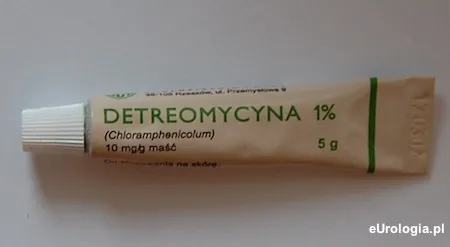
Table of Contents
Package leaflet: information for the patient
DETREOMYCYNA 1%, 10 mg/g, ointment
Chloramphenicolum
Please read all of this leaflet carefully before using the medicine, as it contains
important information for the patient.
- Keep this leaflet, so that you can read it again if necessary.
- If you have any doubts, please consult your doctor or pharmacist.
- This medicine has been prescribed for a specific individual. Do not pass it on to others. The medicine may harm another person, even if their symptoms are the same.
- If you experience any adverse reactions, including any not listed in this leaflet, tell your doctor or pharmacist. See section 4.
Leaflet contents
- What Detreomycyna 1% is and what it is used for
- Important information before using Detreomycyna 1%
- How to use Detreomycyna 1%
- Possible side effects
- How to store Detreomycyna 1%
- Contents of the pack and other information
1. What Detreomycyna 1% is and what it is used for
Detreomycyna 1% is an ointment containing the active substance chloramphenicol.
Chloramphenicol is a broad-spectrum antibiotic with bacteriostatic activity against both
Gram-negative and Gram-positive bacteria, spirochetes, and rickettsiae. Chloramphenicol acts against Haemophilus influenzae,
Salmonella spp., Neisseria spp., Klebsiella spp., Streptococcus pneumoniae, and anaerobic bacteria
(moderately effective against Bacteroides fragilis, strongly effective against Propionibacterium acnes).
It is also active against Staphylococcus spp., Streptococcus pyogenes, Escherichia coli, Proteus
mirabilis, Shigella spp., Serratia marcescens, Mycoplasma spp., Rickettsia spp., Chlamydia spp.
Pseudomonas aeruginosa, acid-fast bacilli, and certain Bacillus species are resistant to chloramphenicol.
Indications
Detreomycyna 1% is indicated for the topical treatment of purulent skin infections caused by microorganisms resistant to other antibiotics.
2. Important information before using Detreomycyna 1%
When not to use Detreomycyna 1%
- if the patient is allergic to chloramphenicol, arachis oil, or any of the other ingredients of this medicine (listed in section 6);
- during pregnancy and breastfeeding;
- in newborns and children under 11 years of age;
- in patients with liver disease or severe kidney function disorders;
- in patients with bone marrow disorders, hematopoietic disorders, or with a history of abnormal blood composition;
- for prophylactic use;
- if the patient is allergic to peanuts or soya, as the medicine contains arachis oil (from peanuts).
Warnings and precautions
Before starting treatment with Detreomycyna 1%, discuss this with your doctor or pharmacist.
Do not use for longer than necessary, i.e. until symptoms of the disease have resolved.
Prolonged use beyond 14 days or application over a large skin surface increases the risk of severe adverse effects of chloramphenicol.
Repeated treatment with medicines containing chloramphenicol should be avoided.
Do not use concurrently with medicines that may cause bone marrow suppression.
Do not use with medicines that may lead to interactions; see: Detreomycyna 1% and other medicines.
Detreomycyna 1% and other medicines
Inform your doctor about all medicines currently or recently taken, as well as any medicines the patient plans to take.
Chloramphenicol should not be administered simultaneously with penicillins and cephalosporins due to antagonistic effects. Chloramphenicol should not be used together with macrolide antibiotics, as they share the same mechanism of action (inhibition of protein synthesis by binding to the same ribosomal site). Chloramphenicol is an inhibitor of multiple microsomal enzymes, thereby enhancing and prolonging the effects of many drugs metabolized in the liver, such as tolbutamide, chlorpropamide, phenytoin, cyclophosphamide, and warfarin, which may lead to severe toxic effects of these drugs. Chloramphenicol interferes with vitamin K synthesis; therefore, in patients concurrently receiving anticoagulants, close monitoring of prothrombin time is required. Chloramphenicol enhances the blood glucose-lowering (hypoglycemic) effects of sulfonylurea derivatives, increases blood concentration and prolongs the half-life of dihydroxycoumarin derivatives, and significantly enhances the hematotoxic effects of many drugs, e.g. phenylbutazone, indomethacin, and co-trimoxazole.
This medicine should not be used simultaneously with topically applied erythromycin due to competitive mechanisms of action.
Interactions with other topically applied medicines are unknown.
Pregnancy and breastfeeding
If the patient is pregnant or breastfeeding, suspects she may be pregnant, or is planning to have a child, she should consult a doctor or pharmacist before using this medicine.
Do not use during pregnancy and breastfeeding.
Driving and operating machinery
Detreomycyna 1% has no influence on the ability to drive or operate machinery.
Detreomycyna 1% contains arachis oil (from peanuts)
Do not use if known hypersensitivity to peanuts or soya has been diagnosed.
Detreomycyna 1% contains lanolin
Due to the presence of lanolin, this medicine may cause local skin reactions (e.g. contact dermatitis).
3. How to use Detreomycyna 1%
This medicine should always be used as directed by a physician. In case of doubt, consult a doctor or pharmacist.
This medicine is intended for topical use on the skin.
The dose depends on the extent and location of the affected area. A thin layer of ointment, squeezed onto gauze, is usually applied to cleansed, diseased skin once to three times daily, every 6 to 8 hours.
Do not use this medicine for longer than 14 days.
After applying the medicine, wash your hands.
Use in children and adolescents
Do not use in newborns and children under 11 years of age.
Topical use of chloramphenicol-containing medicine during adolescence should be limited to the minimum necessary.
Use of a higher than recommended dose of Detreomycyna 1%
If more than the recommended dose is used, contact a doctor.
Missed dose of Detreomycyna 1%
Do not use a double dose to make up for a missed dose.
If a dose is missed, apply the medicine as soon as possible. Then continue treatment as previously directed by the physician.
If you have any further doubts regarding the use of this medicine, consult your doctor or pharmacist.
4. Possible adverse reactions
Like any medicine, this medicine can cause adverse reactions, although not everybody will experience them.
Irritation may occur in the form of redness, stinging, itching, angioedema,
skin inflammation, and allergic skin reactions, which are indications for discontinuation of the medicine
(urticaria, erythema). Overgrowth of yeast-like fungi may occur.
Rarely, bone marrow damage including aplastic anemia and blood abnormalities have been reported.
Reporting of adverse reactions
If any adverse reactions occur, including any adverse reactions not listed
in this leaflet, inform your doctor, pharmacist, or nurse. Adverse reactions can be reported directly to the Department of Monitoring Adverse Drug Reactions of the Office for Registration of Medicinal Products, Medical Devices
and Biocidal Products
Al. Jerozolimskie 181C
02-222 Warsaw
Phone: + 48 22 49 21 301
Fax: + 48 22 49 21 309
Website: https://smz.ezdrowie.gov.pl
Adverse reactions can also be reported to the marketing authorization holder.
By reporting adverse reactions, additional information regarding the safety of the medicine can be collected.
5. How to store Detreomycyna 1%
Store below 25°C.
Keep the medicine out of the sight and reach of children.
Pay attention to the expiry date of the medicine.
Do not use this medicine after the expiry date stated on the tube. The expiry date refers to the last day of the stated month.
Medicines must not be disposed of via wastewater or household waste. Ask your pharmacist how to dispose of medicines no longer in use. This will help protect the environment.
6. Contents of the pack and other information
What Detreomycyna 1% contains
- The active substance is chloramphenicol - 1 g of ointment contains 10 mg of chloramphenicol.
- The other ingredients are: white vaseline, lanolin, arachis oil.
What Detreomycyna 1% looks like and contents of the pack
Detreomycyna 1% is a light yellow ointment of uniform consistency.
The medicine is packed in aluminium tubes containing 5 g of ointment. The tube, together with the patient leaflet, is placed in a cardboard box.
Marketing Authorisation Holder and Manufacturer
CHEMA-ELEKTROMET
Labour Cooperative
Przemysłowa 9 Street
35-105 Rzeszów
tel. 17 862 05 90
e-mail: [email protected]