Davercin
Poland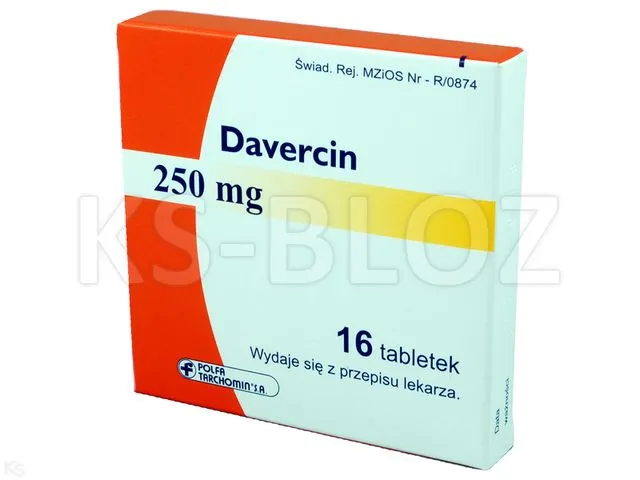
Table of Contents
Package leaflet: Information for the patient
Davercin, 250 mg, film-coated tablets
Erythromycini cyclocarbonas
Please read all of this leaflet carefully before taking this medicine, because it contains
important information for you.
- Keep this leaflet, as you may need to read it again.
- If you have any further questions, please consult your doctor or pharmacist.
- This medicine has been prescribed for a specific individual. Do not share it with others. This medicine may harm another person, even if their symptoms are the same.
- If you experience any adverse reactions, including those not listed in this leaflet, inform your doctor or pharmacist. See section 4.
Table of contents of the leaflet:
What Davercin is and what it is used for
Important information before taking Davercin
How to take Davercin
Possible side effects
How to store Davercin
Contents of the pack and other information
1. What Davercin is and what it is used for
Davercin contains as its active substance cyclic 11,12-carbonate of erythromycin A. It is a macrolide antibiotic that inhibits the growth of bacteria causing infections.
Indications
Davercin is used in the following infections caused by microorganisms sensitive to the antibiotic.
- Upper respiratory tract infections: pharyngitis, sinusitis.
- Lower respiratory tract infections: acute bronchitis or exacerbation of chronic bronchitis, pneumonia.
- Skin and soft tissue infections: abscesses, furuncles, erysipelas.
- Gastrointestinal tract infections caused by Campylobacter spp.
- In dentistry: gingivitis, Vincent's angina.
- Other infections: erythrasma.
2. Important information before using Davercin
When not to use Davercin
- If the patient is allergic (hypersensitive) to erythromycin cyclophosphate or other macrolide antibiotics such as azithromycin, clarithromycin, or to any of the other ingredients of this medicine (listed in section 6);
- If the patient has severe liver failure;
- If the patient is currently taking any of the following medicines:
- lovastatin or simvastatin (medicines used in hypercholesterolemia and coronary artery disease), astemizole or terfenadine (medicines commonly used in treating hay fever and allergies), cisapride (a medicine used to treat gastrointestinal disorders), pimozide (a medicine used in the treatment of psychiatric disorders), ergotamine or dihydroergotamine when using erythromycin, because concomitant use of these medicines may sometimes cause serious disturbances in heart rhythm. Please consult your doctor about alternative medicines that
the patient may take instead of those listed above (see section 2 "Davercin and other
medicines").
- lomitapide (used to reduce elevated blood levels of lipids such as cholesterol and triglycerides). Taking this medicine together with erythromycin may lead to increased activity of liver enzymes (aminotransferases), indicating liver stress and possible impairment of liver function.
- If the patient has abnormally low levels of potassium or magnesium in the blood (hypomagnesemia or hypokalemia);
- If the patient or a family member has a history of heart rhythm disorders (ventricular tachycardia or torsades de pointes arrhythmias) or an abnormality in the electrocardiogram (ECG) known as "long QT syndrome".
Warnings and precautions
If any of the following situations apply to the patient, inform the doctor before taking the medicine:
- The patient is allergic to macrolide antibiotics (e.g. azithromycin, lincomycin, or clindamycin);
- The patient has been diagnosed with liver dysfunction or is taking medicines that may adversely affect liver function;
- The patient suffers from myasthenia gravis, a rare disease causing muscle weakness;
- The patient is taking other medicines known to cause serious disturbances in heart rhythm;
- The patient has heart problems.
If the patient experiences any of the following symptoms during treatment with Davercin, seek medical advice immediately:
- Severe allergic reactions such as maculopapular rash, urticaria, petechiae, laryngeal edema, or bronchospasm. In such cases, seek immediate medical attention; appropriate treatment will be administered;
- Severe, persistent diarrhea;
- Signs of new infection with bacteria resistant to Davercin or fungal infections (superinfection), especially during prolonged antibiotic use;
- Loss of appetite, jaundice, dark urine, itching, or abdominal pain. These symptoms may indicate impaired liver function.
During long-term treatment with Davercin, the doctor usually orders liver function tests.
Davercin and other medicines
Inform your doctor or pharmacist about all medicines currently taken or recently used, as well as any medicines the patient plans to take, including those available without a prescription.
It is essential to inform the doctor if the patient is taking any of the following medicines, as their concomitant use with Davercin is contraindicated:
astemizole or terfenadine (medicines used to treat allergies);
lovastatin, simvastatin (statins – medicines that lower blood cholesterol levels);
cisapride (a medicine used for gastrointestinal motility disorders);
pimozide (medicines used in psychiatric disorders);
ergotamine or dihydroergotamine (medicines used, among others, in migraine treatment).
Inform your doctor if the patient is taking any of the following medicines, because special caution is required when using them with Davercin:
theophylline (a medicine used in the treatment of bronchial asthma);
digoxin (a medicine used in the treatment of heart rhythm disorders);
cyclosporine (a medicine used after organ transplants);
phenytoin (an anticonvulsant medicine);
oral anticoagulants, e.g. warfarin, acenocoumarol, and rivaroxaban (used to thin the blood);
corticosteroids administered orally, by injection, or by inhalation (used to suppress the immune system – useful in treating many conditions);
hydroxychloroquine or chloroquine (used in the treatment of diseases such as rheumatoid arthritis or in the treatment and prevention of malaria). Taking these medicines together with erythromycin may increase the risk of abnormal heart rhythms and other serious adverse cardiac effects;
oral contraceptives: Davercin used together with oral contraceptives may reduce their effectiveness. The doctor will recommend using additional non-hormonal contraceptive methods.
Pregnancy and breastfeeding
If the patient is pregnant or breastfeeding, suspects she may be pregnant, or plans to become pregnant, she should consult a doctor or pharmacist before using this medicine.
The active substance of Davercin may cross the placenta in pregnant women and is excreted in breast milk. Data from studies on the risk of congenital malformations are inconsistent; however, some studies have reported heart defects after using Davercin in early pregnancy.
Erythromycin may be administered to pregnant or breastfeeding women only if, in the doctor's opinion, it is clearly necessary.
Driving and operating machinery
There is no data available on the effect of the medicine on the ability to drive vehicles or operate mechanical equipment.
Davercin contains sodium.
This medicine contains less than 1 mmol (23 mg) of sodium per tablet, meaning it is considered "sodium-free".
3. How to use Davercin
Davercin should always be used as directed by the physician. In case of doubt, consult a doctor or pharmacist.
Adults
The initial dose is usually 750 mg. Subsequently, 500 mg is administered every 12 hours.
In severe infections, the dose may be increased up to 2 g per day (1 g twice daily, every 12 hours).
Children
The initial dose is usually 30 mg/kg body weight. Subsequently, 15 mg/kg body weight is administered every 12 hours.
Davercin tablets may be given to children who are able to swallow a tablet (usually from the age of 6 years). For younger children, Davercin granules for oral suspension are intended.
Elderly patients
Dosage adjustment is not usually required in elderly patients. However, due to the frequent occurrence of conditions affecting liver function or biliary tract in this patient group, caution is recommended.
Duration of treatment
The duration of treatment depends on the severity and type of infection. After symptoms have resolved clinically, the medication should still be continued for an additional 2 to 3 days.
The physician will determine the appropriate duration of treatment, which must be strictly followed.
Method of administration
Davercin tablets should be swallowed whole with a large amount of water.
The medication should be taken on an empty stomach, either 1 hour before a meal or 2 hours after eating.
Accidental overdose of Davercin
Taking a higher dose of Davercin than recommended may cause gastrointestinal symptoms (e.g. vomiting, abdominal pain) or hearing disturbances.
In case of overdose, seek immediate medical attention by contacting a doctor or going to the nearest hospital emergency department. Bring the medication in its original packaging so that healthcare personnel can identify exactly which drug was taken.
Missed dose of Davercin
If a dose of Davercin is missed, take it as soon as possible, then continue with the next dose at the scheduled time.
Do not take a double dose to make up for a missed dose.
Stopping Davercin treatment
It is important that the medication is taken according to the prescribed treatment schedule. Do not stop treatment simply because the patient feels better. Premature discontinuation of treatment may result in recurrence of the infection.
If the patient feels worse during treatment or does not feel well after completing the prescribed course, they should consult their doctor.
In case of any further doubts regarding the use of this medication, consult a doctor or pharmacist.
4. Possible adverse reactions
Like all medicines, this medicine can cause adverse reactions, although not everybody will experience them.
Serious adverse reactions
- allergic reactions
- severe skin rashes which may involve blistering affecting limbs, eyes, mouth, throat and genital organs – occur rarely (in less than 1 in 1,000 people)
- sudden breathing difficulties, speech and swallowing problems, swelling of lips, face and neck, severe dizziness or collapse – frequency unknown (cannot be estimated from available data)
- severe diarrhoea which is prolonged or contains blood, accompanied by stomach pain or fever, which may be a sign of severe colitis – very rare (occurs in less than 1 in 10,000 people)
- abnormal heart function (including palpitations, faster heartbeat, life-threatening heart rhythm disorders known as torsades de pointes, or abnormal heart activity on ECG) or cardiac arrest – frequency unknown (frequency cannot be estimated from available data)
- yellowing of the skin and eyes, feeling tired or fever, dark urine (symptoms of jaundice or hepatitis) – occur rarely (in less than 1 in 1,000 people)
- severe skin reaction: red, peeling rash with subcutaneous nodules and blisters (erythema multiforme) – frequency unknown (cannot be determined from available data).
➢ If any of the above symptoms occur, treatment with the medicine must be stopped immediately and a doctor must be informed or the nearest hospital emergency department visited immediately.
Other adverse reactions that may occur during treatment with Davercin
The following adverse reactions occur rarely (occur in less than 1 in 1,000 people):
- deficiency of certain types of white blood cells;
- transient increase in levels of certain liver enzymes.
The following adverse reactions occur very rarely (occur in less than 1 in 10,000 people):
- abdominal and back pain – may be symptoms of pancreatitis;
- subfebrile condition, dull pain in the lumbar region, skin rash in various locations, frequent urination or reduced urine volume, haematuria (presence of red blood cells in urine causing reddish discoloration) – may be symptoms of interstitial nephritis;
- dizziness, disorientation, hallucinations, nightmares.
The following adverse reactions occur with unknown frequency (frequency cannot be estimated from available data):
- infections caused by bacteria or fungi resistant to the drug;
- hearing disturbances (tinnitus, deafness); these may occur especially after administration of high doses of the drug and (or) in patients with hepatic or renal impairment – such disturbances usually resolve after discontinuation of the drug;
- rapid or irregular heartbeat;
- abdominal pain, nausea, vomiting, diarrhoea – most commonly occur after administration of high doses of the drug.
Reporting of adverse reactions
If any adverse symptoms occur, including any adverse reactions not listed in this leaflet, inform a doctor, pharmacist or nurse. Adverse reactions can be reported directly to the Department of Monitoring Adverse Drug Reactions, Office for Registration of Medicinal Products, Medical Devices and Biocidal Products
Al. Jerozolimskie 181C; 02-222 Warsaw
Tel: +48 22 49 21 301;
Fax: +48 22 49 21 309;
Website: https://smz.ezdrowie.gov.pl
Adverse reactions can also be reported to the marketing authorization holder.
Reporting adverse reactions helps provide more information on the safety of the medicine.
5. How to store Davercin
Keep out of the sight and reach of children.
Store below 25 °C. Keep in the original packaging to protect from moisture.
Do not use the medicine after the expiry date (EXP) stated on the packaging. The expiry date refers to the last day of the specified month.
Medicines must not be disposed of via wastewater or household waste. Ask your pharmacist what to do with medicines no longer required. Such measures help protect the environment.
6. Contents of the pack and other information
The active substance is erythromycin A cyclic 11,12-carbonate.
One coated tablet contains 250 mg of erythromycin.
Excipients:
sodium carboxymethyl starch (type A), talc, magnesium stearate, microcrystalline cellulose.
Coating composition: cellulose acetate phthalate, macrogol 6000, titanium dioxide (E 171), talc.
What Davercin looks like and contents of the pack
White or almost white, round, biconvex coated tablets.
The pack contains 16 coated tablets.
Marketing Authorisation Holder and Manufacturer
Tarchomin Pharmaceutical Works "Polfa" Joint Stock Company
A. Fleminga 2 Street
03-176 Warsaw
Telephone number: (22) 811-18-14
For further information on this medicinal product, please contact the Marketing Authorisation Holder.