Dalacin c
Poland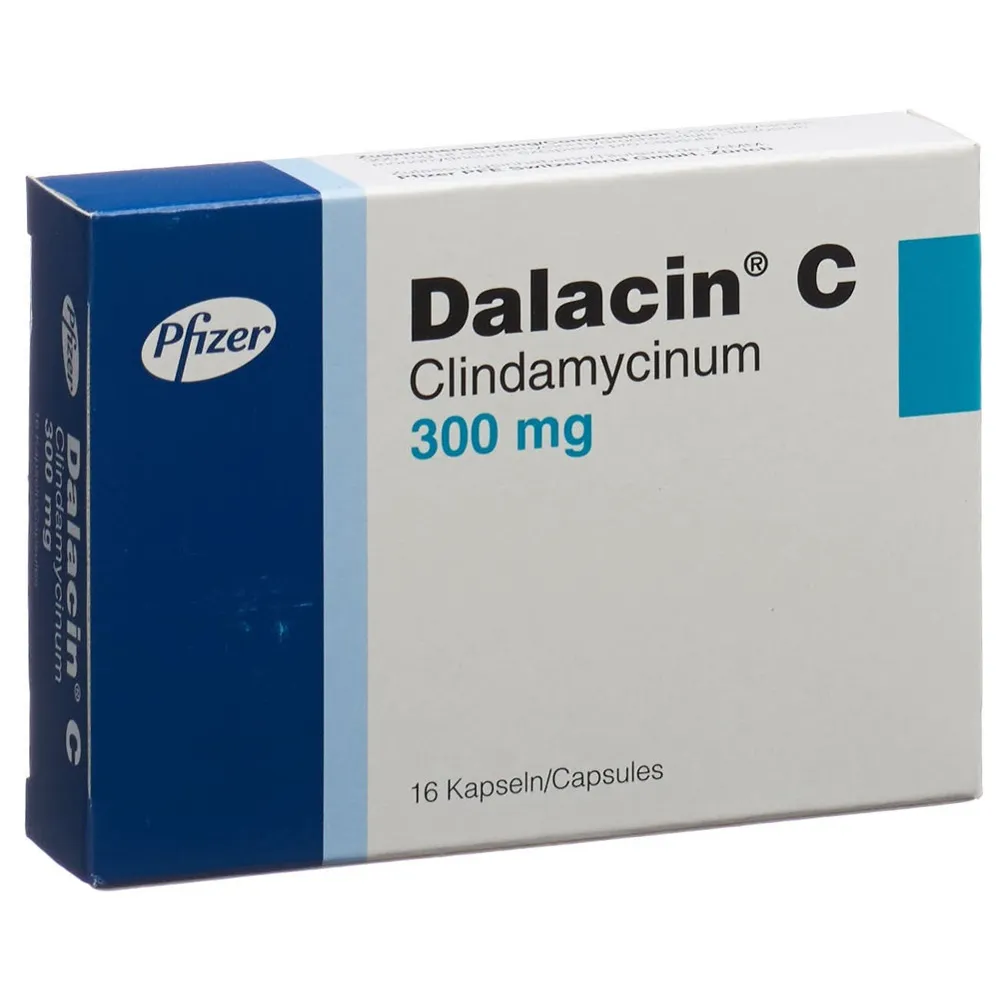
Table of Contents
Package leaflet: Information for the user
DALACIN C, 300 mg, capsules
Clindamycinum
Please read all of this leaflet carefully before taking this medicine, because it contains
important information for you.
- Keep this leaflet, as you may need to read it again.
- If you have any further questions, please ask your doctor, pharmacist, or nurse.
- This medicine has been prescribed for a specific individual. Do not pass it on to others. It may harm someone else, even if their symptoms are the same.
- If you experience any adverse reactions, including any not listed in this leaflet, inform your doctor, pharmacist, or nurse. See section 4.
Contents of the leaflet
- What Dalacin C is and what it is used for
- Important information before taking Dalacin C
- How to take Dalacin C
- Possible side effects
- How to store Dalacin C
- Contents of the pack and other information
1. What Dalacin C is and what it is used for
Dalacin C is an antibiotic. The active substance, clindamycin, acts primarily as a bacteriostatic agent and also has bactericidal activity depending on the concentration at the site of infection and the susceptibility of microorganisms.
Clindamycin has been shown to be effective in the treatment of the following bacterial infections caused by microorganisms sensitive to clindamycin:
- Bone and joint infections,
- Otitis media, pharyngitis, sinusitis,
- Dental and oral infections,
- Lower respiratory tract infections,
- Pelvic and intra-abdominal infections,
- Female genital tract infections,
- Skin and soft tissue infections,
- Peritonitis,
- Endocarditis and sepsis.
In severe cases, treatment with the intravenous form of the drug is recommended.
In patients with endocarditis or sepsis, treatment should be initiated with intravenous administration of clindamycin.
2. Important information before using Dalacin C
When not to use Dalacin C
- If the patient is allergic to clindamycin, lincomycin (patients allergic to one of these substances may also be allergic to the other – so-called cross-allergy), or to any of the other ingredients of this medicine (listed in section 6).
Warnings and precautions
Special caution is required when using Dalacin C in patients:
- who are allergic to penicillin,
- with impaired liver function,
- with neuromuscular conduction disorders (myasthenia gravis, Parkinson's disease),
- with a history of gastrointestinal disorders (e.g. previous colitis).
During prolonged treatment (for more than 3 weeks), regular monitoring of blood morphology and liver and kidney function tests is necessary.
Severe kidney function disorders may occur. Inform the doctor about all concomitantly used medicines and any kidney problems. If the patient experiences reduced urine output or fluid retention causing swelling of the feet, ankles or legs, shortness of breath or nausea, contact the doctor immediately.
Due to the risk of oesophagitis and oesophageal ulceration, it is important that Dalacin C is always taken exactly as described in section 3.
Prolonged or repeated use of clindamycin may lead to overgrowth of drug-resistant bacteria or yeasts.
Dalacin C should not be used to treat:
respiratory tract infections caused by viruses,
meningitis, due to insufficient antibiotic concentration achieved in cerebrospinal fluid.
If the patient develops severe skin reactions such as drug reaction with eosinophilia and systemic symptoms (DRESS) (a severe, life-threatening allergic reaction), Stevens-Johnson syndrome (a disease characterized by numerous skin blisters), or acute generalized exanthematous pustulosis (a disease characterized by numerous fluid-filled pustules on swollen and red skin), the patient must stop taking Dalacin C and immediately consult a doctor.
The patient should consult a doctor if diarrhoea develops during or within a few weeks after treatment, especially if it is severe and persistent. This may be a sign of pseudomembranous colitis (in most cases caused by Clostridioides difficile). This condition, a complication of antibiotic therapy, may be life-threatening. Once pseudomembranous colitis is diagnosed, the doctor should immediately discontinue Dalacin C and initiate appropriate treatment (oral metronidazole is given, and vancomycin in severe cases). Do not take agents that inhibit intestinal peristalsis or have constipating effects.
Dalacin C and other medicines
Inform your doctor or pharmacist about all medicines currently or recently taken, as well as any medicines planned for use.
Microorganisms resistant to lincomycin are also resistant to clindamycin (so-called cross-resistance).
Due to its neuromuscular transmission blocking properties, clindamycin may enhance the effect of muscle relaxants (e.g. ether, tubocurarine, pancuronium bromide). This may lead to unexpected, life-threatening complications during surgical procedures.
If the patient is taking clindamycin together with medicines such as rifampicin (an antibiotic used to treat several types of bacterial infections), St. John's wort (used as a natural antidepressant and mood enhancer), phenytoin (an anticonvulsant), or carbamazepine (used in the treatment of epilepsy and neuropathic pain), monitoring by the treating physician is recommended.
The effectiveness of oral contraceptives taken simultaneously with clindamycin has been questioned. Therefore, additional contraceptive methods should be used during treatment with this medicine.
Warfarin or similar medicines affecting blood coagulation: the patient may have an increased tendency to bleeding. The doctor may decide to perform regular blood tests to monitor blood clotting.
Dalacin C with food and drink
Dalacin C is rapidly and almost completely absorbed from the gastrointestinal tract. Food taken simultaneously slightly prolongs the absorption period. When administered on an empty stomach, the drug reaches maximum serum concentration after approximately 45–60 minutes; when administered after a meal, after approximately 2 hours.
Pregnancy and breastfeeding
If the patient is pregnant or breastfeeding, suspects she may be pregnant, or is planning to have a child, she should consult a doctor or pharmacist before using this medicine.
The doctor may prescribe Dalacin C during pregnancy only if clearly necessary.
Clindamycin passes into human milk.
Serious adverse effects in breastfed infants cannot be excluded. Therefore, the doctor will decide whether the patient may take clindamycin and breastfeed simultaneously.
Driving and operating machinery
There is no data available on the effect of Dalacin C on the ability to drive or operate machinery.
Dalacin C contains lactose
Patients with intolerance to certain sugars should consult their doctor before using Dalacin C.
3. How to use Dalacin C
This medicine should always be used exactly as directed by your doctor. If in doubt, consult your doctor, pharmacist, or nurse.
Adults and adolescents over 14 years of age
Depending on the site and severity of infection, adults and adolescents over 14 years of age should receive clindamycin in a daily dose of 2 to 6 capsules of 300 mg (i.e. 600 mg to 1800 mg per day), divided into 3 or 4 doses administered throughout the day.
If the recommended daily dose does not exceed 900 mg, or when clindamycin needs to be administered to children under 14 years of age, Dalacin C formulations with lower active substance content are available (75 mg capsules, 150 mg capsules, granules for oral solution 75 mg/5 ml). When precise dosing in mg/kg body weight cannot be achieved using capsules, clindamycin in the form of granules for oral solution should be used.
Capsules containing clindamycin hydrochloride should only be used in children who are able to swallow a capsule whole.
The doctor will determine the clindamycin dosage based on the patient's total body weight, regardless of excess weight.
Additionally, Dalacin C is also available as an injection and infusion solution at 150 mg/ml.
For infections caused by beta-haemolytic streptococci, the medicine should be taken for at least 10 days.
Method of administration
The capsules should be taken whole, with a full glass of water, and at least 30 minutes before lying down, to avoid potential irritation of the oesophagus.
Use in patients with hepatic impairment
In patients with moderate to severe liver dysfunction, the half-life of clindamycin is prolonged. Dose reduction is not necessary when Dalacin C is administered every 8 hours. However, in patients with advanced liver failure, the physician should monitor clindamycin plasma concentrations. Depending on the results, dose reduction or prolongation of dosing intervals may be required.
Use in patients with renal impairment
In patients with renal impairment, a slight prolongation of clindamycin half-life may occur, but this does not generally necessitate dose reduction. Even in patients with severe renal impairment, dose adjustment is not required when Dalacin C is administered every 8 hours. However, in patients with severe renal impairment or anuria, the physician should monitor clindamycin plasma concentrations. Depending on the results, dose reduction or prolongation of dosing intervals to 8 or even 12 hours may be necessary.
Use in patients undergoing haemodialysis
Clindamycin is not removed from the body during haemodialysis. Therefore, no additional dose is required before or after dialysis.
Use of a higher than recommended dose of Dalacin C
In case of accidental overdose of Dalacin C, seek immediate medical advice from a doctor or pharmacist. The doctor will take appropriate measures, such as gastric lavage.
Overdose of Dalacin C may cause severe allergic reactions (serum sickness-like reactions, angioedema, anaphylactic reactions up to anaphylactic shock).
To date, no symptoms of overdose have been observed. There is no known antidote for overdose with Dalacin C. Haemodialysis and peritoneal dialysis are ineffective.
Missed dose of Dalacin C
Do not take a double dose to make up for a missed dose.
If a dose is missed, take the medicine as soon as possible, unless it is almost time for the next dose.
Discontinuation of Dalacin C
If you have any further questions about the use of this medicine, consult your doctor or pharmacist.
4. Possible adverse reactions
Like all medicines, this medicine can cause adverse reactions, although not everyone experiences them.
Contact a doctor immediately if the patient experiences:
- severe, persistent or bloody diarrhoea (which may be associated with abdominal pain or fever). This is an adverse reaction that may occur during or after antibiotic treatment and may be a sign of a serious intestinal inflammation*.
- symptoms of a severe allergic reaction, such as sudden wheezing, difficulty breathing, dizziness, swelling of the eyelids, face, lips, throat or tongue, rash or itching (especially if affecting the whole body)*.
- potentially life-threatening skin rashes:
- blistering and peeling of large areas of skin, fever, cough, malaise and swelling of gums, tongue or lips*
- extensive rash with blisters and peeling of large areas of skin, particularly around the mouth, nose, eyes and genital organs (Stevens-Johnson syndrome)* and a more severe form causing widespread skin detachment (toxic epidermal necrolysis)*
- widespread red rash with small blisters containing pus (exfoliative or bullous dermatitis)*
- fever, swollen lymph nodes or skin rash, which may be symptoms of a condition known as DRESS (drug reaction with eosinophilia and systemic symptoms), which can be severe and life-threatening. DRESS symptoms usually begin within a few weeks of exposure to clindamycin*
- rare skin eruptions characterised by sudden appearance of red skin areas with small pustules (small blisters filled with whitish-yellow fluid) (acute generalised exanthematous pustulosis, AGEP)*
- skin rash presenting with blisters and resembling small spots (central dark spots surrounded by a lighter area, with a dark ring around the edge), known as erythema multiforme
- yellowing of the skin and whites of the eyes (jaundice)*
- significant decrease in blood cells which may cause bruising or bleeding, or weakened immune system (agranulocytosis)*, decreased number of white blood cells (leukopenia)*, decreased number of platelets (thrombocytopenia)*
- fluid retention causing swelling of legs, ankles or feet, shortness of breath or nausea.
Other possible adverse reactions may include:
Common (may occur in up to 1 in 10 people)
- blood clots (phlebitis)
- diarrhoea
- increased number of white blood cells in blood (eosinophilia)
- abnormal liver function test results
- rash characterised by flat, red areas on the skin covered with small bumps
Uncommon (may occur in up to 1 in 100 people)
- cardiac arrest
- low blood pressure
- vomiting
- abdominal pain
- nausea
- taste disturbances
- urticaria
- pain, abscess at the injection site
Rare (may occur in up to 1 in 1,000 people)
- itching
Frequency not known (frequency cannot be estimated from available data)
- oesophageal mucosal inflammation*, open sores or lesions in the oesophageal mucosa*
- vaginal and perivaginal infection*
- cutaneous vasculitis*
- vesicular rash resembling chickenpox (vesicular eruption)*
- skin reaction characterised by symmetrical, clearly defined redness in skin folds, particularly in the buttocks, groin and armpits*
- irritation at the injection site*
* Adverse reactions observed after marketing of the medicine.
Adverse reactions observed only during administration of the injectable form of the medicine.
Adverse reactions observed only during administration of the oral form of the medicine.
The occurrence of these adverse reactions is more likely if Dalacin C is
administered while lying down and/or without taking sufficient water.
Rare cases of adverse reactions observed after too rapid intravenous administration of the medicine.
Reporting of adverse reactions
If any adverse reactions occur, including any possible adverse reactions
not listed in this leaflet, inform your doctor or pharmacist. Adverse reactions can be reported directly to the Department of Monitoring Adverse Drug Reactions of the Office for Registration of Medicinal Products, Medical Devices
and Biocidal Products
Al. Jerozolimskie 181C
02-222 Warsaw
Tel.: +48 22 49 21 301
Fax: +48 22 49 21 309
Website: https://smz.ezdrowie.gov.pl
Adverse reactions can also be reported to the marketing authorisation holder or its representative.
Reporting adverse reactions helps to provide more information on the safety of the medicine.
5. How to store Dalacin C
Store below 30°C.
Keep the medicine in a place out of sight and reach of children.
Do not use this medicine after the expiry date stated on the packaging after "Expiry date (EXP)". The expiry date refers to the last day of the stated month.
Medicines must not be disposed of via wastewater or household waste. Ask your pharmacist how to dispose of medicines no longer in use. This will help protect the environment.
6. Contents of the pack and other information
What Dalacin C contains
The active substance is clindamycin. Each capsule contains 300 mg of clindamycin
in the form of clindamycin hydrochloride.
The other ingredients are: magnesium stearate, maize starch, talc, lactose monohydrate.
Capsule shell composition: titanium dioxide (E 171), gelatin.
What Dalacin C looks like and contents of the pack
Dalacin C 300 mg hard capsules: two-piece, white capsule marked with "CLIN 300" and "Pfizer".
Pack: PVC/Al blisters containing 16 or 20 capsules, packed in a cardboard carton.
Marketing Authorisation Holder
Pfizer Europe MA EEIG, Boulevard de la Plaine 17, 1050 Bruxelles, Belgium
Manufacturer
Fareva Amboise, Zone Industrielle, 29 route des Industries, 37530 Pocé-sur-Cisse, France
For further information about this medicinal product, contact the Marketing Authorisation Holder's representative:
Pfizer Polska Sp. z o.o.; tel. 22 335 61 00
Detailed and up-to-date information about this product can be obtained by scanning the QR code located on the outer packaging using a mobile device. The same information is also available at the URL: https://pfi.sr/ulotka-dalacinc300 and on the website of the Office for Registration of Medicinal Products, Medical Devices and Biocidal Products http://www.urpl.gov.pl