Dacepton
Poland
Table of Contents
Patient Information Leaflet
Dacepton, 10 mg/ml, solution for injection in cartridge
Apomorphini hydrochloridum hemihydricum
Please read all of this leaflet carefully before using this medicine, because it contains
important information for the patient.
- Keep this leaflet, as you may need to read it again.
- If you have any further questions, please ask your doctor, nurse, or pharmacist.
- This medicine has been prescribed for a specific individual. Do not pass it on to others. It may harm other people, even if their symptoms are the same.
- If you experience any side effects, including any not listed in this leaflet, tell your doctor, nurse, or pharmacist. See section 4.
Contents of the leaflet
- What Dacepton is and what it is used for
- Important information before using Dacepton
- How to use Dacepton
- Possible side effects
- How to store Dacepton
- Contents of the pack and other information
1. What Dacepton is and what it is used for
Dacepton contains apomorphine as a solution for injection. The medicine is administered subcutaneously (under the skin) only using the dedicated D-mine Pen injector.
The active substance in Dacepton is apomorphine hydrochloride hemihydrate. Each millilitre of solution contains 10 mg of apomorphine hydrochloride hemihydrate.
Apomorphine hydrochloride belongs to a group of medicines known as dopamine agonists. Dacepton is used in the treatment of Parkinson's disease. Apomorphine helps reduce the duration of "off" periods—episodes of immobility—in patients previously treated with levodopa (another medicine used in Parkinson's disease) and/or other dopamine agonists.
Your doctor or nurse will help you recognize the symptoms indicating when the medicine should be used.
Despite its name, apomorphine does not contain morphine.
2. Important information before using Dacepton
When NOT to use Dacepton
- if the patient is allergic to apomorphine or any of the other ingredients of this medicine (listed in section 6);
- if the patient is under 18 years of age;
- if the patient has difficulty breathing;
- if the patient has dementia or Alzheimer's disease;
- if the patient has a psychiatric disorder with symptoms such as hallucinations, delusions, unusual thoughts, or loss of contact with reality;
- if the patient has liver disease;
- if the patient has severe dyskinesia (involuntary movements) or severe dystonia (inability to perform movements), despite treatment with levodopa;
- if it is known that the patient or a family member has abnormalities on ECG (long QT syndrome). The doctor should be informed;
- if the patient is taking ondansetron (a medicine used to treat nausea and vomiting).
Warnings and precautions
Before using Dacepton, the doctor will perform an ECG (electrocardiogram) and ask about any other medicines the patient is currently taking. The ECG will be repeated on the first day of treatment and then at any other time during treatment if the doctor considers it necessary. The doctor will ask questions about the patient's medical conditions, especially heart-related conditions. Some questions and tests may be repeated at each visit. If the patient experiences any heart-related symptoms, such as palpitations, fainting, or feeling like they are about to faint, they should immediately inform the doctor. The doctor should also be informed immediately if the patient develops diarrhoea or starts taking any new medicine.
Before starting Dacepton, discuss with the doctor, nurse, or pharmacist:
- if the patient has kidney disease;
- if the patient has lung disease;
- if the patient has heart disease;
- if the patient has low blood pressure or feels weak and dizzy upon standing;
- if the patient is taking medicines for high blood pressure;
- if the patient has nausea or vomiting;
- if the patient with Parkinson's disease has psychiatric disturbances such as hallucinations and disorientation;
- if the patient is elderly or frail.
The patient should inform the doctor if the patient or a family member/carer notices the presence of impulses or urges to behave in ways that are unusual and that the patient cannot resist, such as an impulse, need, or temptation to perform actions that may be harmful to themselves or others. These symptoms are known as impulse control disorders and may include pathological gambling, excessive eating or spending, abnormally increased sex drive, or increased sexual interest and behaviour. The doctor may consider it necessary to adjust the dose or discontinue treatment.
Some patients may experience symptoms resembling addiction, involving the use of large amounts of Dacepton and other medicines used to treat Parkinson's disease.
Children and adolescents
Dacepton must not be used in children and adolescents under 18 years of age.
Dacepton and other medicines
Tell the doctor or pharmacist about all medicines the patient is currently using, has recently used, or plans to use.
Before using Dacepton, consult a doctor or pharmacist.
If the patient is taking medicines known to affect heart function. These include medicines used for heart rhythm disorders (e.g. quinidine and amiodarone), depression (including tricyclic antidepressants such as amitriptyline and imipramine), bacterial infections (macrolide antibiotics such as erythromycin, azithromycin, and clarithromycin), and domperidone.
If the patient is taking ondansetron (a medicine used to treat nausea and vomiting), because this may lead to severe lowering of blood pressure and loss of consciousness.
If the patient is using Dacepton together with other medicines, it may alter the effects of those medicines. This is particularly important in the case of:
- medicines such as clozapine, used to treat certain psychiatric disorders;
- medicines that lower blood pressure;
- other medicines used in Parkinson's disease.
The doctor will inform the patient if a dose adjustment of apomorphine or other medicines is required.
If the patient is taking levodopa (another medicine used in Parkinson's disease) as well as apomorphine, the doctor should regularly monitor blood test results.
Taking Dacepton with food and drink
Food and drink do not affect the action of Dacepton.
Pregnancy and breastfeeding
If the patient is pregnant, breastfeeding, suspects she may be pregnant, or is planning to have a child, she should consult her doctor, nurse, or pharmacist before using this medicine.
Dacepton should not be used during pregnancy unless absolutely necessary.
It is not known whether Dacepton passes into human breast milk. If the patient is breastfeeding or intends to breastfeed, she should talk to her doctor. The doctor will advise whether she should continue breastfeeding or stop it and continue taking the medicine, or discontinue the medicine.
Driving and using machines
Dacepton may cause drowsiness and sudden sleepiness. Do not drive or operate any tools or machinery if Dacepton affects the patient in this way.
Dacepton contains sodium metabisulfite
Sodium metabisulfite may in rare cases cause allergic reactions such as skin rash or itching, difficulty breathing, swelling of the eyelids, face or lips, or swelling or redness of the tongue. If such adverse effects occur, go immediately to the nearest hospital emergency department.
Dacepton contains less than 1 mmol of sodium (23 mg) per 10 ml, meaning the medicine is considered "sodium-free".
3. How to use Dacepton
This medicine should always be used exactly as directed by the doctor. If in doubt, consult the doctor, nurse, or pharmacist.
Before using Dacepton, the doctor will ensure that the patient tolerates this medicine and the antiemetic medicine that must be taken simultaneously.
To prevent nausea and vomiting, treatment with a medicine containing domperidone should be started at least 2 days before taking Dacepton.
Do not use Dacepton if:
- The solution has changed colour to green.
- The solution is cloudy or solid particles are visible.
Recommended dose:
The amount of Dacepton to be administered and the number of injections per day depend on the individual needs of the patient. The doctor will discuss this with the patient and inform them about the required doses and frequency of administration.
The optimal dose for the patient will be determined during a visit to a specialist clinic.
- The usual dose ranges from 3 mg to 30 mg.
- The patient may require a dose of up to 100 mg per day.
- Typically, the patient will require 1 to 10 injections each day.
- A single injection should not contain more than 10 mg.
The D-*mine* Pen injector, used for administering Dacepton as an injection solution in a cartridge, is not suitable for patients requiring doses greater than 6 mg per injection. Other medicines should be used for such patients.
There is no need to dilute Dacepton before administration. It must not be mixed with other medicines.
- The doctor will inform the patient about the dose and frequency of Dacepton administration. The doctor will also advise on how to adjust the dose if necessary. Do not change the dose of Dacepton or use it more frequently unless instructed by the doctor.
- The patient and caregiver will receive detailed instructions on how to prepare and administer the medicine, with special attention to the correct use of the appropriate injector.
Before using Dacepton
Warning: This package does NOT contain an injector or needles.
Dacepton in the injector is intended for use exclusively with the D-*mine* Pen injector and single-use needles, as described in the Injector Instructions for Use.
Description of the injector
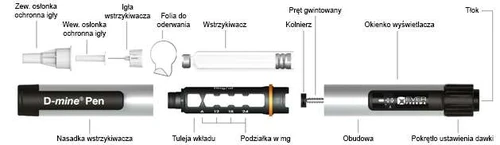
- Always use a new needle for each injection to prevent contamination.
- Do not share needles or injectors with other people.
- Before administering Dacepton, become familiar with the injector and its Instructions for Use to ensure proper handling.
- If the injector is damaged or not functioning properly (due to a mechanical defect), refer to the information provided in the Injector Instructions for Use.
Where and how to inject Dacepton
- Wash your hands.
- Before using the injector, prepare surgical swabs and one needle with a protective needle shield.
- Follow the Instructions for Use of the injector.
Preparing the injector / replacing the cartridge
Remove the injector from the packaging and remove the protective shield.
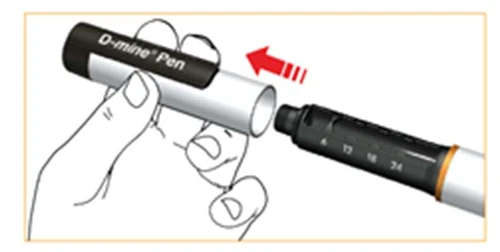
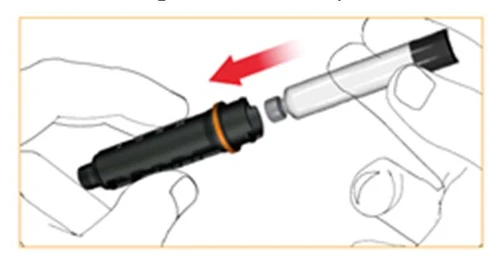
Remove the cartridge shield by turning it clockwise.
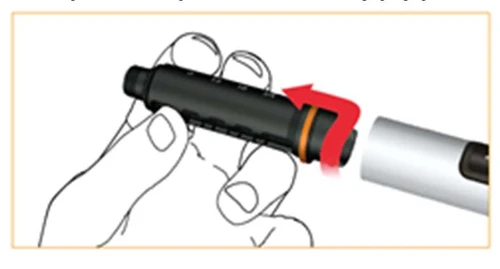
Insert the new cartridge into the shield.
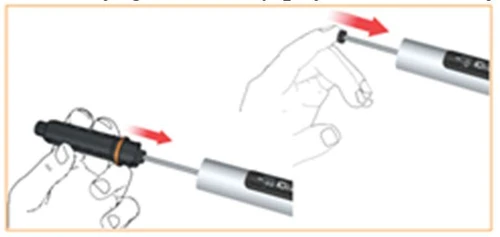
Push the threaded rod fully in, preferably using the fingertip on the collar.
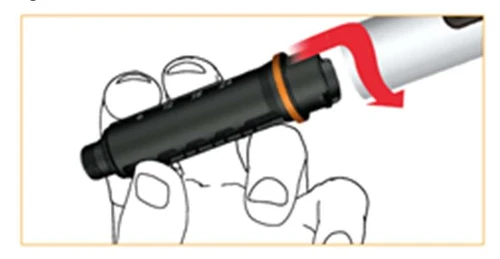
Insert the cartridge sleeve into the housing and lock it by turning counterclockwise.
Attaching the injector needle
Follow the needle's Instructions for Use. Peel off the protective foil.
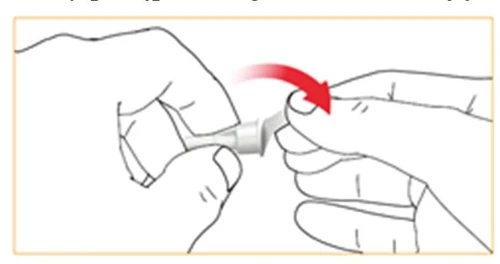
Click / attach the needle to the cartridge housing.
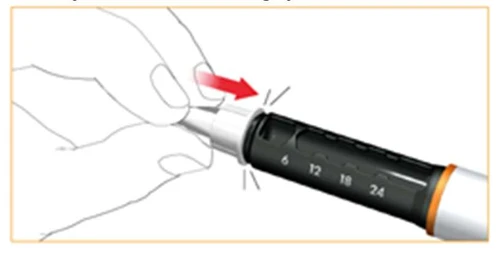
Remove the outer protective needle shield. Keep it for safe needle disposal after the injection.
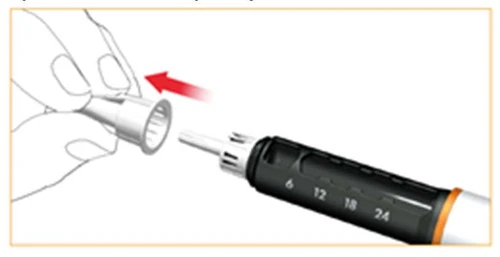
Remove and discard the inner protective needle shield.
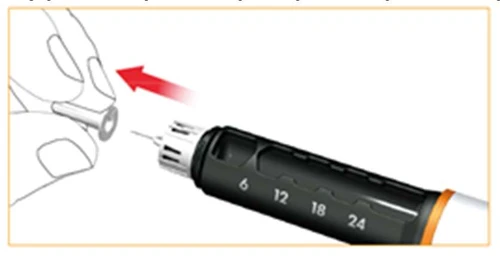
Priming and function check
Before use, remove air from the cartridge. Set a test dose by turning the dose knob. Check the dose setting by viewing the dose window vertically from above, not at an angle; the symbol "" must be clearly visible. This step is called priming and is important to ensure the full dose of medicine will be delivered when the injector is used.
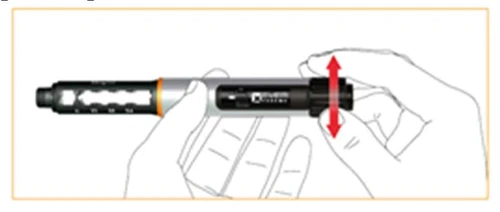
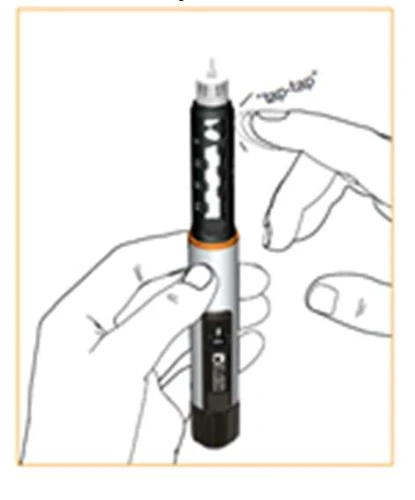
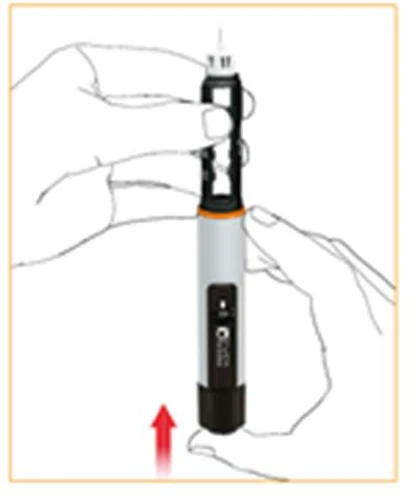
To check the injector's function, hold it vertically and gently tap the cartridge housing to allow air bubbles to rise to the top.
Press the plunger.
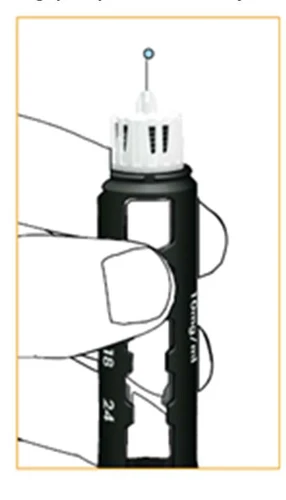
A few drops of medicine should emerge from the needle. If this does not happen, repeat the previous step.
Setting the dose
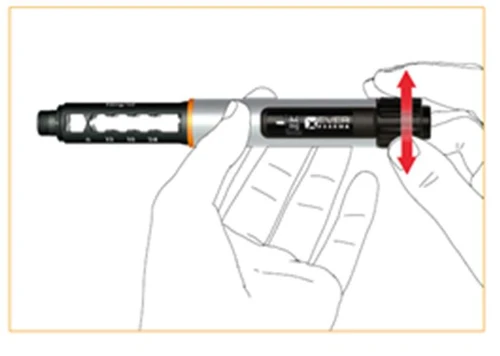
Set the required dose by turning the dose knob clockwise. Adjust the dose by turning the knob counterclockwise.
Administering the medicine
- Clean the skin at the intended injection site and surrounding area with a surgical swab.
- Dacepton should be injected into the front of the waist (abdomen) or the outer surface of the thigh, under the skin (subcutaneously), as demonstrated by the doctor or nurse.
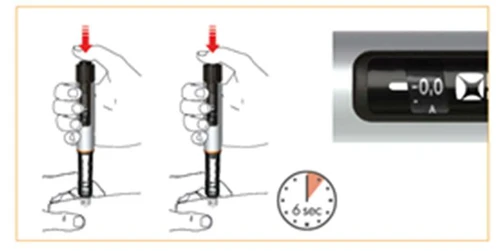
To administer the injection, press the plunger fully. Keep the plunger completely depressed during injection. After delivering the full dose, wait 6 seconds before slowly withdrawing the needle. During the 6-second wait, the plunger may remain depressed or be released slowly. To confirm the full dose has been administered, check that the value "0.0" is visible in the dose window.
- Always rotate injection sites when administering Dacepton. This reduces the risk of skin reactions at the injection site. Do not inject Dacepton into areas of skin that are painful, red, infected, or damaged.
- The medicine must never be injected directly into a vein (intravenously) or into muscle (intramuscularly).
After using Dacepton
After each injection, remove and dispose of the needle safely (see section 5 for safe disposal instructions).
Removing the injector needle after each injection
Carefully place the outer protective needle shield back over the needle.
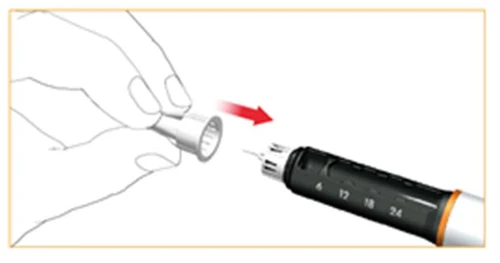
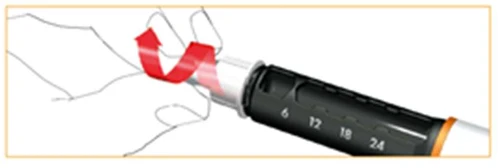
Turn the injector needle by rotating the outer protective shield clockwise and safely remove the needle.
Alternative method:
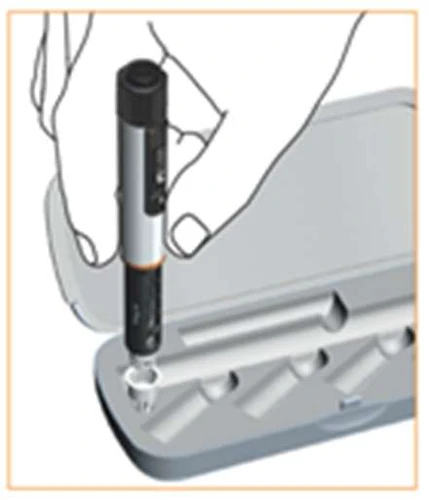
Place the outer protective needle shield into the appropriate compartment of the provided box, with the opening of the shield facing upwards. Carefully insert the needle (attached to the injector) into the opening of the shield. Without touching the shield, press firmly and turn the injector counterclockwise to detach the needle.
After each use, place the cap back onto the injector.
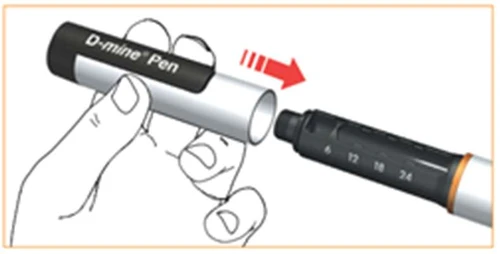
- Leave the medicine cartridge inside the injector.
- A new medicine cartridge can be used for up to 15 days (for more information, see section 5, "How to store Dacepton").
- If the remaining solution volume is too small to administer the next dose, remove and discard the cartridge.
- Remove the needle safely, as described in the Injector Instructions for Use.
Using more than the recommended dose of Dacepton
- Contact your doctor or the nearest hospital emergency department immediately.
- An overdose may cause slow heart rate, increased nausea, excessive drowsiness, and/or breathing difficulties. Low blood pressure may also lead to fainting or dizziness, especially when standing up. Lying down with legs elevated may help.
Missing a dose of Dacepton
Take the next dose at the usual time. Do not take a double dose to make up for a missed dose.
Stopping Dacepton treatment
Do not stop using Dacepton without first consulting your doctor.
If you have any further questions about the use of this medicine, consult your doctor, nurse, or pharmacist.
4. Possible adverse effects
Like all medicines, this medicine can cause adverse effects, although not everyone will experience them.
If an allergic reaction occurs, stop using Dacepton
and seek immediate medical attention by contacting your doctor or the nearest hospital emergency department.
Symptoms of an allergic reaction may include:
- rash,
- difficulty breathing, or
- a feeling of pressure in the chest,
- swelling of the eyelids, face, or lips,
- swelling or redness of the throat or tongue.
Dacepton may sometimes cause the following adverse effects:
Very common (may affect more than 1 in 10 people):
- Subcutaneous nodules at the injection site, which are painful, bothersome, and may be red and itchy. To avoid these nodules, it is recommended to change the injection site each time the needle is inserted.
- Hallucinations (seeing, hearing, or feeling things that do not exist).
Common (may affect up to 1 in 10 people):
- Nausea or vomiting, especially at the beginning of Dacepton treatment. If the patient is taking domperidone and still experiences nausea, or if the patient is not taking domperidone but feels nauseous, the doctor or nurse should be informed as soon as possible.
- Feeling tired or excessively sleepy.
- Confusion or hallucinations.
- Yawning.
- Dizziness or lightheadedness upon standing.
Uncommon (may affect up to 1 in 100 people):
- Exaggerated involuntary movements or increased tremors during "on" periods.
- Hemolytic anemia, abnormal breakdown of red blood cells in blood vessels or other parts of the body. This uncommon adverse effect may occur in patients also taking levodopa.
- Sudden sleep attacks.
- Rash.
- Difficulty breathing.
- Ulceration at the injection site.
- Decreased number of red blood cells, leading to pale-yellow skin discoloration and symptoms such as weakness or shortness of breath.
- Decreased number of platelets, increasing the risk of bleeding or bruising.
Rare (may affect up to 1 in 1,000 people):
- Allergic reaction.
- Eosinophilia, i.e., abnormally high levels of white blood cells in the blood or other body tissues.
Frequency not known (cannot be estimated from available data):
- Swelling of the legs, feet, or fingers.
- Fainting.
- Aggression, agitation.
- Headache.
- Inability to resist an impulse, urge, or desire to perform certain behaviors that may be harmful to the patient or others, including:
- inability to resist the urge to gamble despite serious personal or family consequences,
- changes in sexual interests and behaviors of significant concern to the patient or others, such as increased libido,
- uncontrolled excessive shopping or spending,
- binge eating (consuming large amounts of food in a short time) or compulsive eating (eating more food than usual and more than needed to satisfy hunger).
Patients should inform their doctor if they experience any of these behaviors. The doctor will
provide guidance on how to manage or reduce the symptoms.
Reporting adverse effects
If any adverse symptoms occur, including any not listed
in this leaflet, inform your doctor, pharmacist, or nurse. Adverse effects
can be reported directly to the Department of Monitoring Adverse Drug Reactions of the Office for Registration of Medicinal Products, Medical Devices and Biocidal Products:
Al. Jerozolimskie 181C, 02-222 Warsaw, phone: +48 22 49-21-301, fax: +48 22 49-21-309,
Website: https://smz.ezdrowie.gov.pl
Adverse effects can also be reported to the marketing authorization holder.
Reporting adverse effects helps to provide more information on the safety of this medicine.
5. How to store Dacepton
Keep this medicine out of sight and reach of children.
Do not use this medicine after the expiry date stated on the cardboard box and label following the abbreviation: EXP. The expiry date refers to the last day of the stated month.
Do not store above 25°C.
Do not store in a refrigerator or freeze.
Store the patch in the outer packaging to protect it from light.
Storage conditions remain the same after first opening and during intervals between applying subsequent doses.
If a patient has started using a new patch, it may be used for up to 15 days.
After this time, do not reuse the patch. A new patch must be used.
Do not use the medicine if the solution has turned green. The medicine should only be used if the solution is clear, colourless to yellowish, and free from solid particles.
Medicines must not be disposed of via wastewater or household waste. Ask your pharmacist how to dispose of medicines no longer required. Such measures help protect the environment.
6. Contents of the package and other information
What Dacepton contains
The active substance is apomorphine hydrochloride monohydrate. Each millilitre of Dacepton contains 10 mg of apomorphine hydrochloride monohydrate.
Dacepton is available in cartridges with a capacity of 3 ml, containing 30 mg of apomorphine hydrochloride monohydrate.
The other ingredients are:
- sodium metabisulfite (E 223)
- hydrochloric acid (for pH adjustment)
- sodium hydroxide (for pH adjustment)
- water for injections
For information on sodium metabisulfite, see section "Dacepton contains sodium metabisulfite" in point 2.
What Dacepton looks like and contents of the pack
Dacepton is a clear, colourless to slightly yellow solution for injection, free from particulate matter, supplied in cartridges made of colourless type I glass, with a bromobutyl rubber stopper, an aluminium cap (flip-off) and a seal made of bromobutyl rubber/synthetic polyisoprene, placed on a plastic tray in a cardboard box.
Each cartridge contains 3 ml of solution for injection. The cardboard box contains 5 cartridges.
Marketing Authorisation Holder
EVER Neuro Pharma GmbH
Oberburgau 3
4866 Unterach am Attersee
Austria
Manufacturers
- EVER Neuro Pharma GmbH, Oberburgau 3, 4866 Unterach am Attersee, Austria
- EVER Pharma Jena GmbH, Otto-Schott-Str. 15, Jena 07745, Germany
- EVER Pharma Jena GmbH, Brüsseler Str. 18, Jena 07747, Germany
This medicinal product is authorised in the European Economic Area and the United Kingdom (Northern Ireland) under the following names:
Austria Dacepton® 10 mg/ml Injektionslösung in einer Patrone
Belgium Dacepton® 10 mg/ml oplossing voor injectie in een patroon
Bulgaria Дацептон® 10 mg/ml инжекционен разтвор в патрон
Czech Republic Dacepton®
Germany Dacepton® 10 mg/ml Injektionslösung in einer Patrone
Denmark Dacepton®
Spain Dacepton® 10 mg/ml solución inyectable en cartucho EFG
Finland Dacepton® 10 mg/ml injektioneste, liuos, sylinteriampulli
France Dopaceptin® 10 mg/ml Solution injectable en cartouche
Greece Dopaceptin® 10 mg/ml ενέσιμο διάλυμα σε φυσίγγιο
Croatia Dacepton® 10 mg/ml otopina za injekciju u ulošku
Hungary Dacepton® 10 mg/ml oldatos injekció patronban
Ireland Dacepton® 10 mg/ml solution for injection in cartridge
Italy Dopaceptin® 10 mg/ml soluzione iniettabile in cartuccia
Luxembourg Dacepton® 10 mg/ml Solution injectable en cartouche
Netherlands Dacepton® 10 mg/ml oplossing voor injectie in een patroon
Norway Dacepton®
Poland Dacepton® 10 mg/ml roztwór do wstrzykiwań we wkładzie
Portugal Dacepton® 10mg/ml solução injetável em cartucho
Romania Dacepton® 10 mg/ml soluţie injectabilă în cartuş
Sweden Dacepton® 10 mg/ml injektionsvätska, lösning i cylinderampull
Slovenia Dacepton® 10 mg/ml raztopina za injiciranje v vložku
Slovakia Dacepton® 10mg/ml Injekčný roztok v náplni
United Kingdom (Northern Ireland) Dacepton® 10 mg/ml solution for injection in cartridge