Cytotec
Poland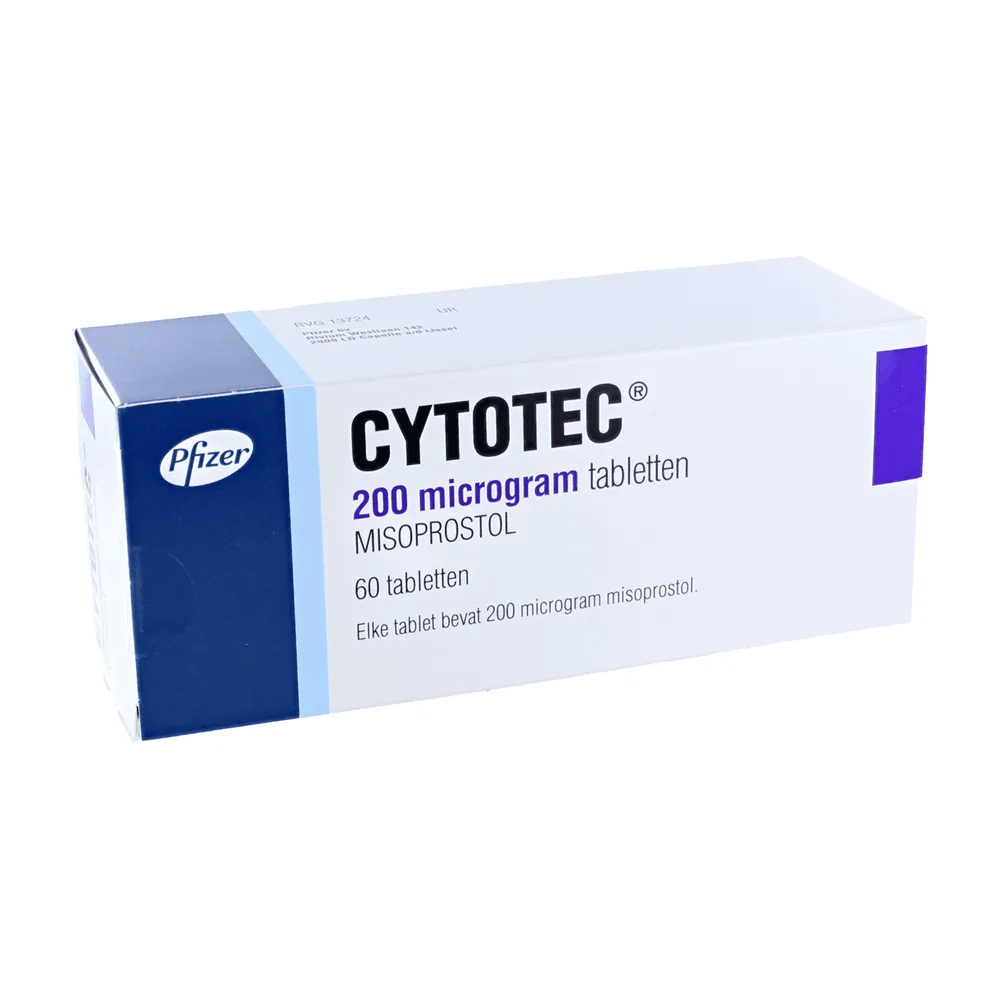
Table of Contents
Warning! Keep the package leaflet. Information on the immediate packaging is in a foreign language.
Cytotec
200 µg, tablets
Misoprostol
Please read the entire leaflet carefully before using this medicine, as it contains
important information for the patient.
- Keep this leaflet for future reference.
- If you have any questions, consult your doctor or pharmacist.
- This medicine has been prescribed for a specific individual. Do not pass it on to others. The medicine may harm someone else, even if their symptoms are similar.
- If the patient experiences any adverse reactions, including any not listed in this leaflet, inform a doctor, pharmacist, or nurse. See section 4.
Table of contents of the leaflet:
- What Cytotec is and what it is used for
- Important information before taking Cytotec
- How to take Cytotec
- Possible side effects
- How to store Cytotec
- Contents of the pack and other information
1. What Cytotec is and what it is used for
Cytotec contains misoprostol as the active substance. Misoprostol is similar to naturally occurring substances in the body called prostaglandins (particularly prostaglandin E1), which are produced, among other places, in the stomach, duodenum, and intestines.
Cytotec is indicated for the prevention of gastric and duodenal ulcers induced by nonsteroidal anti-inflammatory drugs (NSAIDs).
2. Important information before using Cytotec
When not to use Cytotec
- if the patient is allergic to the active substance, other prostaglandins, or any of the other components of this medicine (listed in section 6);
- if the patient is of childbearing age and is not using an effective method of contraception to prevent pregnancy (for further information see section "Pregnancy");
- if the patient is pregnant, trying to become pregnant, or has not obtained a negative pregnancy test result, because taking this medicine may cause miscarriage (for further information see section "Pregnacy");
- during breastfeeding.
The patient should inform the doctor if he or she has heart or blood vessel diseases,
including coronary artery disease, hypertension, or cerebrovascular disorders.
Warnings and precautions
Before starting to take Cytotec, discuss this with your doctor or pharmacist if:
- the patient is pregnant or planning to become pregnant (see subsection "Pregnancy" below); due to the risk to the fetus, treatment with Cytotec must be stopped immediately;
- the patient is of childbearing age (see subsection "Pregnancy" below); due to the risk to the fetus, it is important to use an effective method of contraception during treatment with Cytotec.
When to exercise special caution when using Cytotec
- in women of premenopausal age, unless the patient requires administration of nonsteroidal anti-inflammatory drugs (NSAIDs) and has a high risk of developing NSAID-induced ulcer complications. In such cases, effective methods of contraception should be used,
- in patients with conditions predisposing to diarrhea, such as inflammatory bowel disease. To reduce the risk of diarrhea, mizoprostol should be taken with food and antacids containing magnesium, which neutralize gastric hydrochloric acid, should be avoided,
- in patients for whom dehydration may be dangerous. Such patients should be closely monitored.
In patients treated with NSAIDs who are taking Cytotec, gastrointestinal ulcers, perforations, and bleeding may occur.
The doctor may decide to perform endoscopy or biopsy before starting treatment to exclude neoplastic disease of the upper gastrointestinal tract.
Symptom relief after using Cytotec does not exclude the presence of gastric malignancy.
Use of Cytotec in elderly patients (over 65 years of age)
There is no need to adjust the dosage.
Use in patients with renal impairment
There is no need to adjust the dosage.
Use in patients with hepatic impairment
The effect of hepatic impairment on the metabolism of the drug and its plasma concentration is minimal.
Use of other medicines
Tell your doctor or pharmacist about all medicines you are currently taking or have recently taken, as well as any medicines you plan to take, including those available without a prescription. Studies have not shown any influence of Cytotec on the use of other medicines.
During treatment with Cytotec, antacids that neutralize gastric hydrochloric acid (containing magnesium) should be avoided, as they may exacerbate mizoprostol-induced diarrhea.
In rare cases, concomitant administration of NSAIDs and Cytotec may lead to increased aminotransferase activity and peripheral edema.
Pregnancy and breastfeeding
If the patient is pregnant or breastfeeding, suspects she may be pregnant, or is planning to have a baby, she should consult her doctor or pharmacist before using this medicine.
Pregnancy
If the patient is pregnant or planning to have a child, she should not take Cytotec.
If the patient becomes pregnant while taking Cytotec, the doctor will inform her about the risks associated with the treatment, because Cytotec may cause miscarriage, premature delivery, or congenital malformations in the fetus. Pregnancies exposed to mizoprostol during the first trimester have been associated with approximately a threefold increased risk of congenital malformations, particularly facial muscle paralysis, limb malformations, and brain and skull developmental defects. If the patient has been exposed to Cytotec during pregnancy, she should discuss this with her doctor. If the patient decides to continue the pregnancy, she should be closely monitored until delivery, and multiple ultrasound examinations should be performed, with particular attention to the fetus's limbs and head.
Cytotec should not be used during breastfeeding.
Cytotec should not be used during breastfeeding because its metabolites pass into human milk, which may cause adverse effects in breastfed infants (e.g., diarrhea).
Driving and operating machinery
Cytotec may cause dizziness; therefore, Cytotec may affect the ability to drive and operate machinery.
Cytotec contains sodium
The medicine contains less than 1 mmol (23 mg) of sodium per tablet, meaning the medicine is considered "sodium-free".
3. How to use Cytotec
This medicine should always be used exactly as prescribed by your doctor. If in doubt, consult your doctor or pharmacist.
The recommended dose is from 400 micrograms to 800 micrograms per day, divided into two or four doses. During treatment with Cytotec, continue taking non-steroidal anti-inflammatory drugs (NSAIDs) as directed by your doctor. If indicated, Cytotec should be taken concomitantly with non-steroidal anti-inflammatory drugs (NSAIDs) until the NSAID treatment is completed. Individual doses of Cytotec should be taken with breakfast and (or) main meals and at bedtime.
Taking more Cytotec than prescribed
If more medicine is taken than prescribed, the side effects listed below may occur or existing side effects may worsen. If you take more than the recommended dose, contact your doctor or pharmacist immediately.
Missing a dose of Cytotec
Do not take a double dose to make up for a missed dose.
Stopping Cytotec
If you have any further doubts about using this medicine, consult your doctor or pharmacist.
4. Possible adverse effects
Like all medicines, this medicine can cause adverse effects, although not everyone will experience them.
If any of the adverse effects worsen or if any adverse effects not listed in this leaflet occur,
inform your doctor or pharmacist.
Very common (more than 1 in 10 people)
diarrhoea*, rash
Common (more than 1 in 100 and less than 1 in 10 people)
central dizziness, headache, abdominal pain*, constipation, dyspepsia,
flatulence, nausea, vomiting, congenital abnormalities (fetal developmental abnormalities). If a woman becomes
pregnant during treatment, Cytotec must be discontinued immediately and medical advice should be sought.
Uncommon (more than 1 in 1,000 and less than 1 in 100 people)
vaginal bleeding (including bleeding in postmenopausal women), intermenstrual bleeding, menstrual disorders,
uterine contractions, fever
Rare (more than 1 in 10,000 and less than 1 in 1,000 people)
menorrhagia, dysmenorrhoea, uterine rupture (uterine perforation) after administration of
prostaglandins in the second or third trimester of pregnancy; this occurs mainly in women who have previously given birth or who have scars from caesarean section. Immediate medical attention is required.
Not known (frequency cannot be estimated from available data)
anaphylactic reactions, amniotic fluid embolism, abnormal uterine contractions, fetal death,
incomplete abortion, premature delivery, retained placenta, uterine rupture, uterine perforation,
uterine haemorrhage, chills.
*Diarrhoea and abdominal pain were dose-related, usually occurring early in treatment
and tending to resolve spontaneously. In rare cases, severe diarrhoea leading to severe dehydration has been reported.
Selected population groups
No specific differences in the safety profile of misoprostol have been identified in patients aged 65 years or older compared to younger patients.
The use of misoprostol in children has not been evaluated to date.
Reporting of adverse effects
If any adverse effects occur, including any adverse effects not listed in this leaflet, inform your doctor, pharmacist, or nurse.
Adverse effects can be reported directly to the Department of Monitoring Adverse Drug Reactions of the Office for Registration of Medicinal Products, Medical Devices and Biocidal Products
Al. Jerozolimskie 181C
02-222 Warsaw
tel.: +48 (22) 49 21 301
fax: +48 (22) 49 21 309
website: https://smz.ezdrowie.gov.pl
Reporting adverse effects allows additional information on the safety of the medicine to be collected.
5. How to store Cytotec
Store at room temperature (15ºC-25ºC).
Keep the medicine out of the sight and reach of children.
Do not use this medicine after the expiry date stated on the packaging. The expiry date refers to the last day of the stated month.
Medicines must not be disposed of via wastewater or household waste. Ask your pharmacist how to dispose of medicines no longer required. This will help protect the environment.
6. Contents of the pack and other information
What Cytotec contains
- The active substance is mizoprostol. Each tablet contains 200 µg (micrograms) of mizoprostol.
- The other ingredients are: microcrystalline cellulose, sodium carboxymethyl starch, hydrogenated castor oil, hypromellose 2910.
What Cytotec looks like and contents of the pack
Aluminium foil blisters in a cardboard carton containing 28 or 42 tablets.
For more detailed information, please contact the responsible party or the parallel importer.
Marketing Authorisation Holder in Belgium, the country of export:
Pfizer NV/SA, boulevard de la Plaine 17, B-1050 Brussels, Belgium
Manufacturer:
Piramal Pharma Solutions (Dutch) B.V., Level, 7th floor, Bargelaan 200, 2333 CW Leiden,
The Netherlands
Parallel importer:
Delfarma Sp. z o.o., ul. Św. Teresy od Dzieciątka Jezus 111, 91-222 Łódź
Repackaged in:
Delfarma Sp. z o.o., ul. Św. Teresy od Dzieciątka Jezus 111, 91-222 Łódź
Marketing Authorisation number in Belgium, the country of export: BE134093
Parallel Import licence number: 40/22