Cytosar
Poland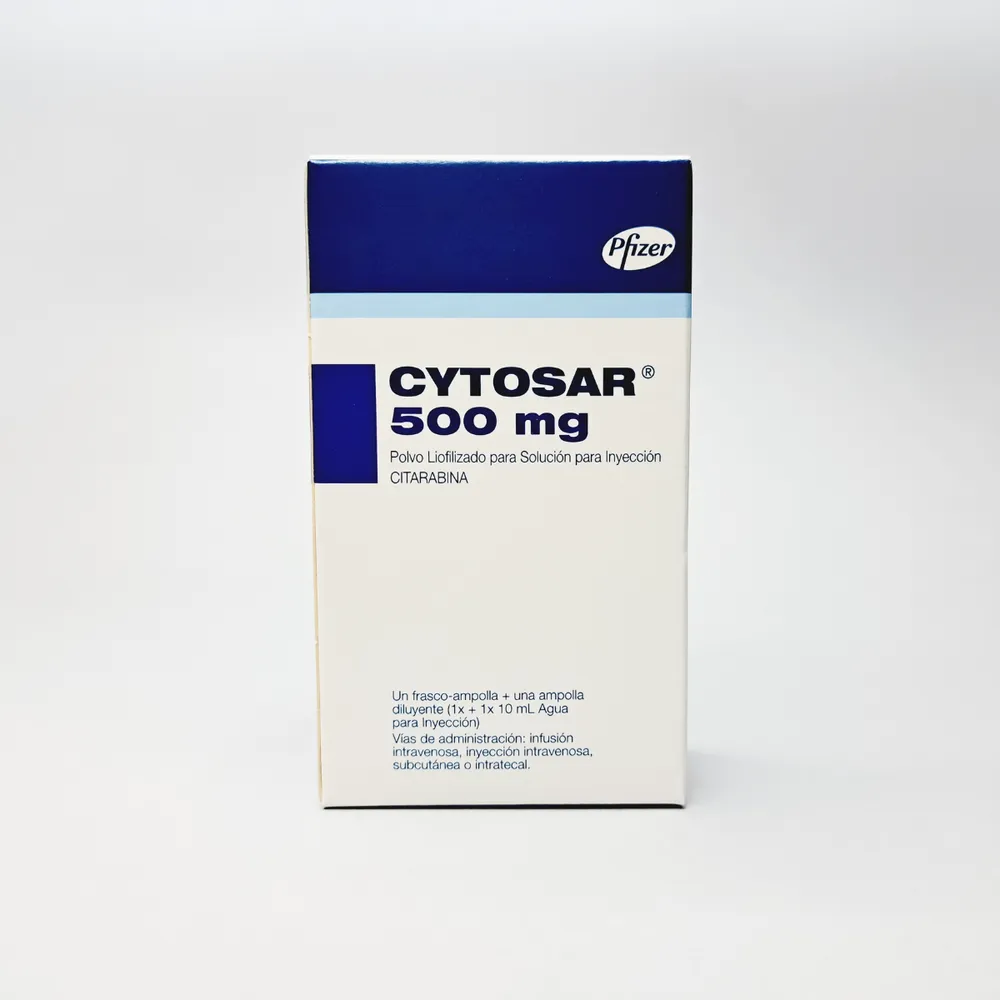
Table of Contents
- Patient Information Leaflet
- 1. What Cytosar is and what it is used for
- 2. Important information before using the medicine
- 3. How to use the medicine
- 4. Possible adverse reactions
- 5. How to store the medicine
- 6. Contents of the pack and other information
- Information intended exclusively for healthcare professionals
Patient Information Leaflet
CYTOSAR, 100 mg, powder and solvent for solution for injection
Cytarabine
Please read this leaflet carefully before using this medicine, as it contains
important information for you.
- Keep this leaflet. You may need to read it again.
- If you have any further questions, please consult your doctor or pharmacist.
- This medicine has been prescribed for a specific individual only. Do not give it to others. It may harm them, even if their symptoms are the same.
- If you experience any adverse reactions, including any not listed in this leaflet, inform your doctor or pharmacist immediately. See section 4.
Table of Contents
- What Cytosar is and what it is used for
- Important information before using Cytosar
- How to use Cytosar
- Possible side effects
- How to store Cytosar
- Contents of the pack and other information
1. What Cytosar is and what it is used for
Cytosar belongs to a group of anticancer medicines. It should be used only by physicians experienced in cancer chemotherapy, and only when the benefits of cytarabine treatment outweigh the risks.
Cytosar is used in the treatment of acute myeloid leukaemia in adults and children. It is also indicated in the treatment of acute lymphoblastic leukaemia and chronic myeloid leukaemia. It may be used as monotherapy (as a single agent) or in combination with other anticancer drugs. Best results are achieved with combination therapy.
When used as monotherapy or in combination with hydrocortisone sodium succinate and methotrexate administered intrathecally, it may be used in the treatment of leukaemia with meningeal involvement.
High-dose Cytosar administered by intravenous infusion, either alone or in combination with other anticancer drugs, is effective in the treatment of poor-prognosis leukaemia, treatment-resistant leukaemia, and relapses of acute leukaemia.
It is rarely effective in the treatment of patients with solid tumours.
2. Important information before using the medicine
When not to use the medicine
- if the patient is allergic to cytarabine or any of the other ingredients of this medicine (listed in section 6).
When administering high doses intravenously or intrathecally for drug preparation, solvents containing benzyl alcohol must not be used.
Warnings and precautions
- In patients with previously detected drug-induced bone marrow suppression. The medicine strongly suppresses bone marrow function, causing leukopenia (reduced number of white blood cells in peripheral blood), thrombocytopenia (reduced number of platelets) and anaemia. There is a risk of potentially fatal infections associated with granulocytopenia (reduction in the number of neutrophil granulocytes – a type of white blood cell), impaired immune defence and bleeding due to thrombocytopenia. The physician will consider discontinuing treatment or adjusting the dose if the patient's peripheral blood contains less than 50,000 platelets/mm³ or 1,000 granulocytes/mm³. Re-administration of the medicine may be considered after recovery of bone marrow function and increased platelet and granulocyte counts.
- In patients receiving high doses of the medicine (2–3 g/m² BSA) due to the occurrence of severe and sometimes fatal damage to the central nervous system (manifesting, among others, as seizures), gastrointestinal tract, lungs (adult respiratory distress syndrome, pulmonary oedema), and symptoms of cardiomegaly (enlargement of the heart).
- In patients treated with high doses of the medicine due to the occurrence of severe eye damage and risk of neuropathy. Dose regimen modifications may be necessary to avoid irreversible neurological disorders.
- In patients receiving high doses of cytarabine in combination with cyclophosphamide, due to reported cases of fatal cardiomegaly.
- In patients with acute non-lymphocytic leukaemia receiving concomitant high doses of cytarabine, daunorubicin and asparaginase, due to observed motor and sensory peripheral neuropathies.
- During administration of rapid intravenous injections of high doses of the medicine, as nausea and vomiting frequently occur, which may persist for several hours. These symptoms are usually less severe when the medicine is administered by infusion.
- In patients receiving standard doses of the medicine concomitantly with other medicines due to the possibility of peritonitis symptoms, colitis with accompanying neutropenia and thrombocytopenia.
- In children with acute myeloid leukaemia, following intrathecal and intravenous administration of standard doses of the medicine concomitantly with other medicines, delayed progressive ascending paralysis leading to death has been observed.
- In patients with impaired liver or kidney function, in whom the medicine should be used, if possible, at reduced doses.
- During concomitant use of the medicine with other drugs due to the possibility of acute pancreatitis.
- During intrathecal administration of the medicine due to the risk of systemic toxic reactions. Careful monitoring of haematopoietic function by the physician is recommended. Dose adjustment of the medicine may be necessary.
- In patients receiving the medicine both intrathecally and intravenously within several days, due to an increased risk of spinal cord damage. In life-threatening situations, the decision to administer the medicine simultaneously via intrathecal and intravenous routes should depend solely on the treating physician’s assessment.
- In patients receiving the medicine intravenously concomitantly with methotrexate administered intrathecally, severe neurological adverse reactions have been reported, including headache, paralysis, coma and stroke-like episodes.
The medicine may cause hyperuricaemia (increased uric acid concentration in blood) as a consequence of rapid lysis (breakdown) of tumour cells. The physician should monitor the patient’s blood uric acid levels and, if necessary, apply appropriate pharmacological measures.
Patients receiving the medicine should undergo periodic monitoring of bone marrow, liver and kidney function.
Patients receiving the medicine should not be vaccinated with live vaccines. They may receive inactivated or killed vaccines, although their effectiveness may be reduced.
Administration of live or live attenuated vaccines to patients with immunosuppression due to chemotherapy (including this medicine) may lead to severe infections and even death.
Other medicines
Before using any new medicine together with this medicine, inform your doctor.
Tell your doctor about all medicines currently or recently taken by the patient, as well as any medicines the patient plans to take.
The medicine may affect digoxin plasma concentrations.
Lack of rapid improvement has been observed in patients infected with Klebsiella pneumoniae receiving cytarabine and being treated concomitantly with gentamicin. Change of antibacterial therapy is recommended.
The medicine may reduce the efficacy of flucytosine.
Intravenous administration of the medicine concomitantly with intrathecal administration of methotrexate may increase the risk of severe neurological adverse reactions.
Pregnancy and breast-feeding
Pregnancy
If the patient is pregnant or breast-feeding, suspects she may be pregnant, or is planning to have a child, she should consult a doctor or pharmacist before using this medicine.
If pregnancy occurs, contact your doctor.
Women who are pregnant or of childbearing age may receive the medicine only after careful consideration of the benefit-risk ratio for the mother and the foetus.
Use of the medicine during the first trimester of pregnancy may cause congenital malformations. The risk of foetal damage is significantly lower if treatment is initiated during the second or third trimester of pregnancy.
Cytosar 100 mg powder and solvent for solution for injection contains benzyl alcohol – a preservative that may cross the placenta (see section 2 “The medicine contains benzyl alcohol and sodium”).
Contraception in women of childbearing potential
Women should always use an effective method of birth control (contraception) to prevent pregnancy during treatment and for 6 months after the last dose. Discuss with your doctor which contraceptive methods are appropriate for the patient and her partner.
Contraception in men
Men with partners of childbearing potential should always use highly effective contraceptive methods during treatment and for 3 months after the last dose.
Breast-feeding
There are insufficient data on the passage of the medicine into human milk.
Due to the risk of serious adverse reactions in infants breastfed by mothers receiving the medicine, the physician will consider the decision to discontinue breast-feeding during treatment with the medicine and for at least one week after the last dose, or to discontinue the medicine, taking into account the benefit of treatment for the mother.
Driving and operating machinery
The effect of the medicine on the ability to drive and operate machinery has not been studied.
The medicine may affect the ability to drive and operate machinery due to possible adverse reactions (e.g. brain function disorders, dizziness).
The medicine contains benzyl alcohol and sodium
Cytosar 100 mg powder and solvent for solution for injection contains 9 mg of benzyl alcohol in each 1 ml of solvent, equivalent to 9 mg/ml benzyl alcohol. Benzyl alcohol may cause allergic reactions. Its administration to neonates is associated with the risk of severe adverse reactions, including respiratory distress (known as "gasping syndrome").
Do not administer to neonates (up to 4 weeks of age) without medical advice.
Do not administer to young children (under 3 years of age) for longer than one week without medical advice or pharmacist’s recommendation.
Patients with liver or kidney disease, and pregnant or breast-feeding women should consult a doctor or pharmacist before using the medicine, as large amounts of benzyl alcohol may accumulate in their bodies and cause adverse effects (e.g. metabolic acidosis).
If the medicine is administered in high doses or intrathecally, solvents containing benzyl alcohol must not be used. The medicine should be dissolved in preservative-free 0.9% sodium chloride solution.
The medicine contains less than 1 mmol (23 mg) of sodium per vial, meaning the medicine is considered "sodium-free".
3. How to use the medicine
The doctor will determine the dose of the medicine most suitable for the individual patient. The regimen and method of administration depend on the treatment schedule used. The medicine may be administered by intravenous infusion, intravenous injection, subcutaneously, or intrathecally.
Use of a higher than recommended dose of the medicine
The medicine will be used in hospital conditions by doctors experienced in the field of cancer chemotherapy, therefore the use of a higher than recommended dose is unlikely.
Discontinuation of the medicine
The decision to discontinue treatment is made by the doctor. If you have any further doubts regarding the use of this medicine, consult your doctor or pharmacist.
4. Possible adverse reactions
Like all medicines, this medicine can cause adverse reactions, although not everyone will experience them.
Very common (may occur in more than 1 in 10 people):
- Septicaemia (systemic infection), pneumonia, infection.
- Bone marrow suppression, thrombocytopenia (reduced platelet count), anaemia, megaloblastic anaemia (syndrome of symptoms resulting from haemoglobin levels below normal and reduced numbers of enlarged red blood cells), leukopenia (reduced white blood cell count), decreased reticulocyte count (immature forms of red blood cells).
- Mucositis (inflammation of the mucous membrane of the mouth), oral mucosal ulceration, anal mucosal ulceration, proctitis (inflammation of the rectal mucosa), diarrhoea, vomiting, nausea, abdominal pain.
- Liver function disorders.
- Hair loss, rash.
- Cytarabine syndrome (fever, muscle pain, bone pain, sometimes chest pain, maculopapular rash, conjunctivitis, and malaise, usually occurring 6 to 12 hours after drug administration).
- Fever.
- Abnormal bone marrow biopsy and blood smear findings.
- Disorders of brain and cerebellar function*, somnolence*.
- Corneal disorders*.
- Acute respiratory distress syndrome (lung disease)*, pulmonary oedema*.
Common (may occur in no more than 1 in 10 people):
- Skin ulceration.
- Necrotizing enteritis*.
- Skin desquamation*.
Frequency not known (cannot be estimated from available data):
- Subcutaneous tissue inflammation at injection site.
- Anaphylactic reaction (sudden allergic reaction), angioedema (allergic swelling).
- Decreased appetite.
- Toxic nerve damage, neuritis, dizziness, headache.
- Conjunctivitis.
- Pericarditis, sinus bradycardia (reduced heart rate).
- Thrombophlebitis.
- Dyspnoea, sore throat.
- Pancreatitis, oesophageal ulceration, oesophagitis.
- Jaundice.
- Painful redness and blistering of the hands and soles of the feet (hand-foot syndrome, palmar-plantar erythrodysesthesia), urticaria, pruritus, petechiae.
- Renal dysfunction, urinary retention.
- Chest pain, pain and inflammation at subcutaneous injection site.
- Liver abscess*.
- Personality change*.
- Coma*, seizures*, peripheral motor neuropathy*, peripheral sensory neuropathy*.
- Cardiomyopathy* (heart disease).
- Gastric or intestinal necrosis*, gastric or intestinal ulcer*, intestinal perforation*, peritonitis*.
- Liver damage*, hyperbilirubinemia* (increased blood bilirubin concentration).
*Adverse reactions occurring after high-dose treatment, different from those observed after standard-dose administration.
Reporting of adverse reactions
If any adverse reactions occur, including any adverse reactions not listed in this leaflet, inform your doctor or pharmacist. Adverse reactions can be reported directly to the Department of Monitoring Adverse Drug Reactions of the Office for Registration of Medicinal Products, Medical Devices and Biocidal Products
Al. Jerozolimskie 181C
02-222 Warsaw
Tel.: + 48 22 49 21 301
Fax: + 48 22 49 21 309
Website: https://smz.ezdrowie.gov.pl
Adverse reactions can also be reported to the marketing authorisation holder or its representative.
Reporting adverse reactions helps provide more information on the safety of the medicine.
5. How to store the medicine
The medicine should be stored in a place inaccessible and out of sight of children.
Do not use this medicine after the expiry date stated on the label and/or packaging,
following: EXP. The expiry date refers to the last day of the stated month.
Store below 25°C.
The prepared solution (using the solvent supplied in the package) may be stored
for up to 4 days in a refrigerator (2°C - 8°C) or up to 24 hours at temperatures below 30°C.
Medicines must not be disposed of via wastewater or household waste. Ask a pharmacist
how to dispose of medicines no longer required. This will help protect
the environment.
6. Contents of the pack and other information
What the medicine contains
- The active substance is cytarabine. Each vial contains 100 mg of cytarabine.
- The other ingredients are: hydrochloric acid (for pH adjustment), sodium hydroxide (for pH adjustment).
- Solvent: water for injections, benzyl alcohol (see section 2 "The medicine contains benzyl alcohol and sodium").
What the medicine looks like and contents of the pack
A white, crystalline powder and a colourless solvent.
The pack contains 1 vial made of colourless glass, closed with a bromobutyl stopper and aluminium cap, and 1 ampoule made of colourless glass containing the solvent, all in a cardboard box.
Marketing Authorisation Holder
Pfizer Europe MA EEIG
Boulevard de la Plaine 17
1050 Bruxelles
Belgium
Manufacturer
Actavis Italy S.p.A.
Viale Pasteur 10
20014 Nerviano (Milan)
Italy
For further information, contact the Marketing Authorisation Holder:
Pfizer Polska Sp. z o.o.
tel: 22 335 61 00
Information intended exclusively for healthcare professionals
Full product information is contained in the Summary of Product Characteristics.
Dosage and administration
The drug is inactive when administered orally. The drug may be administered by intravenous infusion, intravenous injection, subcutaneously, or intrathecally.
High doses of the drug are better tolerated by patients when given as a rapid intravenous injection rather than as a slow intravenous infusion.
Intravenous administration
Standard doses
At the beginning of treatment (induction of remission) of acute non-lymphocytic leukemia, the usual dose of the drug administered concomitantly with other antineoplastic agents is typically 100 mg/m² BSA per day as a continuous intravenous infusion (days 1 to 7) or 100 mg/m² BSA intravenously every 12 hours (days 1 to 7).
High doses
From 2 g/m² BSA to 3 g/m² BSA, administered by intravenous infusion lasting 1 to 3 hours, given every 12 hours for 2–6 days, either in combination with other antineoplastic agents or as monotherapy. When high-dose therapy is used, solvents containing benzyl alcohol must not be used.
Dosing of the drug in acute lymphocytic leukemia and non-Hodgkin's lymphoma in children should be in accordance with current guidelines.
Intrathecal administration in leukemia with meningeal involvement
When preparing cytarabine for intrathecal administration, solvents containing benzyl alcohol must not be used. The product should be reconstituted using preservative-free 0.9% sodium chloride injection solution. The product should be administered immediately after preparation.
Cytarabine has been administered intrathecally in acute leukemia at doses ranging from 5 mg/m² to 75 mg/m² BSA. The frequency of administration varied from one dose daily for 4 days to one dose every 4 days. The most commonly used dose was 30 mg/m² BSA every 4 days until normalization of cerebrospinal fluid test results, followed by one additional treatment course. The dosing regimen generally depends on the type and severity of central nervous system symptoms and response to prior treatment.
Cytarabine has been administered intrathecally in combination with hydrocortisone sodium succinate and methotrexate, both for prophylaxis in newly diagnosed acute lymphoblastic leukemia in children and for treatment of leukemia with meningeal involvement. Prophylactic treatment with these three products prevented central nervous system (CNS) disease and provided similar overall remission rates and survival levels as in patients who received CNS irradiation and intrathecal methotrexate as initial prophylaxis. The cytarabine dose was 30 mg/m² BSA, hydrocortisone sodium succinate 15 mg/m² BSA, and methotrexate 15 mg/m² BSA (total maximum single dose of methotrexate is 15 mg/m² BSA). Before initiating treatment, the physician should be familiar with this regimen; however, in children and adolescents, methotrexate dosing should be based on age rather than body surface area.
Prophylactic treatment with the three products may be used after successful initial treatment of leukemia with meningeal involvement. Before starting therapy using this regimen, the physician should consult current guidelines.
Intrathecal cytarabine may cause general toxic effects, requiring careful monitoring of the hematopoietic system. Modification of anti-leukemic treatment may be necessary. Severe toxic effects are rare. When cytarabine is administered both intrathecally and intravenously within a few days of each other, there is an increased risk of bone marrow toxicity; however, in cases of severe, life-threatening disease, concomitant intravenous and intrathecal administration of cytarabine may be considered at the discretion of the treating physician.
In cases of focal leukemic infiltrates in the central nervous system, intrathecal administration of the drug may be ineffective. In such cases, radiotherapy is preferred.
Subcutaneous administration
Typically, 20–100 mg/m² BSA is administered, depending on the indication and treatment regimen used.
Dosing of the drug in acute lymphocytic leukemia and non-Hodgkin's lymphoma in children should be in accordance with current guidelines.
Children and adolescents
Dosing of the drug is similar to that recommended for adults. Current recommendations for dosing in children and adolescents should be verified in the latest treatment guidelines.
For reconstitution of the product, preservative-free 0.9% sodium chloride injection solution should be used. The product should be administered immediately after preparation.
Pharmaceutical incompatibilities
The drug is physically incompatible with heparin, insulin, 5-fluorouracil, sodium succinate methylprednisolone, and penicillins such as oxacillin and penicillin G.
Pharmaceutical compatibility
Cytarabine remains pharmaceutically compatible with the following products at specified concentrations in 5% aqueous glucose solution for 8 hours: cytarabine 0.8 mg/ml and cephalothin (sodium) 1.0 mg/ml; cytarabine 0.4 mg/ml and prednisolone (sodium phosphate) 0.2 mg/ml; cytarabine 16 mg/ml and vincristine (sulfate) 4 µg/ml. Cytarabine is also physically compatible with methotrexate.
Special precautions for storage
Stability and compatibility after reconstitution
Chemical and physical stability studies of the drug have shown that cytarabine remains stable for 7 days at temperatures below 25°C in glass bottles and plastic intravenous infusion bags in a solution at a concentration of 0.5 mg/ml when combined with the following solvents:
- Water for injections,
- 5% glucose solution for injections,
- 0.9% sodium chloride solution for injections.
Cytarabine also remains stable for 7 days at temperatures below 25°C, at 20°C, and at 4°C in glass bottles and plastic intravenous infusion bags in a solution at a concentration of 8–32 mg/ml when combined with the following solvents:
- 5% glucose solution for injections,
- 5% glucose in 0.2% sodium chloride solution for injections,
- 0.9% sodium chloride solution for injections.
Cytarabine remains stable for up to 8 days at temperatures below 25°C at a concentration of 2 mg/ml in the presence of KCl at 50 mEq/500 ml when combined with the following solvents:
- 5% glucose solution for injections,
- 0.9% sodium chloride solution for injections.
Cytarabine also remains stable at temperatures below 25°C or between 8°C and 25°C at concentrations of 0.2–1.0 mg/ml in the presence of sodium bicarbonate at 50 mEq/l in 5% glucose solution or 5% glucose in 0.2% sodium chloride solution for 7 days in glass bottles or intravenous infusion bags.
Cytarabine injections and prepared infusion solutions do not contain antimicrobial agents. Therefore, it is recommended that further dilutions be prepared immediately before use and that the infusion be started as soon as possible after solution preparation. The infusion should be completed within 24 hours of solution preparation, and any remaining solution should be discarded.