Cutaquig
Poland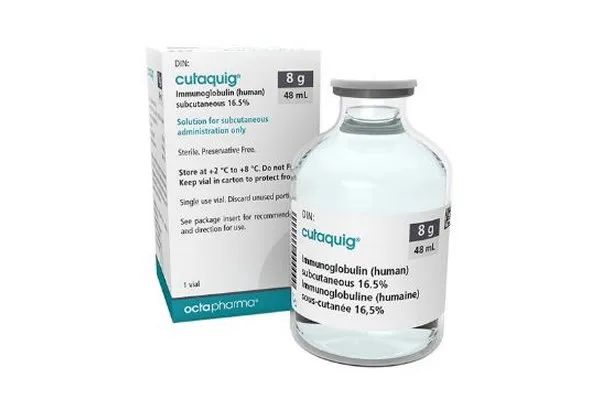
Table of Contents
Package leaflet: Information for the user
CUTAQUIG 165 mg/ml solution for injection
Human normal immunoglobulin (SCIg)
Please read all of this leaflet carefully before using this medicine because it contains
important information for you.
- Keep this leaflet as you may need to read it again.
- If you have any further questions, please ask your doctor or pharmacist.
- This medicine has been prescribed for a specific individual. Do not pass it on to others. It may harm someone else, even if their symptoms are the same.
- If you experience any adverse effects, including any not listed in this leaflet, tell your doctor or pharmacist. See section 4.
Contents of the leaflet
- What Cutaquig is and what it is used for
- Important information before using Cutaquig
- How to use Cutaquig
- Possible side effects
- How to store Cutaquig
- Contents of the pack and other information
1. What Cutaquig is and what it is used for
What Cutaquig is
Cutaquig belongs to a class of medicines known as "normal human immunoglobulins".
Immunoglobulins are also called antibodies; they are proteins found in the blood of healthy people.
Antibodies are part of the immune system (the body's natural defence mechanism) and help the body fight infections.
How Cutaquig works
Cutaquig contains immunoglobulins obtained from the blood of healthy individuals. This medicine works in exactly the same way as immunoglobulins naturally present in blood.
What Cutaquig is used for
Cutaquig is used in patients who do not have enough antibodies to fight infections and who therefore suffer from frequent infections. Regular administration of appropriate doses of Cutaquig can increase abnormally low blood immunoglobulin levels to a normal range (replacement therapy).
Cutaquig is prescribed for adults and children (aged 0–18 years) in the following situations:
Treatment of patients born with a reduced or absent ability to produce immunoglobulins (primary immunodeficiency).
Patients with acquired antibody deficiency (secondary immunodeficiency) due to specific diseases or treatments, who experience severe or recurrent infections.
2. Important information before using Cutaquig
When NOT to use Cutaquig:
- if the patient is allergic to normal human immunoglobulin or any of the other ingredients of this medicine (listed in section 6).
DO NOT inject Cutaquig into blood vessels.
Warnings and precautions:
Before starting treatment with Cutaquig, discuss this with your doctor or pharmacist.
The patient may be allergic (hypersensitive) to immunoglobulins without knowing it.
True allergic reactions, such as sudden drop in blood pressure or anaphylactic shock
(sudden drop in blood pressure combined with other symptoms such as swelling of the throat,
difficulty breathing and skin rash) are rare but may occur, even if the patient has previously received
human immunoglobulins and tolerated them well. This may be particularly likely if the patient has
insufficient levels of immunoglobulin A (IgA deficiency) and has antibodies against IgA.
- Before treatment, tell your doctor or other medical personnel if the patient has immunoglobulin A (IgA) deficiency. Cutaquig contains a minimal amount of IgA, which may trigger an allergic reaction. In such rare cases, allergic reactions may occur, such as sudden drop in blood pressure or shock (see also section 4). Symptoms and signs of such rare allergic reactions include:
- feeling faint, dizziness or loss of consciousness,
- skin rash and itching, swelling of the mouth or throat, difficulty breathing, wheezing,
- irregular heartbeat, chest pain, blue coloration of lips or fingers and toes,
- blurred vision. If such symptoms occur during infusion of Cutaquig, inform the doctor immediately. The doctor will decide whether the infusion rate should be reduced or the infusion stopped completely.
- Inform your doctor if the patient has previously had heart or blood vessel disease, blood clots (thrombosis), or has been immobile for a period of time. It is known that such conditions increase the risk of blood clots after administration of Cutaquig. Also tell your doctor about all medicines currently being taken by the patient, as certain medicines, such as those containing estrogen hormone (e.g. contraceptive pills), may increase the risk of blood clots. If symptoms or signs such as shortness of breath, chest pain, pain and swelling in a limb, or weakness or numbness on one side of the body occur after administration of Cutaquig, contact your doctor immediately.
- If symptoms or signs such as severe headache, neck stiffness, drowsiness, fever, photophobia, nausea and vomiting occur after administration of Cutaquig, contact your doctor. These may be symptoms of aseptic meningitis. The doctor will decide whether additional tests are necessary and whether treatment with Cutaquig should continue.
- Cutaquig contains antibodies against blood groups, which may cause destruction of red blood cells and thus lead to anemia (too few red blood cells).
The doctor will reduce the risk of possible complications by ensuring:
- that the patient is not allergic to normal human immunoglobulin. At the beginning, the medicine must be administered at a low infusion rate. The recommended infusion rates given in section 3 must be strictly followed.
- that the patient is carefully monitored for any symptoms throughout the entire
infusion, especially if:
o the patient is receiving normal human immunoglobulin for the first time,
o the patient has just switched from another medicine to Cutaquig,
o a long time has passed since the last infusion (more than eight weeks).
In such cases, monitoring during the first infusion and for one hour after completion is recommended.
If none of the above applies to the patient, observation for at least 20 minutes after administration is recommended.
Children and adolescents
The above warnings and precautions apply to both adults and children.
Cutaquig and other medicines
- Tell your doctor or pharmacist about all medicines currently or recently taken by the patient, as well as any medicines the patient plans to take.
- Do not mix Cutaquig with any other medicine.
- Before vaccination, inform the healthcare provider administering the vaccine that the patient is being treated with Cutaquig. Cutaquig (like all other medicines containing normal human immunoglobulin) may interfere with the effectiveness of certain live virus vaccines, such as those against measles, mumps, rubella, and varicella. Therefore, after administration of Cutaquig, the patient may need to wait up to 3 months before receiving a live attenuated vaccine. In the case of measles vaccination, this interference may last up to one year.
- Blood glucose testing Some types of blood glucose monitoring systems (so-called glucometers) may incorrectly identify maltose contained in Cutaquig as glucose. This may lead to falsely elevated glucose readings during infusion and for approximately 15 hours after the end of infusion, potentially resulting in inappropriate insulin administration causing life-threatening hypoglycemia (low blood sugar). Also, in cases of true hypoglycemia, treatment may not be administered due to falsely elevated glucose readings. Therefore, during administration of Cutaquig or other products containing maltose, blood glucose concentration should be measured using a system employing a glucose-specific method. Systems based on glucose dehydrogenase pyrroloquinoline quinone (GDH-PQQ) or glucose oxidoreductase should not be used. Carefully read the information provided with the glucose monitoring system, including test strips, to determine whether the system is suitable for use during concomitant administration of parenteral products containing maltose. If in doubt, contact the treating physician to confirm whether the glucose monitoring system is appropriate for use during concomitant administration of parenteral products containing maltose.
Cutaquig with food, drink and alcohol
No effect has been observed.
Pregnancy, breastfeeding and fertility
During pregnancy, breastfeeding, or if pregnancy is suspected or planned, consult your doctor or pharmacist before using this medicine. This medicine should be used during pregnancy or breastfeeding only after consultation with a doctor or pharmacist.
Clinical studies with Cutaquig have not been conducted in pregnant women. However, immunoglobulin-containing medicines have been used in pregnant and breastfeeding women for many years without harmful effects on pregnancy or the fetus or newborn being observed.
If a breastfeeding patient receives Cutaquig, the immunoglobulins contained in the medicine will also pass into breast milk. This will help protect the infant against certain infections.
Experience with immunoglobulins does not indicate a harmful effect on fertility.
Driving and using machines
Some adverse effects associated with Cutaquig may impair the ability to drive or operate machinery. Patients who experience adverse effects during treatment should wait until these effects have subsided before driving or operating machinery.
Cutaquig contains sodium
This medicine contains 33.1 mg of sodium (the main component of table salt) per 48 ml vial and 13.8 mg of sodium per 20 ml vial. This corresponds to 1.7% and 0.7% of the recommended maximum daily dietary sodium intake for adults, respectively.
Information on the source of Cutaquig
Cutaquig is derived from human blood plasma (the liquid component of blood). When medicines are manufactured from human blood or plasma, specific precautions are taken to prevent transmission of infections to patients. These include:
- careful selection of blood and plasma donors to exclude donors who may be carriers of infections,
- testing of each donation and pooled plasma for the presence of viruses/infections,
- inclusion of steps in the manufacturing process intended to inactivate or remove viruses. Despite these precautions, when administering medicines prepared from human blood or plasma, it cannot be completely excluded that transmission of infection may occur. This also applies to unknown or newly emerging viruses or other types of infections.
The measures taken are considered effective against enveloped viruses, such as human immunodeficiency virus (HIV - the virus causing AIDS), hepatitis B virus and hepatitis C virus.
The precautions taken may have limited effectiveness against non-enveloped viruses, such as hepatitis A virus and parvovirus B19.
No cases of immunoglobulin products transmitting hepatitis A or parvovirus B19 infection have been reported, probably because the antibodies against these infections contained in this product provide protective effects.
It is strongly recommended that, in every case of administration of Cutaquig, the name and batch number of the medicine be recorded to document the batch used (see also Annex I: Administration guidelines).
3. How to use Cutaquig
This medicine should always be used exactly as directed by your doctor or pharmacist. If in doubt,
please consult your doctor or pharmacist.
Cutaquig must be administered by subcutaneous infusion (under the skin).
Treatment will be initiated by your treating doctor or a nurse experienced in managing patients with
impaired immune systems.
Once the appropriate dose and infusion rate have been determined for the patient by the doctor or
nurse, and after the patient has received several initial infusions under supervision, the patient may
be authorized to self-administer the treatment at home or have it administered at home by a trained
caregiver. A doctor or nurse experienced in managing patients receiving home therapy will ensure
that the patient or caregiver receives proper training and detailed information on:
- maintaining aseptic infusion techniques,
- using the infusion device (if applicable),
- keeping a treatment diary,
- actions to take in case of serious adverse reactions (see also section 4). Once the patient is able to self-administer the treatment without experiencing any adverse reactions, the doctor may authorize continuation of treatment at home.
Dosage
The dosage and infusion rate for each individual patient will be determined by the doctor, who will
adjust the dose according to body weight, previous treatment, and the patient's response to therapy.
Always follow your doctor's instructions.
Replacement therapy in primary immunodeficiency syndromes:
Your doctor will determine whether the patient requires a loading dose (for adults and children) of at
least 1.2 to 3.0 ml/kg body weight, divided over several days. Subsequently, Cutaquig will be given at
regular intervals, ranging from daily administration to administration every two weeks. The cumulative
monthly dose will be approximately 2.4 to 4.8 ml/kg body weight. The doctor or nurse may adjust the
dose depending on the patient's response to treatment.
Replacement therapy in secondary immunodeficiency:
The recommended dose of Cutaquig is a cumulative monthly dose of 1.2–2.4 ml/kg, administered
at regular intervals (approximately once a week). It may be necessary to administer each dose at a
different site. The doctor may adjust the dose depending on the response to treatment.
Do not change the dose or frequency of administration without consulting your doctor. If you think
you should receive Cutaquig more or less frequently, discuss this with your doctor. If you think you
have missed a dose, contact your doctor as soon as possible.
Method and route of administration
Selection of infusion site(s):
Recommended sites for subcutaneous infusion of Cutaquig include the abdomen, thighs, upper arms,
and upper leg/hip area. Infusion can be administered at more than one site simultaneously. There is
no limit to the number of infusion sites, but individual sites should be at least 5 cm apart. The infusion
sites should be rotated with each administration as directed by your doctor or nurse.
The volume infused at a single site varies; however, it is recommended to divide large infusion
volumes (> 30 ml) and administer them at multiple sites. In newborns and children, infusion sites may
be changed after administering 5–15 ml.
Infusion rate:
The doctor will determine the appropriate infusion rate for the patient, taking into account the
individual dose, dosing frequency, and product tolerance.
The recommended initial infusion rate is 15 ml/hour/site if the patient has not previously been treated
with SCIG. For patients already receiving SCIG therapy and switching to Cutaquig, the previously used
infusion rate should be maintained during the initial infusions. In subsequent infusions, if the product
is well tolerated, the infusion rate may be gradually increased by approximately 10 ml/hour/site
every 2–4 weeks in adults (≥40 kg), and up to 10 ml/hour/site every 4 weeks in children and
adolescents (<40 kg).
Then, if the patient tolerates the initial infusions at full dose per site and at maximum rate, further
increases in infusion rate may be considered, up to a maximum flow rate of 67.5 ml/hour/site in adults
(≥40 kg) and 25 ml/hour/site in children and adolescents (<40 kg).
Detailed instructions for use are provided below.
Cutaquig is intended for subcutaneous administration only (under the skin). Do not inject Cutaquig into
blood vessels.
Cutaquig may only be used at home after receiving proper instructions and training from a doctor or
nurse.
When using Cutaquig, strictly follow each step of the administration guidelines provided at the end
of this leaflet (Annex I) and adhere to aseptic techniques (sterile technique).
Wear gloves if your doctor has advised you to do so during infusion preparation.
Use in children and adolescents
For children and adolescents (aged 0 to 18 years), the same indications, doses, and infusion
frequencies apply as for adults.
Accidental overdose of Cutaquig
If you think you have administered too high a dose of Cutaquig in an infusion, contact your doctor or
nurse immediately.
Missed dose of Cutaquig
If you miss a dose, inform your doctor or nurse as soon as possible. Do not administer a double dose
of Cutaquig to make up for a missed dose.
4. Possible adverse reactions
Like all medicines, this medicine can cause adverse reactions, such as chills, headache, dizziness, fever, vomiting, allergic reactions, nausea, joint pain, low blood pressure, and moderate lower back pain, although not everyone will experience them.
Some adverse reactions, such as headache, chills, or body pain, may be reduced by slowing the infusion rate.
In clinical trials evaluating the safety of Cutaquig, no serious adverse drug reactions were observed in patients treated with this medicine.
The patient may be allergic (hypersensitive) to immunoglobulins and may experience allergic reactions such as a sudden drop in blood pressure or, in rare cases, shock. Physicians are aware of these potential adverse reactions and will monitor the patient during and after the first few infusions.
If the patient experiences any of the following symptoms, inform the doctor immediately:
- Feeling faint, dizzy, or fainting,
- Skin rash and itching, swelling of the mouth or throat, difficulty breathing, wheezing,
- Irregular heartbeat, chest pain, blue lips or fingers,
- Blurred vision.
If Cutaquig is used at home, the patient may receive the infusion in the presence of a caregiver who will observe the patient for signs of allergic reactions. If any symptoms of an allergic reaction occur, the infusion must be stopped immediately and medical help should be sought if necessary. Information regarding the risk of allergic reactions is also provided in section 2 of this leaflet.
The following adverse reactions occur very commonly (may occur in more than 1 in 10 infusions):
- Reactions at the infusion site, such as redness, swelling, itching, and discomfort.
The following adverse reactions occur uncommonly (may occur in more than 1 in 1000 infusions up to less than 1 in 100 infusions):
- Headache
- Nausea
- Fatigue
The following adverse reactions occur rarely (may occur in more than 1 in 10,000 infusions):
- Dizziness
- Abdominal pain
- Abdominal distension
- Vomiting
- Gag reflex
- Muscle pain
- Joint pain
- Fever
- Chills
- Chest discomfort
- Flu-like symptoms
- Pain
- General malaise
- Positive blood test result for antibodies
- Abnormal blood test results indicating destruction of red blood cells
- Increased hemoglobin concentration
- Increased blood creatinine concentration
- Rash
- Skin reactions
- Increased activity of certain liver enzymes called transaminases
Other adverse reactions not observed in clinical trials but reported include:
- Hypersensitivity (e.g., flushing, urticaria)
- High blood pressure
- Problems related to blood clot formation in blood vessels (e.g., deep vein thrombosis, stroke)
- Blood clots in blood vessels (see also section 2 "Warnings and precautions")
- Itching
- Back pain
Adverse reactions observed with similar medicines
The following additional adverse reactions have been observed with subcutaneous infusion of normal human immunoglobulin. These may possibly occur in some patients treated with this medicine.
- Chills,
- Pallor,
- Diarrhea,
- Pain at injection site,
- Rapidly spreading redness of the neck/face area,
- Feeling of warmth,
- Feeling of cold,
- Weakness,
- Throat tightness,
- Breathing difficulties,
- Asthma-like symptoms,
- Cough,
- Facial swelling,
- A syndrome called "aseptic meningitis" (see also section 2 "Warnings and precautions").
If the patient experiences any of the following symptoms, inform the doctor immediately: These may be symptoms of a serious problem.
- Severe headache associated with symptoms such as nausea, vomiting, neck stiffness, fever, and sensitivity to light. These may be symptoms of a transient and reversible non-infectious swelling of the membranes surrounding the brain and spinal cord (meningitis).
- Pain, swelling, increased temperature, redness, or a lump in the arm or leg, unexplained shortness of breath, pain or discomfort in the chest worsening with deep breathing, unexplained rapid heartbeat, numbness or weakness on one side of the body, sudden confusion, or difficulty speaking. These may be symptoms of a blood clot.
Such adverse reactions may occur even if the patient has previously received human immunoglobulins and tolerated them well.
Additional information on circumstances increasing the risk of adverse reactions is provided in section 2.
Reporting of adverse reactions
If the patient experiences any adverse reactions, including any not listed in this leaflet, inform a doctor or pharmacist. Adverse reactions can be reported directly to the national reporting system:
Department of Monitoring Adverse Drug Reactions
Office for Registration of Medicinal Products, Medical Devices and Biocidal Products
Al. Jerozolimskie 181C
PL-02 222 Warsaw
Tel.: + 48 22 49 21 301
Faks: + 48 22 49 21 309
e-mail: https://smz.ezdrowie.gov.pl
Adverse reactions can also be reported to the marketing authorization holder.
Reporting adverse reactions helps provide more information on the safety of this medicine.
5. How to store Cutaquig
Keep this medicine out of the sight and reach of children.
Do not use this medicine after the expiry date stated on the label and the carton after "EXP". The expiry date refers to the last day of the specified month.
Store in a refrigerator (2°C – 8°C). Do not freeze. Keep the vial in the outer carton to protect from light.
During the shelf life, the medicine may be stored at room temperature (do not store above 25°C) for a period of up to 9 months without the need for refrigeration during this time; if the medicine is not used within this period, it must be discarded after this time has elapsed.
After first opening the container, the medicine should be used immediately.
Do not use Cutaquig if the solution is cloudy or contains particulate matter.
Medicines must not be disposed of via wastewater or household waste. Ask your pharmacist how to dispose of medicines no longer required. Such measures will help protect the environment.
6. Contents of the pack and other information
What Cutaquig contains
The active substance is human normal immunoglobulin at a concentration of 165 mg/ml (at least 95%
consists of immunoglobulin G).
- IgG ……….. 71%
- IgG ……….. 25%
- IgG ……….. 3%
- IgG ………… 2%
The other ingredients are: maltose, polysorbate 80, and water for injections.
Maximum IgA content is 300 micrograms/ml.
Cutaquig contains sodium in amounts ≤ 30 mmol/l.
What Cutaquig looks like and contents of the pack
Cutaquig is a solution for injection.
The solution is clear and colourless.
During storage, the solution may become slightly opalescent and pale yellow.
Cutaquig is available as:
6, 10, 12, 20, 24 or 48 ml of solution in a vial (made of type I glass) with a bromobutyl rubber stopper –
packs containing 1, 10 or 20 vials.
Not all pack sizes may be marketed.
Marketing Authorisation Holder and Manufacturer
Marketing Authorisation Holder:
Octapharma (IP) SPRL
Route de Lennik 451
1070 Anderlecht
Belgium
Manufacturer:
Octapharma Pharmazeutika Produktionsges.m.b.H.
Oberlaaer Strasse 235
1100 Vienna
Austria
Octapharma AB
Lars Forssells gata 23
112 75 Stockholm
Sweden
This medicinal product is authorised in the European Economic Area member states under the following names:
Austria, Belgium, Bulgaria, Croatia, Czech Republic, Denmark, Estonia,
Finland, France, Spain, Netherlands, Ireland, Iceland, Lithuania,
Latvia, Luxembourg, Malta, Germany, Norway, Poland, Cutaquig
Portugal, Romania, Slovakia, Slovenia, Sweden, Hungary,
United Kingdom (Northern Ireland), Italy:
Annex I – Instructions for Administration
1. Prepare the required number of Cutaquig vials
- If the vials have been stored in the refrigerator, remove them and allow to reach room temperature for at least 90 minutes before infusion.
- Do not heat the vials or place them in a microwave oven.
- Do not shake the vials to avoid foaming.
2. Preparing for infusion
- Select and prepare a clean work area using antiseptic wipes or disinfectant solution (Figure 1).
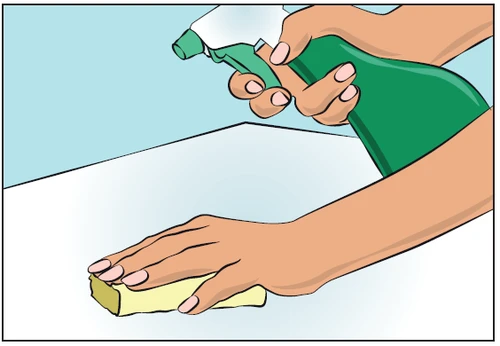
Figure 1
- Prepare equipment and materials for infusion:
- infusion pump (optional) and compatible syringe(s),
- needle (for drawing product from vial),
- infusion set,
- infusion tubing and Y-connector (if needed),
- alcohol and alcohol wipes/antiseptic wipes,
- gauze pad or transparent dressing and adhesive tape (non-occlusive dressing),
- sharps container,
- treatment diary and pen.
- Wash hands thoroughly and allow them to dry completely (Figure 2). Use hand disinfectant gel as shown during training.

Figure 2
- If using a pump, program it according to the manufacturer’s instructions and as demonstrated during physician or nurse training.
3. Checking and opening vials
- Carefully inspect each vial:
- for correct labelling with the dose prescribed by the physician,
- appearance of the solution (should be clear and colourless to pale yellow or light brown),
- ensure the protective cap is intact and undamaged,
- check the expiry date and batch number.
- Do not use the solution if it is cloudy or contains particles.
- Remove the protective cap.
- Disinfect the rubber stopper with an antiseptic wipe and allow it to dry (Figure 3).
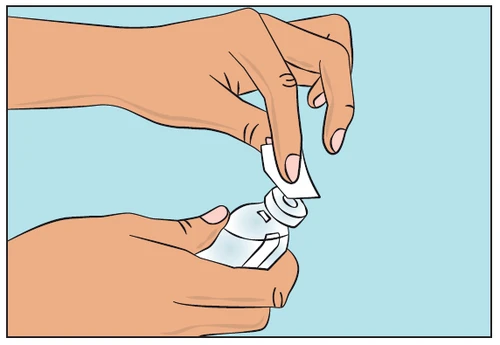
Figure 3
4. Preparing and filling the syringe
- Open the package containing a sterile syringe and needle.
- Attach the needle to the syringe.
- Pull back the syringe plunger to draw in air volume approximately equal to the volume of solution to be withdrawn from the vial.
- Insert the needle into the vial and invert the vial. Inject air, ensuring the needle tip remains above the solution to avoid foaming.
- Slowly withdraw the required volume of Cutaquig, ensuring the needle tip remains in the solution at all times (Figure 4).
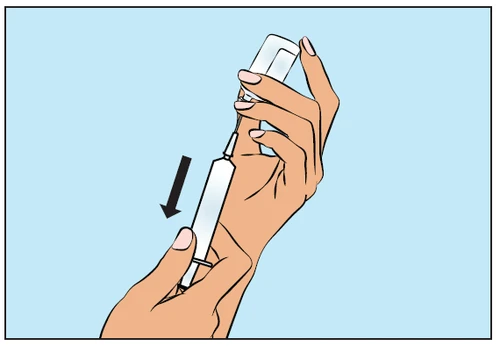
Figure 4
- Remove the needle from the vial.
- This procedure may need to be repeated if the calculated dose requires drawing from more than one vial.
- After completion, detach the needle and dispose of it in the sharps container.
- Proceed immediately to the next step, as IgG solution should be used as soon as possible.
5. Preparing the infusion pump and tubing (optional)
- Prepare the pump according to the manufacturer’s instructions.
- To prime the infusion tubing, connect the filled syringe to the infusion tubing and gently push the plunger to fill the tubing with Cutaquig and remove all air (Figure 5).
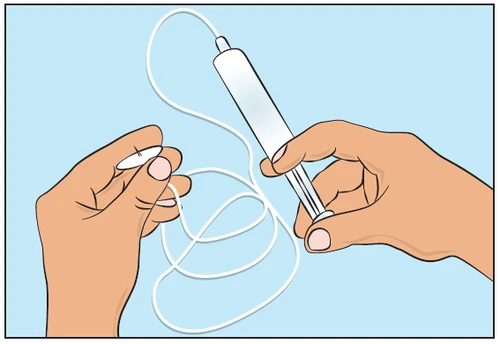
Figure 5
6. Selecting infusion sites and inserting infusion needle(s)
- Cutaquig infusions may be administered into the following areas: abdomen, thighs, upper arms, and upper leg/hip area (Figure 6).
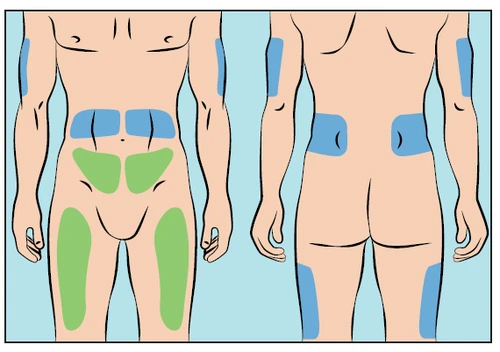
Figure 6
- Individual infusion sites should be at least 5 cm apart.
- Use infusion sites different from those used in the previous administration.
- Avoid inserting the needle into scars, tattoos, stretch marks, or damaged/inflamed/erythematous skin areas.
- Clean the selected infusion site(s) with an antiseptic skin wipe and allow the skin to dry.
- Pinch a skin fold around the infusion site between the thumb and index finger (Figure 7), carefully remove the needle cover, and insert the needle into the skin (Figure 8). The angle of needle insertion depends on the type of infusion set used.
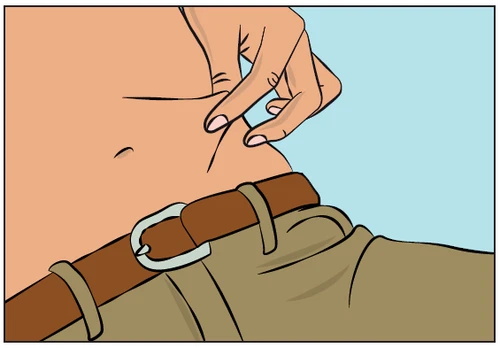
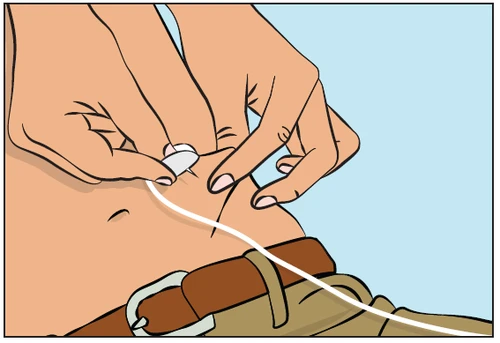
Figure 7 Figure 8
7. Checking the infusion
- The solution must not be administered intravenously.
- Secure the needle in place using a sterile gauze pad and adhesive tape (non-occlusive) or a transparent dressing (Figure 9).
Rysunek 9
8. Starting the infusion
- Begin the infusion. If using an infusion pump, follow the manufacturer’s instructions.
9. Recording the infusion
- Each Cutaquig vial has a detachable label section containing batch number information. Affix this label to the patient’s treatment diary or infusion log. Record information regarding dose, date, time, infusion site locations, any infections or adverse reactions, and any other remarks related to the infusion.
10. After infusion is complete
- Gently remove the needle(s) from the skin and immediately dispose of them in the sharps container.
- If necessary, apply a small gauze pad over the needle sites and cover with a dressing.
- Dispose of all used single-use materials, as well as any unused medication and empty vials, as directed by the physician or nurse and in accordance with local requirements. Clean and store all reusable equipment (e.g. pump) safely until the next infusion.