Convival chrono
Poland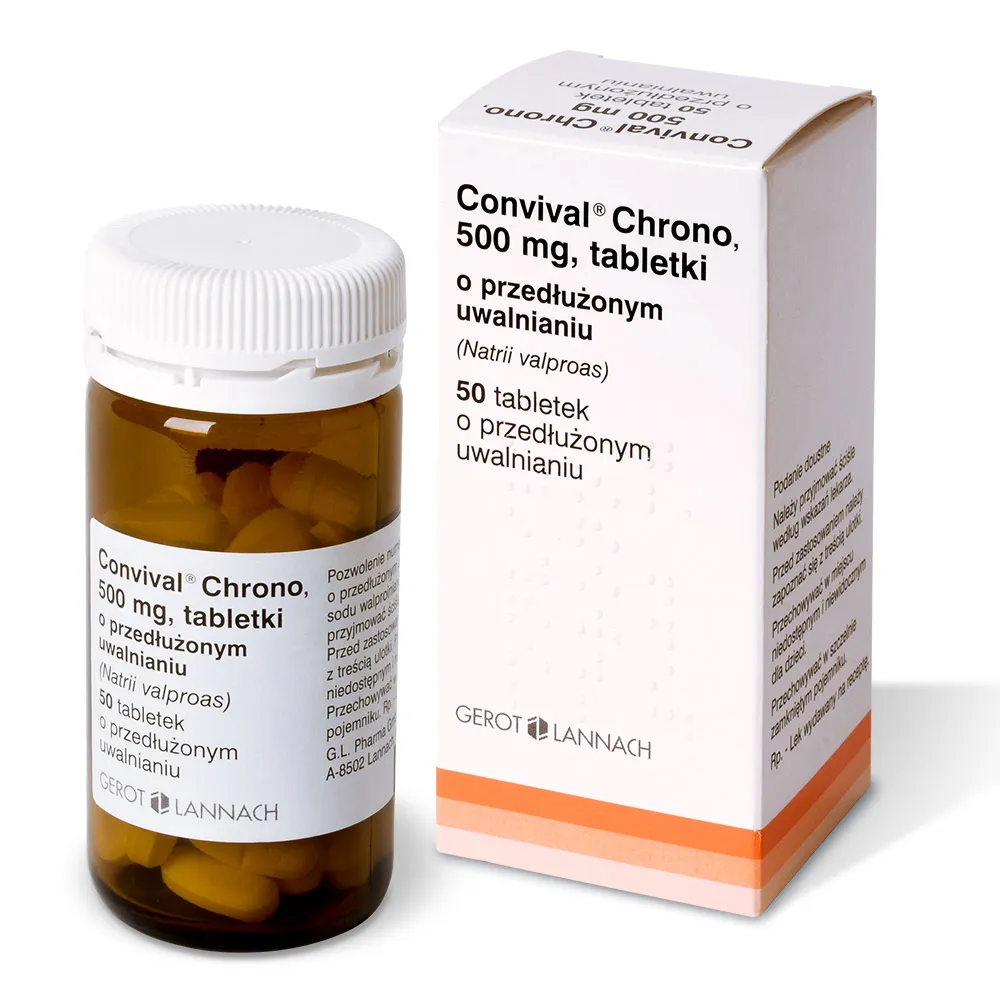
Table of Contents
Package leaflet: Information for the user
Convival Chrono, 300 mg, prolonged-release tablets
Natrii valproas
This medicinal product is subject to additional monitoring. This will allow rapid identification of

new safety information. Users of this medicine can help by reporting any side effects that occur after using the medicine. To find out how to report side effects – see section 4.
WARNING
Convival Chrono (sodium valproate) used during pregnancy can seriously harm the unborn child. Women of childbearing potential must use an effective method of contraception (birth control) continuously throughout the entire duration of treatment with Convival Chrono. The treating physician will discuss this with the patient; patients should also follow the recommendations given in section 2 of this leaflet.
Patients should contact their treating physician immediately if they are planning a pregnancy or suspect they may be pregnant.
Do not stop taking Convival Chrono unless advised by a doctor, as the patient's condition may worsen.
Please read this leaflet carefully before taking this medicine, as it contains important information for the patient.
- Keep this leaflet, so that you can read it again if necessary.
- If you have any questions, consult your doctor or pharmacist.
- This medicine has been prescribed for a specific individual. Do not give it to others. This medicine may harm another person, even if their symptoms are the same.
- If you experience any adverse effects, including any side effects not listed in this leaflet, inform your doctor or pharmacist. See section 4.
Contents of the leaflet:
- What Convival Chrono is and what it is used for
- Important information before taking Convival Chrono
- How to take Convival Chrono
- Possible side effects
- How to store Convival Chrono
- Contents of the pack and other information
1. What Convival Chrono is and what it is used for
Convival Chrono is available as prolonged-release tablets and contains the active substance sodium valproate, which belongs to a group of antiepileptic medicines that act on the central nervous system.
The medicine has anticonvulsant activity in various forms of epilepsy in humans.
Convival Chrono is a medicine used in the treatment of epilepsy and mania.
Convival Chrono is used to treat:
- epilepsy, in generalized seizures:
- myoclonic seizures,
- tonic-clonic seizures,
- atonic seizures,
- absence seizures, partial seizures:
- simple or complex partial seizures,
- secondarily generalized seizures,
- Lennox-Gastaut syndrome.
- Mania, a condition in which the patient feels extremely excited, elated, stimulated, enthusiastic, or hyperactive. Mania occurs in a disorder known as bipolar affective disorder. Convival Chrono may be used when lithium cannot be administered.
2. Important information before using Convival Chrono
When not to use Convival Chrono:
Do not use this medicine if:
- you are allergic to the active substance sodium valproate or to any of the other ingredients of this medicine (listed in section 6),
- you have acute or chronic hepatitis,
- you have experienced severe hepatitis, especially drug-induced hepatitis, or if there is a family history of severe hepatitis,
- you have porphyria (a very rare metabolic disorder),
- concurrent use with mefloquine,
- you have a genetic disorder causing mitochondrial disorders (e.g. patients with Alpers-Huttenlocher syndrome),
- you have metabolic disorders, e.g. urea cycle disorders,
- you have carnitine deficiency (a very rare metabolic disorder) which is untreated,
- for bipolar affective disorder:
- if you are pregnant,
- if you are of childbearing age, unless you use an effective method of contraception throughout the entire treatment period with Convival Chrono. Do not stop taking Convival Chrono or contraception without first discussing it with your doctor. Your doctor will provide further advice (see below "Pregnancy, breastfeeding and fertility – Important advice for women").
- for epilepsy:
- if you are pregnant, unless no other therapy is effective,
- if you are of childbearing age, unless you use an effective method of contraception throughout the entire treatment period with Convival Chrono. Do not stop taking Convival Chrono or contraception without first discussing it with your doctor. Your doctor will provide further advice (see below "Pregnancy, breastfeeding and fertility – Important advice for women").
Warnings and precautions
Before starting treatment with Convival Chrono, discuss this with your doctor.
YOU MUST IMMEDIATELY INFORM YOUR DOCTOR IF:
- You suddenly experience any of the following symptoms: weakness, loss of appetite, drowsiness, recurring vomiting and abdominal pain, jaundice (yellowing of the skin and whites of the eyes), or recurrence of epileptic seizures, especially during the first 6 months of treatment. Convival Chrono may cause severe liver damage, sometimes leading to death. Liver function tests should be performed periodically before starting treatment and during the first 6 months of treatment.
The risk of liver damage increases if Convival Chrono is used in children under 3 years of age, in patients taking other antiepileptic drugs simultaneously, in patients with other neurological or metabolic disorders, and in patients with severe epilepsy.
- You experience severe abdominal pain. Convival Chrono very rarely may cause severe pancreatitis, sometimes leading to death.
- You or your child taking Convival Chrono develop problems with balance and coordination, drowsiness or reduced alertness, or vomiting. This may be due to increased blood ammonia levels.
- A small number of people taking antiepileptic medicines containing sodium valproate have thought about harming or killing themselves. If you ever have such thoughts, contact your doctor immediately.
- Serious skin reactions, including Stevens-Johnson syndrome, toxic epidermal necrolysis, drug reaction with eosinophilia and systemic symptoms (DRESS), erythema multiforme and angioedema, have been reported with valproate treatment. If you notice any symptoms related to these serious skin reactions described in section 4, you should immediately consult a doctor.
Before starting treatment with this medicine, discuss the following with your doctor:
- Valproate should not be used in women with epilepsy who are planning pregnancy, except when other treatments are ineffective or not tolerated. The benefits of using the medicine should be weighed against the risks before the first prescription or when a woman treated with sodium valproate plans pregnancy. Women of childbearing age must use effective contraception during treatment.
- Before starting treatment, before any surgical procedure, and in case of bruising or spontaneous bleeding, laboratory tests are recommended (blood count with blood smear, including platelet count, bleeding time and coagulation tests).
- Use with caution in patients with renal impairment. Your doctor may recommend a lower dose.
- The medicine should be used with caution in patients with systemic lupus erythematosus.
- If any metabolic disorder is suspected in the patient, especially inborn enzyme deficiencies such as "urea cycle disorders", due to the risk of increased blood ammonia levels.
- Weight gain may occur in patients treated with sodium valproate.
- If the patient has a rare disorder called "carnitine palmitoyltransferase II deficiency", due to the increased risk of muscle disorders.
- Concurrent use of carbapenem antibiotics with sodium valproate is not recommended (see section "Convival Chrono and other medicines").
- Sodium valproate is mainly excreted by the kidneys, partly in the form of ketone bodies, so urine ketone tests in diabetic patients may give false-positive results.
- If the patient has or the doctor suspects a genetic disorder caused by mitochondrial dysfunction, due to the risk of liver damage.
- As with other antiepileptic drugs, seizures may worsen in severity or frequency during treatment. If seizures worsen, consult your doctor immediately.
- If the patient has inadequate intake of carnitine, found in meat and dairy products, especially in children under 10 years of age,
- If the patient has carnitine deficiency and is taking carnitine supplements.
- If the patient has ever experienced severe skin rash, skin peeling, blistering and/or oral ulcers after taking valproate.
Children and adolescents
Children and adolescents under 18 years of age:
Convival Chrono should not be used in children and adolescents under 18 years of age for the treatment of mania.
Convival Chrono and other medicines
Tell your doctor about all medicines you are currently taking, have recently taken, or plan to take.
Some medicines may affect the action of sodium valproate, and sodium valproate may also affect the action of other medicines. These include:
- neuroleptic medicines, including quetiapine, olanzapine (used to treat psychotic disorders);
- medicines used to treat depression, MAO inhibitors;
- benzodiazepines, used to treat insomnia and anxiety disorders;
- other medicines used to treat epilepsy, including phenobarbital, phenytoin, primidone, lamotrigine, carbamazepine, felbamate, topiramate, rufinamide;
- cannabidiol (used to treat epilepsy and other indications);
- certain anticancer medicines containing pivampicillin (such as pivampicillin, adefovir dipivoxil);
- methotrexate (used to treat cancer and inflammatory diseases);
- zidovudine, ritonavir and lopinavir (used to treat HIV infection and AIDS);
- mefloquine (used to treat and prevent malaria);
- salicylates (acetylsalicylic acid);
- anticoagulant medicines;
- cimetidine (used to treat gastric ulcers);
- erythromycin, rifampicin;
- carbapenems (antibiotics used to treat bacterial infections);
- cholestyramine (used to lower blood cholesterol levels);
- propofol (used for general anaesthesia);
- nimodipine;
- medicines containing estrogen (including certain contraceptives);
- metamizole (used to treat pain and fever);
- clozapine (used to treat psychiatric disorders).
These medicines may affect the action of sodium valproate and vice versa. Your doctor may need to adjust the dose of the individual medicines or use alternative medicines. Your doctor will inform you about any changes in treatment.
Your doctor will also provide additional information about medicines that should be used with caution or avoided during treatment with Convival Chrono.
Convival Chrono with food, drink and alcohol
This medicine should be taken with food.
Alcohol consumption is not recommended during treatment with sodium valproate.
Pregnancy, breastfeeding and fertility
Pregnancy
Important advice for women
Bipolar affective disorder
- Do not use Convival Chrono to treat bipolar affective disorder if you are pregnant.
- Women of childbearing age should not take Convival Chrono to treat bipolar affective disorder unless they use an effective method of contraception throughout the entire treatment period with Convival Chrono. Do not stop taking Convival Chrono or contraception without first discussing it with your doctor. Your doctor will provide further advice.
Epilepsy
- Do not use Convival Chrono to treat epilepsy if you are pregnant, unless no other therapy is effective.
- Women of childbearing age should not take Convival Chrono to treat epilepsy unless they use an effective method of contraception throughout the entire treatment period with Convival Chrono. Do not stop taking Convival Chrono or contraception without first discussing it with your doctor. Your doctor will provide further advice.
Risks of taking sodium valproate during pregnancy (regardless of the condition being treated with sodium valproate)
- Consult your doctor immediately if you are planning pregnancy or are pregnant.
- Taking sodium valproate during pregnancy carries risks. The higher the dose, the greater the risk, but no dose is completely risk-free, even when sodium valproate is used in combination with other antiepileptic medicines.
- Sodium valproate may cause serious congenital malformations and affect the physical and mental development of the child after birth. The most common congenital malformations include: spina bifida (when the spinal bones are not properly developed); facial and cranial developmental defects; heart, kidney, urinary tract and genital organ defects; limb defects; and many associated developmental defects affecting several organs and body parts. Congenital malformations may lead to disabilities, which may be significant.
- Hearing problems or deafness have been reported in children exposed to sodium valproate in utero.
- Eye developmental defects, together with other congenital malformations, have been reported in children exposed to valproate in utero. Eye developmental defects may affect vision.
- Women taking sodium valproate during pregnancy have an increased risk of giving birth to a child with congenital malformations requiring treatment. Sodium valproate has been used for many years, so it is known that in the group of children born to mothers taking sodium valproate, about 11 out of 100 children will have congenital malformations. For comparison, such malformations are found in 2-3 out of every 100 children born to women without epilepsy.
- It is estimated that 30-40% of preschool-aged children whose mothers took sodium valproate during pregnancy may have early developmental problems. Affected children may start walking and talking later, may be less intellectually capable than other children, and may have language problems and memory difficulties.
- Various disorders within the autism spectrum are more frequently diagnosed in children exposed to sodium valproate in utero. Some evidence suggests an increased risk of attention deficit/hyperactivity disorder (ADHD) in these children.
- Before prescribing this medicine, your doctor will explain to you the risks to the child if you become pregnant while taking sodium valproate. If you are taking this medicine and decide you want to have a child, do not stop taking the medicine or contraception without first discussing it with your doctor.
- Some contraceptives (estrogen-containing contraceptive pills) may reduce blood levels of sodium valproate. Discuss with your doctor the most appropriate method of contraception for you.
- Parents or guardians of girls treated with sodium valproate should contact the treating doctor when their child starts menstruating.
- Ask your doctor about taking folic acid during attempts to conceive. Folic acid may reduce the general risk of spina bifida and early miscarriage, which affects all pregnancies. However, it is unlikely that taking folic acid will reduce the risk of congenital malformations associated with sodium valproate treatment.
Please select from the situations described below the one that applies to you and read the information:
- STARTING TREATMENT WITH CONVIVAL CHRONO
- CONTINUING TREATMENT WITH CONVIVAL CHRONO WITHOUT PLANNING PREGNANCY
- CONTINUING TREATMENT WITH CONVIVAL CHRONO WHILE PLANNING PREGNANCY
- BECOMING PREGNANT WHILE CONTINUING TREATMENT WITH CONVIVAL CHRONO
STARTING TREATMENT WITH CONVIVAL CHRONO
If Convival Chrono is being prescribed for the first time, your doctor will explain the risks to the unborn child if you become pregnant. Women of childbearing age should ensure that they use an effective method of contraception continuously throughout the entire treatment period with Convival Chrono. If you need advice on contraception, consult your doctor or a family planning clinic.
Important information:
- Before starting treatment with Convival Chrono, you should confirm that you are not pregnant with a pregnancy test, the result of which should be confirmed by your doctor.
- You should use an effective method of contraception throughout the entire treatment period with Convival Chrono.
- Discuss with your doctor the appropriate method of contraception. Your doctor will provide you with information on pregnancy prevention and may refer you to a specialist for advice on contraception.
- You should have regular visits (at least once a year) with a specialist experienced in treating bipolar affective disorder or epilepsy. During these visits, your doctor will ensure that you have been well informed and understand all the risks and advice related to taking sodium valproate during pregnancy.
- If you plan to have a child, inform your doctor.
- If you are pregnant or suspect you may be pregnant, inform your doctor immediately.
CONTINUING TREATMENT WITH CONVIVAL CHRONO WITHOUT PLANNING PREGNANCY
If you are continuing treatment with Convival Chrono and do not plan pregnancy, you must be certain that you are continuously using an effective method of contraception throughout the entire treatment period with Convival Chrono. If you need advice on contraception, consult your doctor or a family planning clinic.
Important information:
- You should use an effective method of contraception throughout the entire treatment period with Convival Chrono.
- Discuss contraception (method of birth control) with your doctor. Your doctor will provide you with information on pregnancy prevention and may refer you to a specialist for advice on contraception.
- You should have regular visits (at least once a year) with a specialist experienced in treating bipolar affective disorder or epilepsy. During these visits, your doctor will ensure that you have been well informed and understand all the risks and advice related to taking sodium valproate during pregnancy.
- If you plan to have a child, inform your doctor.
- If you are pregnant or suspect you may be pregnant, inform your doctor immediately.
CONTINUING TREATMENT WITH CONVIVAL CHRONO WHILE PLANNING PREGNANCY
If you plan to have a child, you should first schedule an appointment with your doctor.
Do not stop taking Convival Chrono or contraception without first discussing it with your doctor. Your doctor will provide further advice.
Children born to mothers who took valproate have a high risk of congenital malformations and developmental problems, which may significantly impair the child. Your doctor will refer you to a specialist experienced in treating bipolar affective disorder or epilepsy so that alternative treatment options can be appropriately evaluated in advance. The specialist may take actions to ensure the best possible pregnancy course and minimize risks for both mother and unborn child.
The treating specialist may decide to change the dose of Convival Chrono, switch to another medicine, or discontinue treatment with Convival Chrono well before conception to ensure the disease is stable.
Ask your doctor about taking folic acid during attempts to conceive. Folic acid may reduce the general risk of spina bifida and early miscarriage, which affects all pregnancies. However, it is unlikely that taking folic acid will reduce the risk of congenital malformations associated with sodium valproate treatment.
Important information:
- Do not stop treatment with Convival Chrono unless your doctor decides otherwise.
- Do not stop using contraception methods before talking to your doctor and jointly developing a management plan that ensures control of your condition and reduces risks to the child.
- First, schedule an appointment with your doctor. During this visit, your doctor will ensure that you have been well informed and understand all the risks and advice related to taking sodium valproate during pregnancy.
- Your doctor will try switching to another medicine or discontinuing treatment with Convival Chrono well before conception.
- If you are pregnant or suspect you may be pregnant, schedule an urgent appointment with your doctor.
BECOMING PREGNANT WHILE CONTINUING TREATMENT WITH CONVIVAL CHRONO
Do not stop treatment with Convival Chrono without first discussing it with your doctor, as your health condition may worsen. If you are pregnant or suspect you may be pregnant, schedule an urgent appointment with your doctor. Your doctor will provide you with further advice.
Children born to mothers who took sodium valproate have a high risk of congenital malformations and developmental problems, which may significantly impair the child.
You will be referred to a specialist experienced in treating bipolar affective disorder or epilepsy to evaluate alternative treatment options.
In exceptional circumstances, when Convival Chrono is the only available treatment option during pregnancy, you will be closely monitored both for the treatment of the underlying disease and for fetal development. You and your partner will receive counselling and support regarding pregnancy exposed to sodium valproate.
Ask your doctor about taking folic acid. Folic acid may reduce the general risk of spina bifida and early miscarriage, which affects every pregnancy. However, it is unlikely that taking folic acid will reduce the risk of congenital malformations associated with sodium valproate treatment.
Important information:
- If you are pregnant or suspect you may be pregnant, schedule an urgent appointment with your doctor.
- Do not stop treatment with Convival Chrono unless your doctor decides otherwise.
- You should ensure that you have been referred to a specialist experienced in treating epilepsy or bipolar affective disorder to evaluate the need for alternative treatment methods.
- You must receive counselling on the risks of using Convival Chrono during pregnancy, including its teratogenic effects (causing congenital malformations) and physical and mental developmental disorders in children.
- You should ensure that you have been referred to a specialist in prenatal monitoring to detect possible developmental defects.
Newborns of mothers who used Convival Chrono during pregnancy may experience coagulation disorders, hypoglycemia, hypothyroidism, and withdrawal symptoms such as agitation, irritability, hyperactivity, tremors, seizures, and feeding difficulties.
You should read the patient guide provided by your doctor. Your doctor will discuss the annual risk acknowledgment form and ask you to sign and keep it. You will also receive a patient card from the pharmacist as a reminder of the risks associated with using sodium valproate during pregnancy.
Important advice for male patients
Possible risks associated with taking valproate during the 3 months before conception
A study suggests a possible risk of motor disorders and psychological developmental disorders (early childhood developmental problems) in children whose fathers were treated with valproate during the 3 months before conception. In this study, about 5 out of 100 children whose fathers were treated with valproate had such disorders, compared to about 3 out of 100 children whose fathers were treated with lamotrigine or levetiracetam (other medicines that may be used to treat the condition affecting the patient). The risk in children whose fathers discontinued valproate treatment at least 3 months (the time required for new sperm production) before conception is unknown. The study has limitations, so it is unclear whether the increased risk of motor and psychological developmental disorders suggested by this study is caused by valproate. The study was not large enough to show exactly what types of motor disorders and psychological developmental disorders in children are involved.
As a precaution, your doctor will discuss with you:
- the possible risks for children whose fathers were treated with valproate;
- the need to consider using effective contraception by both you and your partner during treatment and for 3 months after its completion;
- the need to consult your doctor when planning conception and before stopping contraception;
- the possibility of using other treatment methods for the disease, depending on your individual situation.
Do not donate sperm during treatment with valproate and for 3 months after discontinuation.
If you plan to have children, discuss this with your doctor.
If your partner becomes pregnant while you were taking valproate during the 3 months before conception and you have questions about this, contact your doctor. Do not stop treatment without consulting your doctor. If you stop treatment, symptoms may worsen.
You should have regular visits with the doctor who prescribed the medicine. During these visits, your doctor will discuss the precautions related to using valproate and the possibility of using other treatment methods for your condition, depending on your individual situation.
You should read the patient guide provided by your doctor. You will also receive a patient card from the pharmacist as a reminder of the possible risks associated with using valproate.
Breastfeeding
Sodium valproate is excreted in small amounts into breast milk. Consult your doctor to determine whether you can breastfeed during treatment.
Driving and using machines
Some patients may experience drowsiness during treatment, especially when taking several antiepileptic medicines or when benzodiazepines are used concurrently. Before driving or operating machinery, patients should ensure they know how they react to the treatment.
Convival Chrono contains sodium
This medicine contains 42 mg of sodium (the main component of table salt) in each tablet. This corresponds to 2.1% of the recommended maximum daily sodium intake in the diet for adults.
3. How to use Convival Chrono
Convival Chrono must always be used exactly as directed by the physician. If in doubt, consult your doctor.
Female patients and women of childbearing age
Treatment with Convival Chrono should be initiated and supervised by a physician specialized in the treatment of epilepsy or bipolar affective disorder.
Male patients
It is recommended that treatment with Convival Chrono be initiated and supervised by a specialist experienced in the treatment of epilepsy or bipolar affective disorder – see section 2 Important advice for male patients.
The prolonged-release formulation allows Convival Chrono to be administered as a single daily dose or divided into two daily doses.
Convival Chrono prolonged-release tablets may be used in children weighing over 17 kg, provided the child is able to swallow the tablet. This formulation is not suitable for children under 6 years of age (risk of choking).
The daily dose of Convival Chrono should be determined according to age and body weight. Additionally, the physician should always consider the individual patient's sensitivity to valproate.
Switching therapy to prolonged-release formulations (Convival Chrono)
When switching from conventional tablets to prolonged-release tablets (Convival Chrono), it is recommended (based on current knowledge) to maintain the same total daily dose.
Initiating Convival Chrono treatment in epilepsy
When starting treatment with Convival Chrono as the sole antiepileptic drug, the dose should be increased every 2–3 days so that the average recommended dose is reached after one week.
When introducing Convival Chrono in patients already receiving other antiepileptic drugs, the dose of Convival Chrono should be gradually increased over 2 weeks to reach the average recommended dose. Subsequently, the doses of other antiepileptic drugs should be gradually reduced to a level that ensures optimal seizure control, or their use may be discontinued.
If additional antiepileptic drugs are required, they should be introduced gradually.
The initial daily dose is usually 5 to 15 mg/kg body weight and should be gradually increased every 2–3 days by 5 mg/kg body weight until the optimal dose is achieved (see: Initiating Convival Chrono treatment).
The usual daily dose is 20 to 30 mg/kg body weight, administered as a single dose or divided into two doses.
If necessary, the daily dose may exceed 50 mg/kg body weight, provided close clinical monitoring of the patient is maintained (see section: Special caution when using Convival Chrono).
Children weighing over 17 kg
The average dose is 30 mg/kg body weight per day.
Adults
The average dose is 20 to 30 mg/kg body weight per day.
Elderly patients
Dosing should be based on the degree of seizure control.
Mania
Adults: The daily dose should be individually determined and monitored by the treating physician.
Initial dose:
The recommended initial daily dose is 750 mg.
Average daily dose:
The average daily dose is usually between 1000 mg and 2000 mg.
Duration of treatment
The medicine should be taken for as long as directed by the physician.
If you feel that the effect of Convival Chrono is too strong or too weak, consult your doctor.
Patients with renal impairment
The physician may decide whether dose adjustment is necessary.
Use of a higher than recommended dose of Convival Chrono
Symptoms of severe overdose with valproic acid derivatives include: somnolence, reduced muscle tone and tendon reflexes, pupillary constriction, respiratory disturbances; metabolic acidosis, decreased arterial pressure, and acute circulatory failure may also occur. Other symptoms may appear; seizures have been reported in cases of very high plasma concentrations.
Cases of increased intracranial pressure associated with cerebral edema have been reported.
The presence of sodium in valproate pharmaceutical formulations may lead to increased blood sodium concentration in cases of overdose.
If an overdose is taken, seek immediate medical advice from a physician or pharmacist.
Hospital treatment in cases of poisoning should include: gastric lavage (up to 10–12 hours after ingestion), continuous monitoring of cardiovascular and respiratory function. In the most severe cases, hemodialysis or even exchange transfusion may be required.
Missed dose of Convival Chrono
If a dose is missed, take it as soon as possible, except when the next scheduled dose is approaching. Do not take two doses at the same time or within a short interval. If in doubt, consult your doctor.
Stopping treatment with Convival Chrono
Do not discontinue treatment with Convival Chrono or change the dose without consulting your doctor.
Discontinuing treatment without medical consultation may worsen the patient's condition.
4. Possible adverse effects
Like any medicine, Convival Chrono may cause adverse effects, although they do not occur in everyone. However, patients may require appropriate treatment if certain adverse effects occur.
If any of the following serious adverse effects occur in a patient, seek immediate medical advice, as urgent medical assistance may be required:
- Convulsions, encephalopathy (brain damage), lethargy (a state of inertia and lack of response to stimuli), changes in behaviour with or without increased frequency or severity of epileptic seizures, particularly when used concomitantly with phenobarbital or during abrupt dose reduction of Convival Chrono
- Confusion, weakness, dizziness, nausea, vomiting, which may be caused by low sodium levels in the blood or a condition known as "SIADH" (SIADH, Syndrome of Inappropriate Secretion of ADH) or inappropriate antidiuretic hormone secretion syndrome
- Problems with balance and coordination, drowsiness or reduced alertness, accompanied by vomiting. This may be due to increased blood ammonia levels (hyperammonaemia)
- Increased number and severity of seizures
- Extreme fatigue, weakness, loss of appetite, drowsiness, recurrent vomiting and abdominal pain, severe upper abdominal pain, nausea, jaundice (yellowing of the skin and whites of the eyes), leg swelling or increased frequency of epileptic seizures, or general malaise – these symptoms may indicate liver or pancreas damage
- Allergic reactions, which may manifest as:
- Blisters with skin peeling (formation of blisters, skin sloughing or bleeding from various parts of the body, including lips, eyes, mouth, nose, genitals, palms or soles), with or without rash, sometimes accompanied by flu-like symptoms such as fever, chills or muscle pain – these may be symptoms of conditions known as "toxic epidermal necrolysis" or "Stevens-Johnson syndrome"
- Skin rash or skin changes with a red/pink ring and pale centre, which may be itchy, peeling or filled with fluid. The rash may appear especially on palms or soles. These may be symptoms of a condition called "erythema multiforme"
- Swelling caused by allergy with painful, itchy swellings (most commonly around the eyes, lips, throat, and sometimes hands and feet) – these may be symptoms of "angioedema"
- Syndrome with skin rash, fever, swollen lymph nodes and possible damage to other organs – these may be symptoms of a condition known as "DRESS" (Drug Reaction with Eosinophilia and Systemic Symptoms) or drug-induced hypersensitivity syndrome
- Blood clotting disorders confirmed by laboratory tests, which may cause spontaneous bruising and bleeding
- Significant reduction in white blood cell count or bone marrow failure (myelodysplastic syndrome) confirmed by blood tests, sometimes presenting with fever and breathing difficulties
- Hypothyroidism, which may cause fatigue or weight gain
- Joint pain, fever, fatigue, rash. These may be symptoms of systemic lupus erythematosus
- Tremors, gait disturbances, muscle stiffness, impaired body coordination (parkinsonism, extrapyramidal disorders, ataxia)
- Muscle pain and weakness (rhabdomyolysis – breakdown of striated muscles)
- Breathing difficulties, chest pain or pressure (especially during inhalation), shortness of breath and dry cough due to fluid accumulation around the lungs (pleural effusion)
- Kidney disease (renal failure, interstitial nephritis), which may present as reduced urine output
If any of the following adverse effects worsen or persist for more than a few days, inform your doctor or pharmacist; treatment may be necessary.
Adverse effects are listed according to the following frequency classification:
Very common (may occur in more than 1 in 10 patients):
- tremor
- nausea
Common (may occur in less than 1 in 10 patients):
- anaemia (reduced number of red blood cells), thrombocytopenia (reduced platelet count, increasing the risk of bleeding and bruising)
- stupor, drowsiness, convulsions, memory disturbances, nystagmus (rapid, uncontrolled eye movements), dizziness
- hearing impairment
- vomiting, stomach pain, diarrhoea (frequent in some patients at the beginning of treatment), usually transient and resolving within a few days without the need to discontinue treatment
- gingival abnormalities (mainly gingival hyperplasia), stomatitis (inflammation of the mouth)
- transient and/or dose-dependent hair loss, nail disorders and nail bed abnormalities
- weight gain, which should be monitored as it may be associated with polycystic ovary syndrome
- irregular menstrual cycles
- confusion (disorientation), hallucinations, aggression, agitation, attention disturbances
- urinary incontinence
Uncommon (may occur in less than 1 in 100 patients):
- leucopenia (significant reduction in white blood cell count), pancytopenia (significant reduction in blood cell counts, which may cause weakness, easy bruising or increased susceptibility to infections)
- tingling or numbness in hands or feet
- rash, hair abnormalities (such as abnormal hair structure, changes in hair colour, abnormal hair growth)
- reduced bone mineral density, osteopenia, osteoporosis and fractures in patients on long-term Convival Chrono therapy
- hyperandrogenism (excessive male-pattern hair growth, virilization, acne, male-pattern baldness and/or elevated androgen levels)
- vasculitis (inflammation of blood vessels)
- decreased body temperature, mild swelling of feet and legs
- absence of menstruation
Rare (may occur in less than 1 in 1000 patients):
- macrocytic anaemia (low number of red blood cells), macrocytosis (abnormal enlargement of red blood cells)
- biotin deficiency / biotinidase deficiency
- excessive urination and thirst (Fanconi syndrome)
- involuntary urination (nocturnal enuresis)
- obesity
- male infertility, which is usually transient after discontinuation of treatment and may be transient
- polycystic ovary syndrome
- unusual behaviour, psychomotor hyperactivity, learning difficulties (observed in children and adolescents)
- transient intellectual deterioration associated with transient brain atrophy, cognitive disturbances
- double vision
Frequency not known (frequency cannot be estimated from available data):
- congenital disorders and familial and/or genetic diseases
- decreased carnitine levels (evident in blood and muscle tests)
- darkened areas of skin and mucous membranes (hyperpigmentation)
Additional adverse effects in children
Some adverse effects of valproate occur more frequently or are more severe in children than in adults. These include liver damage, pancreatitis, aggression, agitation, attention disturbances, abnormal behaviour, hyperactivity and learning difficulties.
Reporting of adverse effects
If any undesirable symptoms occur, including any adverse effects not listed in this leaflet, inform your doctor or pharmacist. Adverse effects can be reported directly to the Department of Monitoring Adverse Drug Reactions, Office for Registration of Medicinal Products, Medical Devices and Biocidal Products
Al. Jerozolimskie 181 C
02-222 Warsaw
Tel.: +48 22 49 21 301
Fax: +48 22 49 21 309
Website: https://smz.ezdrowie.gov.pl
Adverse effects can also be reported to the responsible entity.
Reporting adverse effects helps to collect more information on the safety of using the medicine.
5. How to store Convival Chrono
No special temperature precautions are required for storage of this medicinal product.
Keep the container tightly closed.
Store in a place invisible and inaccessible to children.
Do not use Convival Chrono after the expiry date stated on the packaging after: EXP.
The expiry date refers to the last day of the stated month.
The batch number is indicated on the packaging after: Lot.
Medicines must not be disposed of via wastewater or household waste. Ask your pharmacist
what to do with medicines no longer required. Such measures will help protect
the environment.
6. Contents of the pack and other information
What Convival Chrono contains
The active substance is sodium valproate (Natrii valproas).
Each prolonged-release tablet contains 300 mg of sodium valproate.
Excipients: monohydrate citric acid, ethylcellulose (100 cps), ammonium methacrylate copolymer (type B) (Eudragit RS30D) (containing sorbic acid), talc, colloidal hydrated silica, magnesium stearate;
Coating: ammonium methacrylate copolymer (type A) (Eudragit RL30D) (containing sorbic acid), ammonium methacrylate copolymer (type B) (Eudragit RS30D) (containing sorbic acid), talc, sodium carboxymethylcellulose, titanium dioxide (E 171), triethyl citrate, vanillin.
What Convival Chrono looks like and contents of the pack
White, oval, prolonged-release tablets with a score line and the imprint "CC3" on one side. The tablet can be divided into two equal doses.
Pack sizes:
50 tablets
100 tablets
Not all pack sizes may be marketed.
Marketing Authorisation Holder and Manufacturer
G.L. Pharma GmbH
Schlossplatz 1
8502 Lannach,
Austria
For further information, contact the representative of the Marketing Authorisation Holder:
G.L. PHARMA POLAND Sp. z o.o.
Sienna 75; 00-833 Warsaw, Poland
Tel: 022/ 636 52 23; 636 53 02
[email protected]
Other sources of information
Detailed and up-to-date information on this medicinal product is available by scanning with a smartphone the QR code located on the leaflet. The same information is also available on the website:
www.walproiniany.pl
{QR code}