Combigan
Poland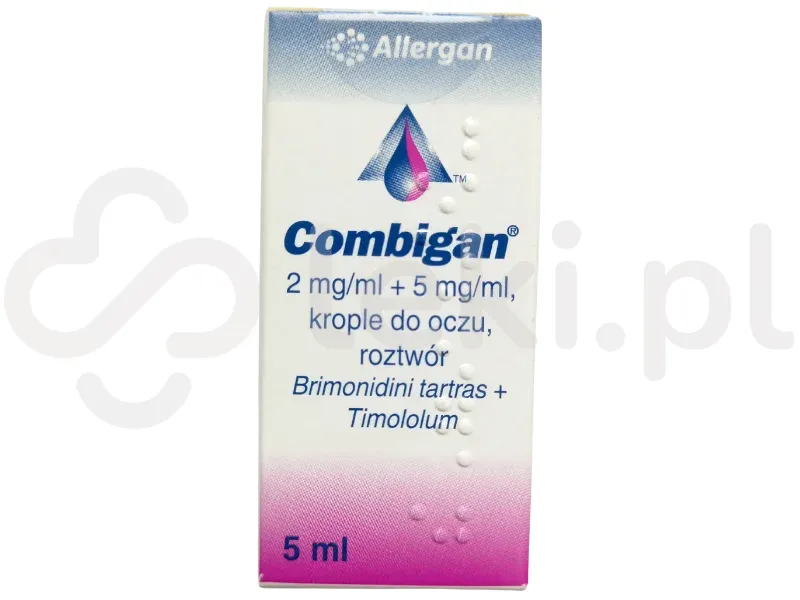
Table of Contents
Patient Information Leaflet
Combigan, 2 mg/ml + 5 mg/ml, ophthalmic solution, eye drops
Brimonidine tartrate + Timolol
Please read this leaflet carefully before using the medicine, as it contains important information for the patient.
- Keep this leaflet for future reference.
- If you have any questions, consult your doctor or pharmacist.
- This medicine has been prescribed for a specific individual. Do not pass it on to others. It may harm someone else, even if their symptoms are the same.
- If you experience any adverse reactions, including any not listed in this leaflet, inform your doctor or pharmacist. See section 4.
Table of Contents
- What Combigan is and what it is used for
- Important information before using Combigan
- How to use Combigan
- Possible side effects
- How to store Combigan
- Contents of the pack and other information
1. What Combigan is and what it is used for
Combigan eye drops are indicated for the treatment of glaucoma. It contains two active substances (brimonidine and timolol) which reduce elevated intraocular pressure. Brimonidine belongs to a group of medicines called alpha-2 adrenergic agonists. Timolol belongs to a group of medicines called beta-adrenolytics. Combigan is used to treat elevated intraocular pressure when treatment with eye drops containing only a beta-adrenolytic is insufficient.
The eye contains a clear, watery fluid that nourishes the inside of the eye. This fluid is continuously drained from the eye and replaced by newly formed fluid. If the fluid is not drained adequately, intraocular pressure increases, which may eventually lead to damage to vision. Combigan works by reducing the production of fluid and increasing the outflow of fluid from the eye. As a result, intraocular pressure is reduced, while the eye remains properly nourished.
2. Important information before using Combigan
When not to use Combigan
- if the patient is allergic (hypersensitive) to brimonidine tartrate, timolol, beta-blockers, or any of the other ingredients of this medicine (listed in section 6). Signs of an allergic reaction may include swelling of the face, lips and throat, wheezing, feeling weak, shortness of breath, itching or redness around the eye
- if the patient has or has previously had respiratory disorders such as asthma or severe chronic obstructive pulmonary disease (a severe lung disease characterized by symptoms such as: wheezing, difficulty breathing and/or persistent cough)
- if the patient has heart problems such as slow heart rate, heart failure, or heart rhythm disorders (not controlled by a cardiac pacemaker)
- if the patient is taking monoamine oxidase inhibitors (MAO inhibitors) or certain other antidepressant medicines
A patient to whom any of the above points apply should not use
Combigan without first consulting a doctor.
Warnings and precautions
Before starting to use Combigan, discuss the following with your doctor:
- if the patient currently has or has previously had any of the following conditions:
- ischemic heart disease (symptoms may include: chest pain or tightness, shortness of breath, angina)
- heart failure, low blood pressure
- heart rhythm disorders, including slow heart rate
- respiratory disorders, asthma, severe chronic obstructive lung disease
- diseases associated with peripheral circulation disorders (such as Raynaud's disease or Raynaud's phenomenon)
- diabetes, because timolol may mask the subjective and objective symptoms of low blood sugar
- hyperthyroidism, because timolol may mask its subjective and objective symptoms
- kidney or liver disease
- pheochromocytoma
- previous eye surgery to reduce intraocular pressure
- if the patient currently has or has previously had allergies (e.g. hay fever, rash) or severe allergic reactions; note that in such cases, a higher dose of adrenaline may be required to treat a severe allergic reaction
- before surgery, inform the doctor that the patient is using Combigan, as timol0l may affect the action of certain anesthetic drugs.
Children and adolescents
Combigan should not be given to children under 2 years of age, and its use is not recommended in children and adolescents aged 2 to 17 years.
Combigan and other medicines
Combigan may affect the action of other medicines taken concomitantly, including other eye drops used to treat glaucoma.
Tell your doctor about all medicines the patient is currently taking or has recently taken, as well as any medicines the patient plans to use, including medicines used for other conditions, even those unrelated to eye disorders, and over-the-counter medicines. Many medicines may interact with Combigan, so it is especially important to inform the doctor if the patient is taking:
- painkillers
- sleeping pills or sedatives
- medicines for high blood pressure
- heart medicines (e.g. for heart rhythm disorders) such as beta-blockers, digoxin, quinidine (used to treat heart disorders and certain types of malaria)
- medicines used in diabetes or conditions associated with high blood sugar levels
- antidepressants such as fluoxetine or paroxetine
- other eye drops used to lower elevated intraocular pressure (glaucoma)
- medicines used to treat severe allergic reactions
- medicines affecting levels of certain hormones in the body, such as adrenaline, dopamine
- medicines acting on blood vessel muscles
- medicines for heartburn or stomach ulcers
- inform the doctor if the dose of any recently taken medicine has changed or if the patient regularly consumes alcohol
- if anesthesia is planned, inform the doctor or dentist that the patient is using Combigan
Pregnancy and breastfeeding
If the patient is pregnant or breastfeeding, suspects she may be pregnant, or is planning to become pregnant, she should consult a doctor or pharmacist before using this medicine. Combigan should not be used during pregnancy except when considered necessary by a doctor.
Combigan should not be used during breastfeeding. Timolol may pass into human milk. During breastfeeding, consult a doctor before using any medicine.
Driving and operating machinery
Combigan may cause drowsiness, fatigue or blurred vision. Do not drive or operate machinery until these symptoms have subsided.
If problems persist, consult a doctor.
Combigan contains benzalkonium chloride
This medicine contains 0.25 mg of benzalkonium chloride in each 5 ml of solution, equivalent to 0.05 mg/ml.
- Benzalkonium chloride may be absorbed by soft contact lenses and may change their color. Contact lenses should be removed before using this medicine, and reinserted only after 15 minutes.
- Benzalkonium chloride may also cause eye irritation, especially in patients with dry eye syndrome or corneal disorders (the transparent layer at the front of the eye). If discomfort, stinging or pain occurs after using this medicine, contact a doctor.
Combigan contains phosphates
This medicine contains 52.9 mg of phosphates in each 5 ml of solution, equivalent to 10.58 mg/ml.
If there has been serious damage to the transparent front layer of the eye (cornea), phosphates may very rarely cause corneal clouding during treatment due to calcium deposits.
3. How to use Combigan
Combigan must always be used exactly as directed by your doctor. If in doubt, consult your doctor or pharmacist. Combigan must not be used in children under 2 years of age. Combigan is also not recommended for use in children and adolescents (aged 2 to 17 years).
The recommended dose of Combigan is one drop twice daily, approximately 12 hours apart. Do not change the dosage or stop using the medicine without consulting your doctor.
If you are using Combigan together with other eye drops, you must wait at least 5 minutes between instilling Combigan and applying other eye drops.
Instructions for use
Do not use the bottle if the tamper-evident seal on the neck of the bottle is damaged before first use.
Before opening the bottle, wash your hands. Tilt your head backward and look upward.
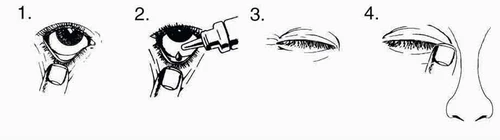
- Gently pull down the lower eyelid to form a small pocket.
- Turn the bottle upside down and gently squeeze to instill one drop into each affected eye.
- Release the lower eyelid and close the eye.
- Keep the eye closed and press with your finger on the inner corner of the eye (where the eye meets the nose) for two minutes. This helps reduce the risk of Combigan entering the systemic circulation.
If you fail to instill the drop into the eye, try again.
To prevent contamination of the drops, avoid touching the eye or any other surface with the dropper tip. Immediately after use, replace the cap and screw the bottle closed.
Use of a dose larger than recommended (overdose)
Adults
It is unlikely that any adverse effects will occur following an overdose of Combigan. Apply the next dose at the usual time. If concerned, contact your doctor.
Infants and children
There have been reports of overdose in infants and children receiving brimonidine (one of the components of Combigan) for the treatment of glaucoma. Symptoms included drowsiness, reduced muscle tone, low body temperature, pallor, and breathing difficulties. If any of these symptoms occur, contact your doctor immediately.
Adults and children
In case of accidental ingestion of Combigan, contact your doctor immediately.
Missed dose of Combigan
If you miss a dose of Combigan, instill one drop into each affected eye as soon as you remember. Then continue using the medicine regularly according to the prescribed schedule. Do not use a double dose to make up for the missed dose.
Stopping Combigan
Combigan should be used every day to achieve the desired effect.
If you have any further questions about the use of this medicine, consult your doctor or pharmacist.
4. Possible adverse effects
Like all medicines, this medicine can cause adverse effects, although not everyone will experience them.
If any of the adverse effects listed below occur, you should immediately contact your doctor:
- Heart failure (e.g. chest pain) or irregular heartbeat
- Accelerated or slowed heart rate or low blood pressure
The likelihood of an adverse effect occurring is described using the following categories:
When using Combigan medicine, the following adverse effects may occur:
Eye-related adverse effects:
Very common (may affect more than 1 in 10 people)
- Eye redness or burning sensation in the eye
Common (may affect up to 1 in 10 people)
- Stinging or eye pain
- Allergic reactions of the eye or skin around the eye
- Small cracks on the surface of the eye (with or without concurrent inflammation)
- Swelling, redness or inflammation of the eyelids
- Eye irritation or sensation of a foreign body in the eye
- Itching of the eye and eyelids
- Granules or white spots on the transparent layer covering the eye surface
- Visual disturbances
- Watery eyes
- Dry eyes
- Sticky eye discharge
Uncommon (may affect up to 1 in 100 people)
- Blurred vision
- Swelling or inflammation of the transparent layer covering the eye surface
- Feeling of eye fatigue
- Light sensitivity
- Eyelid pain
- Pallor of the conjunctiva
- Swelling or inflammatory changes in the transparent layer covering the eye surface
- Floaters in front of the eyes
Frequency not known (frequency cannot be estimated from available data)
- Blurred vision
Systemic adverse effects
Common (may affect up to 1 in 10 people):
- High blood pressure
- Depression
- Drowsiness
- Headache
- Dry mouth
- General weakness
Uncommon (may affect up to 1 in 100 people)
- Heart failure
- Irregular heartbeat
- Dizziness
- Fainting
- Dry nose
- Taste disturbances
- Nausea
- Diarrhea
Frequency not known (frequency cannot be estimated from available data)
- Increased or decreased pulse
- Low blood pressure
- Facial flushing
Some of these adverse effects may be due to an allergic reaction to any of the components of the medicine. Additional adverse effects have been observed with brimonidine or timolol and therefore may also occur during treatment with Combigan.
The following adverse effects have been reported with brimonidine use:
˗ Eye inflammation, pupil constriction, sleep disturbances, cold-like symptoms,
shortness of breath, gastrointestinal symptoms and indigestion, general allergic reactions, skin reactions including: redness, facial swelling, itching, rash, symptoms of blood vessel dilation.
As with other ophthalmic medicines, Combigan (brimonidine + timolol) is systemically absorbed. Absorption of timolol, a beta-adrenergic blocking component of Combigan, may cause adverse effects similar to those observed with intravenous and/or oral beta-blockers. Cases of adverse effects after topical ocular administration are less frequent than with oral or injectable administration. The following adverse effects include reactions observed after topical ocular use of beta-adrenergic blocking agents:
˗ Generalized allergic reactions, including angioedema (swelling of the face and extremities, which may compromise airway patency leading to swallowing or breathing difficulties), urticaria (or itchy rash), local or generalized rash, pruritus, severe, life-threatening anaphylactic reactions.
˗ Low blood glucose levels.
˗ Sleep disturbances (insomnia), nightmares, memory loss, hallucinations.
˗ Stroke, reduced cerebral blood flow, worsening of subjective and objective symptoms of myasthenia (a disease characterized by muscle weakness), sensory disturbances (tingling or prickling sensations).
- Corneal inflammation, retinal pigment epithelium detachment after filtration surgery, which may lead to visual disturbances, reduced corneal sensitivity, formation of fluid-filled pockets in the posterior part of the eye causing blurred vision, corneal erosion (damage to the front layer of the eyeball), upper eyelid ptosis (eye remains half-closed), double vision. Chronic conjunctivitis (swelling or inflammation of the transparent membrane covering the eye surface) with conjunctival fibrosis (scarring of the transparent outer layer of the eye); worsening of vision.
˗ Chest pain, edema (fluid accumulation), changes in heart rhythm or rate, arrhythmias, myocardial infarction, heart muscle failure.
˗ Raynaud's phenomenon, cold hands and feet.
˗ Narrowing of the airways in the lungs (especially in patients with pre-existing lung disease), breathing difficulties, cough.
˗ Indigestion symptoms, abdominal pain, vomiting.
˗ Hair loss, silver-white skin rash (rash resembling psoriasis) or exacerbation of psoriasis, rash.
˗ Muscle pain not caused by exercise.
˗ Sexual dysfunction, decreased libido.
˗ Muscle weakness/fatigue.
Other adverse effects reported with ophthalmic solutions containing phosphates:
Very rarely, in some patients with severe corneal damage, cases of corneal calcification have been reported during treatment with ophthalmic solutions containing phosphates.
Reporting of adverse effects
If any adverse effects occur, including any not listed in this leaflet, inform your doctor, pharmacist, or nurse. Adverse effects can be reported directly to the Department of Monitoring Adverse Drug Reactions, Office for Registration of Medicinal Products, Medical Devices and Biocidal Products
Al. Jerozolimskie 181C
PL-02 222 Warsaw
Tel.: + 48 22 49 21 301
Fax: + 48 22 49 21 309
Website: https://smz.ezdrowie.gov.pl
Adverse effects can also be reported to the marketing authorization holder.
Reporting adverse effects helps provide more information on the safety of this medicine.
5. How to store Combigan
Keep this medicine out of sight and reach of children.
Store the bottle in its outer cardboard package to protect it from light.
Use only one bottle at a time.
Do not use this medicine after the expiry date stated on the carton and on the bottle
after: EXP. The expiry date refers to the last day of the stated month.
The bottle should be discarded four weeks after first opening, even if there are still
drops remaining. This helps prevent infections. To help you remember, write down the date
of first opening in the space provided on the package.
Medicines should not be disposed of via wastewater or household waste. Ask your pharmacist
how to dispose of medicines no longer required. These measures help protect the environment.
6. Contents of the pack and other information
What Combigan contains
- The active substances in this medicine are brimonidine tartrate and timolol
- 1 ml of solution contains 2 mg of brimonidine tartrate and timolol maleate equivalent to 5 mg of timolol
- The other ingredients are: benzalkonium chloride (preservative), monosodium dihydrogen phosphate monohydrate, disodium hydrogen phosphate heptahydrate, and purified water. Small amounts of hydrochloric acid or sodium hydroxide may be added to adjust the pH to the appropriate level (a measure of the acidity or alkalinity of the solution).
What Combigan looks like and contents of the pack
Combigan is a clear, greenish-yellow solution for use as eye drops. It is supplied in a plastic bottle with a cap. Each bottle is half-filled and contains 5 ml of solution. Each package contains either 1 or 3 bottles.
Not all pack sizes may be marketed.
Marketing Authorisation Holder
AbbVie Sp. z o.o.
ul. Postępu 21B
02-676 Warszawa
Poland
tel. 22 372 78 00
Manufacturer
Allergan Pharmaceuticals Ireland
Castlebar Road
Westport
County Mayo
Ireland
Other sources of information
Detailed information about this medicine is available on the website of the Office for Registration of Medicinal Products, Medical Devices and Biocidal Products: http://urpl.gov.pl
To listen to or order a printed copy of this leaflet in large print or as an audio version, please contact the local representative of the Marketing Authorisation Holder.