Colistin tzf
Poland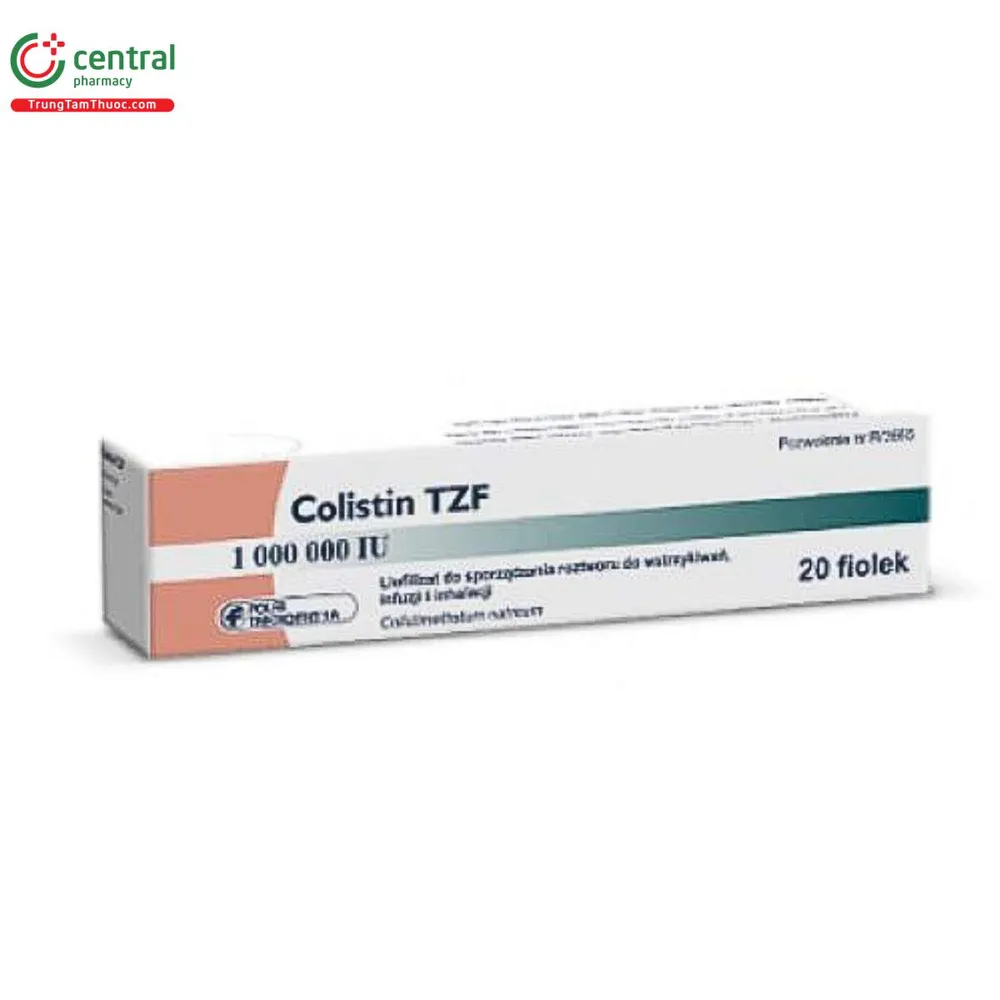
Table of Contents
- Package leaflet: Information for the patient
- 1. What Colistin TZF is and what it is used for
- 2. Important information before using Colistin TZF
- 3. How to use Colistin TZF
- 4. Possible adverse effects
- 5. How to store Colistin TZF
- 6. Contents of the pack and other information
- Information intended exclusively for medical professionals
Package leaflet: Information for the patient
COLISTIN TZF, 1,000,000 IU, lyophilisate for solution for injection, infusion and inhalation
Colistimethatum natricum
Please read all of this leaflet carefully before using this medicine, because it contains
important information for you.
- Keep this leaflet so that you can read it again if necessary.
- If you have any questions, please consult your doctor or nurse.
- This medicine has been prescribed for a specific individual. Do not pass it on to others. It may harm other people, even if their symptoms are the same.
- If you experience any adverse effects, including any not listed in this leaflet, inform your doctor or nurse. See section 4.
Contents of the leaflet
- What Colistin TZF is and what it is used for
- Important information before using Colistin TZF
- How to use Colistin TZF
- Possible side effects
- How to store Colistin TZF
- Contents of the pack and other information
1. What Colistin TZF is and what it is used for
Colistin TZF contains as the active substance colistimethate sodium (colistin), which belongs to
the group of antibiotics known as polymyxins.
- Colistin TZF is administered by injection in the treatment of certain types of severe infections caused by specific bacteria. Colistin TZF is used when other antibiotics are not suitable.
- Colistin TZF is administered by inhalation in the treatment of chronic lung infections in patients with cystic fibrosis. Colistin TZF is used when these infections are caused by bacteria called Pseudomonas aeruginosa.
2. Important information before using Colistin TZF
When not to use Colistin TZF
- If the patient is allergic (hypersensitive) to sodium colistimethate, colistin, other polymyxins, or to any of the other ingredients of this medicine (listed in section 6).
Warnings and precautions
Before starting treatment with Colistin TZF, discuss with the doctor if:
✓ the patient has or has had kidney function disorders – the doctor will adjust the dosage according to the degree of renal impairment;
✓ the patient suffers from myasthenia gravis;
✓ the patient suffers from porphyria (a rare, usually hereditary metabolic disorder);
✓ the patient suffers from asthma.
If the patient experiences muscle cramps, fatigue, or increased urine output, the doctor should be informed immediately, as these events may be related to a condition known as pseudohyperaldosteronism (pseudohypoaldosteronism).
When Colistin TZF is administered by inhalation, chest tightness and breathing difficulties may occur. The doctor usually recommends monitoring of blood counts and blood urea levels, especially in patients with renal impairment, cystic fibrosis, newborns, and patients receiving high doses of the drug.
Particular caution should be exercised when administering Colistin TZF to preterm infants and newborns, as their kidneys are not yet fully developed.
Colistin TZF and other medicines
Inform the doctor about all medicines currently used or recently taken, as well as any medicines the patient plans to take.
In particular, inform the doctor if the patient is taking any of the following medicines:
- Medicines that may affect kidney function (e.g. aminoglycoside antibiotics such as gentamicin, amikacin, tobramycin). Concurrent use of these medicines with Colistin TZF may increase the risk of kidney damage.
- Medicines that may affect the nervous system. Concurrent use of such medicines with Colistin TZF may increase the risk of nervous system-related adverse effects.
- Medicines known as neuromuscular blocking agents, often used during general anesthesia. Colistin TZF may enhance the effect of these medicines. If the patient is to undergo general anesthesia, they should inform the anesthesiologist that they are taking Colistin TZF.
If the patient is taking any of these medicines, the doctor may, in some cases, decide to discontinue one of them during treatment with Colistin TZF, reduce the dose of one of the medicines, or recommend frequent monitoring of colistin blood levels.
If the patient has myasthenia gravis and is also taking other antibiotics known as macrolides (such as azithromycin, clarithromycin, or erythromycin) or antibiotics known as fluoroquinolones (such as ofloxacin, norfloxacin, and ciprofloxacin), taking Colistin TZF may further increase the risk of muscle weakness and breathing difficulties.
Concurrent intravenous infusion and inhalation of Colistin TZF may increase the risk of adverse effects.
Pregnancy and breastfeeding
If the patient is pregnant or breastfeeding, suspects she may be pregnant, or is planning to have a child, she should consult her doctor before using this medicine.
Colistin TZF should not be used during pregnancy unless the doctor considers it absolutely necessary.
Colistin is excreted in human milk. It should be used with great caution in breastfeeding women, only if absolutely necessary.
Driving and operating machinery
Colistin may impair psycho-motor performance. If the patient experiences adverse effects such as dizziness or visual disturbances, they should not drive or operate machinery (see section 4. "Possible adverse effects").
3. How to use Colistin TZF
The doctor will determine the dose and duration of treatment depending on the severity of the infection,
the susceptibility of the microorganism causing the infection, the patient's health status, age, and body weight.
The patient must not use this medicine independently.
The medicine will be administered to the patient by a healthcare professional (doctor or nurse), in accordance with the doctor's instructions.
Colistin TZF must not be administered intrathecally or intraventricularly.
Intravenous and intramuscular administration
Colistin TZF is administered by a doctor, usually intravenously as injections or by infusion.
If intravenous administration is not possible, sodium colistimethate may be given intramuscularly.
Instructions for administration and preparation of solutions are provided at the end of this leaflet in the section intended exclusively for healthcare professionals.
The dose is expressed in international units (IU) of sodium colistimethate. Information intended solely for healthcare professionals includes a table for converting the dose of sodium colistimethate expressed in IU to sodium colistimethate in mg and to mg of colistin base activity (CBA).
Adults and adolescents
The usual daily dose in adults is 9 million units, divided into two or three doses. If the patient is very ill (in critical condition), an initial higher dose of 9 million units may be administered once at the beginning of treatment.
In some cases, the doctor may decide to administer a higher daily dose of up to 12 million units.
Use in children
The usual daily dose in children weighing up to 40 kg is 75,000 to 150,000 units per kilogram of body weight, divided into three doses.
Higher doses have occasionally been used in cystic fibrosis.
For children weighing more than 40 kg, the doctor may consider applying adult dosing recommendations.
Special patient groups
In patients with impaired renal function, neonates, and patients with cystic fibrosis, the doctor will recommend frequent monitoring of colistin blood levels.
Children and adults with impaired renal function, including those undergoing dialysis, usually receive lower doses – dosing recommendations are provided at the end of this leaflet in the section intended exclusively for healthcare professionals.
The doctor will regularly monitor kidney function during treatment with Colistin TZF.
Caution should be exercised when administering sodium colistimethate to patients with impaired liver function.
Inhalation administration
The usual dose for adults, adolescents, and children aged 2 years or older is 1 to 2 million units two to three times daily (maximum 6 million units per day).
The usual dose for children under 2 years of age is 0.5 to 1 million units twice daily (maximum 2 million units per day).
The doctor may decide to adjust the dose depending on the patient's health status. If the patient is using other inhaled medicines, the doctor will inform the patient about the correct order of administration.
Instructions for administration and preparation of solutions
Detailed information is provided at the end of this leaflet in the section intended for healthcare professionals – "Information intended exclusively for healthcare professionals."
Use of more than the recommended dose of Colistin TZF
If the patient believes they have received more than the recommended dose, they must inform the doctor, pharmacist, or nurse as quickly as possible.
Overdose may intensify adverse effects and may be life-threatening. Appropriate treatment may be necessary after discontinuation of the medicine.
Missed dose of Colistin TZF
If a dose has been missed, the medicine should be administered as soon as possible, provided there is sufficient time before the next scheduled dose, or regular dosing should be continued.
Do not use a double dose to make up for a missed dose.
Stopping treatment with Colistin TZF
It is important to use the medicine according to the recommended treatment schedule. Do not stop treatment even if the patient feels better. Premature discontinuation of treatment may cause the infection to return.
4. Possible adverse effects
Like all medicines, this medicine can cause adverse effects, although they do not occur in everyone.
These include:
- transient sensory disturbances (manifesting as facial numbness), dizziness, speech disturbances, visual disturbances, feeling of disorientation, psychosis may occur in patients receiving high doses of the medicine, in patients with renal insufficiency in whom the dose has not been appropriately reduced, and in patients simultaneously receiving muscle relaxants (curare-type) or medicines with neurotoxic effects; reducing the dose of the medicine alleviates the above-described disturbances;
- apnoea;
- allergic skin rashes; if a rash occurs, the medicine should be discontinued and the doctor informed;
- disturbances in kidney function; these disturbances usually resolve after discontinuation of the medicine;
- irritation at the injection site, fever.
After intravenous administration, the following symptoms may occur, which may be related to a condition
known as pseudohyperaldosteronism (see section 2):
- muscle cramps;
- increased urination;
- fatigue.
Adverse effects that may occur after inhalation administration:
- bronchospasm;
- sore throat or oral cavity pain, caused by hypersensitivity or candidiasis;
- skin rashes due to hypersensitivity.
Reporting of adverse effects
If any adverse effects occur, including any adverse effects not listed
in this leaflet, tell your doctor, pharmacist, or nurse. Adverse effects
can be reported directly to the Department of Monitoring Adverse Drug Reactions of the Office for Registration of Medicinal Products, Medical Devices and Biocidal Products
Al. Jerozolimskie 181C, 02-222 Warsaw
Tel.: + 48 22 49 21 301; Fax: + 48 22 49 21 309
Website: https://smz.ezdrowie.gov.pl
Adverse effects can also be reported to the marketing authorization holder.
By reporting adverse effects, additional information on the safety of the medicine can be collected.
5. How to store Colistin TZF
Keep this medicine out of sight and reach of children.
Store below 25 °C. Protect from light.
Do not use this medicine after the expiry date (EXP) stated on the packaging. The expiry date refers to the last day of the stated month.
Medicines must not be disposed of via wastewater or household waste. Ask your pharmacist how to dispose of medicines no longer required. Such measures help protect the environment.
6. Contents of the pack and other information
What Colistin TZF contains
The active substance is colistimethate sodium (colistin).
One vial contains 1,000,000 IU (approximately 80 mg) of colistimethate sodium.
The product does not contain any other ingredients.
What Colistin TZF looks like and contents of the pack
A white or cream-colored lyophilisate in the form of a cake or fragments of varying size.
Pack: 1 vial or 20 vials in a cardboard box.
Marketing Authorisation Holder and Manufacturer
Marketing Authorisation Holder
Tarchomin Pharmaceutical Works "Polfa" Joint Stock Company
A. Fleminga 2 St.,
03-176 Warsaw
Phone number: 22 811 18 14
For further information on this medicinal product, please contact the Marketing Authorisation Holder.
Manufacturer
Tarchomin Pharmaceutical Works "Polfa" Joint Stock Company
A. Fleminga 2 St.,
03-176 Warsaw
Manufacturer
LYOCONTRACT GmbH
Pulverwiese 1
38871 Ilsenburg
Germany
Information intended exclusively for medical professionals
For additional information, see the Summary of Product Characteristics.
Dosing in adult patients with renal function impairment
Dosing recommendations in children with renal function impairment have not been established.
In adults with renal function impairment, dose adjustment is necessary, but pharmacokinetic data
available for patients with renal function impairment are very limited.
The following dosage adjustment is recommended as a guideline.
In patients with creatinine clearance <50 mL/min, dose reduction is recommended.
Administration twice daily is recommended.
| Creatinine clearance [mL/min] | Daily dose |
| <50-30 | 5.5 to 7.5 million IU |
| <30-10 | 4.5 to 5.5 million IU |
| <10 | 3.5 million IU |
1 million IU = 1 million IU
Hemodialysis and continuous hemofiltration or hemodiafiltration
Colistin appears to be dialyzed during conventional hemodialysis and continuous venovenous
hemofiltration or hemodiafiltration (CVVHF, CVVHDF). Available data from population
pharmacokinetic studies involving a very small number of patients undergoing renal replacement
therapy are extremely limited. Precise dosing recommendations cannot be provided. The following
regimens may be considered.
Hemodialysis
Days without HD: 2.25 million IU/day (2.2 to 2.3 million IU/day).
HD days: 3 million IU on hemodialysis days, to be administered after the HD session.
Administration twice daily is recommended.
CVVHF or CVVHDF
Same as in patients with normal renal function. Administration three times daily is recommended.
Route of administration and preparation of solutions
Colistin TZF must not be administered intrathecally or intraventricularly.
Intravenous administration
Sodium colistimethate is usually administered by intravenous infusion in 50 mL of solution over
approximately 30 minutes or by intravenous injection (dose up to 2 million IU) in 10 mL of solution
over at least 5 minutes.
Infusion solution
Reconstitute the vial contents with approximately 2 mL of water for injections, gently shaking – avoid
foaming. Dilute this solution with 0.9% sodium chloride solution to a final volume of 50 to 100 mL
and administer by intravenous infusion.
Solution for intravenous injection
Reconstitute the vial contents with approximately 2 mL of water for injections, gently shaking – avoid
foaming. Dilute this solution with 0.9% sodium chloride solution to a final volume of approximately
10 mL and administer by slow intravenous injection.
Intramuscular administration
If intravenous administration is not possible, sodium colistimethate may be administered
intramuscularly (slowly injected into large muscles).
Solution for intramuscular injection
Reconstitute the vial contents with approximately 2 mL of water for injections, gently shaking – avoid
foaming. Dilute this solution with water or 0.9% sodium chloride solution to a final volume of
approximately 5 mL.
Inhalation administration
The inhalation solution should be prepared in a suitable nebulizer (available in pharmacies).
Preparation of inhalation solution
Dissolve the appropriate dose of sodium colistimethate in 2 to 4 mL of water for injections or 0.9%
sodium chloride solution. Administer via nebulizer.
Dosage conversion table
In the EU, the dose of sodium colistimethate must be prescribed and administered exclusively in
international units (IU). The number of IU per vial is indicated on the product label.
Due to different methods of expressing dosage in terms of potency, confusion and medication errors
have occurred. In the United States and other parts of the world, the dose is expressed in milligrams
of colistin base activity (mg CBA).
The conversion table below is provided for informational purposes only, and the values should be
considered nominal and approximate.
Sodium colistimethate conversion table
| Potency | ≈ mass of sodium colistimate [mg]* [mg]* | |
| IE | ≈ mg CBA | |
| 12 500 | 0.4 | 1 |
| 150 000 | 5 | 12 |
| 1 000 000 | 34 | 80 |
| 4 500 000 | 150 | 360 |
| 9 000 000 | 300 | 720 |
* Nominal strength of the active substance = 12,500 IU/mg
Special precautions for storage
According to good practice, the solution should be administered immediately after
preparation.
The solution for injections prepared as described above remains stable for 24 hours at a temperature of 2°C to 8°C (refrigerator).
The prepared solution for infusion should be used within 24 hours.
The prepared solution for inhalation should be administered immediately after preparation.
The solution may be used only if it is clear and free from particulate matter.
Special precautions for disposal of unused product or waste material
Any unused product or waste material should be disposed of in accordance with local regulations.
Pharmaceutical incompatibilities
Sodium colistimethate shows physicochemical incompatibilities with erythromycin, hydrocortisone, carbenicillin, cephalothin, cephaloridine, kanamycin, and lincomycin hydrochloride. Solutions of sodium colistimethate should not be mixed with other medicinal products.