Cluvot 250 j.m.
Poland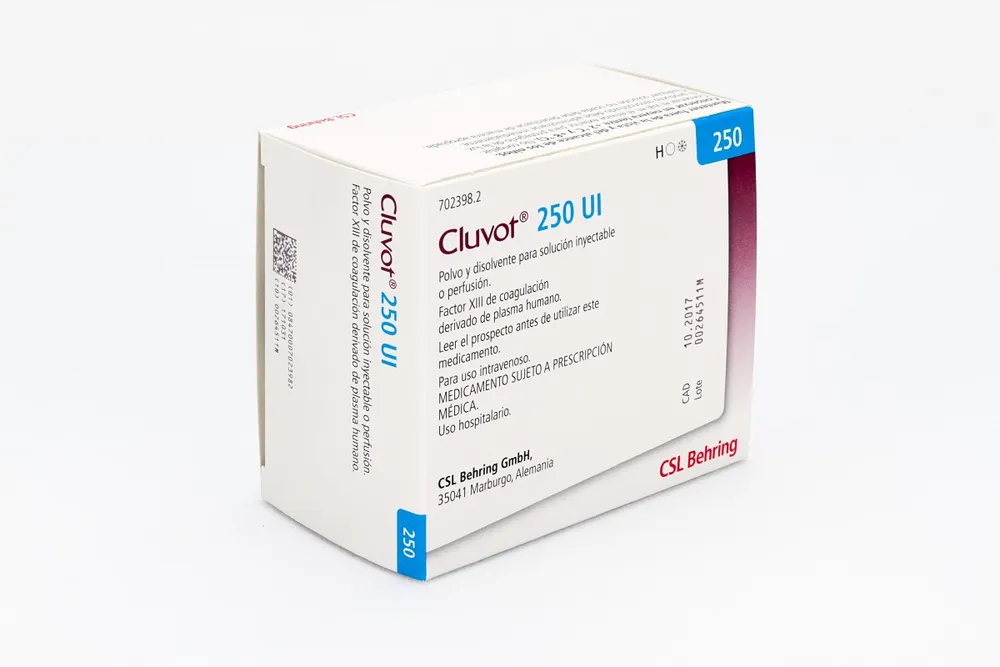
Table of Contents
- Package leaflet: Information for the patient
- 1. What Cluvot is and what it is used for
- 2. Important information before using Cluvot
- 3. How to use Cluvot
- 4. Possible adverse reactions
- 5. How to store Cluvot
- 6. Contents of the pack and other information
- Information intended exclusively for medical professionals:
Package leaflet: Information for the patient
Cluvot 250 IU
Powder and solvent for solution for injection / infusion
Human coagulation Factor XIII
Please read this leaflet carefully before using the medicine, because it contains
important information for the patient.
- Keep this leaflet, so that you can read it again if necessary.
- If you have any doubts, please consult your doctor or pharmacist.
- This medicine has been prescribed for a specific individual. Do not give it to others. The medicine may harm another person, even if their symptoms are the same.
- If any adverse reactions occur in the patient, including any adverse reactions not listed in this leaflet, inform your doctor or pharmacist. See section 4.
Table of contents of the leaflet
- What Cluvot is and what it is used for
- Important information before using Cluvot
- How to use Cluvot
- Possible side effects
- How to store Cluvot
- Contents of the pack and other information
1. What Cluvot is and what it is used for
What Cluvot is
Cluvot is a medicine available as a white powder and solvent. The prepared solution should be administered
by intravenous injection.
Cluvot is human coagulation Factor XIII (F XIII) derived from human plasma (the liquid part of blood) and plays an important role in the haemostasis process (stopping bleeding).
Why Cluvot is used
Cluvot is indicated for use in adults, children and adolescents.
- for prophylactic treatment of congenital Factor XIII deficiency, and
- in perioperative management for the treatment of bleeding during surgical procedures in patients with congenital Factor XIII deficiency.
2. Important information before using Cluvot
This section of the leaflet contains information that should be considered before starting treatment with
the medicine
Cluvot.
When not to use Cluvot:
- if the patient is allergic to the active substance or to any of the other ingredients of this medicine (listed in section 6). The doctor should be informed if there is hypersensitivity to any medication or food.
Warnings and precautions:
- if allergic reactions occurred in the past after administration of blood coagulation factor XIII. Antihistamines and corticosteroids should be used prophylactically if the doctor decides so.
- if allergic symptoms or anaphylactic-type reactions occur (severe allergic symptoms may cause significant breathing difficulties or dizziness). Administration of Cluvot must be immediately stopped (i.e. interruption of injection or infusion). In case of shock, treatment should be administered according to current medical standards.
- if recent thrombosis (blood clot) has occurred. The patient should be carefully monitored due to the fibrin-stabilizing effect of factor XIII.
- formation of inhibitors (neutralizing antibodies) is a known complication of treatment and means that the treatment stops working. If bleeding is not controlled with Cluvot, the doctor should be informed immediately. The patient should be closely monitored for the development (appearance) of inhibitors.
The doctor should always weigh the benefits of treatment against the risk of complications.
Viral safety
When medicines produced from human blood or plasma are used, various measures are taken to protect
patients from transmission of infectious agents. These measures include:
- careful selection of blood and plasma donors to exclude the risk of transmission of infectious agents
- testing of each donation and plasma pools for the presence of markers of viruses/infections
- inclusion in the manufacturing process of steps that may lead to inactivation or removal of viruses.
Despite the application of the above-mentioned measures, it cannot be completely excluded that transmission of infectious agents may occur after administration of a medicinal product derived from human blood or plasma. This risk also applies to unknown or newly discovered viruses and other infectious agents.
The protective measures taken are effective against enveloped viruses such as human immunodeficiency virus (HIV, causing AIDS), hepatitis B virus (HBV, causing hepatitis B), hepatitis C virus (HCV, causing hepatitis C), as well as non-enveloped viruses such as hepatitis A virus (HAV, causing hepatitis A) and parvovirus B19.
In patients repeatedly receiving products derived from human plasma, vaccination against hepatitis A and B should be considered.
It is recommended that whenever Cluvot is administered, the date of administration, batch number, and infused volume should be recorded in the patient's documentation.
Cluvot and other medicines
- Inform the doctor or pharmacist about any other medicines being taken, including those available without a prescription.
- There is no known interaction between coagulation factor XIII concentrate and other medicinal products.
- Cluvot must not be mixed with other medicinal products, solvents, or diluents, except those mentioned in section 6, and should be administered using separate infusion sets.
Pregnancy and breastfeeding
- If the patient is pregnant or breastfeeding, suspects she may be pregnant, or is planning to have a child, she should consult a doctor or pharmacist before using this medicine.
- Limited clinical data on the use of Cluvot during pregnancy do not indicate any adverse effects on pregnancy or embryonic and postnatal development. If necessary, Cluvot may be considered for use during pregnancy.
- It is not known to what extent Cluvot passes into human breast milk; however, due to its high molecular weight, excretion in breast milk is very unlikely, and because of its protein nature, absorption of intact molecules by the newborn is also unlikely. Therefore, Cluvot may be used during breastfeeding.
- There are no data on the effect of Cluvot on fertility.
Driving and operating machinery
No studies have been conducted on the effect on the ability to drive vehicles and operate machinery.
Important information about some ingredients of Cluvot
Cluvot contains sodium.
It should be noted that Cluvot contains sodium. This is important for patients on a controlled low-sodium diet. Cluvot contains 124.4 to 195.4 mg (5.41 to 8.50 mmol) of sodium per dose (40 j.m./body weight – at an average body weight of 70 kg), when the recommended dose is administered (2800 j.m. = 44.8 ml).
3. How to use Cluvot
- Cluvot is usually administered by a doctor.
- Cluvot is intended for intravenous use only.
Dosage
The appropriate dose and frequency of administration of Cluvot should be determined by the doctor, taking into account the patient's progress in treatment.
For more detailed recommendations, see section: "Information intended solely for medical personnel or healthcare professionals".
Overdose
Cases of overdose have not been reported and are not expected when this medicine is administered by medical personnel.
4. Possible adverse reactions
Like any medicine, this medicine can cause adverse reactions, although not everyone experiences them.
The following adverse reactions have been observed rarely (occurred in more than 1 in 10,000 patients
and less than 1 in 1,000):
- Allergic reactions such as generalized urticaria (itchy skin swelling), rash, hypotension (which may cause feelings of faintness or dizziness), breathing difficulties.
- Increase in body temperature.
The following adverse reactions have been observed very rarely (occurred in less than 1 in 10,000
patients):
- Formation of FXIII inhibitors.
If allergic reactions occur, administration of Cluvot should be immediately discontinued
and appropriate treatment initiated. Current medical standards for the treatment of shock should be applied.
Adverse reactions in children and adolescents
Adverse reactions in children are expected to be the same as in adults.
Reporting of adverse reactions
If any adverse symptoms occur, including any adverse symptoms not listed in this leaflet, inform your doctor or pharmacist. Adverse reactions can be reported directly to the Department of Monitoring of Adverse Drug Reactions of the Office for Registration of Medicinal Products, Medical Devices and Biocidal Products
Al. Jerozolimskie 181C,
02-222 Warsaw
Tel.: + 48 22 49 21 301
Fax: + 48 22 49 21 309
Website: https://smz.ezdrowie.gov.pl
Adverse reactions can also be reported to the marketing authorization holder.
Reporting adverse reactions enables further information on the safety of the medicine to be collected.
5. How to store Cluvot
- Store in a refrigerator (2 °C - 8 °C).
- Do not freeze.
- Keep in the outer packaging to protect from light.
- Cluvot does not contain preservatives. The medicinal product should be used immediately after reconstitution. If not used immediately, the solution may be kept at room temperature for no longer than 4 hours. Do not store the reconstituted solution in the refrigerator or freeze it.
- Keep the medicine out of the sight and reach of children.
- Do not use Cluvot after the expiry date stated on the label and outer packaging following the abbreviation EXP.
- The product batch number is indicated on the outer packaging and label following the abbreviation: Lot.
6. Contents of the pack and other information
What Cluvot contains
Active substance:
Coagulation factor XIII concentrate, human plasma (FXIII) containing 250 IU per vial.
Excipients:
Human albumin, monohydrate glucose, sodium chloride, sodium hydroxide (in small amounts for pH adjustment).
Solvent: Water for injections
What Cluvot looks like and contents of the pack
Cluvot is supplied as a white powder and the accompanying solvent, which is water for injections.
The reconstituted solution should be colourless, clear to slightly opalescent. When held up to the light, it should not be cloudy or contain residues (clumps/particles).
Pack sizes
One 250 IU pack contains:
1 vial of powder
1 vial containing 4 ml of water for injections
1 transfer system with filter (Mix2Vial), 20/20
Administration set (inner packaging):
1 single-use syringe with a capacity of 5 ml
1 infusion set
2 alcohol-impregnated swabs
1 non-sterile plaster
Marketing Authorisation Holder and Manufacturer
CSL Behring GmbH
Emil-von-Behring-Strasse 76
35041 Marburg
Germany
Information intended exclusively for medical professionals:
Dosage
1 ml corresponds approximately to 62.5 IU, and 100 IU is equivalent to approximately 1.6 ml.
Important:
The amount required and the frequency of administration should always be adjusted according to clinical effectiveness in individual patients.
Dosage
The dosage should be individually adjusted depending on body weight, laboratory test results, and the patient's clinical condition.
Routine dosage regimen for prophylaxis
Initial dose
- 40 international units (IU) per kilogram of body weight.
- Infusion rate should not exceed 4 ml per minute.
Subsequent doses
- Dosing should be determined based on current FXIII activity levels; doses should be administered at 28-day (4-week) intervals to maintain a minimum FXIII activity level of approximately 5 to 20%.
- Recommended dosage adjustment of +/- 5 IU per kg body weight should be calculated based on the measured minimum FXIII activity level as shown in Table 1 and the patient's clinical condition.
- Dosage adjustments should be guided by a specific, sensitive assay for measuring FXIII levels. Examples of dosage adjustments using the standard Berichrom activity assay are presented in Table 1 below.
Table 1: Dosage adjustment using the Berichrom activity assay
| Minimum factor XIII activity level (%) | Dose adjustment |
| One minimum level < 5% | Increase by 5 units per kg. |
| Minimum level 5% to 20% | No change |
| Two minimum levels > 20% | Decrease by 5 units per kg. |
| One minimum level > 25% | Decrease by 5 units per kg. |
Activity expressed in units is determined using the Berichrom activity test, which refers to the current International Standard for Human Coagulation Factor XIII. Therefore, one unit corresponds to one International Unit.
Preoperative prophylaxis.
After the last dose administered as part of routine prophylaxis, in the case of a planned surgical procedure:
- Between 21 and 28 days after the last dose: a full dose should be administered to the patient immediately before surgery, and the next prophylactic dose should be given 28 days later.
- Between 8 and 21 days after the last dose: an additional dose (full or partial) may be administered before surgery. The dose should be based on the patient's FXIII activity level, clinical condition, and should be adjusted according to the half-life of the medicinal product Cluvot.
- Within 7 days after the last dose: additional administration may not be necessary.
Dosage adjustment may differ from the recommended dosage and should be individually tailored based on the patient's Factor XIII activity level and clinical condition. All patients should be closely monitored during and after surgery.
Therefore, monitoring of the increase in Factor XIII activity level using a Factor XIII assay is recommended. In the case of major surgical procedures and significant bleeding, the target should be achieving levels close to normal values (healthy individuals: 70%–140%).
Children and adolescents
Dosing and administration in children and adolescents are based on body weight and therefore generally do not differ from adult guidelines. Dosing and/or frequency of administration for each patient should always be adjusted according to clinical efficacy and FXIII activity levels.
Elderly patients
Dosing and administration in elderly patients (>65 years of age) have not been documented in clinical studies.
Administration method
General instructions
The solution should be clear or slightly opalescent. After filtration/withdrawal of the vial contents (see below), the reconstituted product should be visually inspected before administration; check for any particulate matter or discoloration.
Do not use cloudy solutions or those containing flakes or particles.
Reconstitution and withdrawal from the vial must be performed under aseptic conditions.
Reconstitution
Allow the diluent to reach room temperature. Remove the plastic caps from the vials containing the powder and diluent, and wipe the stoppers aseptically with an antiseptic solution. After drying, open the Mix2Vial transfer device system.
1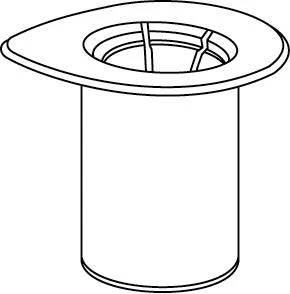 |
|
2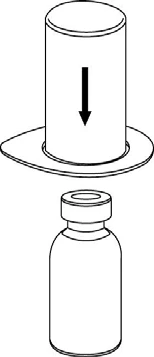 |
|
3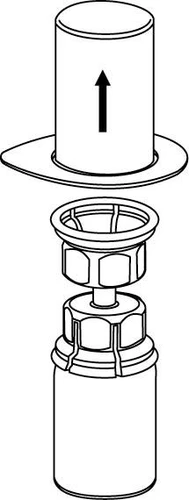 |
|
4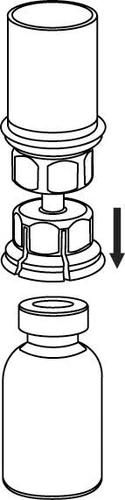 |
|
5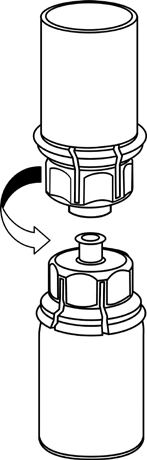 |
|
6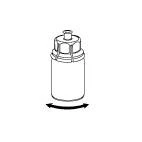 |
|
7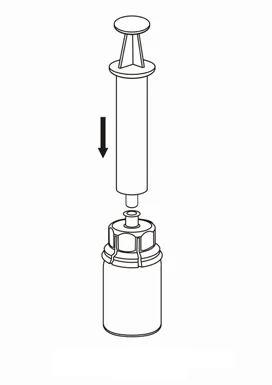 |
|
Retrieval and method of administration
8 |
|
9 |
|
Caution should be exercised to prevent blood from entering the syringe filled with the medicinal product, as there is a risk that blood may clot in the syringe and fibrin clots could be administered to the patient.
The reconstituted solution should be administered through separate injection/infusion sets (supplied with the product) by slow intravenous injection at a rate not exceeding 4 ml per minute.
Any unused medicinal products and waste materials should be disposed of in accordance with local requirements.