Clotidal
Poland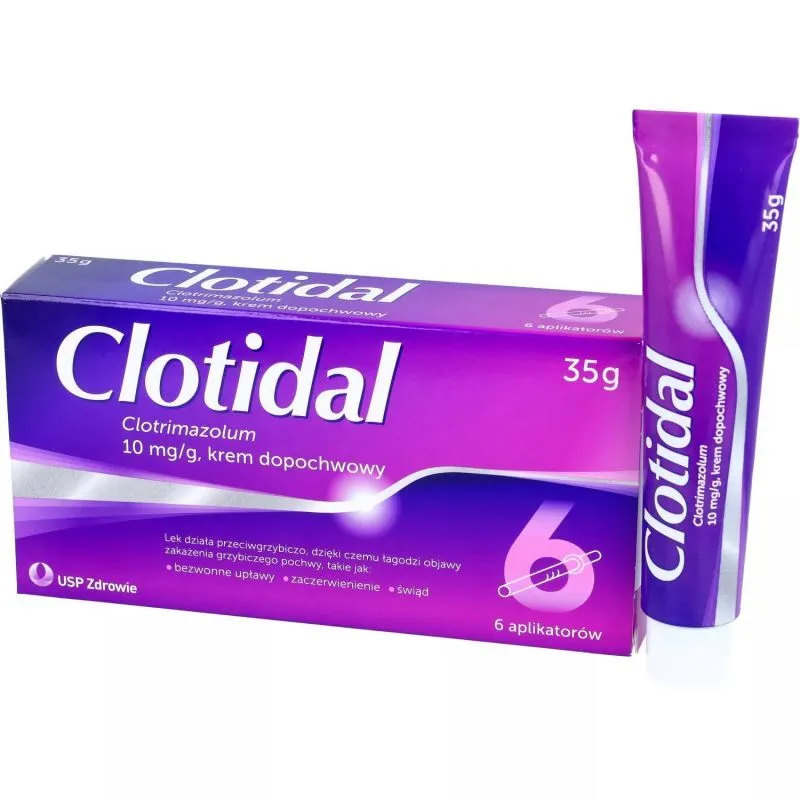
Table of Contents
Package leaflet: Information for the patient
Clotidal, 10 mg/g, vaginal cream
Clotrimazolum
Please read carefully the entire leaflet before using the medicine, as it contains
important information for the patient.
This medicine should always be used exactly as described in the patient leaflet or according to
the instructions provided by the doctor or pharmacist.
- Keep this leaflet, so that you can read it again if necessary.
- If you need advice or further information, please consult your pharmacist.
- If you experience any adverse reactions, including any adverse reactions not listed in this leaflet, inform your doctor or pharmacist. See section 4.
- If there is no improvement after 3 days, or if your condition worsens, or if symptoms do not resolve after 7 days of treatment, contact your doctor.
Table of contents:
- What Clotidal is and what it is used for
- Important information before using Clotidal
- How to use Clotidal
- Possible side effects
- How to store Clotidal
- Contents of the pack and other information
1. What Clotidal is and what it is used for
Clotidal is a vaginal cream containing the active substance clotrimazole, which belongs to a group of medicines called antifungal agents.
Clotidal is used in the treatment of fungal infections (also known as candidiasis) of the mucous membranes of the genital organs (vulvovaginal candidiasis, vaginitis, balanitis).
Vaginal candidiasis is a common infection in women caused by a fungus called Candida. This fungus (Candida) normally lives on the skin, in the vagina, and in the faeces, but under certain conditions it can become pathogenic. Symptoms of vaginal candidiasis include itching, burning, and discharge (a whitish, odourless vaginal discharge), which usually worsen before menstruation.
Fungal infection of the glans (tip of the penis) in the sexual partner, which may cause:
- pain and redness of the penis;
- tightness of the foreskin.
If there is no improvement within 3 days of treatment, or if symptoms worsen, contact your doctor. If symptoms do not resolve after 7 days of treatment, contact your doctor.
2. Important information before using Clotidal
When not to use Clotidal:
- If the patient is allergic to clotrimazole or to any of the other ingredients of this medicine (listed in section 6).
Warnings and precautions
Before starting treatment with Clotidal, discuss this with your doctor or pharmacist.
Discuss with your doctor if:
- the patient (or patient's partner) is unsure whether symptoms of candidiasis are present or if such symptoms are occurring for the first time,
- the patient is pregnant or suspects she may be pregnant,
- the patient or her partner has ever had a sexually transmitted infection,
- there have been at least two episodes of fungal vaginal infections within the last 6 months.
Contact your doctor if any of the following symptoms occur:
- fever or chills
- irregular vaginal bleeding
- abnormal vaginal bleeding or spotting
- ulceration, erosion, or blisters in the vulvar or vaginal area
- lower abdominal pain or pain during urination
- any adverse reactions such as irritation or swelling related to treatment
- nausea and vomiting
- diarrhoea
- vaginal discharge with an unpleasant odour
- back pain
- pelvic pain.
Clotidal, when applied to genital areas (in women: intravaginally, to the labia and vulvar area; in men: to the foreskin and glans penis), may reduce the effectiveness and safety of latex products such as condoms and vaginal diaphragms. Therefore, during treatment with Clotidal, additional contraceptive methods should be used.
Children and adolescents
Clotidal is indicated for patients over 16 years of age.
Clotidal and other medicines
Inform your doctor or pharmacist about all medicines currently used, recently used, or planned to be used by the patient.
Clotidal may affect the action of oral medications containing tacrolimus or sirolimus.
Clotidal also reduces the effectiveness of amphotericin and other polyene antibiotics (e.g. nystatin, natamycin). Concurrent topical use of strongly acting corticosteroids may weaken the effect of Clotidal.
Pregnancy, breastfeeding and fertility
If the patient is pregnant or breastfeeding, suspects she may be pregnant, or is planning to have a child, she should consult her doctor or pharmacist before using this medicine.
Do not use Clotidal during pregnancy.
Breastfeeding should be discontinued during treatment with Clotidal.
There are no data available regarding the effect on fertility.
Driving and operating machinery
This medicine has no effect or has a negligible effect on the ability to drive and operate machinery.
Page 2 of 5
Clotidal contains cetearyl alcohol and 30 mg of benzyl alcohol in each one gram of vaginal cream.
Cetearyl alcohol may cause local skin reactions (e.g. contact dermatitis).
Benzyl alcohol may cause allergic reactions.
Benzyl alcohol may cause mild local irritation.
3. How to use Clotidal
This medicine should always be used exactly as described in this patient leaflet or as directed by
your doctor or pharmacist. If in doubt, consult your doctor or pharmacist.
If Clotidal has been prescribed by a doctor, follow the doctor's instructions for use. If purchased
without a prescription, follow the instructions below:
This medicine is intended for treatment of adults and adolescents over 16 years of age.
If there is no improvement after 3 days of treatment, or if symptoms worsen or do not resolve after
7 days of treatment, consult a doctor.
Vaginal candidiasis
Unless otherwise directed by a doctor, apply the medicine once daily, at bedtime, for 6 consecutive days as follows:
- Fully extend the plunger of the applicator until resistance is felt.
- Open the tube and connect the applicator to the tube. While holding them together, fill the applicator by gently squeezing the tube.
- Detach the applicator from the tube. Insert the applicator as deeply into the vagina as possible (preferably while lying down with knees slightly bent) and press the plunger to completely empty the applicator's contents.
- Remove and discard the applicator.
- Wash hands before and after using the medicine.
Although vaginal cream is administered inside the vagina, a small amount of cream may leak out after application.
- Do not use this medicine during menstruation. Complete the full course of treatment before the onset of menstruation.
- Do not use tampons, vaginal douches, spermicides, or other vaginal medicines during treatment with this medicine.
- If there is concurrent infection of the labia or genital area, in addition to using the vaginal cream, local treatment (combination therapy) should also be applied using a medicine in an appropriate pharmaceutical form (e.g. cream).
- During vaginal infection and treatment with this medicine, vaginal sexual intercourse should be avoided to prevent transmission to the partner.
- If the partner develops symptoms such as itching or inflammation of the genital organs, inform the doctor, as the partner may also require treatment.
Candidal balanitis (glans penis infection)
Apply a thin layer of the medicine 2 to 3 times daily to the affected area, gently rubbing it in. The typical treatment duration is 1 to 2 weeks.
Children and adolescents
Do not use in children and adolescents under 16 years of age.
Duration of treatment
Clotidal vaginal cream should be used for 6 consecutive days.
For local treatment of balanitis in the partner, treatment duration is 1 to 2 weeks.
Consult a doctor if there have been 2 episodes of fungal genital and vaginal infections within the past 6 months.
Use of more than the recommended dose of Clotidal
If more than the recommended dose is used or if the medicine is accidentally ingested orally, consult a doctor.
Missed dose of Clotidal
If a dose is missed, continue treatment as scheduled. Never use more medicine than recommended (1 full applicator per day for vaginal candidiasis).
If you have any further questions about the use of this medicine, consult your doctor or pharmacist.
4. Possible adverse reactions
Like all medicines, this medicine can cause adverse reactions, although not everyone experiences them.
You should contact your doctor immediately if symptoms of hypersensitivity occur, which may include, among others, fainting, low blood pressure (hypotension), breathing difficulties (dyspnoea), swelling (oedema), and urticaria.
Skin peeling around the genital area, itching (pruritus), skin eruptions, redness (erythema), discomfort, burning sensation, irritation, pelvic pain, genital bleeding, and abdominal pain may occur.
Reporting of adverse reactions
If any adverse reactions occur, including any possible adverse reactions not listed in this leaflet, inform your doctor or pharmacist.
Adverse reactions can be reported directly to the Department of Monitoring Adverse Drug Reactions at the Office for Registration of Medicinal Products, Medical Devices and Biocidal Products
ul. Al. Jerozolimskie 181C
02-222 Warsaw
Tel.: +48 22 49 21 301
Fax: +48 22 49 21 309
Website: https://smz.ezdrowie.gov.pl
Adverse reactions can also be reported to the marketing authorization holder.
Reporting adverse reactions helps to provide more information on the safety of the medicine.
5. How to store Clotidal
Do not freeze. There are no special requirements for storage temperature of the medicinal product.
Shelf life after first opening of the tube: 6 months.
Keep the medicine out of the reach and sight of children.
Do not use this medicine after the expiry date stated on the tube and on the carton after the word "EXP". The expiry date refers to the last day of the stated month. The batch number is indicated on the packaging after the abbreviation "Lot".
Page 4 of 5
Medicines must not be disposed of via wastewater or household waste. Ask your pharmacist how to dispose of medicines no longer required. These measures will help protect the environment.
6. Contents of the pack and other information
What Clotidal contains
- The active substance is clotrimazole: 1 g of vaginal cream contains 10 mg of clotrimazole.
- Other ingredients: cetyl palmitate, octyldodecanol, polysorbate 60, sorbitan stearate, benzyl alcohol, cetostearyl alcohol, purified water.
What Clotidal looks like and contents of the pack
White cream of uniform consistency.
Aluminium tube with an internal coating and polyethylene cap.
The tube contains 35 g of vaginal cream.
Pack:
Tube and 6 vaginal applicators of 5 ml each, in a cardboard box.
Marketing Authorisation Holder and Manufacturer
Marketing Authorisation Holder:
US Pharmacia Sp. z o.o.
ul. Ziębicka 40
50-507 Wrocław
Manufacturer:
Laboratórios Basi – Indústria Farmacêutica, S.A.
Parque Industrial Manuel Lourenço Ferreira, Lotes 8, 15 e 16
3450-232 Mortágua
Portugal
For further information, please contact the representative of the Marketing Authorisation Holder:
USP Zdrowie Sp. z o.o.
ul. Poleczki 35, 02-822 Warsaw
tel. +48 (22) 543 60 00
Page 5 of 5