Clonazepam tzf
Poland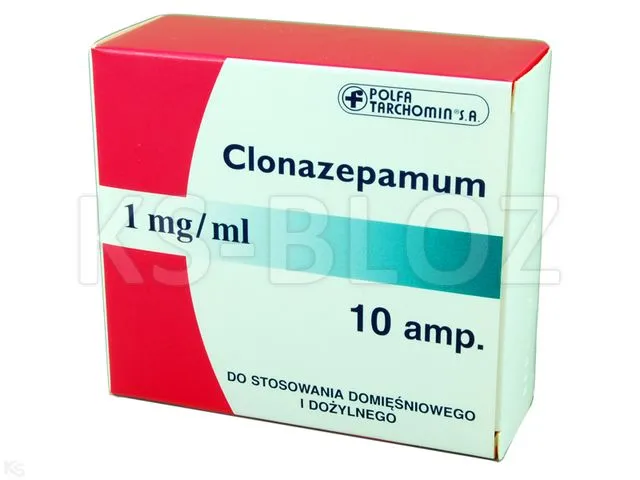
Table of Contents
Package leaflet: Information for the patient
Clonazepamum TZF, 1 mg/ml, solution for injection
Clonazepamum
Please read all of this leaflet carefully before using this medicine, because it contains
important information for you.
- Keep this leaflet so that you can read it again if necessary.
- If you have any questions, please consult your doctor or nurse.
- This medicine has been prescribed for a specific individual. Do not give it to others. This medicine may harm someone else, even if their symptoms are the same.
- If you experience any adverse effects, including any not listed in this leaflet, inform your doctor or nurse. See section 4.
Leaflet contents:
- What Clonazepamum TZF is and what it is used for
- Important information before using Clonazepamum TZF
- How to use Clonazepamum TZF
- Possible side effects
- How to store Clonazepamum TZF
- Contents of the pack and other information
1. What Clonazepamum TZF is and what it is used for
Clonazepamum TZF contains the active substance clonazepam, which belongs to a group of medicines called benzodiazepines. Clonazepamum TZF has anticonvulsant, anxiolytic, sedative, mild hypnotic, and skeletal muscle relaxant properties. It is used in the treatment of epilepsy.
Indications
Clonazepamum TZF in the form of solution for injection is a medicine used to terminate all clinical forms of status epilepticus.
2. Important information before using Clonazepamum TZF
When not to use Clonazepamum TZF
Do not use the medicine if the patient has:
- hypersensitivity (allergy) to clonazepam or other benzodiazepines, or to any of the excipients listed in section 6;
- acute respiratory failure;
- severe respiratory insufficiency;
- sleep apnoea syndrome;
- myasthenia gravis (a disease causing muscle weakness and excessive fatigue). Due to the presence of benzyl alcohol, this medicine must not be administered to newborns, especially premature infants.
Warnings and precautions
General information regarding effects observed during treatment with benzodiazepines, which should be considered when using Clonazepamum TZF.
Tolerance
After several weeks of treatment with Clonazepamum TZF, its effectiveness may decrease.
Dependence
Prolonged use of Clonazepamum TZF may lead to physical and psychological dependence. The risk of dependence increases with higher doses and longer duration of treatment, and is greater in patients with alcohol or drug dependence, or those with personality disorders.
Withdrawal symptoms
If the medicine is stopped abruptly, withdrawal symptoms may occur, such as: headache, muscle pain, increased anxiety, tension, restlessness, agitation, disorientation, sleep disturbances, irritability. In more severe cases, the following may occur: loss of sense of reality, personality disturbances, hypersensitivity to sound, touch, light, noise, tingling and numbness in limbs, hallucinations and delusions, epileptic seizures.
Anterograde amnesia
Clonazepamum TZF may cause anterograde amnesia (difficulty in learning and remembering new information – new data are not permanently stored). This usually occurs within a few hours after administration, particularly with higher doses.
Paradoxical reactions
The risk of abnormal and paradoxical (opposite to expected) psychological reactions is increased in elderly patients and in patients with alcohol dependence. Such reactions include: anxiety, excitement, irritability, aggression, anger, rage, delusions, nightmares, hallucinations, psychosis, and behavioural disturbances.
If such symptoms occur, contact your doctor immediately.
Use in depression
Before using Clonazepamum TZF, inform your doctor about any psychiatric disorders and any previous suicide attempts. Administration of Clonazepamum TZF to such patients may worsen symptoms of depression, including suicidal thoughts.
Elderly patients should receive lower doses of Clonazepamum TZF (see section 3), due to the increased risk of adverse effects, particularly disturbances in orientation and motor coordination (falls, injuries).
If the patient has any of the following conditions, inform the doctor before taking the medicine:
- chronic respiratory insufficiency;
- liver and/or kidney impairment;
- cerebellar or spinal ataxia;
- glaucoma (an eye disease characterised by increased intraocular pressure);
- porphyria (a rare metabolic disorder related to blood);
- alcohol, drug, or medication dependence. In these patients, there is a high risk of developing tolerance and physical and psychological dependence. Therefore, such patients should use Clonazepamum TZF only under strict medical supervision.
Clonazepam may cause excessive salivation and increased respiratory secretions, especially in infants and young children. Airway patency should be monitored during treatment.
Clonazepamum TZF and other medicines
Inform your doctor about all medicines currently used, recently used, or planned for use.
Clonazepam may alter the effects of other medicines, and other medicines may affect its action. This is particularly important if the patient is using any of the following medicines or consuming alcohol:
- other antiepileptic drugs (e.g. carbamazepine, phenytoin, hydantoin, phenobarbital, primidone, or sodium valproate);
- medicines used for peptic ulcer disease (e.g. cimetidine, omeprazole, cisapride);
- erythromycin (an antibiotic);
- rifampicin (used in tuberculosis treatment);
- fluvoxamine, fluoxetine, and other medicines used in psychiatric disorders;
- medicines used for insomnia, anxiolytics;
- strong analgesics (e.g. morphine);
- general anaesthetics;
- muscle relaxants (e.g. baclofen);
- oral contraceptives;
- disulfiram (used in alcoholism treatment);
- alcohol: drinking alcohol during treatment with Clonazepamum TZF may trigger epileptic seizures. Patients must not consume alcohol during treatment. Alcohol alters the effects of the medicine, reduces treatment efficacy, and increases the risk of severe, unpredictable adverse reactions.
- opioids: concomitant use of Clonazepamum TZF and opioids (strong analgesics, medications used in substitution therapy [addiction treatment], some cough medicines) increases the risk of drowsiness, breathing difficulties (respiratory depression), coma, and may be life-threatening. Therefore, concomitant use of these medicines should only be considered when no other treatment options are available.
If the doctor prescribes Clonazepamum TZF together with opioids, the dose and duration of combined treatment should be limited.
The patient should inform the doctor about all opioid medications being used and strictly follow the doctor’s dosing instructions. It may be helpful to inform family members or friends so they are aware of the potential for the above-mentioned symptoms. If such symptoms occur, contact the doctor immediately.
Pregnancy and breastfeeding
If the patient is pregnant, breastfeeding, suspects she may be pregnant, or is planning to become pregnant, she should consult a doctor before using this medicine.
Clonazepamum TZF should not be used during pregnancy.
Clonazepam passes into breast milk. If treatment is necessary, breastfeeding must be discontinued.
Driving and operating machinery
Patients with epilepsy should not drive motor vehicles or operate machinery in motion.
Important information about some excipients in Clonazepamum TZF
Clonazepamum TZF contains benzyl alcohol (31 mg per 1 ml).
Benzyl alcohol may cause allergic reactions.
Administration of benzyl alcohol to young children is associated with the risk of serious adverse effects, including breathing disorders (so-called "gasping syndrome").
Do not administer to newborns (up to 4 weeks of age) without medical advice.
Do not administer to young children (under 3 years of age) for longer than one week without medical advice or pharmacist’s recommendation.
Pregnant or breastfeeding women should consult a doctor before using the medicine, as high amounts of benzyl alcohol may accumulate in their bodies and cause adverse effects (so-called metabolic acidosis).
Patients with liver or kidney disease should consult a doctor before using the medicine, as high amounts of benzyl alcohol may accumulate in their bodies and cause adverse effects (so-called metabolic acidosis).
The medicine contains ethanol (ethyl alcohol)
The amount of alcohol in the volume (158 mg per 1 ml) of this medicine is equivalent to 4 ml of beer or 1.6 ml of wine.
The amount of alcohol in this medicine is unlikely to affect adults and adolescents, and its effects in children are likely to be unnoticeable. It may cause some effects in younger children, for example drowsiness.
Alcohol in this medicine may alter the effects of other medicines. If the patient is taking other medicines, he or she should consult a doctor or pharmacist.
Since this medicine is usually administered slowly, even over 24 hours, the effects of alcohol may be reduced.
3. How to use Clonazepamum TZF
Clonazepamum TZF must always be used according to the doctor’s instructions.
If in doubt, consult your doctor.
Clonazepamum TZF is administered by a doctor or nurse.
The medicine is usually given intravenously – by injection or infusion.
The solution of Clonazepamum TZF may also be administered intramuscularly, but only in emergency situations when intravenous access is difficult or impossible.
The doctor will start treatment with the lowest effective dose and, if necessary, gradually increase it.
Adults
Usually 1 mg; the dose may be repeated if necessary.
Do not exceed 20 mg per day.
Infants and children
Usually 0.5 mg, half an ampoule content, diluted with an equal volume of solvent, administered as a slow intravenous injection.
Duration of treatment
The duration of treatment is determined by the doctor according to the patient’s condition.
Instructions for preparing solutions are provided at the end of the leaflet, in the section “Information intended exclusively for healthcare professionals”.
If during treatment the patient feels that the medicine’s effect is too strong or too weak, he or she should consult the doctor.
Use of a higher than recommended dose of Clonazepamum TZF
The medicine is administered by a doctor or nurse, so it is unlikely that an excessive dose will be given. However, if the patient suspects that a higher dose has been administered, contact the doctor immediately or go to the nearest hospital emergency department.
Take the medicine in its original packaging so that medical staff can verify exactly which medicine was used.
Symptoms of overdose include disturbances in consciousness, drowsiness, and slurred speech. In severe cases of poisoning, the following may occur: ataxia, hypotension, muscle weakness, respiratory depression, coma.
Missed dose of Clonazepamum TZF
Do not use a double dose to make up for a missed dose.
Stopping Clonazepamum TZF treatment
Do not stop using the medicine unless advised by the doctor. Symptoms of the disease may recur. If the doctor decides to discontinue treatment, the dose may be gradually reduced over several days.
Sudden discontinuation of clonazepam may cause withdrawal syndrome (see section 2 “Warnings and precautions”). Abrupt cessation of long-term treatment or treatment with high doses is particularly dangerous and may lead to more severe withdrawal symptoms. The doctor will individually adjust the gradual tapering schedule for each patient.
If in doubt about using the medicine, consult your doctor.
4. Possible adverse reactions
Like any medicine, this medicine may cause adverse reactions, although not everyone will experience them.
Serious adverse reactions
If any of the following adverse symptoms occur, immediately contact
your doctor or go to the nearest hospital emergency department:
- severe allergic reaction manifesting as itching, swelling of lips or tongue, or wheezing or shortness of breath;
- shortness of breath, ankle swelling, cough, fatigue, rapid heartbeat, chest pain that may radiate to the neck and arms;
- disorientation, states of excitement and agitation, depression with suicidal tendencies, restlessness, irritability, delusions, nightmares, hallucinations (seeing or hearing things that are not real), psychoses (loss of contact with reality), unusual behaviors. These disorders most commonly occur after alcohol consumption and in elderly patients.
Other adverse reactions that may occur during treatment with Clonazepamum TZF
- Changes in the count of certain blood cells
- Skin rashes, itching, urticaria
- Loss of appetite
- Paradoxical reactions – psychomotor restlessness, insomnia, increased excitability and aggressiveness, muscle tremor, seizures. Paradoxical reactions most commonly occur after alcohol consumption, in elderly patients, and in patients with psychiatric disorders.
- Psychological and physical dependence may develop during treatment with clonazepam at therapeutic doses. Abrupt discontinuation of treatment may cause withdrawal syndrome. Patients who abuse alcohol or drugs are more susceptible to developing dependence. During clonazepam treatment, previously existing but undiagnosed depression may emerge.
- Drowsiness, dizziness, slowed reactions may occur during the first few days of treatment in elderly patients and usually resolve during continued therapy;
- Speech disturbances
- Visual disturbances (blurred or double vision)
- Slowed heart rate, chest pain
- Low blood pressure
- Respiratory center disturbances – breathing difficulties, chest pain may occur especially when other drugs with depressive effects on the respiratory center are used concomitantly.
In infants and children, particularly those with psychiatric disorders, clonazepam may increase
bronchial and salivary secretions. The doctor will frequently check airway patency.
- Nausea, gastrointestinal discomfort, dry mouth sensation
- Slight increase in liver enzyme activity, liver function disturbances with jaundice (yellowing of the skin, whites of the eyes)
- Hair loss, pigmentary disturbances (changes in skin color)
- Muscle tremor, muscle weakness
- Urinary retention, urinary incontinence
- Menstrual disturbances, decreased sexual drive
- General weakness, fainting Occasionally, inflammation of the vein may occur at the site of administration. In certain forms of epilepsy, seizure frequency may increase during prolonged treatment.
Reporting adverse reactions
If any adverse reactions occur, including any not listed in
this leaflet, inform your doctor, pharmacist, or nurse. Adverse reactions can
be reported directly to the Department of Monitoring of Adverse Drug Reactions
of the Office for Registration of Medicinal Products, Medical Devices and Biocidal Products
Al. Jerozolimskie 181C, 02-222 Warsaw
Tel.: + 48 22 49 21 301; fax: + 48 22 49 21 309
Website: https://smz.ezdrowie.gov.pl
Adverse reactions can also be reported to the marketing authorization holder.
Reporting adverse reactions helps to gather more information on the
safety of the medicine.
5. How to store Clonazepamum TZF
Keep out of sight and reach of children.
Store below 25°C. Store in the original packaging to protect
from light.
Do not use the medicine after the expiry date (EXP) stated on the packaging. The expiry date refers to the last day of the stated month.
Medicines must not be disposed of via the sewage system or household waste. Ask
your pharmacist how to dispose of medicines no longer required. Such measures help protect the environment.
6. Contents of the package and other information
What Clonazepamum TZF contains
The active substance is clonazepam - 1 ml of solution contains 1 mg of clonazepam.
Other components: anhydrous ethanol, benzyl alcohol, glacial acetic acid, propylene glycol.
What Clonazepamum TZF looks like and contents of the pack
Colourless or slightly yellowish-green solution.
Packaging
10 amber glass ampoules in a cardboard box.
Marketing Authorisation Holder and Manufacturer
Tarchomin Pharmaceutical Works "Polfa" Joint Stock Company
A. Fleminga Street 2
03-176 Warsaw
Telephone number: 22 811-18-14
For further information, please contact the representative of the Marketing Authorisation Holder.
Information intended exclusively for medical professionals
When administering intravenously, select a vein of adequate size and infuse the drug very slowly with continuous monitoring of respiratory function and blood pressure. If the injection is administered too rapidly or the vein is insufficiently large, there is a risk of thrombophlebitis, which may lead to venous thrombosis. Rapid administration of the drug may also cause respiratory depression.
The product must be administered only after prior dilution
Solutions of Clonazepamum TZF should be administered slowly. The intravenous injection rate in adult patients should not exceed 0.25 mg – 0.5 mg per minute (0.5 – 1 ml of solution after dilution). During intravenous administration of clonazepam, EEG monitoring, airway patency, and blood pressure should be continuously monitored; resuscitation equipment must always be readily available.
Intravenous injections
The solution of Clonazepamum TZF should be administered slowly into large antecubital veins.
Intravenous infusion
Clonazepamum TZF may be administered via slow intravenous infusion after prior dilution with glucose or physiological saline.
The solution of Clonazepamum TZF may also be administered intramuscularly, but only in emergency situations when venous access is difficult or impossible. The solution should be injected slowly into large muscle groups.
Preparation of solutions
Intramuscular injections
Dilute the contents of the ampoule with at least 1 ml of water for injection and administer slowly into large muscle groups.
Intravenous injections
Dilute the contents of the ampoule with at least 1 ml of water for injection and administer slowly into an antecubital vein.
Intravenous infusion
Doses up to 3 mg (3 ampoules) should be diluted in 250 ml of 0.9% sodium chloride solution or in 5% or 10% glucose solution.
Clonazepam solutions should be administered immediately after preparation.
Clonazepam may adsorb onto surfaces made of PVC; therefore, glass containers are recommended for preparing clonazepam solutions. If the use of PVC infusion bags is unavoidable, the drug should be administered for no longer than 2 hours.
Pharmaceutical incompatibilities
The solution of Clonazepamum TZF must not be diluted with sodium bicarbonate solution or with other solutions that may cause precipitation of clonazepam.