Clofarabine norameda
Poland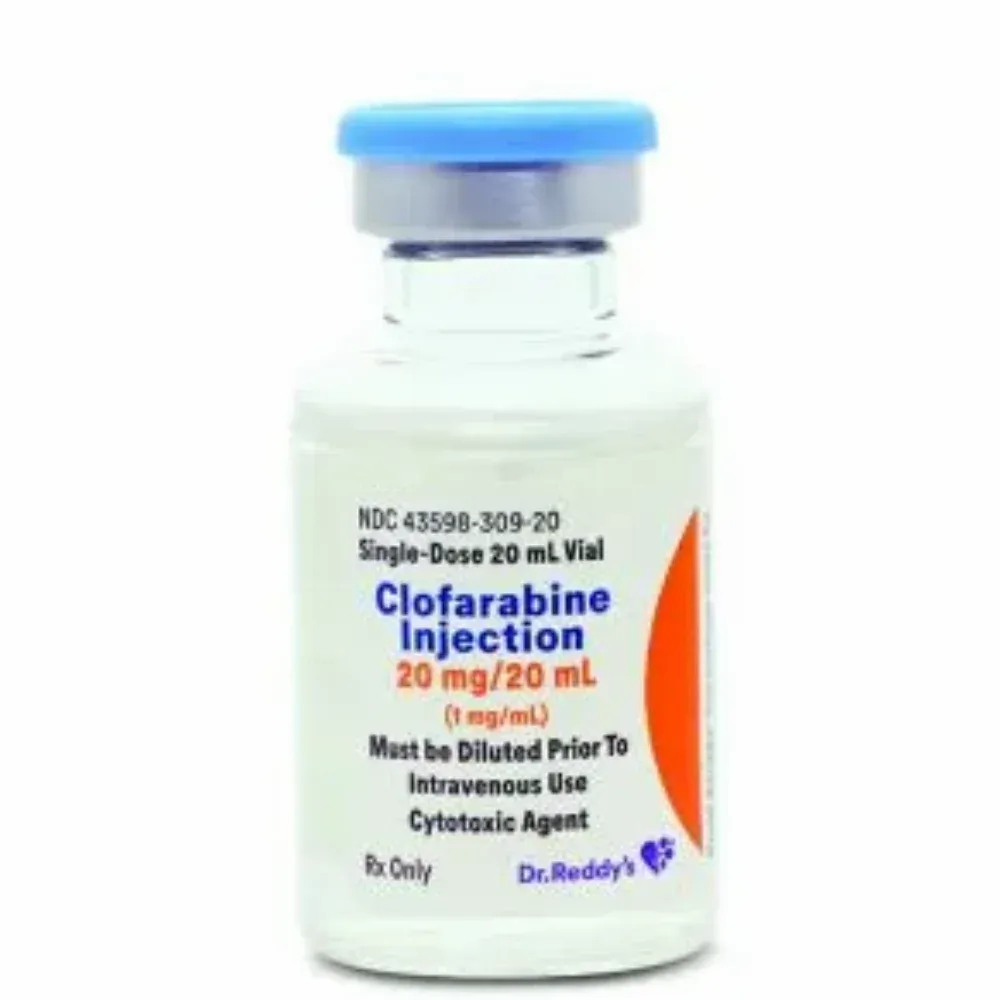
Table of Contents
- Package leaflet: Information for the user
- 1. What Clofarabine Norameda is and what it is used for
- 2. Important information before using Clofarabine Norameda
- 3. How to use Clofarabine Norameda
- 4. Possible adverse reactions
- 5. How to store Clofarabine Norameda
- 6. Contents of the pack and other information
Package leaflet: Information for the user
Clofarabine Norameda, 1 mg/ml, concentrate for solution for infusion
clofarabine
Please read all of this leaflet carefully before this medicine is administered, because it contains
important information for you.
- Keep this leaflet. You may need to read it again.
- If you have any further questions, ask your doctor.
- This medicine has been prescribed for a specific individual. Do not pass it on to others. It may harm someone else, even if their symptoms are the same.
- If you experience any side effects, including any not listed in this leaflet, tell your doctor. See section 4.
Table of contents
- What Clofarabine Norameda is and what it is used for
- What you need to know before using Clofarabine Norameda
- How to use Clofarabine Norameda
- Possible side effects
- How to store Clofarabine Norameda
- Contents of the pack and other information
1. What Clofarabine Norameda is and what it is used for
The active substance in Clofarabine Norameda is clofarabine. Clofarabine belongs to a family of medicines known as anticancer agents. The medicine works by inhibiting the growth of abnormal white blood cells, ultimately leading to their death. It works best on rapidly dividing cells—such as cancer cells.
Clofarabine Norameda is used to treat children (≥ 1 year of age), adolescents, and young adults up to 21 years of age with acute lymphoblastic leukaemia (ALL), when previous treatments have not been effective or have stopped being effective. Acute lymphoblastic leukaemia is caused by abnormal development of a certain type of white blood cells.
2. Important information before using Clofarabine Norameda
When not to use Clofarabine Norameda:
- if the patient is allergic to clofarabine or any of the other ingredients of this medicine (listed in section 6);
- if the patient is breastfeeding (please read the section "Pregnancy and breastfeeding" below);
- if the patient has severe liver or kidney disease.
Inform your doctor if any of the above conditions apply to the patient.
The parent of a child receiving Clofarabine Norameda should inform the doctor if any of the above conditions apply to their child.
Warnings and precautions
Discuss this medicine with your doctor before starting treatment with Clofarabine Norameda.
Inform your doctor if any of the following conditions apply to the patient.
Clofarabine Norameda may not be suitable for the patient:
- if the patient has experienced a serious reaction after previous use of this medicine;
- if the patient has or has had kidney disease in the past;
- if the patient has or has had liver disease in the past;
- if the patient has or has had heart disease in the past.
Contact your doctor or caregiver immediately if the patient experiences any of the following symptoms:
- if the patient develops fever or elevated temperature – clofarabine reduces the number of blood cells produced by the bone marrow, making the patient more susceptible to infections;
- if the patient experiences difficulty breathing, breathes rapidly, or has shortness of breath;
- if the patient feels changes in heart rhythm;
- if the patient experiences dizziness (a feeling of emptiness in the head) or fainting – this may be a sign of low blood pressure;
- if the patient has nausea or diarrhoea (loose stools);
- if the patient's urine is darker than usual – remember to drink plenty of fluids to avoid dehydration;
- if the patient develops blistering rash or mouth ulcers;
- if the patient loses appetite, feels nauseous (unwell), vomits, has diarrhoea, urine is darker than usual, stools are paler than usual, experiences abdominal pain, develops jaundice (yellowing of the skin and whites of the eyes), or generally feels unwell – these may be signs of liver inflammation or damage (liver failure);
- if the patient passes little or no urine, feels drowsy, nauseous, vomits, feels short of breath, has loss of appetite and/or feels weak – these may be symptoms of acute kidney failure or kidney dysfunction.
The parent of a child receiving Clofarabine Norameda should inform the doctor if any of the above symptoms occur in their child.
During treatment with Clofarabine Norameda, the doctor will perform regular blood tests and other examinations to monitor the patient's health. This medicine affects the blood and other organs of the patient.
Consult your doctor regarding contraception. Young men and women must use effective contraception during and after completion of treatment. See the section "Pregnancy and breastfeeding" below. Clofarabine Norameda may damage male and female reproductive organs. Please ask your doctor for advice on how to protect the patient and on the possibility of having children in the future.
Clofarabine Norameda and other medicines
Tell your doctor about all medicines currently used or recently used by the patient, such as:
- heart medications;
- any medicines affecting blood pressure;
- medicines affecting the liver or kidneys;
- any other medicines, including those available without a prescription.
Pregnancy and breastfeeding
Clofarabine should not be used during pregnancy, except when clearly necessary.
Women of childbearing potential: the patient must use effective contraception during treatment with clofarabine. Clofarabine taken by pregnant women may harm the unborn child. If the patient is pregnant or becomes pregnant during treatment with clofarabine, seek medical advice immediately.
Men must also use effective contraception during treatment or if their partners are being treated with clofarabine.
If the patient is breastfeeding, breastfeeding must be stopped before starting treatment and must not be resumed during treatment and for 3 months after its completion.
Driving and operating machinery
Do not drive or operate machinery if the patient experiences dizziness, a feeling of emptiness in the head, or fainting.
Clofarabine Norameda contains sodium
This medicine contains 71 mg of sodium (a main component of common salt) per vial. This corresponds to 4% of the maximum recommended daily dietary intake of sodium for adults.
3. How to use Clofarabine Norameda
Clofarabine Norameda should be administered by a qualified physician experienced in the treatment of leukemias.
The physician will determine the appropriate dose for the patient based on height, body weight, and overall health status. Prior to administration, Clofarabine Norameda will be diluted with sodium chloride solution (a salt and water solution). Inform the physician if the patient is on a salt-restricted diet, as this may affect the way the medication is administered.
The physician will administer the medication to the patient daily for 5 consecutive days. The medication will be given as an intravenous infusion through a long, thin tube inserted into a vein (intravenous drip) or through a small device implanted under the skin (an intravenous access device), if such a device has been implanted in the patient (or child). The infusion will last 2 hours. If the patient's (or child's) body weight is less than 20 kg, the infusion duration may be extended.
The physician will monitor the patient's health condition and may adjust the dose depending on the response to treatment. It is important to drink plenty of fluids to avoid dehydration.
Administration of a higher than recommended dose of Clofarabine Norameda
Immediately inform the physician if the patient believes they have received more than the recommended dose of the medication.
Missed dose of Clofarabine Norameda
The physician will inform the patient when the medication will be administered. Immediately inform the physician if the patient believes a dose has been missed.
If there are any doubts regarding the use of this medication, consult the treating physician.
4. Possible adverse reactions
Like all medicines, this medicine can cause adverse reactions, although not everyone will experience them.
Very common (may affect more than 1 in 10 patients):
- anxiety, headache, fever, fatigue
- nausea and vomiting, diarrhoea (loose stools)
- sudden flushing of the face, itching, skin inflammation, mucositis, e.g. in the mouth or at other sites
- more frequent than usual infections, as Clofarabine Norameda may reduce the number of certain types of blood cells in the patient's body
- skin rashes which may cause itching, red, painful or peeling skin of the hands and feet, or small red or purple spots under the skin.
Common (may affect up to 1 in 10 patients):
- blood infections, pneumonia, shingles, infections of implants, oral infections, e.g. candidiasis or cold sores
- changes in blood biochemical test results, changes in white blood cells
- allergic reactions
- feeling thirsty, dark-coloured urine or reduced urine volume compared to usual, decreased or loss of appetite, weight loss
- restlessness, irritability or agitation
- feeling of numbness or weakness in arms and legs, skin numbness, drowsiness, dizziness, tremor
- hearing disturbances
- fluid accumulation around the heart, rapid heart rate
- low blood pressure, hardening associated with bruising
- leakage from small blood vessels, rapid breathing, nosebleeds, breathing difficulties, shortness of breath, cough
- vomiting blood, stomach pain, anal pain
- bleeding inside the head, stomach, intestines or lungs, from the mouth or gums, mouth ulcers, inflammation of the mucous membrane of the mouth
- yellowing of the skin and eyes (also known as jaundice) or other liver function abnormalities
- bruising, hair loss, skin colour changes, increased sweating, dry skin or other skin problems
- chest wall, bone, neck or back pain, limb, muscle or joint pain
- blood in the urine
- organ failure, pain, increased muscle tension, fluid retention and swelling of parts of the body, including arms and legs, mental status changes, feeling hot, cold or generally unwell
- clofarabine may affect levels of certain substances in the blood. Your doctor will perform regular blood tests to monitor whether your body is functioning properly
- liver damage (liver failure)
- passing small amounts of urine or no urine at all, drowsiness, nausea, vomiting, shortness of breath, loss of appetite and (or) weakness (possible symptoms of acute kidney injury or kidney failure).
Uncommon (may affect up to 1 in 100 patients):
Hepatitis.
Reporting of adverse reactions
If any adverse reactions occur, including any not listed in this leaflet, inform your doctor, pharmacist or nurse. Adverse reactions can be reported directly to the Department for Monitoring Adverse Drug Reactions of the Office for Registration of Medicinal Products, Medical Devices and Biocidal Products
Al. Jerozolimskie 181 C
02-222 Warsaw
Tel.: +48 22 49 21 301
Fax: +48 22 49 21 309
Website: https://smz.ezdrowie.gov.pl
Adverse reactions can also be reported to the marketing authorisation holder.
Reporting adverse reactions helps provide more information on the safety of the medicine.
5. How to store Clofarabine Norameda
Keep this medicine out of the sight and reach of children.
Do not use this medicine after the expiry date stated on the vial label and on the carton after "EXP". The first two digits indicate the month and the last four digits indicate the year of the expiry period.
Do not freeze.
After preparation and dilution, Clofarabine Norameda must be used immediately or within 24 hours if stored in a refrigerator (at a temperature of 2°C to 8°C).
Medicines must not be disposed of via wastewater. Ask your pharmacist how to dispose of medicines no longer required. These measures will help protect the environment.
6. Contents of the pack and other information
What Clofarabine Norameda contains
The active substance is clofarabine. Each ml contains 1 mg of clofarabine. Each 20 ml vial contains 20 mg of clofarabine.
The other ingredients are sodium chloride and water for injections.
What Clofarabine Norameda looks like and contents of the pack
Clofarabine Norameda is a concentrate for solution for infusion. It is a clear, practically colourless solution which must be prepared and diluted before use. The medicine is supplied in 20 ml vials. Each vial contains 20 mg of clofarabine and is presented in cardboard boxes. Each box contains 1, 3, 4, 10 or 20 vials.
Not all pack sizes may be marketed.
Marketing Authorisation Holder and Manufacturer
Marketing Authorisation Holder
UAB Norameda
Meistrų G. 8A
02189 Vilnius
Lithuania
Manufacturer
Synthon BV
Microweg 22
6545CM Nijmegen
The Netherlands
Synthon Hispania S.L.
C/Castelló n°1
Pol. Las Salinas
08830 Sant Boi de Llobregat
Spain
Synthon s.r.o.
Brněnská 32/c.p.597
678 01 Blansko
Czech Republic
Information for healthcare professionals only:
Special precautions for handling and disposal
Before administration, Clofarabine Norameda 1 mg/ml concentrate for solution for infusion must be diluted. It should be filtered through a sterile syringe filter with a pore size of 0.2 microns, then diluted with sodium chloride 9 mg/ml (0.9%) for injection to achieve a total volume according to the example provided in the table below. However, the final dilution volume may vary depending on the patient's clinical condition and the physician's decision. (If it is not possible to use a 0.2 micron syringe filter, the concentrate should first be filtered through a filter with a pore size of 5 microns, then diluted and administered through a 0.22 micron in-line filter in the infusion set.)
| Recommended dilution scheme based on the recommended clofarabine dose of 52 mg/m2 BSA per day | ||
| Body surface area (m2) | Concentrate (ml)* | Total volume after dilution |
| ≤ 1.44 | ≤ 74.9 | 100 ml |
| from 1.45 to 2.40 | from 75.4 to 124.8 | 150 ml |
| from 2.41 to 2.50 | from 125.3 to 130.0 | 200 ml |
| *1 ml of concentrate contains 1 mg of clofarabine. A 20 ml vial contains 20 mg of clofarabine. Therefore, for patients with body surface area ≤ 0.38 m2, a portion of the content of a single vial will be used to prepare the recommended daily dose of clofarabine. For patients with body surface area > 0.38 m2, the contents of 1 to 7 vials will be used to prepare the recommended daily dose of clofarabine. | ||
The diluted concentrate should be a clear, colourless solution. It should be inspected visually for particulate matter and discoloration prior to administration.
The diluted concentrate is chemically and physically stable for 3 days at 2°C - 8°C and at room temperature (up to 25°C).
From a microbiological point of view, the medicinal product should be used immediately after dilution. If not used immediately, the user is responsible for the storage period and conditions prior to use. This period should not generally exceed 24 hours at 2°C - 8°C, unless dilution was carried out under controlled and validated aseptic conditions.
Do not freeze.
Administration instructions
Standard procedures for handling cytotoxic medicinal products must be observed.
Caution must be exercised when handling cytotoxic agents.
When handling Clofarabine Norameda medicinal product, it is recommended to wear disposable gloves and protective clothing. In case of contact with eyes, skin or mucous membranes, the affected area should be immediately rinsed thoroughly with large amounts of water.
Pregnant women must not handle the Clofarabine Norameda medicinal product.
Disposal of unused product
Clofarabine Norameda is intended for single use only. Any unused medicinal product or waste material should be disposed of in accordance with local regulations.