Clobederm
Poland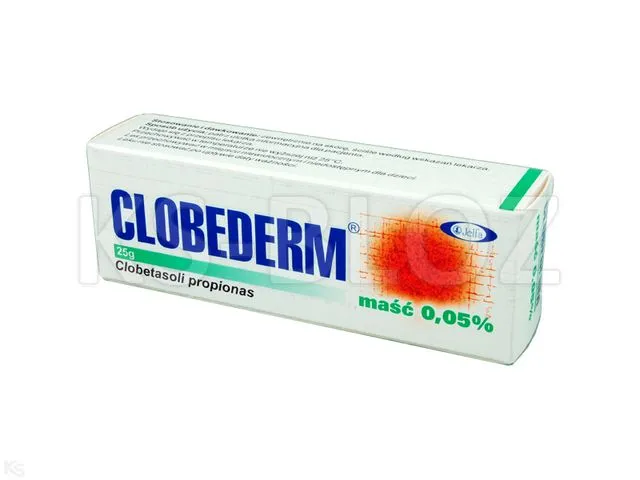
Table of Contents
Package leaflet: Information for the patient
CLOBEDERM, 0.5 mg/g, ointment
Clobetasol propionate
Please read the entire leaflet carefully before using the medicine, as it contains
important information for the patient.
- Keep this leaflet, as you may need to read it again.
- If you have any questions, please consult your doctor, pharmacist, or nurse.
- This medicine has been prescribed for a specific individual. Do not pass it on to others. The medicine may harm someone else, even if their symptoms are the same.
- If you experience any adverse reactions, including any not listed in this leaflet, inform your doctor, pharmacist, or nurse. See section 4.
Table of contents:
- What Clobederm ointment is and what it is used for
- Important information before using Clobederm ointment
- How to use Clobederm ointment
- Possible side effects
- How to store Clobederm ointment
- Contents of the pack and other information
1. What Clobederm ointment is and what it is used for
Clobederm ointment is a topical medicine containing the active substance
clobetasol propionate. Clobetasol propionate is a very potent synthetic
glucocorticoid (a type of hormone) for topical application to the skin. The medicine has very
strong anti-inflammatory, antipruritic (anti-itch), antiallergic, and vasoconstrictive effects.
Indications
Clobederm ointment is indicated for topical, short-term treatment of acute and severe, non-infectious, dry inflammatory skin conditions that respond to glucocorticoids and are accompanied by persistent itching or excessive keratosis, when treatment with weaker glucocorticosteroid preparations has failed.
Clobederm is indicated in: seborrheic dermatitis, contact dermatitis, atopic dermatitis, chronic plaque psoriasis, lichen planus, erythema multiforme, discoid lupus erythematosus, intensely itchy lichen planus, and lichenified eczema.
2. Important information before using Clobederm ointment
When not to use Clobederm ointment:
- if the patient is allergic to the active substance or to any of the other ingredients of this medicine (listed in section 6);
- in bacterial, viral, and fungal skin infections;
- in acne vulgaris;
- in rosacea;
- in perioral dermatitis;
- following vaccinations;
- in hypersensitivity to clobetasone propionate, other glucocorticosteroids, or to any excipient of the medicine;
- in anal or genital pruritus;
- under occlusive dressings (airtight);
- in children under 12 years of age;
- for prolonged periods.
Warnings and precautions
Before starting treatment with Clobederm ointment, discuss with your doctor, pharmacist, or nurse:
- if, during first-time use of Clobederm ointment, the patient experiences bone pain or worsening of pre-existing bone symptoms, especially if the patient has been using Clobederm ointment for a prolonged period or repeatedly.
- if the patient is taking other corticosteroid-containing medicines orally or topically, or medicines intended to regulate immune system function (e.g. in autoimmune diseases or after organ transplantation). Concomitant use of Clobederm ointment with these medicines may lead to severe infections. If irritation or allergic skin reactions occur after using Clobederm ointment, inform your doctor immediately. The doctor will decide whether treatment should be discontinued.
If the patient develops blurred vision or other visual disturbances, contact a doctor.
Do not use the medicine continuously for longer than 2 weeks.
Since corticosteroids are absorbed through the skin, prolonged use of the medicine or application over a large skin surface increases the frequency of systemic adverse effects typical of corticosteroids, such as edema, hypertension, elevated blood glucose levels, and reduced immunity.
Therefore, avoid applying the medicine over a large body surface.
If an infection develops at the site of application, the doctor should initiate appropriate antibacterial or antifungal treatment. If signs of infection do not resolve, contact your doctor. The doctor will decide whether to discontinue treatment until the infection has resolved.
Avoid contact of the medicine with eyes, mucous membranes, or open wounds.
Avoid applying the medicine around the eyes due to the risk of glaucoma or cataract.
Avoid applying the medicine to the eyelids or skin around the eyes, especially in patients with narrow-angle or open-angle glaucoma and in patients with cataracts, due to the risk of worsening of disease symptoms.
Patients with psoriasis should use the medicine with particular caution, as topical use of corticosteroids in psoriasis may be hazardous for several reasons, including disease rebound due to development of tolerance, risk of generalized pustular psoriasis, and systemic toxic effects resulting from impaired skin barrier integrity.
Use on the face, underarms, and groin areas only when absolutely necessary, due to increased absorption of corticosteroids through thin skin and a higher risk of adverse effects such as telangiectasia or perioral dermatitis, even after short-term use.
Use with caution in pre-existing atrophic conditions of subcutaneous tissue, especially in elderly patients.
Do not use the medicine for longer than prescribed by the doctor.
Children and adolescents
Do not use in children under 12 years of age.
Use this medicine with caution in children aged 12 years and older.
In children, due to a higher body surface area to body weight ratio compared to adults, there is an increased risk of hypothalamic–pituitary–adrenal (HPA) axis suppression and Cushing's syndrome (a cluster of symptoms associated with elevated serum steroid levels, most commonly caused by prolonged administration of glucocorticosteroids) due to systemic corticosteroid effects. Chronic corticosteroid treatment may impair growth and development in children.
Clobederm ointment and other medicines
Inform your doctor or pharmacist about all medicines the patient is currently using or has recently used, as well as any medicines the patient plans to use.
No interactions are known during topical use of corticosteroids with other medicines.
Do not get vaccinated against smallpox while using this medicine. Other vaccinations should also be avoided, particularly during prolonged treatment or when applied over a large skin surface.
The medicine may enhance the effects of drugs affecting the immune system.
Pregnancy, breastfeeding, and fertility
If the patient is pregnant or breastfeeding, suspects she may be pregnant, or plans to become pregnant, she should consult a doctor or pharmacist before using this medicine.
Pregnant or breastfeeding women should not use this medicine unless absolutely necessary in the opinion of the doctor, as the medicine contains a glucocorticosteroid with very potent activity.
Driving and operating machinery
Clobederm ointment has no effect on the ability to drive or operate machinery.
Clobederm ointment contains:
- propylene glycol – due to its presence, the medicine may cause skin irritation.
3. How to use Clobederm ointment
This medicine should always be used exactly as directed by a doctor or pharmacist. If in doubt,
consult a doctor or pharmacist. Do not extend the treatment period beyond that recommended by the doctor.
This medicine is intended for topical application to the skin.
Gently rub a small amount of ointment into the affected areas of skin, usually once or twice daily.
Do not use the medicine under occlusive dressings (sealed), diapers, or plasters.
Hands should be washed after applying the medicine.
Treatment should not be continued continuously for longer than 2 weeks.
Once improvement is achieved, treatment should be discontinued.
If further corticosteroid treatment is necessary, the doctor will prescribe corticosteroid medicines with lower potency that still provide control of disease symptoms.
Use in children and adolescents
Do not use in children under 12 years of age.
Use of more than the recommended dose of Clobederm ointment
With prolonged use or application over large areas of skin, symptoms of overdose may occur, such as swelling, high blood pressure, elevated blood sugar levels, reduced immunity, or Cushing's syndrome.
If symptoms of overdose occur, consult a doctor.
Missed dose of Clobederm ointment
Do not use a double dose to make up for a missed dose.
Stopping Clobederm ointment
If you have any further questions about the use of this medicine, consult your doctor.
4. Possible adverse reactions
Like all medicines, this medicine can cause adverse reactions, although not everyone will experience them.
Local adverse reactions with unknown frequency (frequency cannot be determined from the available data):
- blurred vision,
- glaucoma or cataract (in case of local application to eyelid skin),
- acneiform changes,
- steroid-induced purpura,
- epidermal atrophy,
- burning, itching, skin irritation,
- rash,
- atrophy of subcutaneous tissue,
- dry skin,
- excessive hair growth or hair loss,
- skin depigmentation or hyperpigmentation,
- skin atrophy and striae,
- dilation of capillaries and small veins,
- perioral dermatitis,
- folliculitis,
- secondary skin infections,
- generalized pustular psoriasis,
- urticaria or maculopapular rash or exacerbation of existing skin lesions.
Systemic adverse reactions with unknown frequency (frequency cannot be determined from the available data):
As a result of absorption of active substances into the bloodstream, systemic adverse reactions of clobetasol propionate may also occur. These occur primarily with prolonged use of the medicine, application over large areas of skin, under occlusive dressing, or when used in children.
Additional adverse reactions in children and adolescents
Systemic adverse reactions of clobetasol propionate may occur in children.
Systemic adverse effects of clobetasol propionate typical for corticosteroids include, among others:
- suppression of the hypothalamic-pituitary-adrenal (HPA) axis function (leading to disturbances in secretion of certain hormones),
- Cushing's syndrome (a condition characterized by, among others, obesity, muscle atrophy of limbs, skin changes, arterial hypertension, easy fatigue and other symptoms),
- growth and development retardation in children,
- increased blood glucose levels, glucosuria,
- oedema,
- arterial hypertension,
- decreased immunity.
Reporting of adverse reactions
If any adverse reactions occur, including any not listed in this leaflet, inform your doctor, pharmacist, or nurse. Adverse reactions can be reported directly to the Department of Monitoring of Adverse Drug Reactions at the Office for Registration of Medicinal Products, Medical Devices and Biocidal Products, Al. Jerozolimskie 181C, 02-222 Warsaw, phone: +48 22 4921301, fax: +48 22 4921309,
Website: https://smz.ezdrowie.gov.pl
Adverse reactions can also be reported to the marketing authorization holder.
Reporting adverse reactions helps to provide more information on the safety of the medicine.
5. How to store Clobederm ointment
Keep the medicine out of the sight and reach of children.
Store below 25°C.
Do not use this medicine after the expiry date stated on the container. The expiry date refers to the last day of the stated month.
Period of use after first opening the tube: 3 months.
Medicines should not be disposed of via wastewater or household waste. Ask your pharmacist how to dispose of medicines no longer required. Such measures will help protect the environment.
6. Contents of the pack and other information
What Clobederm ointment contains
- The active substance is clobetasol propionate. 1 g of the ointment contains 0.5 mg of clobetasol propionate.
- The other ingredients are: propylene glycol, sorbitan sesquioleate, white soft paraffin.
What Clobederm ointment looks like and contents of the pack
Clobederm ointment is a white, semi-transparent ointment.
The pack consists of an aluminium tube containing 25 g of ointment, placed in a cardboard box.
Marketing Authorisation Holder
Bausch Health Ireland Limited
3013 Lake Drive
Citywest Business Campus
Dublin 24, D24PPT3
Ireland
Manufacturer
Przedsiębiorstwo Farmaceutyczne Jelfa SA
ul. Wincentego Pola 21, 58-500 Jelenia Góra
tel. (075) 643 31 02
fax. (075) 752 44 55
e-mail: [email protected]