Clindamycin hameln
Poland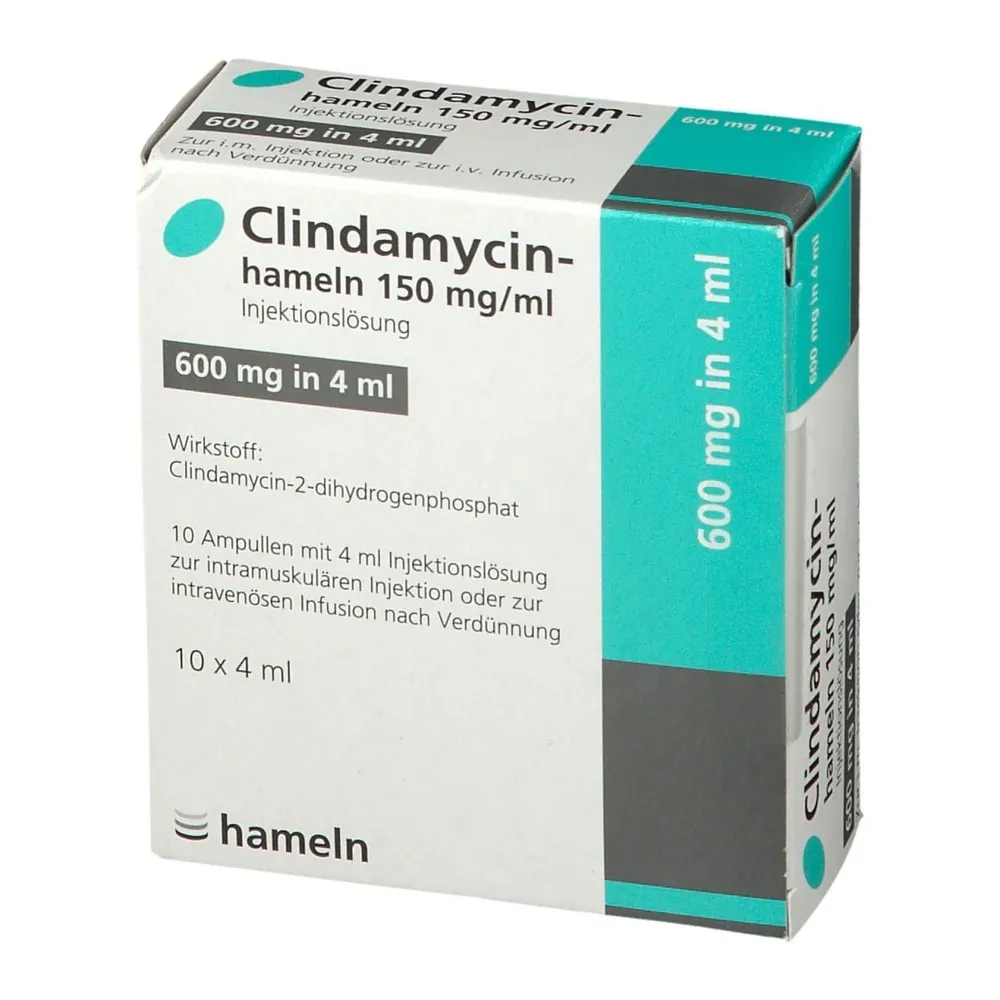
Table of Contents
- Package leaflet: Information for the patient
- 1. What Clindamycin hameln is and what it is used for
- 2. Important information before using Clindamycin hameln
- 3. How to use Clindamycin hameln
- 4. Possible adverse reactions
- 5. How to store Clindamycin hameln
- 6. Contents of the package and other information
- The following information is intended exclusively for healthcare professionals:
Package leaflet: Information for the patient
Clindamycin hameln, 150 mg/ml, solution for injection/infusion
Clindamycin
Please read carefully all the information in this leaflet before using this medicine, as it contains
important information for the patient.
- Keep this leaflet for future reference.
- If you have any questions, please consult your doctor, pharmacist, or nurse.
- If you experience any adverse reactions, including any adverse reactions not listed in this leaflet, inform your doctor, pharmacist, or nurse. See section 4.
Contents of the leaflet
- What Clindamycin hameln is and what it is used for
- Important information before using Clindamycin hameln
- How to use Clindamycin hameln
- Possible side effects
- How to store Clindamycin hameln
- Contents of the pack and other information
1. What Clindamycin hameln is and what it is used for
Clindamycin hameln contains the active substance clindamycin, which is an antibiotic used to treat the following serious bacterial infections in adults and children aged over 4 weeks:
- Bone and joint infections
- Chronic sinusitis
- Lower respiratory tract infections
- Complicated intra-abdominal infections
- Pelvic and female genital tract infections
- Complicated skin and soft tissue infections
2. Important information before using Clindamycin hameln
When not to use Clindamycin hameln:
- If the patient is allergic to clindamycin, lincomycin, or to any of the other ingredients of this medicine (listed in section 6).
Warnings and precautions
Before starting treatment with Clindamycin hameln, consult a doctor,
pharmacist, or nurse if:
- the patient has previously had gastrointestinal disorders (e.g. previous colitis);
- the patient has impaired liver or kidney function. Consult a doctor or pharmacist if the patient has liver or kidney disease, as Clindamycin hameln contains benzyl alcohol, which may accumulate in the body and cause adverse effects (called "metabolic acidosis");
- the patient has any type of allergy, e.g. penicillin allergy, as isolated cases of allergic reactions to clindamycin have been observed in patients allergic to penicillin;
- the patient has muscle function disorders such as myasthenia gravis (a chronic condition causing muscle weakness) or Parkinson's disease (also known as paralysis agitans);
- the patient has ever experienced a severe skin rash, skin peeling, blisters, and/or oral ulceration after taking clindamycin or other antibiotics.
Consult a doctor if any of the above warnings or precautions apply or have previously applied to the patient.
Severe skin reactions
Severe hypersensitivity reactions have been observed in patients receiving clindamycin, including
drug reaction with eosinophilia and systemic symptoms (DRESS), erythema multiforme (Stevens-Johnson syndrome, SJS), toxic epidermal necrolysis (TEN), and acute generalized exanthematous pustulosis (AGEP). If hypersensitivity or a severe skin reaction occurs, contact a doctor immediately.
- SJS/TEN may initially present as red, target-like spots or circular patches, often with centrally located blisters, typically on the trunk. It may also involve ulceration of the mouth, throat, nose, genital organs, and eyes (red, swollen eyes). These severe skin rashes are often preceded by fever and/or flu-like symptoms. Skin rashes may progress to extensive skin peeling and life-threatening complications.
- DRESS initially manifests as flu-like symptoms and a facial rash, followed by a spreading rash, high fever, elevated liver enzymes in blood tests, increased white blood cell count (eosinophilia), and enlarged lymph nodes.
- AGEP may present as reddened areas of skin covered with small pustules (small blisters filled with whitish-yellow fluid).
If the patient develops a severe rash or any of these skin symptoms, discontinue clindamycin immediately and contact a doctor or seek medical help without delay.
Severe allergic reactions may occur even after the first dose. In such cases, the doctor will immediately discontinue clindamycin treatment and initiate standard emergency procedures.
In cases of prolonged treatment (more than 10 days), the doctor may recommend regular monitoring of blood counts and liver and kidney function.
Acute kidney function disorders may occur. Inform the doctor about all currently used medications and any existing kidney problems. Contact a doctor immediately if urine output decreases, fluid retention causes swelling of the legs, ankles, or feet, or if shortness of breath or nausea occur.
Prolonged and repeated administration of clindamycin may lead to skin and mucous membrane infections caused by microorganisms resistant to clindamycin. This may result in fungal infections.
Severe infection of the large intestine (colitis) may occur during treatment with clindamycin. Therefore, inform the doctor immediately if severe and persistent diarrhoea develops during or within three weeks after treatment, especially if mucus or blood is present in the stool.
Children
Clindamycin hameln must not be administered to neonates (up to 4 weeks of age) unless absolutely necessary. Particular caution is required when administering to children under 3 years of age, as this medicine contains benzyl alcohol (see below).
In children under 1 year of age, the doctor may recommend monitoring of blood counts and liver and kidney function.
Clindamycin hameln and other medicines
Inform the doctor, pharmacist, or nurse about all medicines currently used or recently taken, as well as any medicines the patient plans to take, including those available without a prescription. Some medicines may affect the action of Clindamycin hameln, or Clindamycin hameln may reduce the effectiveness of other medicines taken simultaneously. These include:
- muscle relaxants used during surgery. Clindamycin may enhance the effect of muscle relaxants, potentially leading to unexpected, life-threatening events during surgery;
- warfarin or similar anticoagulant medicines. The patient may be at increased risk of bleeding. The doctor may recommend regular blood tests to monitor blood clotting;
- medicines that increase the metabolic activity of liver enzymes (CYP3A4 or CYP3A5 inducers), such as rifampicin (an antibiotic used in tuberculosis treatment), St. John's wort (an herbal product used for depression), and carbamazepine, phenytoin, phenobarbital (medicines used in epilepsy treatment), as these may lead to loss of antibacterial activity of clindamycin;
- medicines that reduce the metabolic activity of liver enzymes (CYP3A4 inhibitors), such as itraconazole, voriconazole (used in fungal infection treatment), clarithromycin (an antibiotic), ritonavir, and cobicistat (antiviral medicines used in HIV/AIDS treatment), as these may increase clindamycin levels in the body and cause adverse effects;
- erythromycin, as mutual reduction in effectiveness may occur when both antibiotics are administered simultaneously;
- lincomycin, as Clindamycin hameln should not be administered subsequently.
Pregnancy and breastfeeding
If the patient is pregnant, breastfeeding, suspects she may be pregnant, or plans to become pregnant, she should consult a doctor before using this medicine.
Clindamycin hameln should not be administered to breastfeeding women unless absolutely necessary. This medicine may pass into breast milk. In breastfed infants, diarrhoea, fungal infections (oral thrush), and allergic reactions may occur. The infant should be carefully monitored for signs of adverse effects, especially blood in stool or diarrhoea (colitis).
The doctor will decide whether to use Clindamycin hameln if the patient is pregnant or breastfeeding.
See also section "Clindamycin hameln contains benzyl alcohol" below.
Driving and operating machinery
This medicine may cause mild to moderate adverse effects that may impair the ability to drive and operate machinery. While taking this medicine, the patient may experience dizziness, fatigue, or headache. If such symptoms occur, do not drive or operate machinery.
Clindamycin hameln contains benzyl alcohol
This medicine contains 9 mg of benzyl alcohol per millilitre.
- Benzyl alcohol may cause allergic reactions.
- Administration of benzyl alcohol to small children carries a risk of severe adverse effects, including respiratory disorders (so-called "gasping syndrome").
- Clindamycin hameln must not be administered to neonates (up to 4 weeks of age) without a doctor's instruction. Do not administer to young children (under 3 years of age) for longer than one week without a doctor's instruction.
- Pregnant or breastfeeding women should consult a doctor before using this medicine, as large amounts of benzyl alcohol may accumulate in their bodies and cause adverse effects (so-called "metabolic acidosis").
- Patients with liver or kidney disease should consult a doctor before using this medicine, as large amounts of benzyl alcohol may accumulate in their bodies and cause adverse effects (so-called "metabolic acidosis").
Clindamycin hameln contains sodium
The medicine contains less than 1 mmol of sodium (23 mg) per 2 ml of solution, meaning the medicine is considered "sodium-free".
The medicine contains 34.4 mg of sodium (main component of table salt) per 4 ml of solution. This corresponds to 1.7% of the maximum recommended daily sodium intake in the adult diet.
3. How to use Clindamycin hameln
The doctor will administer the medicine as an intravenous infusion or intramuscular injection. If the medicine is given intravenously, it is first diluted with glucose solution or saline and administered via an infusion. The injection or infusion takes from 10 to 40 minutes.
Before administering Clindamycin hameln, the doctor will ensure that the concentration of clindamycin does not exceed 18 mg per ml and that the infusion rate does not exceed 30 mg per minute.
If Clindamycin hameln is administered too quickly, it may (rarely) cause a heart attack.
Clindamycin hameln is usually administered only to hospitalised patients. The doctor and nurse will closely monitor the patient during administration of the medicine.
Adults, adolescents over 12 years of age, and elderly patients
The recommended dose of Clindamycin hameln depends on the severity of the infection.
- Mild infections: 1200 to 1800 mg of clindamycin per day (equivalent to 8 to 12 ml of Clindamycin hameln) in three or four divided doses.
- Severe infections: 1800 to 2700 mg of clindamycin (equivalent to 12 to 18 ml of Clindamycin hameln) in two to four divided doses.
Typically, the maximum daily dose for adults, adolescents over 12 years of age, and elderly patients is 2700 mg of clindamycin (equivalent to 18 ml of Clindamycin hameln) in two to four divided doses. In life-threatening infections, doses up to 4800 mg per day may be administered.
In patients with impaired liver or kidney function, dose adjustment is usually not necessary. Monitoring of clindamycin blood levels is recommended.
Clindamycin is not removed from the body during haemodialysis (removal of waste products from the blood by artificial filtration, used in the treatment of kidney failure). Therefore, there is no need to administer additional doses of the medicine to dialysed patients before or after haemodialysis.
Use in children (over 1 month to 12 years of age)
The recommended dose in children (over 1 month of age) is 20 to 40 mg of clindamycin per kg of body weight per day, given in three or four divided doses. The duration of treatment depends on the disease and its course.
The dose should be based on total body weight, regardless of obesity.
Long-term use of Clindamycin hameln
If the patient's condition requires more than one course of treatment with clindamycin, the doctor may order monitoring of the effect of clindamycin on kidney and liver function. Long-term use of the medicine may also increase the likelihood of developing other infections that do not respond to treatment with Clindamycin hameln.
Clindamycin hameln should not be used for longer than one week in young children (under 3 years of age) without a doctor's or pharmacist's advice.
Use of a higher than recommended dose of Clindamycin hameln
Since this medicine is administered by a doctor or nurse, overdose is very unlikely. However, if the patient believes they have received too high a dose of Clindamycin hameln, they should immediately inform the doctor or nurse. In case of overdose, the doctor will treat any symptoms that occur.
Missed dose of Clindamycin hameln
Clindamycin hameln is administered by a doctor or nurse. However, if the patient believes a dose has been missed, they should inform the doctor or nurse.
If you have any further questions about the use of this medicine, consult your doctor, pharmacist, or nurse.
4. Possible adverse reactions
Like all medicines, this medicine can cause adverse reactions, although not everyone will experience them.
You should contact a doctor immediately if the patient experiences:
- Severe skin reactions
- including Stevens-Johnson syndrome (SJS) and toxic epidermal necrolysis (TEN). These may initially appear as red, target-like or circular spots, often with centrally located blisters on the trunk. Oral, throat, nasal, genital, and eye lesions (red, swollen eyes) may also occur. These severe skin rashes are often preceded by fever and (or) flu-like symptoms. The rashes may progress to extensive skin peeling and life-threatening or fatal complications. The frequency of these adverse reactions is rare (may affect up to 1 in 1,000 people).
- red, scaly, widespread rash with subcutaneous nodules and blisters, accompanied by fever at the beginning of treatment (acute generalized exanthematous pustulosis, AGEP). The frequency of this adverse reaction is unknown (cannot be estimated from available data).
- flu-like symptoms and facial rash, followed by widespread rash with high fever, increased liver enzyme levels evident in blood tests, elevated white blood cell count (eosinophilia), swollen lymph nodes, and involvement of other organs (drug reaction with eosinophilia and systemic symptoms, DRESS, also known as drug hypersensitivity syndrome). The frequency of this adverse reaction is unknown (cannot be estimated from available data).
- extensive red skin rash with small pustules containing pus (exfoliative pustular dermatitis). The frequency of this adverse reaction is rare (may affect up to 1 in 1,000 people).
- fluid retention causing swelling of the legs, ankles, or feet, shortness of breath, or nausea.
If the patient experiences any of these adverse reactions, treatment with Clindamycin hameln must be discontinued and a doctor should be contacted or immediate medical assistance sought. See also section 2.
- Symptoms of severe colitis (pseudomembranous colitis), such as persistent or bloody diarrhoea with abdominal pain or fever. This is a common adverse reaction (may affect up to 1 in 10 people), which may occur during or after completion of antibiotic treatment, potentially life-threatening and requiring immediate appropriate treatment.
- Symptoms of severe allergic reaction, such as sudden wheezing, difficulty breathing, eyelid, facial or lip swelling, rash, or itching (especially affecting the whole body).
- Yellowing of the skin and whites of the eyes (jaundice). The frequency of this adverse reaction is unknown (cannot be estimated from available data).
- Increased susceptibility to infections with fever, severe chills, sore throat, or mouth ulcers (which may indicate low white blood cell count). The frequency of this adverse reaction is unknown (cannot be estimated from available data).
- Decreased platelet count, which may lead to bruising or bleeding (thrombocytopenia). This is a common adverse reaction (may affect up to 1 in 10 people).
Other adverse reactions that may occur are listed below according to frequency:
Very common (may affect more than 1 in 10 people)
- Gastrointestinal disorders such as diarrhoea, abdominal pain, vomiting, nausea.
Common (may affect up to 1 in 10 people)
- Vascular disorders such as phlebitis (thrombophlebitis).
- Inflammation of the mucous membrane of the mouth (stomatitis).
- Skin disorders such as rash (widespread rash with small papules), urticaria.
- Abnormal liver function test results.
Uncommon (may affect up to 1 in 100 people)
- Decreased number of certain types of white blood cells (granulocytopenia).
- Nervous system disorders such as neuromuscular blockade (blocking of impulse transmission between the nervous system and muscles) and taste disturbances (dysgeusia).
- Cardiac and vascular disorders such as circulatory arrest and drop in blood pressure (hypotension).
- General disorders and administration site conditions such as pain and abscess (ulceration) at the injection site.
Rare (may affect up to 1 in 1,000 people)
- Drug fever, hypersensitivity to one of the excipients of the medicine (benzyl alcohol), or "gasping syndrome" – a respiratory failure syndrome that may occur in preterm infants exposed to benzyl alcohol, used as a preservative in injectable medicines. This syndrome is characterized by persistent laboured breathing and may include metabolic acidosis, worsening kidney and nervous system function, seizures, intracranial haemorrhage, and cardiovascular failure to maintain adequate blood flow to the brain.
- Swelling, especially of the face and throat, wheezing and (or) difficulty breathing (angioedema).
- Itching of the skin (pruritus).
- Vaginitis (inflammation of the vaginal mucosa).
Very rare (may affect up to 1 in 10,000 people)
- Severe allergic reaction (anaphylactic reaction).
- Transient hepatitis with cholestatic jaundice.
- Hypersensitivity reactions with rash and blister formation.
- Joint inflammation (polyarthritis).
Frequency unknown (cannot be estimated from available data)
- Severe infection of the large intestine caused by Clostridioides difficile (colitis).
- Vaginal infection.
- Severe acute allergic reactions such as marked drop in blood pressure, pallor, weak pulse, clammy skin, reduced consciousness (anaphylactic shock), anaphylactoid reaction, hypersensitivity.
- Somnolence.
- Dizziness.
- Headache.
- Altered sense of smell (parosmia).
- Irritation at injection site.
Reporting of adverse reactions
If any adverse reactions occur, including any not listed in this leaflet, tell a doctor, pharmacist, or nurse.
Adverse reactions can be reported directly to the Department of Monitoring Adverse Drug Reactions of the Office for Registration of Medicinal Products, Medical Devices and Biocidal Products
Al. Jerozolimskie 181C
02-222 Warsaw
Tel: +48 22 49 21 301
Fax: +48 22 49 21 309
Website: https://smz.ezdrowie.gov.pl
Adverse reactions can also be reported to the marketing authorization holder.
Reporting adverse reactions helps provide more information on the safety of the medicine.
5. How to store Clindamycin hameln
Keep the medicine out of the sight and reach of children.
Do not use this medicine after the expiry date (EXP) stated on the label and the carton.
The expiry date refers to the last day of the stated month.
Do not store above 25°C.
This medicine is for single use only.
Any unused solution should be discarded.
The shelf life after dilution – see Special precautions for storage below.
Do not use this medicine if you notice any change in colour, precipitation of sediment, or presence of any solid particles.
Medicines must not be disposed of via wastewater or household waste. Ask your pharmacist how to dispose of medicines no longer required. Such measures help protect the environment.
6. Contents of the package and other information
What Clindamycin hameln contains
The active substance is clindamycin.
Each millilitre of solution contains clindamycin phosphate equivalent to 150 mg clindamycin.
Excipients: benzyl alcohol (E 1519), disodium edetate, sodium hydroxide (for pH adjustment) and water for injections.
What Clindamycin hameln looks like and contents of the pack
Clindamycin hameln is a clear, colourless or slightly yellowish solution free from visible solid particles.
It is packed in boxes containing:
- 5, 10 or 100 ampoules with 2 mL of solution
- 5, 10 or 100 ampoules with 4 mL of solution
Not all pack sizes may be marketed.
Marketing Authorisation Holder
hameln pharma gmbh
Inselstraße 1
317 87 Hameln
Germany
Manufacturer
Siegfried Hameln GmbH
Langes Feld 13
317 89 Hameln
Germany
hameln rds s.r.o.
Horná 36
900 01 Modra
Slovakia
This medicinal product is authorised in the European Economic Area and the United Kingdom (Northern Ireland) under the following names
| Austria | Clindamycin hameln 150 mg/ml injection/infusion solution |
| Bulgaria | Clindamycin hameln 150 mg/ml injection/infusion solution |
| Croatia | Clindamycin hameln 150 mg/ml injection/infusion solution |
| Denmark | Clindamycin hameln |
| Netherlands | Clindamycin hameln 150 mg/ml solution for injection/infusion |
| Germany | Clindamycin hameln 150 mg/ml injection/infusion solution |
| Poland | Clindamycin hameln |
| Czech Republic | Clindamycin hameln |
| Slovakia | Clindamycin hameln 150 mg/ml concentrate for solution for infusion |
| Romania | Clindamycin hameln 150 mg/ml solution for injection/infusion |
| Slovenia | Clindamycin hameln 150 mg/ml solution for injection/infusion |
| Sweden | Clindamycin hameln 150 mg/ml injection/infusion solution |
| Hungary | Clindamycin hameln 150 mg/ml solution for injection or infusion |
| United Kingdom (Northern Ireland) | Clindamycin 150 mg/ml solution for injection or infusion |
The following information is intended exclusively for healthcare professionals:
Clindamycin hameln, 150 mg/ml, solution for injection/infusion
For complete information on the use of the medicinal product, please refer to the
Product Characteristics.
Route of administration
Intramuscular injection
For intramuscular use, this medicinal product should be administered undiluted. Single intramuscular doses exceeding 600 mg of clindamycin are not recommended.
Intravenous infusion
This medicinal product MUST NOT be administered as an intravenous bolus, since rapid intravenous injection of undiluted clindamycin may lead to cardiac arrest.
Dilution
For intravenous infusion, this medicinal product must be diluted with 9 mg/ml (0.9%) sodium chloride solution, 50 mg/ml (5%) glucose solution, or sodium lactate Ringer's solution.
The concentration of clindamycin should not exceed 18 mg/ml, and the infusion rate should not be greater than 30 mg/min.
Dose Diluent Minimum infusion time
300 mg 50 ml 10 minutes
600 mg 50 ml 20 minutes
900 mg 50-100 ml 30 minutes
1200 mg 100 ml 40 minutes
Pharmaceutical incompatibilities
Clindamycin must not be administered together with ampicillin, sodium phenytoin, barbiturates, aminophylline, calcium gluconate, sodium ceftriaxone, ciprofloxacin, diphenylhydantoin, idarubicin hydrochloride, magnesium sulfate, or ranitidine hydrochloride in a mixed injection. This medicinal product must be administered separately.
Solutions of clindamycin salts have a low pH, and incompatibility with alkaline preparations or medicinal products unstable at low pH may be expected.
Special precautions for storage
For single use only. Any unused solution must be discarded.
The medicinal product should not be used if it contains any particles or if the solution is strongly discolored.
Before use, and after dilution, the solution should be inspected visually. Only clear solutions, free from visible particles, should be used.
Opened vials: The product should be used immediately after opening the container.
Diluted solution:
Chemical and physical stability of the solution after dilution with 9 mg/ml (0.9%) sodium chloride solution, 50 mg/ml (5%) glucose solution, or sodium lactate Ringer's solution has been confirmed for 48 hours at 25°C.
From a microbiological standpoint, the medicinal product should be used immediately after dilution. If not used immediately, the responsibility for storage conditions and duration prior to use lies with the user. Generally, the solution should not be stored for longer than 24 hours at a temperature of 2°C to 8°C, unless the dilution was carried out under controlled and validated aseptic conditions.