Clarithromycin hameln
Poland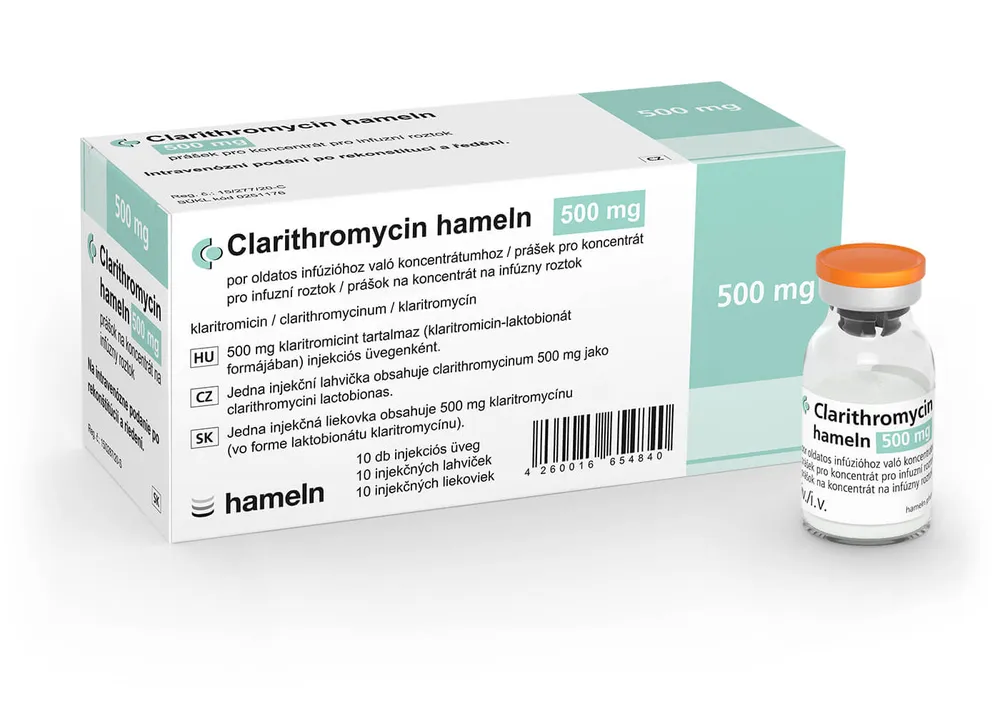
Table of Contents
- Package leaflet: Information for the patient
- 1. What Clarithromycin hameln is and what it is used for
- 2. Important information before using Clarithromycin hameln
- 3. How to use Clarithromycin hameln
- 4. Possible adverse reactions
- 5. How to store Clarithromycin hameln
- 6. Contents of the pack and other information
- Information intended exclusively for medical professionals:
Package leaflet: Information for the patient
Clarithromycin hameln, 500 mg, powder for solution for infusion concentrate
Clarithromycin
Please read all of this leaflet carefully before taking this medicine because it contains
important information for you.
- Keep this leaflet as you may need to read it again.
- If you have any further questions, please ask your doctor or pharmacist.
- If you experience any side effects, including any not listed in this leaflet, tell your doctor or pharmacist. See section 4.
Contents of the leaflet
- What Clarithromycin hameln is and what it is used for
- What you need to know before you use Clarithromycin hameln
- How to use Clarithromycin hameln
- Possible side effects
- How to store Clarithromycin hameln
- Contents of the pack and other information
1. What Clarithromycin hameln is and what it is used for
Clarithromycin hameln contains the active substance clarithromycin. Clarithromycin hameln belongs to a group of medicines called macrolide antibiotics. Antibiotics inhibit the growth of bacteria that cause infections.
Clarithromycin hameln, administered intravenously (injection into a vein), is used for the treatment of severe infections or alternatively when the patient cannot swallow tablets.
This medicine is used to treat bacterial infections such as:
- Acute exacerbation of chronic bronchitis and lung infections (pneumonia)
- Severe sinus infections (sinusitis), throat infections (pharyngitis) and tonsil infections (tonsillitis)
- Skin and soft tissue infections
Clarithromycin hameln is used in adults and children aged 12 years and older.
2. Important information before using Clarithromycin hameln
When not to use Clarithromycin hameln
- if the patient is allergic to clarithromycin or other macrolide antibiotics such as azithromycin, erythromycin, or any of the other ingredients of this medicine (listed in section 6).
- if the patient is taking ergot alkaloids (such as ergotamine or dihydroergotamine) or using an ergotamine inhaler for migraine treatment.
- if the patient is taking medicines such as terfenadine or astemizole (commonly used for hay fever or allergies), cisapride or domperidone (for stomach disorders), pimozide (used for psychiatric disorders), because combining these medicines may cause severe heart rhythm disturbances. Consult your doctor to determine alternative therapies.
- if the patient is taking other medicines known to cause serious heart rhythm disturbances.
- if the patient is taking lovastatin or simvastatin [HMG-CoA reductase inhibitors, commonly known as statins, used to lower blood cholesterol (a type of fat)].
- if the patient is taking oral midazolam (a sedative).
- if the patient has low blood potassium or magnesium levels (hypokalaemia or hypomagnesaemia).
- if the patient has severe liver failure with concomitant kidney failure.
- if the patient has previously had, or there is a family history of, heart rhythm disorders (ventricular arrhythmias, including torsade de pointes), or electrocardiogram (ECG) abnormalities known as "long QT syndrome".
- if the patient is taking ticagrelor, ivabradine, or ranolazine (used in the treatment of heart attack, chest pain, or angina).
- if the patient is taking colchicine (a medicine used to treat gout).
- if the patient is taking a medicine containing lomitapide.
Warnings and precautions
Before starting Clarithromycin hameln, discuss with your doctor or pharmacist if:
- the patient has heart problems (heart disease, heart failure, slow heart rate).
- the patient has kidney or liver function disorders.
- the patient has fungal infections or a tendency to fungal infections (e.g. candidiasis).
- the patient is pregnant or breastfeeding.
- the patient is receiving intravenous or oral mucosal midazolam (absorbed through the mouth).
- the patient is taking medicines that may be harmful to the ears and hearing, such as certain types of antibiotics known as aminoglycosides.
Immediately inform your doctor if severe or prolonged diarrhoea occurs during or after treatment with clarithromycin, as this may be a sign of serious conditions such as pseudomembranous colitis or Clostridium difficile-associated diarrhoea.
If any symptoms of liver dysfunction occur, such as loss of appetite, yellowing of the skin or whites of the eyes, dark urine, itching, or abdominal tenderness, inform your doctor immediately.
Prolonged use of clarithromycin may lead to infection with resistant bacteria and fungi.
Children
Clarithromycin hameln should not be used in children under 12 years of age.
Clarithromycin hameln and other medicines
Tell your doctor or pharmacist about all medicines the patient is currently taking, has recently taken, or plans to take. Dose adjustments or additional tests may be necessary.
Claritromycin must not be given with ergot alkaloids, astemizole, terfenadine, cisapride, domperidone, pimozide, ticagrelor, ranolazine, colchicine, certain medicines used to treat high cholesterol levels, or other medicines known to cause serious heart rhythm disturbances.
In particular, inform your doctor if the patient is taking any of the following medicines:
- digoxin, quinidine, disopyramide (used for heart disorders)
- ibrutinib (used to treat cancers)
- warfarin or any other anticoagulant, e.g. dabigatran, rivaroxaban, apixaban, edoxaban (medicines used to thin the blood)
- omeprazole (used to treat indigestion and stomach ulcers), unless prescribed by a doctor for treatment of Helicobacter pylori infection associated with duodenal ulcer disease
- carbamazepine, valproate, phenobarbital or phenytoin (antiepileptic medicines)
- atorvastatin or rosuvastatin (HMG-CoA reductase inhibitors, commonly known as statins, used to lower blood cholesterol (a type of fat)). Statins may cause rhabdomyolysis (a condition leading to muscle breakdown, which may result in kidney damage); therefore, symptoms of myopathy (muscle pain or weakness) should be monitored.
- nateglinide, pioglitazone, repaglinide, rosiglitazone or insulin (used to lower blood glucose levels)
- gliclazide or glimepiride (sulfonylurea derivatives used in the treatment of type II diabetes)
- theophylline (used in patients with breathing difficulties such as asthma)
- triazolam, alprazolam, or intravenous or oral mucosal midazolam (sedatives)
- cilostazol (for poor circulation)
- methylprednisolone (a corticosteroid)
- vinblastine (used in cancer treatment)
- cyclosporine, sirolimus and tacrolimus (immunosuppressive medicines)
- etravirine, efavirenz, nevirapine, ritonavir, nelfinavir, zidovudine, atazanavir, saquinavir (antiviral medicines used in the treatment of HIV infection)
- rifabutin, rifampicin, rifapentine, fluconazole, itraconazole, ketoconazole (medicines used to treat certain bacterial or fungal infections)
- tolterodine (for overactive bladder)
- verapamil, amlodipine, diltiazem, nifedipine (medicines used for high blood pressure)
- sildenafil, vardenafil and tadalafil [medicines used for erectile dysfunction or pulmonary arterial hypertension (high blood pressure in the blood vessels of the lungs)]
- St John’s wort (a herbal medicine used to treat depression – Hypericum perforatum L.)
- fluoxetine (an antidepressant)
- quetiapine or other antipsychotic medicines
- other macrolide antibiotics
- lincomycin and clindamycin (lincosamides – a class of antibiotics)
- hydroxychloroquine or chloroquine (used, among others, to treat rheumatoid arthritis, or to treat and prevent malaria). Taking these medicines together with clarithromycin may increase the risk of heart rhythm disturbances and other serious adverse effects on the heart.
- corticosteroids taken orally, by injection, or by inhalation (used to suppress the immune system, which is helpful in treating many different conditions)
Inform your doctor about taking oral contraceptives and if diarrhoea or vomiting occurs, as additional contraceptive methods such as condoms may be necessary.
Pregnancy and breastfeeding
If the patient is pregnant or breastfeeding, suspects she may be pregnant, or is planning to have a child, she should consult a doctor or pharmacist before using this medicine, as the safety of clarithromycin during pregnancy or breastfeeding is not known.
Driving and operating machinery
Clarithromycin hameln may cause dizziness or drowsiness. If these symptoms occur, the patient should not drive, operate machinery, or perform any work requiring concentration.
Clarithromycin hameln contains sodium
This medicine contains less than 1 mmol (23 mg) of sodium per vial, meaning the medicine is considered "sodium-free".
3. How to use Clarithromycin hameln
Clarithromycin hameln is prepared by a doctor or nurse – the powder in the vial is dissolved in water for injections. It is then diluted to the appropriate volume with a suitable solvent. Clarithromycin hameln is administered slowly intravenously over at least one hour.
The recommended dose of Clarithromycin hameln for adults and children over 12 years of age is 1.0 g daily, given in two divided doses, for 2 to 5 days. The total duration of treatment with clarithromycin should not exceed 14 days. Your doctor will advise the appropriate dosage.
Use in children
Clarithromycin hameln must not be used in children under 12 years of age. Consult a doctor for prescription of another suitable medicinal product.
If a child accidentally swallows any part of this medicine, seek immediate medical advice.
Patients with renal impairment
The dose of clarithromycin should be reduced to half the recommended dose.
Use of higher than recommended dose of Clarithromycin hameln
Since Clarithromycin hameln is administered by a healthcare professional, overdose is unlikely, but symptoms may include vomiting and abdominal pain.
4. Possible adverse reactions
Like any medicine, this medicine can cause adverse reactions, although not everyone experiences them.
If any of the following symptoms occur in a patient at any time during treatment, the doctor must be informed immediately, as treatment may need to be discontinued:
- Severe or prolonged diarrhoea, which may contain blood or mucus. Diarrhoea may occur even up to two months after clarithromycin treatment; in such cases, contact the doctor as well.
- Rash, difficulty breathing, fainting, or swelling of the face, tongue, lips, eyes, and throat. These may indicate an allergic reaction.
- Yellowing of the skin (jaundice), skin irritation, pale stools, dark urine, tender abdomen, or loss of appetite. These may be symptoms of liver inflammation or liver failure.
- Severe skin reactions, such as blisters on the skin, in the mouth, eyes, and genital organs [symptoms of a rare allergic reaction known as Stevens-Johnson syndrome and (or) toxic epidermal necrolysis (Lyell's syndrome)].
- Red, peeling rash with subcutaneous nodules and blisters (symptoms of acute generalized exanthematous pustulosis). The frequency of this adverse reaction is unknown (cannot be estimated from available data).
- Rare allergic skin reaction causing severe illness with ulceration of the mouth, lips, and skin, leading to a serious condition with rash, fever, and internal organ inflammation (DRESS, drug reaction with eosinophilia and systemic symptoms).
- Muscle pain or weakness known as rhabdomyolysis (a condition causing breakdown of muscle tissue, which may lead to kidney damage).
Common adverse reactions (occur in not more than 1 in 10 patients) include:
- Inflammation, tenderness, or pain at the injection site
- Sleep disturbances
- Altered taste sensation
- Altered sense of smell
- Headache
- Vasodilation
- Gastrointestinal problems such as nausea, vomiting, abdominal pain, indigestion, diarrhoea
- Abnormal liver function test results
- Excessive sweating
- Fungal infection of the mouth
- Increased blood urea concentration
Uncommon adverse reactions (occur in not more than 1 in 100 patients) include:
- High temperature
- Rash, swelling, redness, or itching of the skin
- Vaginal candidiasis (fungal infection)
- Gastritis and enteritis
- Decreased platelet count (platelets help stop bleeding)
- Decreased white blood cell count (leukopenia)
- Decreased neutrophil count (neutropenia)
- Allergic reactions
- Joint stiffness or joint pain
- Chills
- Increased eosinophil count (white blood cells associated with immunity)
- Exaggerated immune response
- Loss or absence of appetite
- Restlessness, nervousness
- Drowsiness, fatigue, peripheral dizziness, or tremors
- Involuntary muscle movements
- Vestibular dizziness
- Tinnitus, hearing loss
- Chest pain or changes in heart rhythm such as palpitations or irregular heartbeat
- Asthma: a lung disease characterized by narrowing of the airways, making breathing difficult
- Nosebleeds
- Blood clots causing sudden blockage of the pulmonary artery (pulmonary embolism)
- Inflammation of the mucous membrane of the oesophagus (oesophagus) and stomach lining
- Anal pain
- Bloating, constipation, flatulence, belching
- Dry mouth
- Cholestasis, when bile (a fluid produced by the liver and stored in the gallbladder) cannot flow from the gallbladder into the duodenum
- Skin inflammation characterized by fluid-filled blisters, itchy and painful rash
- Muscle cramps, muscle pain, or loss of muscle tissue. If a patient has myasthenia (a condition in which muscles become weak and tire easily), clarithromycin may worsen these symptoms.
- Abnormal kidney and liver function tests and elevated blood test results
- Liver function disturbances (usually transient)
- Jaundice
- Feeling of weakness, fatigue, and lack of energy
- Increased blood creatinine concentration
Rare adverse reactions (occur in not more than 1 in 1,000 patients) include:
- Reversible hearing loss
Very rare adverse reactions (occur in not more than 1 in 10,000 patients) include:
- Brain fog
- Kidney inability to function properly
Adverse reactions with unknown frequency (frequency cannot be determined from available data):
- Colitis
- Bacterial infection of the outer layers of the skin
- Swelling of the skin around the face and throat. This may cause breathing difficulties (angioedema)
- Decreased number of certain blood cells (which may increase the likelihood of infections or increase the risk of bruising or bleeding)
- Confusion, disorientation, hallucinations (visual), altered sense of reality, panic, depression, unusual dreams or nightmares, and mania (feeling of euphoria or excessive excitement)
- Seizures (epileptic fits)
- Paresthesia, more commonly known as "pins and needles"
- Deafness
- Loss of taste or smell or inability to properly perceive smell
- A type of heart rhythm disorder (torsade de pointes, ventricular tachycardia, ventricular fibrillation)
- Blood loss (haemorrhage)
- Pancreatitis
- Discoloration of the tongue or teeth
- Liver failure, jaundice (yellowing of the skin) associated with liver failure
- Rare skin allergic reactions such as acute generalized exanthematous pustulosis (AGEP) (causing red, peeling rash with subcutaneous nodules and blisters), Stevens-Johnson syndrome or toxic epidermal necrolysis (causing severe illness with ulceration of the mouth, lips, and skin), drug reaction with eosinophilia and systemic symptoms (DRESS) (causing severe illness with rash, fever, and internal organ inflammation)
- Acne
- Muscle disease (myopathy), breakdown of muscle tissue (rhabdomyolysis), or cramps
- Changes in concentrations of substances produced by the kidneys, kidney inflammation, or kidney failure (may present as fatigue, swelling or puffiness of the face, abdomen, thighs, or ankles, and problems with urination)
Reporting of adverse reactions
If any adverse reactions occur, including any not listed in this leaflet, inform your doctor, pharmacist, or nurse. Adverse reactions can be reported directly to the Department of Monitoring Adverse Drug Reactions, Office for Registration of Medicinal Products, Medical Devices and Biocidal Products,
Al. Jerozolimskie 181C, 02-222 Warsaw,
Tel.: 22 49 21 301,
Fax: 22 49 21 309,
Website: https://smz.ezdrowie.gov.pl
Adverse reactions can also be reported to the marketing authorization holder.
Reporting adverse reactions helps to provide more information on the safety of the medicine.
5. How to store Clarithromycin hameln
Keep this medicine out of the sight and reach of children.
Do not use this medicine after the expiry date stated on the label or carton after EXP. The expiry date refers to the last day of the specified month.
This medicinal product does not require any special storage conditions.
Medicines must not be disposed of via the sewage system or household waste. Ask your pharmacist how to dispose of medicines no longer required. Such measures will help protect the environment.
6. Contents of the pack and other information
What Clarithromycin hameln contains
- The active substance is clarithromycin. Each vial contains 500 mg of clarithromycin in the form of clarithromycin lactobionate.
- The other ingredient (excipient) is: Sodium hydroxide (for pH adjustment).
What Clarithromycin hameln looks like and contents of the pack
Clarithromycin hameln medicinal product is a white or almost white caked powder or powder
in a 15 ml glass vial, closed with a rubber stopper, aluminium cap and a plastic flip-off cap.
Clarithromycin hameln medicinal product is available in pack sizes containing:
1, 5 or 10 vials with 500 mg clarithromycin.
Not all pack sizes may be marketed.
Marketing Authorisation Holder
hameln pharma gmbh
Inselstraße 1
31787 Hameln
Germany
Tel.: +49 171 766 2789
Manufacturer:
ANFARM HELLAS S.A.
61st km National Road Athens-Lamia
320 09 Schimatari
Greece
hameln rds s.r.o
Horná 36
900 01 Modra
Slovakia
This medicinal product is authorised in the European Economic Area and in the United Kingdom (Northern Ireland) under the following names:
| Austria | Clarithromycin-hameln 500 mg Powder for a concentrate for solution for infusion |
| Czech Republic | Clarithromycin hameln |
| Denmark | Clarithromycin hameln |
| Ireland | Clarithromycin 500 mg powder for concentrate for solution for infusion |
| Germany | Clarithromycin-hameln 500 mg Powder for a concentrate for solution for infusion |
| Poland | Clarithromycin hameln |
| Slovakia | Clarithromycin hameln 500 mg powder for concentrate for infusion solution |
| Hungary | Clarithromycin hameln 500 mg |
| concentrate for solution for infusion | |
| United Kingdom (Northern Ireland) | Clarithromycin 500 mg powder for concentrate for solution for infusion |
28.08.2024
Information intended exclusively for medical professionals:
Clarithromycin hameln, 500 mg, powder for preparation of concentrate for infusion solution
Please refer to the Summary of Product Characteristics for complete product information.
For single use only.
Aseptic techniques must be used during solution preparation.
Instructions for reconstitution and dilution of the medicinal product Clarithromycin hameln
Step 1 - Reconstitution
Add 10 mL of sterile Water for Injections and shake until the contents of the vial are completely dissolved.
The resulting solution has a concentration of 50 mg/mL. Reconstitution should not exceed 7 minutes.
The resulting solution is clear to slightly opalescent, colorless to slightly yellow.
Water only should be used for reconstitution, as other solutions may cause precipitation during dissolution.
Do not use solutions containing preservatives or inorganic salts.
The reconstituted solution should be used within 24 hours if stored at 25°C or within 48 hours if stored at 2°C–8°C.
Step 2 - Dilution
Add the reconstituted solution from Step 1 to 250 mL of an appropriate intravenous diluent prior to infusion (see below). This results in a final infusion solution with a concentration of 2 mg/mL. The diluted solution is clear to slightly opalescent, colorless to slightly yellow.
The diluted solution should be used within 6 hours if stored at 25°C or within 48 hours if stored at 2°C–8°C.
IMPORTANT: BOTH STEPS (1 AND 2) MUST BE PERFORMED BEFORE USE.
Recommended diluents for Step 2:
0.9% sodium chloride solution, 5% dextrose solution, 5% dextrose in 0.3% sodium chloride solution, 5% dextrose in 0.45% sodium chloride solution, 5% dextrose in Ringer's lactate solution, and Ringer's lactate solution.
Administration method
Clarithromycin must not be administered as an intravenous bolus or by intramuscular injection.
Clarithromycin hameln should be administered via intravenous infusion over 60 minutes into one of the larger proximal veins, using a solution with a concentration of approximately 2 mg/mL.
Do not use if:
- The solution concentration exceeds 2 mg/mL (0.2%).
- The infusion duration is less than 60 minutes (< 60 minutes).
Failure to observe these precautions may result in pain along the vein.
Shelf life of the medicinal product after reconstitution and dilution:
The reconstituted stock solution is chemically and physically stable for 24 hours at temperatures up to 25°C or for 48 hours at 2°C–8°C.
The ready-to-administer infusion solution is chemically and physically stable for 6 hours at temperatures up to 25°C or for 48 hours at 2°C–8°C.
From a microbiological standpoint, the infusion solution should be used immediately after preparation. Otherwise, the responsibility for storage conditions and duration lies with the user. The solution should not be stored for longer than 24 hours at 2°C–8°C, provided it was prepared and diluted under controlled and validated conditions.