Clarelux
Poland
Table of Contents
Caution! Keep the package leaflet, information on the immediate packaging in a foreign language!
Clarelux, 500 micrograms/g, foam for skin
Clobetasol propionate
Please read the entire leaflet carefully before using this medicine, as it contains
important information for the patient.
- Keep this leaflet for future reference.
- If you have any questions, consult your doctor or pharmacist.
- This medicine has been prescribed for a specific individual. Do not share it with others. The medicine may harm others, even if their symptoms are similar.
- If the patient experiences any adverse reactions, including those not listed in this leaflet, inform a doctor or pharmacist immediately. See section 4.
Table of contents of the package leaflet
- What Clarelux is and what it is used for
- Important information before using Clarelux
- How to use Clarelux
- Possible side effects
- How to store Clarelux
- Contents of the pack and other information
1. What Clarelux is and what it is used for
Clarelux contains the active substance clobetasol propionate, which belongs to a group of medicines called topical corticosteroids. Clobetasol propionate is a very potent corticosteroid.
Clarelux is available as a foam for application to the skin.
Clarelux is used for short-term treatment of steroid-responsive dermatoses of the scalp, such as scalp psoriasis, which have not responded adequately to treatment with less potent corticosteroids.
2. Important information before using Clarelux
When not to use Clarelux:
- if the patient is allergic (hypersensitive) to clobetasol propionate, to other corticosteroids, or to any of the other ingredients of this medicine (listed in section 6);
- if the patient has skin infections: viral (e.g. herpes simplex, shingles, chickenpox), bacterial (e.g. impetigo), fungal (caused by microscopic fungi), or parasitic;
- if the patient has burns, ulcers, or other skin disorders such as rosacea, acne, perioral dermatitis, pruritus ani, or genital pruritus;
- on any part of the body or face (including eyelids), except the scalp;
- in children under 2 years of age.
Warnings and precautions
Before starting treatment with Clarelux, discuss this with your doctor or pharmacist.
You should stop using the medicine immediately and consult your doctor if during treatment
the condition worsens, as this may indicate the development of an allergic reaction (symptoms
of which include skin rash, itching, or painless swelling of tissues - angioedema), infection,
or if another therapy may be required.
If the condition recurs within a short time (within 2 weeks) after stopping treatment, do not
reapply Clarelux without first consulting your doctor, unless your doctor has previously
advised you to do so. If the patient's condition has resolved, but upon recurrence redness
extends beyond the previously treated area and the patient experiences burning of the skin,
consult a doctor before resuming treatment. A rebound effect may be suspected.
As with all topical corticosteroids, Clarelux may be absorbed through the skin and cause
adverse effects such as suppression of adrenal cortex function - all possible adverse effects
are listed in section 4. Therefore:
- avoid prolonged treatment with Clarelux;
- do not apply Clarelux over large areas of skin;
- treated areas should not be bandaged or covered unless advised by a doctor;
- do not use Clarelux on wounds or ulcers;
- contact your doctor if the patient experiences blurred vision or other visual disturbances.
Inform your doctor if:
- during treatment with Clarelux the patient experiences bone pain for the first time or worsening of pre-existing bone symptoms, especially if Clarelux is used for a prolonged period or repeatedly;
- the patient is taking orally or topically other medicines containing corticosteroids or medicines intended to regulate immune system function (e.g. in autoimmune diseases or after organ transplantation). Concomitant use of Clarelux with these medicines may lead to severe infections;
- after 2 weeks of treatment the patient's condition does not improve;
- an infection occurs, as discontinuation of Clarelux may be required;
- the patient begins to experience visual disturbances, as such medicines may cause cataracts and glaucoma.
Wash hands thoroughly after each use of the medicine.
In case of accidental contact of the medicine with the facial skin or eyes, rinse the area thoroughly
with plenty of water.
Children and adolescents
Use in children under 12 years of age is not recommended.
Clarelux and other medicines
Tell your doctor or pharmacist about all medicines the patient is currently taking or has recently taken, as well as any medicines the patient plans to take.
Pregnancy and breastfeeding
If the patient is pregnant or breastfeeding, suspects she may be pregnant, or is planning to have a child, she should consult her doctor or pharmacist before using this medicine.
Clarelux should not be used during pregnancy or breastfeeding unless the doctor considers it clearly necessary.
Driving and operating machinery
Clarelux is unlikely to affect the ability to drive and operate machinery.
Important information about certain ingredients of Clarelux
Clarelux contains:
- 2145 mg of alcohol (ethanol) per application, which may cause stinging of damaged skin,
- 74 mg of propylene glycol per application,
- cetyl alcohol and stearyl alcohol, which may cause local skin reactions (e.g. contact dermatitis).
3. How to use Clarelux
WARNINGS:
The container contains a flammable liquid under pressure.
Do not use or store near open flames, ignition sources, materials generating heat, or
electrical appliances in use.
Do not smoke while using or holding the container.
Clarelux should always be used as directed by your doctor. If in doubt, consult your doctor or pharmacist.
Clarelux should be used only as intended, i.e. exclusively on the hairy scalp. Do not swallow.
It is not recommended to dispense the foam directly onto the hand, as contact with warm skin will cause the foam to melt immediately.
Apply Clarelux to the affected areas of the hairy scalp twice daily, once in the morning and once in the evening, according to the following instructions:
Note: To properly dispense the foam, the container must be held upside down!
1.
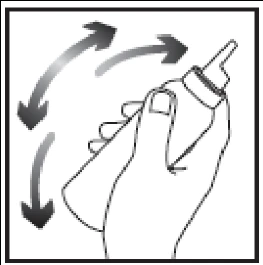
Shake the container vigorously.
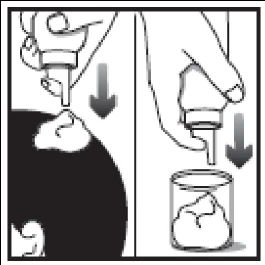
- Turn the container upside down and dispense a small amount (about the size of a walnut) directly onto the hairy scalp or onto the cap, a saucer, or another cool surface, then apply to the scalp. Apply a thin layer of Clarelux, using the smallest amount necessary to cover the affected area. The exact amount needed depends on the size of the affected area. Do not apply to the eyelids or near the eyes, nose, or mouth. It is not recommended to dispense Clarelux foam directly onto the hand, as the foam will melt immediately upon contact with warm skin.
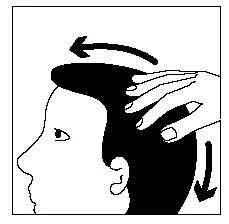
- Part the hair and gently massage the foam into the scalp until it disappears and is fully absorbed. Repeat if necessary to cover the entire affected area.
After each application of Clarelux, wash hands thoroughly and remove any unused foam residue.
Do not apply Clarelux to the face. If the product accidentally gets into the eyes, nose, or mouth, rinse immediately with cold water. The product may cause a stinging sensation.
If the pain persists, contact your doctor.
Do not bandage or cover treated areas unless directed by a doctor.
Do not wash or rinse the treated areas of the scalp immediately after applying Clarelux.
Do not use more than 50 g of Clarelux per week.
Treatment should not last longer than 2 weeks. After this period, Clarelux may be used occasionally as needed. Alternatively, your doctor may prescribe a weaker steroid to control your condition.
Use of a higher than recommended dose of Clarelux
Contact your doctor immediately if Clarelux is used:
- in a dose higher than prescribed;
- for a longer period than recommended.
Missed dose of Clarelux
If a dose is missed, apply it as soon as remembered, then continue treatment as before. If the missed dose is remembered at the time the next dose is due, apply the next dose as a single dose for that day, then continue treatment as before. Do not apply a double dose to make up for a missed dose. If several doses are missed, contact your doctor.
Stopping Clarelux treatment
Do not stop treatment suddenly, as this may be harmful. Your doctor may discontinue treatment gradually. Regular check-ups may be necessary.
If you have any further questions about the use of this medicine, consult your doctor or pharmacist.
4. Possible adverse reactions
Like all medicines, this medicine can cause adverse reactions, although not everyone will experience them. Treatment with Clarelux should be discontinued and medical advice should be sought immediately if hypersensitivity reactions occur, such as local irritation.
Adverse reactions include:
Common adverse reactions (may affect up to 1 in 10 patients, but more than 1 in 100 patients):
- Burning sensation;
- Other skin reactions at the application site.
Very rare adverse reactions (may affect up to 1 in 10,000 patients):
- Tingling or pricking sensation;
- Eye irritation;
- Vein inflammation;
- Skin irritation and tenderness;
- Skin tightness;
- Itchy rash (contact dermatitis);
- Exacerbation of psoriatic lesions;
- Redness at the application site;
- Itching and sometimes pain at the application site;
- Presence of blood, protein, and nitrogen in urine may be detected by a physician.
Additional adverse reactions occurring with unknown frequency (frequency cannot be estimated from the available data):
- Changes in hair growth (abnormal hair growth away from the application site and on atypical body parts);
- Skin discoloration;
- Follicular irritation, e.g., pain, sensation of heat, and redness;
- Rash around the mouth;
- Facial redness and eruptions;
- Prolonged wound healing;
- Eye effects (cataract, increased intraocular pressure);
- Visual disturbances.
Adverse reactions due to long-term use occurring with unknown frequency (frequency cannot be estimated from the available data):
- White spots on the skin (striae) and dilation of cutaneous blood vessels;
- As with other corticosteroids, prolonged use of Clarelux in high doses may lead to Cushing's syndrome, characterized by a red, round face (so-called "moon face"), high blood pressure, weight gain, and changes in blood and urine sugar levels;
- Long-term steroid treatment may cause skin atrophy (thinning of the skin);
- Topical steroid withdrawal reaction (rebound effect). If the medicine has been used continuously for a long time, abrupt discontinuation may trigger a withdrawal reaction with some or all of the following symptoms: skin redness, which may spread beyond the originally treated area, burning or stinging sensation, intense itching, skin desquamation, and oozing open sores.
In rare cases, treatment of psoriasis with corticosteroids (or discontinuation of treatment) may lead to worsening of lesions and the development of pustular psoriasis. After discontinuation of corticosteroid treatment, skin lesions on the scalp may sometimes recur. Additionally, pre-existing infections may worsen if Clarelux is used inappropriately.
Reporting of adverse reactions
If any adverse reactions occur, including any not listed in this leaflet, inform your doctor or pharmacist. Adverse reactions can be reported directly to the Department of Monitoring of Adverse Drug Reactions of the Office for Registration of Medicinal Products, Medical Devices and Biocidal Products, Al. Jerozolimskie 181C, 02-222 Warsaw, tel.: 22 49-21-301, fax: 22 49-21-309, website: https://smz.ezdrowie.gov.pl
Reporting adverse reactions helps to provide more information on the safety of this medicine.
5. How to store Clarelux
- The container contains a flammable liquid under pressure.
- Do not store near open flames, sources of ignition, heat-producing materials, or electrical appliances in use.
- Do not expose to temperatures above 50°C or to direct sunlight.
- Do not pierce or burn the container, even if it is empty.
- After treatment is completed, the container must be disposed of safely.
Keep out of the sight and reach of children.
Do not use Clarelux after the expiry date stated on the packaging.
The expiry date refers to the last day of the stated month.
Do not store above 25°C. Do not store in the refrigerator.
Store in an upright position.
Medicines should not be disposed of via wastewater or household waste. Ask your pharmacist how to dispose of medicines no longer in use. This will help protect the environment.
6. Contents of the pack and other information
What Clarelux contains
The active substance is clobetasol propionate.
Each 1 gram of Clarelux cutaneous foam contains 500 micrograms of clobetasol propionate.
The other ingredients are: anhydrous ethanol, purified water, propylene glycol, cetyl alcohol,
stearyl alcohol, polysorbate 60, citric acid, potassium citrate, and a mixture of gases: propane/n-butane/isobutane.
What Clarelux looks like and contents of the pack
Clarelux is a white cutaneous foam in an aluminium pressurised container closed with a valve, fitted with a dispenser and a protective cap lined internally with a double layer of transparent epoxy-phenolic lacquer, packed in a cardboard box.
The container holds 100 grams of cutaneous foam.
For more detailed information, please contact the marketing authorisation holder or the parallel importer.
Marketing authorisation holder in Spain, the country of export:
Pierre Fabre Ibérica, S.A.
C/ Ramón Trias Fargas, 7-11
08005 Barcelona, Spain
Manufacturer:
Recipharm Uppsala AB
Björkgatan 30
751 82 Uppsala, Sweden
Farmol Health Care S.r.L.
Via del Maglio, 6
23868 Valmadrera (LC), Italy
Parallel importer:
Medezin Sp. z o.o.
ul. Zbąszyńska 3
91-342 Łódź, Poland
Relabelled and/or repackaged in:
Medezin Sp. z o.o.
ul. Zbąszyńska 3
91-342 Łódź, Poland
Marketing authorisation number in Spain: 761619.1
Parallel import authorisation number: 21/25
This medicinal product is authorised for sale in the European Economic Area under the following names:
CLARELUX 500 micrograms/g cutaneous foam – Austria, Belgium, Czech Republic, France, Germany, Greece, Luxembourg, Netherlands, Poland, Portugal, Slovakia, United Kingdom and Spain.
OLUX 500 micrograms/g cutaneous foam – Italy.