Citrafleet
Poland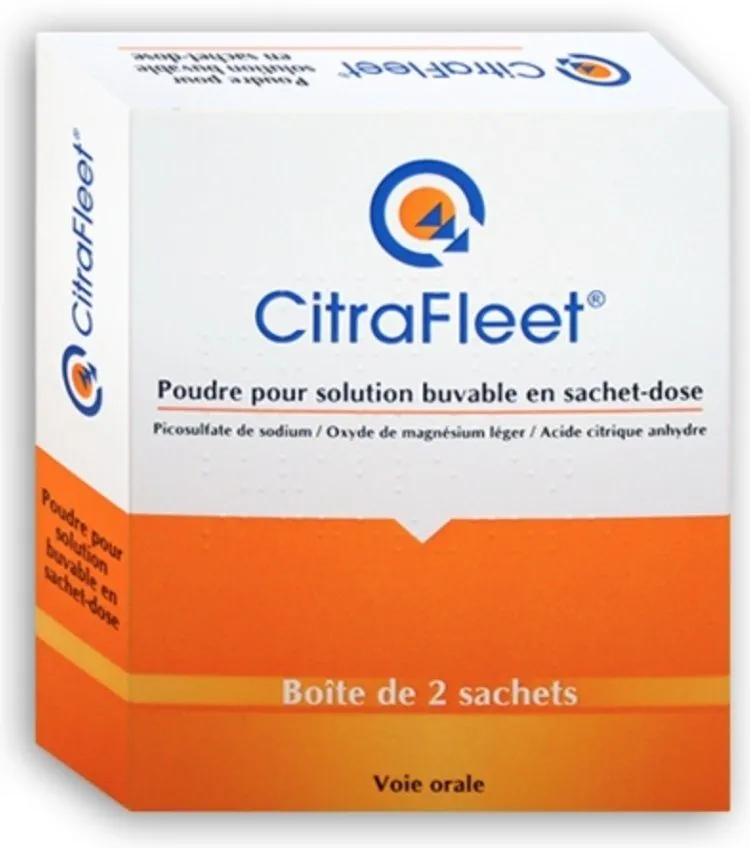
Table of Contents
PACKAGE LEAFLET: INFORMATION FOR THE USER
Warning! Keep this leaflet, information on the immediate packaging in a foreign language!
CitraFleet
(0.01 g + 3.50 g + 10.97 g)/sachet, powder for oral solution
Sodium picosulfate + Magnesium oxide light + Citric acid
Please read this leaflet carefully before taking this medicine, as it contains
important information for the patient.
- Keep this leaflet, so that you can read it again if necessary.
- If you have any questions, please consult your doctor or pharmacist.
- This medicine has been prescribed for a specific individual. Do not pass it on to others. This medicine may harm other people, even if their symptoms are the same.
- If the patient experiences any adverse reactions, including any not listed in this leaflet, inform your doctor or pharmacist. See section 4.
Leaflet contents
- What CitraFleet is and what it is used for
- Important information before taking CitraFleet
- How to take CitraFleet
- Possible side effects
- How to store CitraFleet
- Contents of the pack and other information
1. What CitraFleet is and what it is used for
CitraFleet is taken to cleanse the intestines and colon before examinations requiring clean bowels, such as colonoscopy (a procedure imaging the intestine using a long, flexible instrument inserted by the doctor through the patient's anus) or radiological imaging. CitraFleet is a powder with a lemon scent and taste. The powder contains two laxative substances mixed in each sachet. When dissolved in water and drunk, these agents will cleanse the intestines. It is important that the patient's bowels are empty and clean so that the doctor has a clear view during the examination.
CitraFleet is indicated for use in adults aged 18 years and above (including elderly patients).
2. Important information before taking CitraFleet
When not to take CitraFleet:
- if the patient is allergic to sodium picosulfate, magnesium oxide, citric acid, or any of the other ingredients of this medicine (listed in section 6);
- if the patient has congestive heart failure (the heart is unable to pump blood effectively throughout the body);
- if the patient has delayed gastric emptying (the stomach does not empty properly);
- if the patient has gastric or duodenal ulcers;
- if the patient has intestinal obstruction or bowel movement disorders;
- if the patient has been informed by a doctor about intestinal wall damage (also known as toxic colitis);
- if the patient has colonic dilation (also known as paralytic ileus);
- if the patient has recently experienced nausea or vomiting;
- if the patient feels intense thirst or may be severely dehydrated;
- if the patient has been informed by a doctor about fluid accumulation in the abdominal cavity causing swelling (ascites);
- if the patient recently underwent abdominal surgery, e.g. due to appendicitis;
- if the patient may have intestinal perforation, injury, or obstruction;
- if the patient has been informed by a doctor about active inflammatory bowel disease (such as Crohn's disease or ulcerative colitis);
- if the patient has been informed by a doctor about muscle tissue damage leading to breakdown products entering the bloodstream (rhabdomyolysis);
- if the patient has severe kidney disease or the doctor has diagnosed excessively high magnesium levels in the blood (hypermagnesemia).
Warnings and precautions
Before starting CitraFleet, talk to your doctor if:
- the patient recently underwent intestinal surgery;
- the patient has kidney or heart disease;
- the patient has electrolyte imbalance (sodium or potassium) or is taking medicines that may affect electrolyte balance (sodium or potassium), such as diuretics, corticosteroids, or lithium;
- the patient has been diagnosed with epilepsy or has a history of seizures;
- the patient has low blood pressure (hypotension);
- the patient feels thirsty or suspects they may be moderately dehydrated;
- the patient is elderly or physically frail;
- the patient has ever had low blood levels of sodium or potassium (hyponatremia or hypokalemia);
- after taking CitraFleet, the patient experiences severe or persistent abdominal pain and/or rectal bleeding, in which case the doctor should be notified. This is because CitraFleet has rarely been associated with intestinal inflammation (colitis).
The patient should expect frequent loose stools after taking CitraFleet. It is important to drink large amounts of clear fluids (see section 3) to replace lost fluids and electrolytes. Otherwise, dehydration and low blood pressure may occur, potentially leading to fainting.
CitraFleet and other medicines
Tell your doctor or pharmacist about all medicines you are currently taking or have recently taken, as well as any medicines you plan to take.
Taking CitraFleet together with other medicines may affect their effectiveness. Other medicines may also affect the action of CitraFleet. If the patient is taking medicines belonging to any of the groups listed below, the doctor may decide to prescribe an alternative medicine or adjust the dose. Therefore, if the patient has not yet discussed the following medicines with their doctor, they should return to the doctor and ask how to proceed:
- oral contraceptives, as their effectiveness may be reduced;
- medicines used for diabetes or epilepsy (seizures), as their effectiveness may be reduced;
- antibiotics, as their effectiveness may be reduced;
- other laxatives, including bran;
- diuretics, such as furosemide (water tablets);
- corticosteroids such as prednisone, used in conditions such as arthritis, asthma, hay fever, skin inflammation, and inflammatory bowel disease;
- digoxin, used in the treatment of heart failure;
- non-steroidal anti-inflammatory drugs (NSAIDs) such as acetylsalicylic acid and ibuprofen, used to treat pain and inflammation;
- tricyclic antidepressants such as imipramine and amitriptyline, and selective serotonin reuptake inhibitors (SSRIs) such as fluoxetine, paroxetine, and citalopram, used to treat depression and anxiety;
- antipsychotic medicines such as haloperidol, clozapine, and risperidone, used to treat schizophrenia;
- lithium, used in the treatment of bipolar disorder (manic-depressive illness);
- carbamazepine, used in the treatment of epilepsy;
- penicillamine, used to treat rheumatoid arthritis and other conditions.
Pregnancy, breastfeeding, and fertility
If the patient is pregnant, breastfeeding, suspects she may be pregnant, or is planning to have a baby, she should consult her doctor or pharmacist before using this medicine.
Driving and operating machinery
If the patient feels tired or dizzy after taking CitraFleet, they should not drive or operate machinery.
CitraFleet contains potassium and sodium
This medicine contains 5 mmol (or 195 mg) of potassium per sachet, which should be considered in patients with impaired kidney function or those monitoring dietary potassium intake.
This medicine contains less than 1 mmol of sodium (23 mg) per sachet, meaning the medicine is considered "sodium-free".
3. How to take CitraFleet
This medicine should always be taken as directed by the physician, because if the intestines are not completely cleared, the procedure may need to be repeated. In case of doubt, consult a physician or pharmacist.
The patient should be prepared for frequent, loose stools at any time after taking a dose of CitraFleet.
This is normal and indicates that the medicine is working. The patient should ensure access to a toilet until bowel movements cease.
It is important to follow a special low-residue diet on the day before the procedure. From the time the medicine is started until the procedure is performed, no solid foods should be consumed. Always follow the physician's dietary instructions. If you have any questions, contact your physician or pharmacist.
Unless otherwise directed by the physician, the patient should not take more than the recommended dose within 24 hours.
Treatment schedule
The patient should receive two CitraFleet sachets. Each sachet contains a single dose intended for an adult.
Treatment should be carried out using one of the following regimens:
- One sachet in the evening the day before the procedure, and one sachet in the morning on the day of the procedure, or
- One sachet in the afternoon and one sachet in the evening the day before the procedure. This regimen is recommended when the procedure is scheduled for early morning, or
- Both sachets in the morning on the day of the procedure. This regimen is appropriate only if the procedure is scheduled for the afternoon or evening.
In each of the above regimens, there should be at least a 5-hour interval between the first and second sachet.
The contents of each sachet should be dissolved in a cup of water. Immediately after taking the medicine, fluids should not be consumed to avoid further dilution of the product.
After consuming each sachet, wait approximately 10 minutes, then drink about 1.5–2 liters of clear fluids, at a rate of approximately 250 ml (a glass) to 400 ml per hour. To prevent dehydration, consumption of clear soups and/or balanced electrolyte drinks is recommended. Drinking plain water is not recommended.
After taking the second sachet and drinking about 1.5–2 liters of fluids, do not eat or drink anything for at least 2 hours before the procedure, or follow the physician's instructions.
DOSING INSTRUCTIONS:
Adults (including elderly patients) aged 18 years and older.
- Step 1 – Pour the contents of 1 sachet into a cup of cold water (approximately 150 ml).
- Step 2 – Mix for 2–3 minutes. If the solution warms during mixing, wait until it cools before drinking the entire solution. The suspension should be consumed immediately after preparation. The suspension will be cloudy.
Taking more CitraFleet than recommended
If more CitraFleet has been taken than recommended, contact a physician or pharmacist immediately.
4. Possible adverse effects
Like all medicines, this medicine can cause adverse effects, although not everyone will experience them.
The known adverse effects associated with taking CitraFleet are described below, listed in order of frequency:
Very common (may affect more than 1 in 10 people):
Abdominal pain.
Common (may affect up to 1 in 10 people):
Abdominal bloating, feeling of thirst, sensation of discomfort around the anus, pain around the anus, fatigue (feeling tired), sleep disturbances, headache, dry mouth, nausea.
Uncommon (may affect up to 1 in 100 people):
Dizziness, vomiting, inability to control bowel movements (fecal incontinence).
Other adverse effects for which frequency is unknown (cannot be estimated from the available data):
Anaphylactic reaction or hypersensitivity, which are severe allergic reaction symptoms. If breathing difficulties, redness, or any other symptoms indicating a severe allergic reaction occur, seek immediate medical attention at a hospital.
Hyponatremia (low sodium levels in blood), hypokalemia (low potassium levels in blood), epilepsy, convulsions, orthostatic hypotension (low blood pressure upon standing, which may lead to dizziness or instability), confusion, rash including urticaria, itching, and purpura (subcutaneous bleeding).
Flatulence (gas) and pain.
The medicine is intended to produce regular, loose stools similar to those occurring during diarrhea. However, if bowel movements become troublesome or concerning after taking this medicine, consult a doctor.
Reporting of adverse effects
If any adverse effects occur, including any not listed in this leaflet, inform a doctor or pharmacist. Adverse effects can be reported directly to the Department of Monitoring Adverse Drug Reactions at the Office for Registration of Medicinal Products, Medical Devices and Biocidal Products, Al. Jerozolimskie 181 C, 02-222 Warsaw, phone: +48 22 49 21 301, fax: +48 22 49 21 309, website: https://smz.ezdrowie.gov.pl
Reporting adverse effects helps to provide more information on the safety of the medicine.
5. How to store CitraFleet
Keep this medicine out of sight and reach of children.
Do not store above 25°C.
Do not use this medicine after the expiry date stated on the packaging. The expiry date refers to the last day of the stated month.
Medicines should not be disposed of via wastewater or household waste. Ask your pharmacist how to dispose of medicines no longer required. Proper disposal helps protect the environment.
6. Contents of the pack and other information
What CitraFleet contains
- The active substances are: sodium picosulfate 0.01 g (10.0 mg), light magnesium oxide 3.5 g, citric acid 10.97 g.
- The other components are: potassium hydrogen carbonate, sodium saccharin, lemon flavour (lemon flavour, maltodextrin, tocopherol (E 307)). See section 2.
What CitraFleet looks like and contents of the pack
CitraFleet is a white, crystalline powder for oral solution, available in packs containing 2 sachets. Each sachet contains a single adult dose of 15.08 g.
For further information, contact the responsible party or the parallel importer.
Marketing Authorisation Holder in Ireland, the country of export:
Casen Recordati, S.L.
Autovía de Logroño, Km 13,300
50180 Utebo - Saragossa
Spain
Manufacturer:
Casen Recordati, S.L.
Autovía de Logroño, Km 13,300
50180 Utebo - Saragossa
Spain
Parallel Importer:
Medezin Sp. z o.o.
ul. Zbąszyńska 3
91-342 Łódź
Repackaged in:
Medezin Sp. z o.o.
ul. Zbąszyńska 3
91-342 Łódź
Irish Marketing Authorisation Number: PA 2028/002/001
Parallel Import Licence Number: 17/25
This medicinal product is authorised for sale in the European Economic Area countries under the following names:
Citrafleet: Croatia, Czech Republic, Denmark, Norway, Slovenia
CitraFleet: Austria, Belgium, Bulgaria, Cyprus, Estonia, Finland, France, Germany, Greece, Hungary, Iceland, Ireland, Italy, Latvia, Liechtenstein, Lithuania, Luxembourg, Malta, Netherlands, Poland, Portugal, Romania, Slovakia, Spain, Sweden, United Kingdom (Northern Ireland).