Cirrus
Poland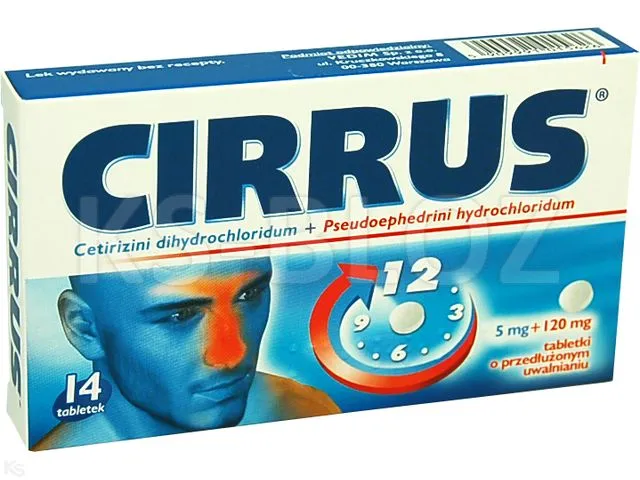
Table of Contents
Patient Information Leaflet
Cirrus, 5 mg + 120 mg, prolonged-release tablets
Cetirizini dihydrochloridum + Pseudoephedrini hydrochloridum
Please read this leaflet carefully before taking this medicine, as it contains important information for you.
- Keep this leaflet so that you can read it again if necessary.
- If you have any questions, please consult your doctor or pharmacist.
- This medicine has been prescribed for a specific individual. Do not pass it on to others. This medicine may harm someone else, even if their symptoms are the same.
- If you experience any adverse effects, including any not listed in this leaflet, inform your doctor or pharmacist. See section 4.
Leaflet Contents
- What Cirrus is and what it is used for
- Important information before taking Cirrus
- How to take Cirrus
- Possible side effects
- How to store Cirrus
- Contents of the pack and other information
1. What Cirrus is and what it is used for
Cirrus contains two active substances: cetirizine dihydrochloride and pseudoephedrine hydrochloride. Cetirizine dihydrochloride is an antiallergic medicine, while pseudoephedrine hydrochloride constricts blood vessels in the nasal mucosa, thereby reducing nasal mucosal congestion.
Cirrus prolonged-release tablets are indicated for the treatment of symptoms of seasonal and perennial allergic rhinitis, such as nasal congestion (nasal mucosal congestion), sneezing, watery nasal discharge (runny nose), and itching (pruritus) of the nose and conjunctivae. This medicine is intended for use when both the antiallergic effect of cetirizine dihydrochloride and the nasal decongestant effect of pseudoephedrine hydrochloride are desired.
2. Important information before using the medicine Cirrus
When not to use the medicine Cirrus:
- if the patient is allergic to the active substances, ephedrine, piperazine or its derivatives, or any of the other ingredients of this medicine (listed in section 6),
- if the patient has very high blood pressure (severe hypertension) or uncontrolled arterial hypertension with medication, or a severe form of ischemic heart disease,
- if the patient has severe acute (sudden) or chronic (long-term) kidney disease, or kidney failure / end-stage renal failure,
- if the patient has uncontrolled hyperthyroidism,
- if the patient has severe cardiac arrhythmias,
- if the patient has been diagnosed with a pheochromocytoma,
- if the patient has glaucoma or increased intraocular pressure,
- if the patient has urinary retention,
- if the patient has had a stroke,
- if the patient is in a high-risk group for hemorrhagic stroke,
- if the patient is taking dihydroergotamine (a medicine used for migraine),
- if the patient is currently taking or has taken within the last two weeks monoamine oxidase inhibitors (MAOIs), see below “Cirrus and other medicines”,
- in children under 12 years of age.
Warnings and precautions
Before starting to use the medicine Cirrus, discuss this with your doctor or pharmacist.
Exercise particular caution when using Cirrus if:
- the patient has diabetes,
- the patient has hyperthyroidism,
- the patient has arterial hypertension (high blood pressure), especially if also taking non-steroidal anti-inflammatory drugs (see below “Cirrus and other medicines”),
- the patient has ischemic heart disease or cardiac arrhythmias such as tachycardia,
- the patient has moderate renal or hepatic impairment (see section 3),
- the patient is elderly,
- the patient is taking sympathomimetic medicines (such as nasal decongestants, appetite suppressants, psychostimulants, e.g. amphetamine and its derivatives), tricyclic antidepressants, antihypertensive medicines, alcohol, or medicines that depress the central nervous system and impair performance, cardiac glycosides such as digoxin or digitoxin (see below “Cirrus and other medicines”),
- the patient has benign prostatic hyperplasia or difficulty urinating,
- the patient has risk factors for hemorrhagic stroke (such as concomitant use of other vasoconstrictive medicines (e.g. bromocriptine, pergolide, lisuride, cabergoline, ergotamine) or any other orally or nasally administered decongestant (e.g. phenylpropanolamine, phenylephrine, ephedrine)), as vasoconstriction and increased blood pressure increase the risk of hemorrhagic stroke,
- the patient has risk factors for hypercoagulable states, e.g. in inflammatory bowel diseases,
- the patient has conditions in which anticholinergic effects are undesirable, especially patients with risk factors for urinary retention (e.g. spinal cord injury, prostatic hyperplasia, prostatic hypertrophy or bladder outlet obstruction), as Cirrus may increase the risk of urinary retention.
If the patient develops fever with generalized skin erythema and vesicular rash,
discontinue taking Cirrus and contact a doctor or seek immediate medical help. See section 4.
During treatment with Cirrus, sudden abdominal pain or rectal bleeding due to
inflammatory disease of the large intestine (ischemic colitis) may occur. If such
gastrointestinal symptoms occur, discontinue use of Cirrus and immediately consult a
doctor or seek medical help. See section 4.
Cases of posterior reversible encephalopathy syndrome (PRES) and reversible cerebral vasoconstriction syndrome (RCVS) have been reported after using medicines containing pseudoephedrine.
PRES and RCVS are rare conditions that may involve reduced blood flow to the brain.
If symptoms suggestive of PRES or RCVS occur, discontinue Cirrus immediately and seek immediate medical attention (symptoms, see section 4 “Possible side effects”).
Caution is advised in patients with hypertension who are also taking non-steroidal anti-inflammatory drugs (NSAIDs), as both NSAIDs and pseudoephedrine may increase blood pressure.
Before using Cirrus, consult a doctor, even if the above warnings refer to conditions that occurred in the past.
Cirrus may affect the results of skin allergy tests. Therefore, skin tests should be performed at least 3 days after discontinuation of the medicine.
Cases of pseudoephedrine abuse have been reported, similar to other substances with central nervous system stimulant effects.
When pseudoephedrine is used by professional athletes, it should be noted that its use may lead to a positive anti-doping test result.
Use of Cirrus in patients with renal impairment
Exercise special caution when using the medicine in patients with renal impairment. In patients with moderate renal impairment, the dose of Cirrus should be reduced to one tablet per day. Cirrus should not be used in patients with end-stage renal failure. Consult a doctor before using the medicine.
Use of Cirrus in patients with hepatic impairment
Exercise special caution when using the medicine in patients with hepatic impairment. In patients with moderate hepatic impairment, the dose of Cirrus should be reduced to one tablet per day. Consult a doctor before using the medicine.
Children and adolescents
Use of Cirrus in children under 12 years of age is contraindicated (see above “When not to use Cirrus”), because the combination of active substances in Cirrus has not been studied in this age group and due to the presence of one of the active substances, pseudoephedrine.
Cirrus and other medicines
Inform your doctor or pharmacist about all medicines currently or recently taken, as well as any medicines you plan to take. Some medicines, if taken together with Cirrus, may cause adverse effects.
Do not use Cirrus with the following medicines:
- monoamine oxidase inhibitors (MAOIs), used in depression. Concomitant use of Cirrus may lead to increased blood pressure, even hypertensive crisis. This adverse effect may occur within two weeks after stopping MAOIs; therefore, Cirrus should not be used during treatment with MAOIs or within two weeks after their discontinuation.
- dihydroergotamine (a medicine used for migraine), see above “When not to use Cirrus”.
Consult a doctor before using Cirrus if the patient is taking any of the following medicines:
- linezolid (an antibiotic),
- tricyclic antidepressants, such as imipramine, amitriptyline, doxepin,
- vasoconstrictive medicines, such as bromocriptine, pergolide, lisuride, cabergoline, ergotamine,
- nasal decongestants, such as phenylpropanolamine, phenylephrine, ephedrine,
- appetite suppressants, such as phentermine, mazindol,
- psychostimulants, such as amphetamine and its derivatives,
- antihypertensive medicines, such as methyldopa, guanethidine and reserpine, and beta-adrenergic blocking agents (e.g. atenolol, bisoprolol). Cirrus may reduce the effectiveness of these medicines.
- cardiac glycosides, such as digoxin or digitoxin, used in heart failure treatment,
- central nervous system depressants, e.g. sedatives,
- antacids (medicines containing, e.g. aluminium or magnesium hydroxide) and proton pump inhibitors (medicines used in peptic ulcer disease, such as omeprazole). Note that these medicines increase the absorption rate of pseudoephedrine.
- halogenated general anesthetics, such as halothane,
- kaolin (a medicine used for diarrhea) reduces the absorption rate of pseudoephedrine,
- theophylline (a medicine used, among others, in bronchial asthma),
- ritonavir (a medicine used in HIV infection).
Exercise caution when using Cirrus in patients with hypertension who are also taking non-steroidal anti-inflammatory drugs (NSAIDs), e.g. acetylsalicylic acid, paracetamol, ibuprofen, naproxen.
During treatment with Cirrus, reduced blood flow in the optic nerve may occur. If sudden vision loss occurs, discontinue use of Cirrus and immediately contact a doctor or seek medical help. See section 4.
Taking Cirrus with food and drink
Cirrus can be taken during or between meals.
Pregnancy, breastfeeding and fertility
If the patient is pregnant, breastfeeding, suspects she may be pregnant, or plans to become pregnant, she should consult a doctor or pharmacist before using this medicine.
Cirrus should not be used during pregnancy.
Cirrus should not be used during breastfeeding, as cetirizine and pseudoephedrine pass into breast milk.
Animal studies in rats did not show any effect on fertility. There are no data on the effect of Cirrus on human fertility.
Driving and operating machinery
In clinical studies, cetirizine at recommended doses did not significantly affect the ability to drive or psycho-physical performance. However, somnolence was reported in some individuals participating in the studies. Cetirizine at doses higher than recommended may affect the central nervous system. Concurrent use of cetirizine with alcohol or other substances that depress the central nervous system may further impair reaction ability and concentration. However, no negative effect of pseudoephedrine has been observed or expected.
Therefore, patients who drive, perform potentially hazardous tasks, or operate machinery are advised to exercise caution, not exceed the recommended dose, and consider their individual response to the medicine and the possibility of adverse effects. Patients should not drive if they experience somnolence or dizziness.
Cirrus contains lactose and sodium
If the patient has previously been diagnosed with intolerance to certain sugars, the patient should consult a doctor before taking the medicine.
The medicine contains less than 1 mmol (23 mg) of sodium per tablet, meaning the medicine is considered “sodium-free”.
3. How to use Cirrus
This medicine should always be used as directed by a physician or pharmacist. If in doubt,
consult a physician or pharmacist.
The recommended dose of Cirrus for adults is one tablet twice daily (in the morning and evening),
taken during or between meals.
Cirrus tablets must not be broken, chewed, crushed, or chewed. The tablet should be swallowed whole,
with an adequate amount of liquid.
Duration of treatment
The duration of treatment with Cirrus should not exceed the period during which symptoms are present and should
not be longer than 2 to 3 weeks. The physician may recommend continuing treatment with ceterizine alone.
Use in patients with moderate renal impairment or hepatic impairment
In patients with moderate renal impairment or hepatic impairment, the dose of Cirrus should
be reduced by half (to 1 tablet per day).
Use in children and adolescents
Adolescents aged 12 to below 18 years: one tablet twice daily (in the morning and evening), during
or between meals.
Children under 12 years of age: use of this medicine is contraindicated (see above "When not to use Cirrus" and "Children and adolescents").
If the effect of Cirrus appears too strong or too weak, consult a physician.
Use of a higher than recommended dose of Cirrus
In case of ingestion of a higher than recommended dose (overdose), seek immediate advice from a
physician or pharmacist.
Symptoms of acute overdose of Cirrus include: diarrhoea, dizziness, fatigue, headache, malaise,
pupil dilation, urinary retention, increased heart rate, cardiac arrhythmias, elevated blood pressure,
sedation, respiratory depression, loss of consciousness, cyanosis, circulatory collapse, insomnia, hallucinations, tremor, and convulsions. These symptoms may be life-threatening.
Significant overdose of Cirrus may lead to toxic psychosis with delusions and hallucinations.
In some patients, cardiac arrhythmias, circulatory collapse, convulsions, coma, and respiratory failure may occur.
These symptoms may lead to death.
Treatment of overdose (symptomatic and supportive) should be conducted under hospital conditions.
Note that hemodialysis removes only a small amount of cetirizine and pseudoephedrine from the body.
Missed dose of Cirrus
Do not take a double dose to make up for a missed dose.
After stopping the medicine, itching may occur (rarely).
If you have any further questions about the use of this medicine, consult your
physician or pharmacist.
4. Possible adverse reactions
Like any medicine, this product may cause adverse reactions, although not everyone experiences them.
You must immediately stop taking Cirrus and seek urgent medical help
if symptoms indicating posterior reversible encephalopathy syndrome (PRES) or reversible cerebral vasoconstriction syndrome (RCVS) occur. These include:
- sudden, severe headache,
- nausea,
- vomiting,
- confusion,
- seizures,
- visual disturbances.
Adverse reactions reported:
Common (may occur in 1 to 10 out of 100 patients):
- nervousness
- insomnia
- dizziness, headache
- drowsiness
- increased heart rate
- dryness of the oral mucosa
- nausea
- feeling of weakness
Uncommon (may occur in 1 to 10 out of 1,000 patients):
- anxiety
- agitation
Rare (may occur in 1 to 10 out of 10,000 patients):
- hypersensitivity reactions (including anaphylactic shock)
- hallucinations
- seizures, tremor
- cardiac arrhythmias
- pallor
- high blood pressure
- vomiting
- liver function abnormalities (increased aminotransferase, alkaline phosphatase, gamma-glutamyltransferase activity, increased bilirubin concentration)
- dry skin, rash, increased sweating, urticaria
- difficulty or painful urination
Very rare (may occur in fewer than 1 out of 10,000 patients):
- psychotic disorders
- taste disturbances
- cerebrovascular incidents (stroke)
- inflammation of the large intestine due to insufficient blood flow (ischaemic colitis)
- drug rash
- circulatory collapse (sudden drop in arterial blood pressure manifesting as severe weakness, skin pallor, excessive sweating, often with loss of consciousness)
- angioedema (swelling of the face, eyelids, mucous membranes, lips, tongue, and larynx, causing breathing and swallowing difficulties). If any of these symptoms occur, contact a doctor immediately or go to the nearest hospital.
Frequency not known (frequency cannot be estimated from available data):
- severe conditions affecting blood vessels in the brain, known as posterior reversible encephalopathy syndrome (PRES) and reversible cerebral vasoconstriction syndrome (RCVS)
- aggression, confusion, depressed mood (depression), involuntary movements (tics), euphoria, suicidal thoughts
- disturbances in skin sensation (paraesthesia), inability to sit still or relax (psychomotor restlessness), abnormal prolonged muscle contractions (dystonia), involuntary movements (dyskinesia), memory loss (amnesia), memory problems, fainting
- accommodation disorders (eye disorders), blurred vision, unusual pupil dilation, eye pain, visual impairment, involuntary eye movements, abnormal visual tolerance to light
- breathing difficulties (dyspnoea)
- erectile dysfunction
- sudden fever, skin redness, or numerous small pustules (possible symptoms of Acute Generalized Exanthematous Pustulosis - AGEP) may occur within the first 2 days of taking Cirrus. See section 2. If such symptoms occur, discontinue Cirrus and contact a doctor or seek immediate medical help.
- itching
- palpitations, heart attack, low blood pressure (hypotension)
- diarrhoea, discomfort in the lower abdomen
- reduced blood flow in the optic nerve (ischaemic optic neuropathy)
- difficulty emptying the bladder (urinary retention), micturition
- joint pain, muscle pain
- swelling, malaise
Cases of hepatitis have been reported during treatment with cetirizine alone.
Other adverse reactions may occur in some individuals during treatment with Cirrus.
Reporting of adverse reactions
If any adverse symptoms occur, including any adverse reactions not listed
in this leaflet, inform your doctor or pharmacist. Adverse reactions can be
reported directly to the Department of Monitoring Adverse Drug Reactions of the Office for Registration of Medicinal Products, Medical Devices and Biocidal Products: Al. Jerozolimskie 181 C, 02-222 Warsaw, tel.: +48 22 49 21 301, fax: +48 22 49 21 309, website: https://smz.ezdrowie.gov.pl. Adverse reactions can also be reported to the marketing authorisation holder. Reporting adverse reactions helps provide more information on the safety of the medicine.
5. How to store the Cirrus medicine
Keep the medicine out of the sight and reach of children.
Do not use this medicine after the expiry date stated on the carton. The expiry date refers to the last day of the stated month.
No special storage instructions apply.
Medicines should not be disposed of via wastewater or household waste. Ask your pharmacist how to dispose of medicines no longer in use. This will help protect the environment.
6. Contents of the pack and other information
What the medicine Cirrus contains
- The active substances in this medicine are: cetirizine dihydrochloride and pseudoephedrine hydrochloride. Each tablet contains 5 mg of cetirizine dihydrochloride in an immediate-release form and 120 mg of pseudoephedrine hydrochloride in a prolonged-release form.
- Other ingredients are:
The immediate-release layer contains: monohydrate lactose, microcrystalline cellulose, sodium croscarmellose, colloidal anhydrous silica, magnesium stearate.
The prolonged-release layer contains: hypromellose, microcrystalline cellulose, colloidal anhydrous silica, magnesium stearate.
The coating Opadry Y-1-7000 white contains: hypromellose, titanium dioxide (E171), and polyethylene glycol 400.
What Cirrus looks like and contents of the pack
Cirrus is a white or almost white, round, biconvex tablet.
The pack contains 14 tablets.
PVC-Aclar/Rx160/Al blister in a cardboard box.
Marketing Authorisation Holder and Manufacturer
Marketing Authorisation Holder:
VEDIM Sp. z o.o.
ul. Kruczkowskiego 8
00-380 Warszawa
Tel. +48 22 696 99 20
Manufacturer:
Aesica Pharmaceuticals S.r.l.
Via Praglia 15
I-10044 Pianezza (TO), Italy
Importer:
PHOENIX Pharma Polska Sp. z o.o.
ul. Rajdowa 9, Konotopa
05-850 Ożarów Mazowiecki