Cidofovir tillomed
Poland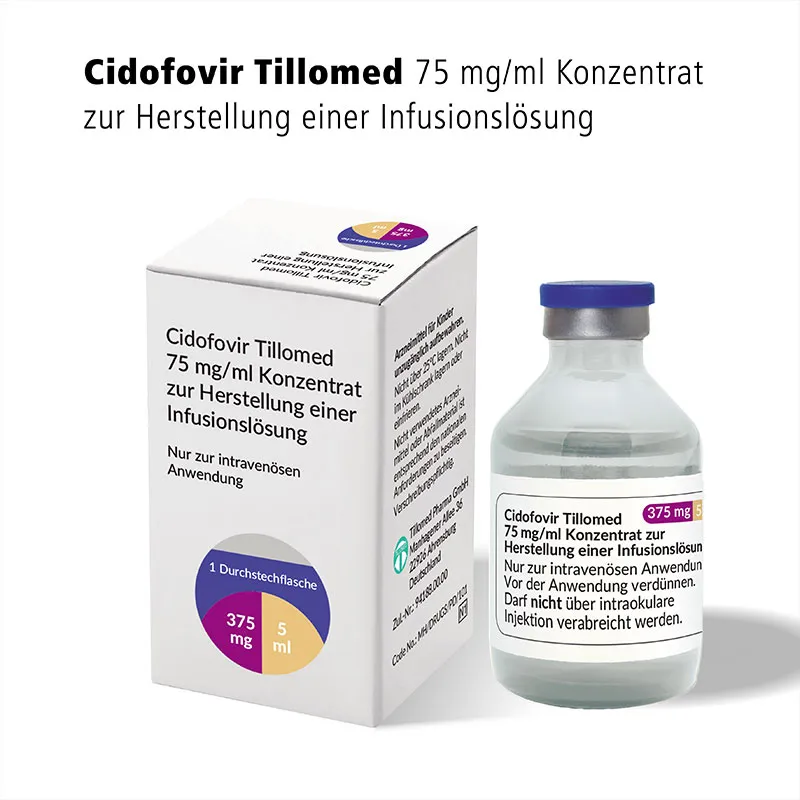
Table of Contents
- Package leaflet: Information for the user
- 1. What Cidofovir Tillomed is and what it is used for
- 2. Important information before using Cidofovir Tillomed
- 3. How to use Cidofovir Tillomed
- 4. Possible side effects
- 5. How to store Cidofovir Tillomed
- 6. Contents of the pack and other information
- Information intended exclusively for medical professionals or healthcare personnel:
Package leaflet: Information for the user
Cidofovir Tillomed, 75 mg/mL, concentrate for solution for infusion
Cidofovirum
Please read all of this leaflet carefully before this medicine is administered, because it contains
important information for you.
- Keep this leaflet, as you may need to read it again.
- If you have any further questions, please ask your doctor, pharmacist or nurse.
- This medicine has been prescribed for a specific person. Do not pass it on to others. This medicine may harm another person, even if their symptoms are the same.
- If you experience any adverse reactions, including any not listed in this leaflet, tell your doctor, pharmacist or nurse. See section 4.
Contents of the leaflet:
- What Cidofovir Tillomed is and what it is used for
- Important information before receiving Cidofovir Tillomed
- How to use Cidofovir Tillomed
- Possible side effects
- How to store Cidofovir Tillomed
- Contents of the pack and other information
1. What Cidofovir Tillomed is and what it is used for
Cidofovir is used to treat an eye infection called cytomegalovirus (CMV) retinitis in patients with AIDS (acquired immunodeficiency syndrome).
Cidofovir will not cure CMV retinitis, but it may improve the patient's condition by delaying the progression of the disease.
The safety and efficacy of cidofovir have not been established for diseases other than CMV retinitis in patients with AIDS.
Cidofovir Tillomed must be administered by qualified medical personnel (a doctor or nurse) in a hospital setting.
What is CMV retinitis?
CMV retinitis is an eye infection caused by a virus called cytomegalovirus (CMV). The CMV virus attacks the retina of the eye and may lead to vision loss and ultimately blindness. Patients with AIDS are at high risk of developing CMV retinitis or other forms of CMV disease, such as colitis (inflammatory bowel disease). Treatment of CMV retinitis is necessary to reduce the risk of vision loss.
Cidofovir is an antiviral medicine that inhibits the replication of CMV by interfering with viral DNA synthesis.
2. Important information before using Cidofovir Tillomed
When not to use Cidofovir Tillomed:
- If the patient is allergic to cidofovir or any of the other ingredients of this medicine (listed in section 6).
- If the patient has ever had kidney disease.
- If the patient cannot take a medicine called probenecid due to severe allergy to probenecid or other medicines containing sulfonamides (e.g. sulfamethoxazole).
If any of the above situations apply to the patient, please speak with a doctor. Cidofovir must not be
administered in such cases.
Warnings and precautions
Before starting treatment with cidofovir, discuss this with your doctor, pharmacist, or nurse.
- Kidney damage is the main adverse effect associated with cidofovir treatment. Therefore, your doctor may need to closely monitor your condition, especially if you already have impaired kidney function or are undergoing hemodialysis.
- If the patient has diabetes. Cidofovir should be used with caution in patients with diabetes due to the possible increased risk of developing low intraocular pressure (hypotony of the eyeball).
- Regular ophthalmological examinations should be performed during cidofovir treatment to detect possible eye irritation, inflammation, or swelling. If eye pain, redness, itching, or vision disturbances occur, the patient must immediately inform the doctor.
- Cidofovir has caused reduced testicular weight and low sperm count (oligospermia) in animals. Although such changes have not been observed in human studies with cidofovir, they may occur and could lead to infertility. Men should use barrier contraceptive methods during cidofovir treatment and for 3 months after its completion.
- Cidofovir is not used in the treatment of HIV infection. Cidofovir does not prevent transmission of HIV virus to others; therefore, appropriate precautions must still be taken to avoid infecting other people.
Children
Studies on the use of cidofovir in children have not been conducted. Therefore, this medicine must not be used in children.
Cidofovir Tillomed and other medicines
Tell your doctor or pharmacist about all medicines the patient is currently taking or has recently taken, as well as any medicines the patient plans to take, including those obtained without a prescription, because they may interact with cidofovir or probenecid.
It is very important to inform your doctor about taking other medicines that may damage the kidneys.
These include:
- medicines containing tenofovir, used in the treatment of HIV-1 infection and (or) chronic hepatitis B
- aminoglycosides, pentamidine, or vancomycin (used in bacterial infections)
- amphotericin B (used in fungal infections)
- foscarnet (used in viral infections)
- adefovir (used in HBV infection).
Treatment with these medicines should be discontinued at least 7 days before administration of cidofovir.
Probenecid may interact with other medicines commonly used in the treatment of AIDS and AIDS-related conditions, such as zidovudine (AZT). Patients taking zidovudine should discuss with their doctor whether they should temporarily discontinue zidovudine or reduce the dose by 50% on days when cidofovir and probenecid are administered.
No studies have been conducted on potential interactions between cidofovir and anti-HIV protease inhibitors.
Cidofovir Tillomed with food and drink
A meal should be consumed before administration of cidofovir. Your doctor may recommend drinking large amounts of fluids before cidofovir administration.
Pregnancy and breastfeeding
Cidofovir must not be given to pregnant women. If a patient becomes pregnant while taking this medicine, she must immediately inform her doctor. Cidofovir has been shown to cause fetal harm in animals and should not be used during pregnancy unless the potential benefits to the mother justify the risk to the fetus.
Women of childbearing potential should use effective contraceptive methods during cidofovir treatment and for six months after its completion.
Men should use effective contraceptive methods and must not father children during cidofovir treatment and for three months after its completion.
Cidofovir must not be given to breastfeeding women. It is not known whether cidofovir passes into human milk. Since many drugs are excreted in human milk, nursing mothers should either discontinue cidofovir or stop breastfeeding if they continue taking the medicine.
In general, women infected with HIV should not breastfeed to avoid transmission of HIV virus to the infant through breast milk.
Driving and operating machinery
Cidofovir may cause transient adverse effects such as fatigue or weakness. If the patient drives or operates machinery, they should consult their doctor for advice on whether these activities should be discontinued depending on the patient's condition and tolerance to the medicine.
Cidofovir Tillomed contains sodium
This medicine contains 11.4 mg of sodium (main component of table salt) per mL. This corresponds to 0.57% of the maximum recommended daily dietary sodium intake for adults.
3. How to use Cidofovir Tillomed
Cidofovir Tillomed is administered as an intravenous infusion ("drip"). It must not be given by any
other route, including intraocular injection or topical application (to the skin). Cidofovir must be administered
by a doctor or nurse experienced in the treatment of patients with AIDS.
The doctor or nurse will transfer the appropriate dose of cidofovir from the vial into an infusion bag
containing 100 mL of sodium chloride 9 mg/mL (0.9%) solution for infusion. The entire volume of the bag
will be administered intravenously at a constant rate over 1 hour using a standard infusion pump.
The recommended dose, frequency of administration, and infusion rate must not be exceeded.
Further information for healthcare professionals on the administration of cidofovir is provided at the end
of this leaflet.
To reduce the risk of kidney damage, the patient must receive probenecid tablets and intravenous fluids
(sodium chloride 9 mg/mL (0.9%) solution for infusion) on the day each dose of cidofovir is administered
(See sections "How to take probenecid with cidofovir" and "How intravenous fluids are administered before cidofovir" below).
Dosage in adults
The required dose is calculated based on the patient's body weight.
Induction therapy (initial treatment)
The recommended dose of cidofovir in patients with normal kidney function is 5 mg per kg of body weight,
administered once weekly for two consecutive weeks.
Maintenance therapy
Starting from the second week after completion of induction therapy, the recommended maintenance dose
of cidofovir in patients with normal kidney function is 5 mg per kg of body weight, administered once every
two weeks.
Dose adjustment
If the patient has impaired kidney function, treatment with cidofovir may not be appropriate.
Before each cidofovir infusion, urine and/or blood samples will be taken to assess kidney function.
In patients in whom worsening kidney function is observed, treatment with cidofovir may be interrupted or
discontinued, depending on the individual case.
Administration of a higher than recommended dose of Cidofovir Tillomed
If the patient accidentally receives a higher dose of cidofovir than prescribed, the doctor must be informed
immediately.
How to take probenecid with cidofovir
Probenecid tablets are given to reduce the risk of kidney damage. Three doses of probenecid tablets should be taken orally on the same day that cidofovir is administered, according to the table below:
| Time | Dose |
| 3 hours before starting cydofowir infusion | 2 g probenecid |
| 2 hours after completion of cydofowir infusion | 1 g probenecid |
| 8 hours after completion of cydofowir infusion | 1 g probenecid |
| Total dose | 4 g probenecid |
Probenecid is administered only on the same day that cidofovir is given.
How intravenous fluids are administered before cidofovir administration
Normal sodium chloride solution 9 mg/mL (0.9%) for infusion is administered to
reduce the risk of kidney damage. Prior to each dose of cidofovir, the patient should receive
intravenously (as an intravenous infusion) a total of one liter of sodium chloride solution 9 mg/mL
(0.9%) for infusion. The sodium chloride solution 9 mg/mL (0.9%) should be administered as a 1-hour
infusion immediately before cidofovir infusion.
If the patient tolerates additional fluid load, the physician may administer a second liter of fluid. If given,
the second liter of sodium chloride solution 9 mg/mL (0.9%) for infusion should be administered at the beginning
of cidofovir infusion or immediately after it, as an infusion lasting from 1 to 3 hours. The physician may
also recommend drinking large amounts of fluids.
If you have any further doubts regarding the use of this medicine, please consult your
physician, pharmacist, or nurse.
4. Possible side effects
Like all medicines, this medicine can cause side effects, although not everyone will experience them.
These effects usually resolve after stopping treatment with cidofovir. If any of the side effects
worsen or if you experience any side effects not listed in this leaflet, inform your doctor or
pharmacist immediately.
The most common side effect observed during treatment with cidofovir is kidney damage.
Very common side effects
(May occur in more than 1 in 10 people):
low white blood cell count, headache, nausea, vomiting, presence of protein in urine, increased blood creatinine levels (a marker of kidney function), hair loss, rash, weakness and/or fatigue, and fever.
Common side effects
(May occur in up to 1 in 10 people):
eye inflammation, decreased intraocular pressure, breathing difficulties or laboured breathing, shortness of breath, diarrhoea, and chills.
Any symptoms such as eye pain, redness, or itching, as well as changes in vision, should be reported to your doctor immediately so that treatment can be reviewed.
Additional reactions reported after the medicine was placed on the market include kidney failure, damage to renal tubular cells, pancreatitis, and hearing disturbances.
Possible side effects associated with probenecid use
Very common side effects probably related to probenecid
(May occur in more than 1 in 10 people):
nausea, vomiting, rash, and fever.
Common side effects probably related to probenecid
(May occur in up to 1 in 10 people):
headache, weakness and/or fatigue, chills, and allergic reactions.
To reduce the risk of nausea and/or vomiting associated with probenecid, take a meal before each dose. Your doctor may recommend taking other medicines such as antiemetics, antihistamines, and/or paracetamol to reduce probenecid-related side effects.
Probenecid may also cause other side effects, including loss of appetite, gum pain, skin redness, hair loss, dizziness, decreased red blood cell count, and increased frequency of urination. Allergic reactions including skin inflammation, itching, urticaria, and, rarely, severe allergic reactions and serious skin reactions have occurred. Decreased white blood cell count, hepatotoxicity, nephrotoxicity, and haemolysis have also been reported. Decreases in blood cells and platelets have also occurred.
Therefore, before administering probenecid, the doctor should review current prescribing information regarding the drug's safety. The package leaflet included with the probenecid product should also be consulted.
Reporting of side effects
If any side effects occur, including any not listed in this leaflet, tell your doctor, pharmacist, or nurse. Side effects can be reported directly to the Department of Monitoring of Adverse Drug Reactions, Office for Registration of Medicinal Products, Medical Devices and Biocidal Products, Al. Jerozolimskie 181 C, 02--222 Warsaw
Tel.: +48 22 49 21 301,
Fax: +48 22 49 21 309
Website: https://smz.ezdrowie.gov.pl
Side effects can also be reported to the marketing authorisation holder.
Reporting side effects helps provide more information on the safety of the medicine.
5. How to store Cidofovir Tillomed
Keep this medicinal product out of the sight and reach of children.
Do not use this medicinal product after the expiry date stated on the carton and vial label after
"EXP". The expiry date refers to the last day of the stated month.
Do not store above 25°C. Do not store in a refrigerator or freeze.
Shelf-life after dilution:
Chemical and physical in-use stability has been demonstrated for the prepared solution for 24 hours at a temperature of 2°C to 8°C. From a microbiological point of view, the medicinal product should be used immediately. If not used immediately, the user is responsible for the storage conditions and duration prior to use, and this period should generally not exceed 24 hours at a temperature of 2°C to 8°C, unless the dilution was carried out under controlled and validated aseptic conditions.
Medicinal products must not be disposed of via wastewater or household waste. Ask your pharmacist how to dispose of medicines no longer required. Such measures will help protect the environment.
6. Contents of the pack and other information
What Cidofovir Tillomed contains
The active substance is cidofovir. Each mL contains cidofovir as the dihydrate equivalent to
75 mg of cidofovir.
The other ingredients are: sodium hydroxide (for pH adjustment), hydrochloric acid (concentrated) (for pH adjustment),
water for injections.
What Cidofovir Tillomed looks like and contents of the pack
Cidofovir Tillomed, 75 mg/mL, concentrate for solution for infusion is a clear, colourless concentrate for solution for infusion in a glass vial.
Each pack contains 1 vial with a volume of 5 mL.
Marketing Authorisation Holder and Manufacturer
Marketing Authorisation Holder:
Tillomed Malta Ltd.
Tower Business Centre 2nd Floor, Tower Str.
Swatar Birkirkara, BKR4013
Malta
Tel: +48 509368531
e-mail: [email protected]
Manufacturer:
Tillomed Malta Ltd.
Malta Life Sciences Park
LS2.01.06 Industrial Estate
San Gwann, SGN 3000
Malta
This medicinal product is authorised in the European Economic Area countries under the following names:
Austria: Cidofovir Tillomed 75 mg/ml Konzentrat zur Herstellung einer Infusionslösung
Greece: CIDOFOVIR/TILLOMED
Ireland: Cidofovir Tillomed 75 mg/ml concentrate for solution for infusion
Germany: Cidofovir Tillomed 75 mg/ml Konzentrat zur Herstellung einer Infusionslösung
Poland: Cidofovir Tillomed
Portugal: Cidofovir Tillomed 75mg/ml concentrado para solução para perfusão
Slovakia: Cidofovir Tillomed 75mg/ml koncentrát na infúzny roztok
Czech Republic: Cidofovir Tillomed
Information intended exclusively for medical professionals or healthcare personnel:
Vials of cidofovir should be inspected before use. Do not use a vial if visible particulate matter or discoloration is observed.
Appropriate precautions, including the use of personal protective equipment, should be observed during the preparation, administration, and disposal of cidofovir. Preparation of diluted cidofovir solution should be performed in a biological safety cabinet with laminar airflow. Personnel preparing the solution should wear surgical gloves, protective goggles, and a surgical gown with long sleeves, back closure, and cuffs secured at the wrists.
In case of contact with cidofovir on skin or mucous membranes, thoroughly wash and rinse with water.
The appropriate dose of cidofovir should be transferred from the vial into an infusion bag containing 100 mL of sodium chloride 9 mg/mL (0.9%) solution for infusion. The entire volume of the bag should be administered intravenously to the patient at a constant rate over 1 hour using a standard infusion pump.
The recommended dose, frequency of administration, and infusion rate must not be exceeded.
Chemical and physical stability of the medicinal product Cidofovir Tillomed mixed with sodium chloride 9 mg/mL (0.9%) solution for infusion has been demonstrated in glass bottles, infusion bags made of polyvinyl chloride (PVC) or ethylene-propylene copolymer, and in intravenous administration sets with a vent made of PVC. Stability has not been evaluated when using other intravenous administration sets or other infusion bags.
Compatibility with Ringer's solution, Ringer's lactate solution, or infusion fluids containing bacteriostatic agents has not been studied.
From a microbiological standpoint, the medicinal product should be used immediately.
Chemical and physical stability of the prepared solution has been demonstrated for 24 hours
at 2°C to 8°C, provided dilution was performed under controlled and validated aseptic conditions.
Storage longer than 24 hours or freezing of the medicinal product is not recommended. Infusion bags stored in the refrigerator should be allowed to reach room temperature before use.
Cidofovir is supplied in single-use vials. Partially used vials must be discarded.