Ciclolack
Poland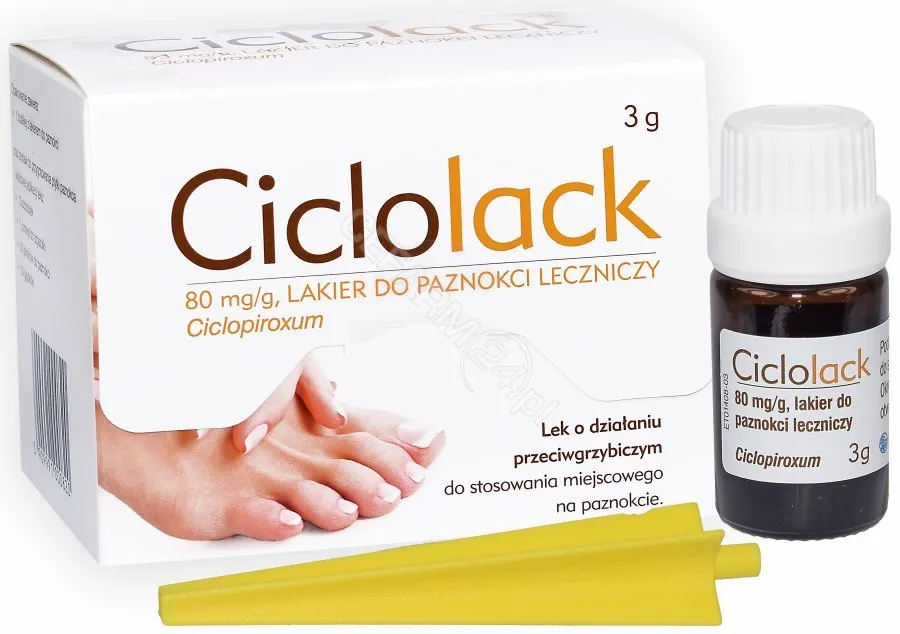
Table of Contents
Package leaflet: Information for the patient
Warning! Keep this leaflet! Information on the immediate packaging in a foreign language.
Ciclolack (Ciclocutan)
80 mg/g, medicinal nail lacquer
Ciclopiroxum
Ciclolack and Ciclocutan are different trade names for the same medicine.
Please read the entire leaflet carefully before using the medicine, as it contains
important information for the patient.
This medicine should always be used exactly as described in this patient leaflet or as directed by
the physician or pharmacist.
- Keep this leaflet for future reference.
- If advice or further information is needed, consult a pharmacist.
- If any adverse reactions occur, including any possible adverse reactions not listed in this leaflet, inform a doctor or pharmacist. See section 4.
- If there is no improvement after 4 weeks of treatment, or if the condition worsens, contact a doctor.
Table of contents
- What Ciclolack is and what it is used for
- Important information before using Ciclolack
- How to use Ciclolack
- Possible side effects
- How to store Ciclolack
- Contents of the pack and other information
1. What Ciclolack is and what it is used for
Ciclolack, medicinal nail lacquer, is an antifungal medicine for topical application to the nail in cases of nail fungus (onychomycosis). The active substance, ciclopirox, penetrates through the nail plate and exerts antifungal activity against fungi causing nail infections.
In onychomycosis, nails become thickened, dull, discolored (white, yellow, or brown), brittle, and there may be accumulation of keratinous debris under the free edge of the nail. Nail plate separation and destruction may occur.
Ciclolack medicinal nail lacquer is intended for the treatment of mild to moderate infections affecting less than 50% of the nail surface and involving no more than 4 out of 10 nails.
If in doubt, consult a doctor before using this medicine.
2. Important information before using Ciclolack
When not to use Ciclolack:
- if the patient is allergic to ciclopirox or any of the other ingredients of this medicine (listed in section 6);
- do not use in children and adolescents under 18 years of age.
Warnings and precautions
Before starting treatment with Ciclolack, discuss it with your doctor or pharmacist.
If allergic reactions occur, discontinue treatment immediately and contact your doctor.
Consult your doctor:
- if the patient has diabetes or circulatory disorders in hands and feet,
- if the patient has weakened immunity due to immunological disorders (e.g. HIV infection, transplant patients, patients receiving concomitant corticosteroid therapy, patients with recurrent or persistent shingles or herpes);
- if the nail plate is damaged,
- if the patient has skin diseases, such as psoriasis or other chronic skin conditions;
- if the patient has yellow nail syndrome (a medical condition characterized by excessive fluid accumulation in the skin and subcutaneous tissue, slowly growing yellow nails, and chronic respiratory disorders).
Do not use Ciclolack if:
- nails are severely damaged,
- lesions affect more than 50% of the nail surface and more than 4 nails,
- lesions are very severe or new changes appear on other nails,
- erythematous, desquamative skin changes develop around the affected nails. In such cases, consult your doctor. The medicine should be used only on the nails.
Avoid contact of the medicine with eyes and mucous membranes. If the medicine gets into the eyes, nose, or ears, rinse immediately with water and contact your doctor immediately and go to the nearest hospital emergency department.
During treatment, do not apply cosmetic products (e.g. nail polishes, nail conditioners) or artificial nails to the nail plate.
To prevent the development of onychomycosis:
- ensure hands and feet are always clean and dry (people with excessive foot sweating should use moisture-absorbing powders and change socks and shoes frequently);
- thoroughly dry the spaces between toes after washing feet;
- use a separate towel (preferably disposable) and only personal nail care tools (after each use, disinfect them or use disposable tools);
- cut nails straight across;
- in case of athlete's foot, always wear clean and dry socks (preferably cotton) and breathable footwear, and air shoes after each use;
- never wear footwear previously worn by someone else;
- avoid walking barefoot in public places (e.g. swimming pools, saunas, sports facilities);
- use pedicure services only in reputable places where instruments are properly disinfected;
- avoid skin injuries during self-performed pedicures;
- avoid any trauma to the nail plate.
Ciclolack and other medicines
Inform your doctor or pharmacist about all medicines currently or recently used, as well as any medicines you plan to use.
There are no data available on potential interactions between Ciclolack and other medicines.
Pregnancy and breastfeeding
If the patient is pregnant or breastfeeding, suspects she may be pregnant, or is planning to have a child, she should consult her doctor or pharmacist before using this medicine.
Due to lack of clinical experience, Ciclolack should not be used during pregnancy or breastfeeding.
Driving and operating machinery
No effects of the medicine on the ability to drive and operate machinery have been observed.
3. How to use Ciclolack
This medicine should always be used exactly as described in this patient leaflet or as directed by
your doctor or pharmacist. If in doubt, consult your doctor or pharmacist.
The medicine is intended for topical application on the nail.
This medicine may only be used in adults.
Before starting to use Ciclolack
Before starting treatment with Ciclolack, remove as much as possible of the diseased nail surface using scissors, clippers, or the disposable nail file provided. After contact with infected nails, reusable tools should be disinfected, while disposable ones must be discarded.
Instructions for use
- Wash feet or hands with soap and water and dry thoroughly (preferably with a disposable towel).
- Gently file the surface of the nail plate using the disposable file. As much as possible of the infected nail should be removed each time. Warning! After use, the file must be discarded!
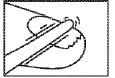
- Wipe the nail plate with an alcohol-impregnated swab provided in the package.
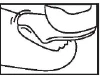
- The medicinal nail lacquer should be applied using one of the reusable spatulas included in the package. The package contains ten individual reusable spatulas connected together. Detach a single reusable spatula before use. An additional spatula handle is also provided. Connect the individual spatula with the handle to ensure more convenient application of the nail lacquer.
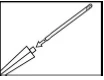
- Before applying the lacquer to each nail, dip the uneven surface of the spatula into the glass bottle, without touching the neck of the bottle (to avoid the risk of the cap sticking to the bottle).
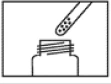
- Apply Ciclolack evenly over the entire surface of the infected nail using the spatula.
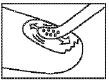
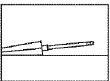
- The special shape of the spatula handle prevents contact of the spatula with any surface (fungal spores remain on the spatula). The spatula can be temporarily set aside without risk of spreading fungal spores.
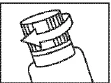
- Immediately after use, close the bottle tightly to prevent the solution from drying out.
- To reuse the spatula, clean it with an alcohol-impregnated swab immediately after use.
Do not apply cosmetic nail products (e.g. decorative nail varnishes, nail conditioners) or artificial nails to the nail plate.
Recommended dosage
During the first month of treatment, apply a thin layer of lacquer to the affected nail every other day. This ensures saturation of the nail with the active substance.
In the second month of treatment, application may be reduced to twice a week, and from the third month onwards, once a week.
Throughout the treatment period:
- Remove the entire lacquer layer once a week using alcohol-impregnated swabs to ensure proper penetration of the active substance;
- Before each subsequent application, file the nail plate with a disposable file (discard the file after use).
If the lacquer layer becomes damaged or worn during treatment, simply reapply the lacquer to the exposed areas.
Files used for infected nails must not be used on healthy nails. Do not use files if any damage is visible.
Duration of treatment
Fungal nail infection treatment is a long-term process. The duration of treatment depends on individual factors, primarily the rate of nail growth and severity of the fungal infection. Treatment of fingernails usually lasts 6 months, while toenail treatment may take up to 12 months.
Treatment should continue until a healthy nail has fully regrown. Therapy is considered effective when healthy nail regrowth becomes visible after several weeks of treatment. Nail growth rates differ between fingernails and toenails, averaging approximately 4 mm per month for fingernails and 1–2 mm per month for toenails.
Do not use Ciclolack for longer than 6 months without consulting a doctor.
If there is no improvement or if the condition worsens within 4 weeks of treatment, consult your doctor.
Your doctor will decide whether further treatment is necessary.
Missed application of Ciclolack
If a dose is missed, apply the medicine to the affected nail as soon as possible and continue treatment according to the instructions in section 3 "How to use Ciclolack".
If the lacquer layer becomes damaged or worn during treatment, simply reapply the medicine to the exposed areas of the nail.
Interrupting treatment with Ciclolack
If treatment is interrupted before the nail(s) are healed or nearly healed, the fungal infection may not resolve. In such cases, the condition of the nails may worsen again.
If you have any further doubts about using this medicine, consult your doctor or pharmacist.
4. Possible adverse reactions
Like all medicines, this medicine can cause adverse reactions, although not everybody gets them.
Very rarely (may affect up to 1 in 10,000 people), redness and peeling of the skin are observed
in the area where Ciclolack has come into contact with the skin around the nail.
Rarely (may affect up to 1 in 1,000 people), allergic contact dermatitis occurs.
Reporting of adverse reactions
If any adverse reactions occur, including any possible adverse reactions not listed in this leaflet,
please inform your doctor or pharmacist. Adverse reactions can be reported directly to the Department of Monitoring of Adverse Drug Reactions of the Office for Registration of Medicinal Products, Medical Devices and Biocidal Products, Al. Jerozolimskie 181C, 02-222 Warsaw, tel.: + 48 22 49 21 301,
fax: + 48 22 49 21 309, website: https://smz.ezdrowie.gov.pl.
Reporting adverse reactions helps to provide more information on the safety of the medicine.
5. How to store Ciclolack
Keep the medicine out of sight and reach of children.
Do not store above 30°C.
After use, Ciclolack should be tightly closed to prevent the solution from drying out.
Avoid contact of the solution with the neck of the bottle to prevent the cap from sticking to the bottle.
Information on shelf life after opening
Shelf life after first opening of the bottle: 6 months (if stored according to the recommendations).
Do not use this medicine after the expiry date stated on the packaging. The expiry date refers to the last day of the stated month.
Medicines must not be disposed of via wastewater or household waste. Ask your pharmacist how to dispose of medicines no longer required. This will help protect the environment.
6. Contents of the packaging and other information
What Ciclolack contains
- The active substance is ciclopirox. 1 g of medicinal nail lacquer contains 80 mg of ciclopiroxs.
- The other components are: copolymer of methylvinyl ether and monobutyl ester of maleic acid, ethyl acetate, isopropyl alcohol.
What Ciclolack looks like and contents of the pack
Ciclolack is a clear, colourless or slightly yellowish solution in a glass, brown bottle with a screw cap made of HDPE, placed in a cardboard box.
Ciclolack is available in packs containing 3 g and 6 g (2 x 3 g) of medicinal nail lacquer; the pack also contains: a set of connected spatulas, a spatula holder, alcohol-impregnated swabs, and nail files.
For more detailed information, please contact the responsible party or the parallel importer.
Marketing Authorisation Holder in Spain, the country of export:
mibe Pharma España SL
C/Rec de Dalt 21-23
Pol.Ind. Can Magarola
08100 - Mollet del Vallès
Spain
Manufacturer:
Mibe GmbH Arzneimittel
Münchener Strasse 15
06796 - Brehna
Germany
Parallel Importer:
InPharm Sp. z o.o.
ul. Strumykowa 28/11
03-138 Warsaw
Repackaged in:
InPharm Sp. z o.o. Services sp. k.
ul. Chełmżyńska 249
04-458 Warsaw
Marketing Authorisation Number in Spain, the country of export: 725761.5
Parallel Import Authorisation Number: 154/22
Instructions for nail files and alcohol-impregnated swabs

Follow the information provided in the patient leaflet.

Single-use nail files.

For external use only.