Celestone
Poland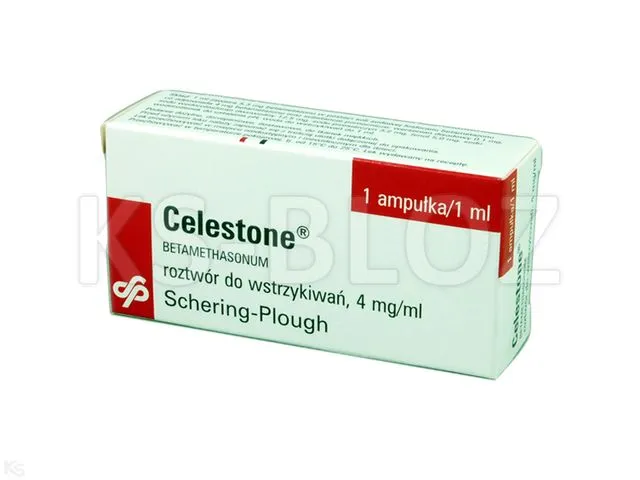
Table of Contents
Patient Information Leaflet
Celestone, 4 mg/ml, solution for injection
Betamethasone
Please read this leaflet carefully before using this medicine because it contains important information for you.
- Keep this leaflet so that you can read it again if necessary.
- If you have any questions, please consult your doctor or pharmacist.
- This medicine has been prescribed for a specific individual. Do not pass it on to others. This medicine may harm other people, even if their symptoms are the same.
- If you experience any adverse reactions, including any not listed in this leaflet, tell your doctor or pharmacist. See section 4.
Table of contents
- What Celestone is and what it is used for
- Important information before using Celestone
- How to use Celestone
- Possible side effects
- How to store Celestone
- Contents of the package and other information
1. What Celestone is and what it is used for
The active substance in Celestone, betamethasone, has strong anti-inflammatory, antiallergic, and antirheumatic properties. Celestone is intended for short-term use in symptomatic treatment of various severe conditions to alleviate or eliminate the acute phase of their course:
Endocrine disorders: primary and secondary adrenocortical insufficiency, acute adrenal insufficiency, severe trauma or illness preceding surgery in patients with previously diagnosed adrenocortical insufficiency or limited adrenal cortical function, shock unresponsive to standard treatment due to known or suspected adrenocortical insufficiency, post-bilateral adrenalectomy state, congenital adrenal hyperplasia, acute thyroiditis, non-suppurative thyroiditis, thyroid storm.
Shock: supportive treatment used concomitantly with standard treatment methods.
Cerebral edema (increased intracranial pressure): supportive treatment to reduce cerebral edema or prevent its development following surgical procedures or other brain injuries, in cerebrovascular diseases (stroke).
Musculoskeletal disorders: short-term supportive treatment of exacerbations of rheumatoid arthritis, osteoarthritis (post-traumatic), bursitis, psoriatic arthritis, ankylosing spondylitis, acute gouty arthritis, acute and subacute tenosynovitis, acute rheumatic fever, fibromyositis, epicondylitis, tendon sheath inflammation, myositis, and fasciitis.
Celestone solution for injection may also be used in the treatment of gelatinous cysts of the tendon sheath.
Skin diseases: treatment of pemphigus, herpes zoster, severe erythema multiforme (Stevens-Johnson syndrome), exfoliative dermatitis, pyoderma granulosa, severe psoriasis, allergic eczema (chronic dermatitis), severe seborrheic dermatitis.
Allergic conditions: control of severe allergic disorders unresponsive to standard treatment, such as seasonal or perennial allergic rhinitis, nasal polyposis, bronchial asthma, contact dermatitis, atopic dermatitis, drug allergy, serum sickness, and acute non-infectious laryngeal edema.
Hematological disorders: idiopathic and secondary thrombocytopenia in adults, autoimmune hemolytic anemia, transfusion reactions.
Prevention of respiratory distress syndrome (hyaline membrane disease) in premature infants.
2. Important information before using Celestone
When not to use Celestone:
- if the patient is allergic to the active substance, other corticosteroids, or any of the other ingredients of this medicine (listed in section 6);
- if the patient has systemic fungal infection.
Do not use corticosteroids in cases of: tuberculosis, osteoporosis, emotional instability,
peptic ulcer disease, primary glaucoma, early venous thrombosis, diabetes, Cushing's syndrome,
renal insufficiency, bacterial, fungal or viral infections, or in the treatment of respiratory distress syndrome in newborns.
Warnings and precautions
Before starting treatment with Celestone, discuss this with your doctor, pharmacist, or nurse, especially if the patient has a chromaffinoma (adrenal gland tumour).
Severe neurological events, sometimes fatal, have been reported following epidural injection of corticosteroids. Reported specific events include, among others, spinal cord infarction, paraplegia, tetraplegia, cortical blindness, and stroke. These serious neurological events have been reported regardless of fluoroscopic guidance. The safety and efficacy of epidural administration of corticosteroids have not been established, and therefore corticosteroids are not approved for such use.
Rare cases of anaphylactoid or anaphylactic reactions, potentially leading to shock, have been reported in patients receiving corticosteroids via parenteral route. For this reason, the physician will take appropriate preventive measures in patients with a history of corticosteroid allergy.
Aseptic techniques must be observed when performing injections.
Corticosteroids are not indicated in the treatment of respiratory distress syndrome in premature infants.
In the prophylactic treatment of respiratory distress syndrome in preterm infants, corticosteroids should not be administered to pregnant women with pre-eclampsia or eclampsia, or with placental damage.
Intramuscular injections of Celestone should be administered deeply into large muscle masses to avoid local tissue atrophy.
Caution should be exercised when administering Celestone intramuscularly to patients with idiopathic thrombocytopenic purpura (Werlhof's disease).
Local administration into soft tissues and intra-articular administration may result in both local and systemic effects.
After prolonged parenteral treatment, oral therapy should be continued after considering the potential benefits and risks.
Corticosteroids may mask some signs of infection, and new infections may occur during their use. Administration of corticosteroids may reduce immunity and impair localisation of infection.
Prolonged use of corticosteroids may lead to posterior subcapsular cataracts (especially in children), glaucoma with potential optic nerve damage, and increased susceptibility to secondary fungal or viral eye infections. Regular ophthalmological examinations should be performed, especially if treatment is prolonged (lasting more than 6 weeks).
Moderate and high doses of corticosteroids may cause increased blood pressure, sodium and water retention, and increased potassium excretion. Considerable dietary salt restriction and potassium supplementation should be considered. All corticosteroids increase calcium excretion.
During corticosteroid treatment, patients should not be vaccinated against smallpox. Other preventive vaccinations should also be avoided, especially during high-dose corticosteroid therapy, due to the risk of neurological complications and lack of antibody response. However, vaccinations may be administered to patients receiving corticosteroid replacement therapy, e.g. in Addison's disease.
Patients receiving immunosuppressive doses of corticosteroids should be advised to avoid contact with individuals suffering from chickenpox or measles. If such contact occurs, the physician should be informed. This is particularly important in children.
Administration of corticosteroids to patients with active tuberculosis should be limited only to rapidly progressive or disseminated forms, in which corticosteroids are given together with antituberculosis drugs.
If corticosteroid administration is indicated in individuals with inactive tuberculosis or in patients with a positive tuberculin reaction, careful monitoring is required, as reactivation of the disease may occur. During prolonged corticosteroid therapy, patients should receive prophylactic antituberculosis treatment. When rifampicin is used, increased hepatic elimination of corticosteroids should be considered; corticosteroid dosage adjustment may therefore be necessary.
Too rapid withdrawal of corticosteroids may result in drug-induced secondary adrenal insufficiency, which can be minimised by gradual, slow dose reduction. Relative adrenal insufficiency may persist for up to one month after discontinuation of treatment; if a stressful situation occurs during this period, corticosteroids should be re-administered. Since mineralocorticoid secretion may also be impaired, sodium intake should be increased simultaneously and/or mineralocorticoid therapy administered.
The effect of corticosteroids is greater in patients with hypothyroidism or liver cirrhosis.
Corticosteroids should be used cautiously in patients with ocular herpes due to the risk of corneal perforation.
Corticosteroids may exacerbate existing emotional disturbances and tendencies towards psychosis.
Corticosteroids should be used with caution in: ulcerative colitis, risk of intestinal perforation, abscesses or other pyogenic infections, diverticulitis, recent intestinal anastomoses, active or latent peptic ulcers, renal or cardiac insufficiency, hypertension, osteoporosis, myasthenia gravis, thromboembolic tendency, or thrombophlebitis.
If the patient experiences blurred vision or other visual disturbances, medical advice should be sought.
Children and adolescents
Infants and children undergoing long-term corticosteroid therapy should be closely monitored for growth and development due to the risk of growth suppression and suppression of endogenous corticosteroid production.
Celestone with other medicines
Inform your doctor or pharmacist about all medicines currently used or recently used, including those available without a prescription, as well as any medicines the patient intends to use.
Concomitant administration of phenobarbital, rifampicin, phenytoin, or ephedrine may enhance corticosteroid metabolism, thereby reducing their effect.
Symptoms of corticosteroid excess may occur in patients receiving corticosteroids and estrogens.
Concomitant use of corticosteroids and potassium-wasting diuretics may exacerbate hypokalaemia. The use of corticosteroids together with cardiac glycosides may increase the risk of cardiac arrhythmias or toxic effects of cardiac glycosides due to hypokalaemia. Corticosteroids may intensify potassium deficiency caused by amphotericin B. Serum electrolyte levels, especially potassium, should be closely monitored in all patients receiving these concomitant medications.
Concomitant use of corticosteroids and anticoagulant drugs of the coumarin derivatives group may affect anticoagulant activity, possibly requiring adjustment of the anticoagulant dosage.
Corticosteroids may reduce salicylate blood concentrations. Acetylsalicylic acid should be used cautiously with corticosteroids in patients with reduced prothrombin levels.
Concomitant use of non-steroidal anti-inflammatory drugs (NSAIDs) or alcohol with glucocorticosteroids may increase the risk of gastrointestinal ulceration or exacerbate symptoms of peptic ulcer disease.
Administration of corticosteroids to diabetic patients may necessitate adjustment of antidiabetic medication due to corticosteroid-induced increase in blood glucose levels.
Corticosteroids may reduce the effect of concomitantly administered somatotropin. During somatotropin therapy, betamethasone doses exceeding 450 µg (0.45 mg) per square metre of body surface area should be avoided.
Some medicines may enhance the effect of Celestone, and the doctor may wish to closely monitor the patient taking such medicines (including certain HIV medications: ritonavir, cobicistat).
Pregnancy, breastfeeding and fertility
If the patient is pregnant or breastfeeding, suspects she may be pregnant, or is planning to have a child, she should consult her doctor or pharmacist before using this medicine.
Pregnancy
Animal studies have shown that high doses of corticosteroids administered during pregnancy may cause fetal developmental abnormalities. There are no studies confirming developmental abnormalities in humans during corticosteroid use in pregnancy. Corticosteroids should be administered to pregnant women and women of childbearing age only when the benefits of treatment outweigh the potential risks to the mother and fetus.
There are no data confirming the safety of prophylactic corticosteroid use beyond 32 weeks of gestation. The physician should therefore weigh the benefits against the potential risks to the mother and fetus before administering corticosteroids during this period of pregnancy.
In the prophylactic treatment of respiratory distress syndrome in preterm infants, corticosteroids should not be administered to pregnant women with pre-eclampsia or eclampsia, or with signs of placental damage.
Infants born to mothers treated with high doses of corticosteroids during pregnancy should be carefully monitored for signs of adrenal insufficiency and thoroughly examined for risk of congenital cataracts, although this risk is very low.
Pregnant women receiving corticosteroids should be monitored during labour and after delivery, as adrenal insufficiency may occur due to stress associated with childbirth.
Newborns whose mothers received Celestone late in pregnancy may have low blood sugar levels after birth.
Breastfeeding
Corticosteroids cross the placental barrier and are excreted into human milk.
Due to the risk of adverse effects in breastfed infants whose mothers are receiving Celestone, a decision must be made whether to discontinue breastfeeding or to discontinue Celestone therapy, taking into account the benefits of treatment for the mother.
Fertility
Corticosteroids may affect sperm motility and sperm count in some patients.
Driving and using machines
Although visual disturbances are rare, patients who drive or operate machinery should be informed of this possibility.
Celestone contains sodium
This medicine contains less than 1 mmol (23 mg) of sodium per ml, meaning the medicine is considered "sodium-free".
The sodium content from the diluent should be taken into account when calculating the total sodium content in the intravenous preparation of Celestone.
For precise information regarding the sodium content in the solution used to dilute the medicinal product, healthcare professionals should consult the Summary of Product Characteristics of the diluent used.
3. How to use Celestone
This medicine should always be used according to the instructions given by your doctor or pharmacist. If in doubt,
you should consult your doctor or pharmacist.
The dose is determined individually depending on the type of disease, its severity, and the response to treatment.
In adults, the initial dose of Celestone injection solution is up to 8 mg of betamethasone per day. If after an appropriate period of treatment with the initial dose there is no satisfactory response, administration of Celestone injection solution should be discontinued and alternative appropriate therapy initiated.
In children, the initial daily dose of betamethasone ranges from 0.02 to 0.125 mg/kg body weight.
Dosing in infants and children, as in adults, depends on the type and severity of the condition.
In emergency situations, intravenous administration of Celestone is recommended. Celestone injection
solution may be administered by intravenous infusion after dilution with 0.9% sodium chloride solution or 5% glucose solution. Celestone should be added to the infusion immediately before administration. Unused solution should be stored immediately in a refrigerator and used within 24 hours.
After improvement has been achieved, maintenance dosing should be established by gradually reducing the initial dose to the lowest effective dose.
Dosing in the following conditions
Shock: as supportive treatment, Celestone injection solution may be administered in a dose
equivalent to 3 mg of betamethasone. If shock persists, the dose may be repeated every 4–6 hours. High-dose corticosteroid therapy should be discontinued immediately once the patient's condition has stabilized.
Cerebral edema: improvement may occur within a few hours after administration of Celestone injection solution in a dose equivalent to 2–4 mg of betamethasone. Comatose patients may receive doses of 2–4 mg four times daily.
Musculoskeletal disorders: recommended doses depend on the size of the joint and the site of injection:
Large joints (knee, hip, shoulder) 2–4 mg
Small joints (joints of foot, hand, thorax) 0.8–2 mg
Bursa 2–3 mg
Tendon sheath 0.4–1 mg
Soft tissues 2–6 mg
Ganglion 1–2 mg
Prevention of respiratory distress syndrome (hyaline membrane disease) in preterm infants: if delivery before 32 weeks of gestation is necessary or spontaneous preterm delivery in this period is inevitable, Celestone injection solution (in a dose equivalent to 4–6 mg betamethasone) should be administered intramuscularly every 12 hours for 24–48 hours (two to four doses). Administration of Celestone injection solution is recommended 48 to 72 hours before the expected delivery.
Transfusion reactions: to prevent transfusion reactions, 1 ml or 2 ml of Celestone injection solution (4–8 mg betamethasone) should be administered intravenously immediately before blood transfusion. Celestone must not be mixed with the blood being transfused. When repeated blood transfusions are required, the same dose may be administered before each transfusion if necessary, without exceeding four doses per day.
If you have any further questions regarding the use of this medicine, consult your doctor or pharmacist.
4. Possible adverse reactions
Like all medicines, this medicine can cause adverse reactions, although not everybody will experience them.
Adverse reactions occurring after administration of Celestone injection solution are the same as those observed with other corticosteroids and depend on both the dose and duration of treatment. They usually resolve or diminish after dose reduction, without the need to discontinue treatment.
| Immune system disorders | Anaphylactic reactions, hypersensitivity reactions, angioedema, anaphylactic shock |
| Endocrine disorders | Cushingoid symptoms, growth suppression in children, secondary adrenal and pituitary insufficiency (suppression of the hypothalamic-pituitary-adrenal axis), decreased carbohydrate tolerance, diabetes mellitus, worsening of diabetes |
| Metabolism and nutrition disorders | Sodium retention, hypokalemia, hypokalemic alkalosis, fluid retention, negative nitrogen balance, lipomatosus, increased body weight |
| Psychiatric disorders | Euphoria, mood swings, personality changes, severe depression, psychosis, insomnia |
| Nervous system disorders | Seizures, dizziness and headache, hyperirritability, increased intracranial pressure with papilledema (pseudotumor cerebri) |
| Eye disorders | Cataract, increased intraocular pressure, glaucoma, exophthalmos, blindness Blurred vision has been observed during corticosteroid use (frequency unknown - cannot be estimated from available data) |
| Cardiac disorders | Cardiac failure due to fluid overload |
| Vascular disorders | Arterial hypertension, facial flushing |
| Gastrointestinal disorders | Peptic ulceration of stomach and intestines with potential for perforation and bleeding, pancreatitis, abdominal distension, erosive esophagitis |
| Skin and subcutaneous tissue disorders | Impaired wound healing, atrophic changes in skin and subcutaneous tissue, thinning and fragility of skin, petechiae and hemorrhagic eruptions, increased sweating, urticaria, skin pigmentation disorders (hyperpigmentation and hypopigmentation), allergic dermatitis, angioedema |
| Musculoskeletal and connective tissue disorders | Muscle weakness, muscle atrophy, osteoporosis, compression fractures of vertebral bodies, aseptic necrosis of femoral and humeral heads, worsening of muscle weakness in myasthenia gravis, tendon rupture, steroid myopathy, pathological fractures of long bones, joint instability, exacerbation of myasthenia gravis symptoms |
| Pregnancy, puerperium and perinatal period | Inhibition of fetal growth |
| Reproductive system and breast disorders | Irregular menstruation |
| General disorders and administration site conditions | Atrophic changes in subcutaneous tissue and skin at injection site, sterile abscess at injection site, swelling at injection site (after intra-articular administration), Charcot-like arthropathy at injection site |
Reporting of adverse reactions
If any adverse reactions occur, including any adverse reactions not listed
in this leaflet, inform a doctor or pharmacist. Adverse reactions can
be reported directly to the Department of Monitoring Adverse Drug Reactions of the Office for Registration of Medicinal Products, Medical Devices and Biocidal Products:
Al. Jerozolimskie 181C, 02-222 Warsaw, Tel.: + 48 22 49 21 301, Fax: + 48 22 49 21 309,
Website: https://smz.ezdrowie.gov.pl.
Adverse reactions can also be reported to the marketing authorization holder.
By reporting adverse reactions, additional information on the safety of the medicine can be collected.
5. How to store Celestone
Keep the medicine out of the sight and reach of children.
Store below 25°C. Do not freeze.
Keep in the cardboard box to protect from light.
Do not use this medicine after the expiry date stated on the packaging. The expiry date refers to the last day of the stated month.
Medicines must not be disposed of via wastewater or household waste. Ask your pharmacist how to dispose of medicines no longer required. This will help protect the environment.
6. Contents of the packaging and other information
What Celestone contains
- The active substance is betamethasone in the form of betamethasone sodium phosphate.
- One ampoule (1 ml of solution) contains 4 mg of betamethasone in the form of betamethasone sodium phosphate.
- Other components are: disodium edetate, disodium phosphate dihydrate, phosphoric acid (for pH adjustment), water for injections.
What Celestone looks like and contents of the pack
Celestone is a solution for injection.
A clear, colourless to slightly yellowish solution free from solid particles.
Pack sizes available:
1 ampoule or 50 ampoules of colourless glass with 1 ml in a cardboard box.
Not all pack sizes may be marketed.
Marketing Authorisation Holder and Manufacturer
Marketing Authorisation Holder:
Organon Polska Sp. z o.o.
ul. Marszałkowska 126/134
00-008 Warsaw
Tel.: +48 22 306 57 64
[email protected]
Manufacturer:
Organon Heist bv
Industriepark 30
2220 Heist-op-den-Berg
Belgium