Cefazolin tzf
Poland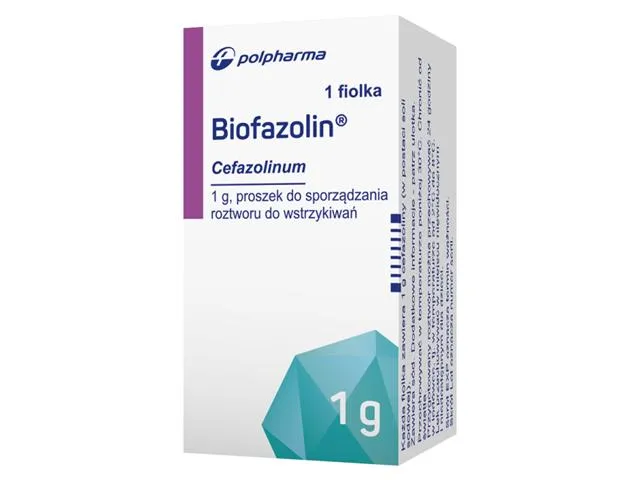
Table of Contents
- Package leaflet: Information for the patient
- 1. What Cefazolin TZF is and what it is used for
- 2. Important information before using Cefazolin TZF
- 3. How to use Cefazolin TZF
- 4. Possible adverse reactions
- 5. How to store Cefazolin TZF
- 6. Contents of the pack and other information
- Information intended exclusively for medical professionals:
Package leaflet: Information for the patient
Cefazolin TZF, 1 g, powder for solution for injection / infusion
Cefazolinum
Please read all of this leaflet carefully before using this medicine, because it contains
important information for the patient.
- Keep this leaflet, as you may need to read it again.
- If you have any further questions, please consult your doctor, pharmacist, or nurse.
- This medicine has been prescribed for a specific individual. Do not pass it on to others. This medicine may harm someone else, even if their symptoms are the same.
- If you experience any adverse reactions, including any not listed in this leaflet, inform your doctor, pharmacist, or nurse. See section 4.
Table of contents of the leaflet
- What Cefazolin TZF is and what it is used for
- Important information before using Cefazolin TZF
- How to use Cefazolin TZF
- Possible side effects
- How to store Cefazolin TZF
- Contents of the pack and other information
1. What Cefazolin TZF is and what it is used for
Cefazolin TZF contains the active substance cefazolin (in the form of sodium salt). Cefazolin belongs to a group of antibiotics called cephalosporins, which act bactericidally against bacteria sensitive to these antibiotics.
Cefazolin is used in infections definitely or probably caused by bacteria sensitive to cefazolin. It is used to treat the following infections:
- respiratory tract infections
- kidney, urinary tract, and genital organ infections
- skin and soft tissue infections
- sepsis (a specific systemic response to infection)
- biliary tract infections
- bone and joint infections
- endocarditis (inflammation of the inner lining of the heart or heart valves)
Cefazolin TZF may also be administered before or after surgery to prevent infections.
2. Important information before using Cefazolin TZF
When not to use Cefazolin TZF
- if the patient is allergic to cefazolin or any of the other ingredients of this medicine listed in section 6;
- if the patient has previously experienced an immediate and/or severe allergic reaction to penicillin or another antibiotic.
Warnings and precautions
Before using Cefazolin TZF, consult a doctor, pharmacist, or nurse:
- if the patient has previously experienced a mild allergic reaction to penicillin or similar antibiotics (such as skin rash, possibly with itching);
- if the patient is allergic to any medicine not previously mentioned in this leaflet;
- if the patient has ever had gastrointestinal disorders, particularly pseudomembranous colitis (severe diarrhoea) caused by taking antibiotics;
- if the patient has kidney problems;
- if the patient has vitamin K deficiency;
- if the patient is on a low-sodium diet.
Risk factors causing vitamin K deficiency or risk factors causing other disorders of blood coagulation mechanisms.
In rare cases, bleeding disorders may occur during treatment with cefazolin. The risk of such disorders is higher in patients with vitamin K deficiency or other factors leading to coagulation disorders (parenteral nutrition, nutritional deficiencies, liver or kidney dysfunction, thrombocytopenia [reduced platelet count, increasing the risk of bleeding or bruising]).
Other underlying diseases (e.g. haemophilia (bleeding disorders), peptic ulcer of the stomach or duodenum) may also cause or exacerbate bleeding and affect blood coagulation. In patients with the above-mentioned conditions, blood coagulation will be monitored by the physician.
This medicine must not be administered by intrathecal injection (into the space surrounding the spinal cord), as severe toxic effects on the central nervous system (including seizures) have been reported.
Cefazolin TZF must not be used in premature infants or newborns under 1 month of age.
Prolonged use of cefazolin may lead to superinfection. The physician will closely monitor the patient for signs of superinfection and, if necessary, recommend appropriate treatment.
Cefazolin TZF and other medicines
Inform your doctor or pharmacist about all medicines currently taken or recently taken, as well as any medicines the patient plans to take. This includes over-the-counter medicines and herbal remedies. Cefazolin TZF may affect the action of other medicines, and some medicines may also affect the action of Cefazolin TZF.
In particular, inform your doctor or nurse if the patient is taking any of the following medicines:
- aminoglycosides or other antibiotics (used to treat infections);
- probenecid (used in the treatment of gout);
- vitamin K;
- anticoagulants (blood-thinning medicines);
- furosemide (a diuretic);
- oral contraceptives.
Also inform your doctor or nurse if the patient is undergoing urine glucose tests or blood tests (including in newborns whose mothers received cephalosporins).
Pregnancy and breastfeeding
If the patient is pregnant or breastfeeding, suspects she may be pregnant, or is planning to have a child, she should consult a doctor or pharmacist before using this medicine.
Pregnancy
This medicine may be used during pregnancy only after careful consideration by the physician of the benefit-risk ratio.
Breastfeeding
A small amount of cefazolin passes into breast milk. In breastfed infants, this may cause allergies, diarrhoea, or candidiasis. In such cases, the doctor may advise discontinuing breastfeeding during treatment.
Driving and operating machinery
Cefazolin has no effect on the ability to drive or operate machinery. However, adverse reactions (e.g. dizziness) may occur, which could affect the ability to drive or operate machinery (see section 4).
Cefazolin TZF contains sodium
This medicine contains 50.6 mg of sodium (a main component of table salt) per vial. This corresponds to 2.53% of the maximum recommended daily dietary sodium intake for adults.
3. How to use Cefazolin TZF
Cefazolin TZF is administered by a doctor or nurse.
Cefazolin TZF will be given in one of the following ways:
- by intramuscular injection (e.g. into the muscle of the arm);
- by slow injection into a vein. The injection will take from 3 to 5 minutes;
- through a small tube inserted into a vein. This is known as intravenous infusion.
Recommended dose
The dose of Cefazolin TZF is determined by the doctor according to age, body weight, severity of infection, and kidney function. Your doctor will provide explanations regarding this.
Adolescents over 12 years of age, adults and elderly patients with normal kidney function
- In case of infections, the dosage may range from 1 g to 6 g or 12 g per day, depending on the severity of the infection.
- In case of surgery, the patient will receive a dose of 1 g given 30–60 minutes before the start of surgery.
- For prolonged surgical procedures, the patient may additionally receive 0.5 g to 1 g of the drug during surgery. Administration of Cefazolin TZF may continue for 24 hours after surgery, or, in surgeries where infection poses a particular risk, for a period of 3 to 5 days, to prevent the risk of infection.
Use in children and infants (aged 1 month and older) with normal kidney function
The doctor will determine the appropriate dose based on the child's body weight. In children, the daily dose may range from 25 mg to 50 mg per kg of body weight. This dose may be increased up to 100 mg per kg of body weight, depending on the severity of infection.
Adults and children with impaired kidney function
If the patient has impaired kidney function, the dose of the drug may be reduced. Blood tests may be necessary to determine the correct dose.
Use of a higher than recommended dose of Cefazolin TZF
If an overdose of Cefazolin TZF is suspected, the patient should inform the doctor or nurse immediately.
Missed dose of Cefazolin TZF
Do not administer a double dose to make up for a missed dose.
If you have any further doubts concerning the use of this medicine, consult your doctor or nurse.
4. Possible adverse reactions
Like all medicines, this medicine can cause adverse reactions, although they do not occur in everyone.
Serious adverse reactions
- Severe allergic reactions. These are very rare (may occur in less than 1 in 10,000 people). Symptoms may include:
- sudden swelling of the face, throat, lips or mouth, causing difficulty in breathing or swallowing,
- sudden swelling of hands, feet and ankles,
- skin redness, skin itching, joint pain, skin changes, widespread rash, urticaria, drug fever.
- Transient hepatitis and jaundice (yellowing of the skin or whites of the eyes). These are very rare (may occur in less than 1 in 10,000 people).
- Inflammation of the large intestine (pseudomembranous colitis). Symptoms include severe or prolonged diarrhoea, possibly with blood or mucus in the stool, usually with blood and mucus, abdominal pain and fever. Frequency unknown (frequency cannot be estimated from available data).
➢ If any of the above symptoms occur, stop administering the medicine immediately and contact a doctor or go to the nearest hospital emergency department.
Other possible adverse reactions occurring:
Common (may affect up to 1 in 10 people)
- Allergic reactions such as erythema, urticaria and itching
- Nausea and vomiting
- Diarrhoea
- Loss of appetite
- Flatulence
- Abdominal pain
- Pain and hardening at the injection site.
Uncommon (may affect up to 1 in 100 people)
- Increase in certain blood cells
- Decrease in white blood cells
- Abnormal breakdown of red blood cells
- Decrease in blood cells involved in blood clotting
- Transient increase in parameters indicating liver function
- Phlebitis, thrombophlebitis.
Rare (may affect up to 1 in 1,000 people)
- Bleeding disorders. Bleeding from the nose or after minor cuts lasts longer.
- Kidney function disorders.
Frequency unknown (frequency cannot be estimated from available data)
- Candidiasis (yeast infection of the vagina, mouth or skin folds); a doctor may recommend appropriate treatment.
- Headache
- Dizziness
- Unpleasant, sometimes painful sensations of tingling, pricking, numbness in the limbs, disturbances in perception of cold and heat, nervous agitation
- Involuntary muscle twitching and spasms
- Seizures.
Reporting of adverse reactions
If any adverse reactions occur, including any adverse reactions not listed in this leaflet, inform your doctor, pharmacist or nurse. Adverse reactions can be reported directly to the Department of Monitoring of Adverse Drug Reactions of the Office for Registration of Medicinal Products, Medical Devices and Biocidal Products
Al. Jerozolimskie 181C, 02-222 Warsaw
Tel.: +48 22 4921 301
Fax: +48 22 4921 309
Website: https://smz.ezdrowie.gov.pl
Adverse reactions can also be reported to the marketing authorization holder.
Reporting adverse reactions helps to provide more information on the safety of the medicine.
5. How to store Cefazolin TZF
Keep the medicine out of the sight and reach of children.
Do not use this medicine after the expiry date (EXP) stated on the label and on the packaging.
The expiry date refers to the last day of the stated month.
Store below 25°C. Keep the vial in the outer packaging to protect it from light.
Instructions for storage and preparation of the solution can be found at the end of this leaflet under the section "Information intended exclusively for healthcare professionals:".
Medicines should not be disposed of via the sewage system or in household waste. Ask your pharmacist how to dispose of medicines no longer required. Such practices help protect the environment.
6. Contents of the pack and other information
What Cefazolin TZF contains
The active substance is cefazolin (in the form of cefazolin sodium).
1 vial contains 1 g of cefazolin (in the form of cefazolin sodium).
This medicine does not contain excipients.
What Cefazolin TZF looks like and contents of the pack
White or almost white powder, very hygroscopic.
Packaging
1 vial in a cardboard box with a patient leaflet.
Marketing Authorisation Holder and Importer
Tarchomin Pharmaceutical Works "Polfa" Joint Stock Company
A. Fleminga Street 2
03-176 Warsaw
Telephone number: 22 811-18-14
For further information on this medicine, please contact the Marketing Authorisation Holder.
Information intended exclusively for medical professionals:
Please consult the product information for Cefazolin TZF, 1 g, powder for solution for injection / infusion for complete details.
Dosage
The dose, route of administration, and dosing interval depend on the severity of infection, susceptibility of the microorganism causing the infection, age, body weight, and patient's condition (e.g. renal function).
Adults and adolescents over 12 years with normal renal function
Infections caused by highly susceptible microorganisms:
The usual dosage in adults is 1 g to 2 g daily in two or three equal doses (one dose every 8 or 12 hours).
Infections caused by less susceptible microorganisms:
The usual dosage in adults is 3 g to 4 g daily in three or four equal doses (one dose every 6 or 8 hours).
In severe and life-threatening infections, doses of 6 g to 12 g daily in three or four equal doses (one dose every 6 to 8 hours) may be administered.
Perioperative prophylaxis: For adults and adolescents, the following dosage is recommended:
a) 1 g intravenously or intramuscularly 30 minutes to 1 hour before surgery
b) during prolonged surgical procedures (e.g. lasting 2 hours or more), 0.5 g to 1 g intravenously or intramuscularly during surgery (administration adjusted to the duration of surgery)
c) 0.5 g to 1 g intravenously or intramuscularly every 6 to 8 hours for 24 hours after surgery, or, in procedures where infection poses a particular risk, for a period of 3 to 5 days.
It is important that the preoperative dose is administered immediately before the start of surgery (30 minutes to 1 hour prior), so that adequate antibiotic concentrations in serum and tissues are achieved at the time of initial surgical incision. Cefazolin should also be administered, if necessary, at appropriate intervals during surgery to ensure adequate antibiotic concentrations at times of anticipated high infection risk.
Adult patients with impaired renal function
Adult patients with impaired renal function may require reduced doses to avoid drug accumulation. The dose should be adjusted based on serum cefazolin concentration measurements. If this is not possible, the dose may be determined based on creatinine clearance.
An appropriate initial dose should be administered in patients with renal impairment. Subsequent doses should be appropriately adjusted, taking into account the degree of renal impairment, severity of infection, and pathogen susceptibility.
In hemodialyzed patients, the treatment regimen depends on dialysis conditions.
| Creatinine clearance (ml/min) | Serum creatinine (mg/100 ml) | Daily dose | Dosing interval |
| ≥ 55 | ≤ 1.5 | usual dose* | unchanged |
| 35–54 | 1.6–3.0 | usual dose* | every 8 hours |
| 11–34 | 3.1–4.5 | half the usual dose | every 12 hours |
| ≤ 10 | ≥ 4.6 | half the usual dose | every 18 to 24 hours |
* Daily dose for adult patients with normal renal function
Infants (over 1 month) and children
Recommended total daily dose in moderately severe infections: 25–50 mg/kg body weight,
divided into 3 to 4 individual doses.
In severe infections, the total daily dose may be increased to 100 mg/kg body weight.
Children with impaired renal function
Children with impaired renal function may (as adults) require reduced doses to avoid
drug accumulation. A reduced dose should be determined based on serum cefazolin concentration measurements.
If this is not possible, the dose may be calculated based on creatinine clearance.
In cases of impaired renal function, an appropriate initial dose should be administered. Subsequent doses should be
adjusted appropriately, taking into account the degree of renal impairment, severity of infection, and pathogen susceptibility.
| Creatinine clearance (ml/min) | Percentage of the usually recommended daily dose |
| 70–40 | 60% in 2 divided doses |
| 40–20 | 25% in 2 divided doses |
| 20–5 | 10% in 2 divided doses |
Premature infants and young children under 1 month of age
Since the safety of use in premature infants and children under 1 month of age has not been established,
the use of cefazolin in these patients is not recommended. See also section 4.4.
Elderly patients
In elderly patients with normal renal function, dose adjustment is not necessary.
Preparation of solutions for injections and infusions
Before administration, the appearance of the solution should be inspected. The solution may range from pale yellow to yellow in color.
The solution may only be administered if it is clear and practically free of visible particles to the naked eye.
Intramuscular injection
Add 4 ml of water for injection or 0.9% sodium chloride solution to the vial and shake until completely dissolved.
The product should be administered deep into a large muscle mass. Intramuscular administration of cefazolin rarely causes pain.
Intravenous injection
Dissolve the contents of the vial in at least 10 ml of water for injection.
The product should be injected very slowly over no less than 3 minutes.
Intravenous infusion
After initial dissolution, cefazolin should be further diluted in 50 ml or 100 ml of one of the following diluents. Administer over 20 to 30 minutes.
Diluents suitable for solution preparation:
water for injection,
0.9% sodium chloride solution,
5% glucose solution,
10% glucose solution,
5% glucose with 0.9% sodium chloride solution,
5% glucose with 0.45% sodium chloride solution,
5% glucose with 0.2% sodium chloride solution,
Ringer's solution,
Ringer's solution with sodium lactate.
Prepared solutions
Cefazolin solution prepared using the diluents listed above maintains physicochemical stability for 24 hours at 25°C and in the refrigerator (2°C–8°C).
From a microbiological standpoint, the medicinal product should be used immediately. If not used immediately, the user is responsible for the storage conditions and duration, which must not exceed 24 hours at a temperature of 2°C to 8°C (refrigerator).
Pharmaceutical incompatibilities
The medicinal product must not be mixed with other medicinal products except those mentioned in the section "Method of administration and preparation of solutions".