Cefazolin dali pharma
Poland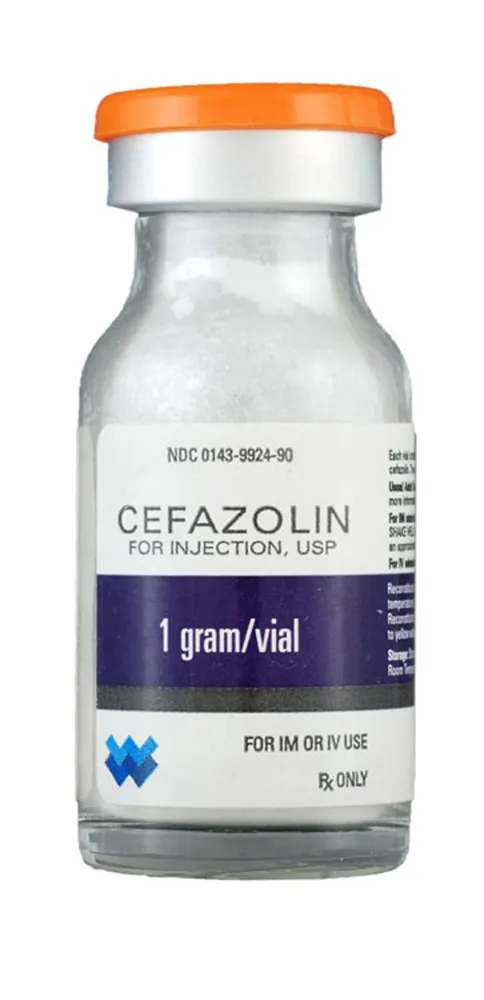
Table of Contents
- Package leaflet: Information for the patient
- 2. Important information before using Cefazolin Dali Pharma
- 3. How to use Cefazolin Dali Pharma
- 4. Possible side effects
- 5. How to store Cefazolin Dali Pharma
- 6. Contents of the pack and other information
- Information intended exclusively for healthcare professionals:
Package leaflet: Information for the patient
Cefazolin Dali Pharma, 2 g, powder for solution for infusion
Cefazolinum
Please read this leaflet carefully before using the medicine, as it contains
important information for the patient.
- Keep this leaflet to be able to read it again if necessary.
- If you have any questions, please consult your doctor, pharmacist, or nurse.
- This medicine has been prescribed for a specific individual. Do not pass it on to others. The medicine may harm another person, even if their symptoms are the same.
- If you experience any adverse reactions, including any not listed in this leaflet, inform your doctor, pharmacist, or nurse. See section 4.
Table of contents
- What Cefazolin Dali Pharma is and what it is used for
- Important information before using Cefazolin Dali Pharma
- How to use Cefazolin Dali Pharma
- Possible side effects
- How to store Cefazolin Dali Pharma
- Contents of the pack and other information
1. What Cefazolin Dali Pharma is and what it is used for
Cefazolin Dali Pharma contains the active substance cefazolin (in the form of cefazolin sodium).
Cefazolin is an antibiotic belonging to the cephalosporin group, with bactericidal activity.
Cefazolin Dali Pharma is used in the treatment of bacterial infections caused by bacteria sensitive to cefazolin. Cefazolin Dali Pharma is used to treat the following infections:
- Skin and soft tissue infections
- Bone and joint infections
Cefazolin Dali Pharma is also used before, during, or after surgery to prevent infections in patients.
2. Important information before using Cefazolin Dali Pharma
When not to use Cefazolin Dali Pharma
- If you are allergic to cefazolin sodium
- If you are allergic to any cephalosporin
- If you have previously experienced a severe allergic reaction (hypersensitivity) to any beta-lactam antibiotic (penicillins, monobactams, or carbapenems)
Warnings and precautions
Before starting treatment with Cefazolin Dali Pharma, discuss with your doctor or pharmacist if:
- You have a tendency to allergies (e.g. hay fever or bronchial asthma), as the risk of severe allergic reactions to Cefazolin Dali Pharma may be higher.
- You previously had an allergic reaction to other beta-lactam antibiotics (e.g. penicillins), as the risk of an allergic reaction to Cefazolin Dali Pharma may be higher (see section 4).
- You have impaired kidney or liver function.
- You have blood coagulation disorders (e.g. haemophilia) or are at risk of developing such disorders [due to parenteral nutrition, malnutrition, impaired liver or kidney function, reduced platelet count (increasing the risk of bleeding or bruising – thrombocytopenia), or use of anticoagulant drugs (e.g. heparin)].
- You have bleeding disorders (e.g. peptic ulcers).
- You develop severe, persistent diarrhoea during or after treatment with Cefazolin Dali Pharma (see section 4). In such a case, contact your doctor immediately. Do not take drugs that inhibit intestinal peristalsis without consulting your doctor.
- You have or have previously had hypertension; consider the sodium content of Cefazolin Dali Pharma.
Cefazolin Dali Pharma must not be administered into the spinal canal (intrathecally), as severe central nervous system toxicity (including seizures) has been reported.
Prolonged use of Cefazolin Dali Pharma may lead to superinfection. Your doctor will then recommend appropriate treatment.
Rarely, Cefazolin Dali Pharma may give falsely positive results in certain laboratory tests.
Children
Cefazolin should not be used in premature infants and infants under 1 month of age, as safety has not yet been established in this age group.
Cefazolin Dali Pharma and other medicines
Tell your doctor or pharmacist about all medicines you are currently taking, have recently taken, or plan to take, including those available without a prescription.
Pay special attention if you are taking any of the following medicines:
- Antibiotics that inhibit bacterial growth, such as tetracyclines, sulfonamides, erythromycin, and chloramphenicol.
- Probenecid (used in the treatment of joint disease and gout), as it may increase cefazolin levels in the blood.
- Anticoagulants (drugs preventing blood clotting such as warfarin or heparin), as concomitant use with cephalosporins may very rarely lead to coagulation disorders. Therefore, coagulation should be monitored during concomitant use of cefazolin and anticoagulants.
- Certain diuretics (e.g. furosemide), as concomitant use with cefazolin may increase nephrotoxic effects. Kidney function should be monitored during concomitant use of cefazolin and such drugs.
- Medicines potentially nephrotoxic. Cefazolin may enhance the nephrotoxic effects of certain antibiotics (aminoglycosides) and diuretics (e.g. furosemide). Concomitant use of Cefazolin Dali Pharma with any of the above medicines requires regular monitoring of kidney function, especially in patients with impaired renal function.
- Oral contraceptives (the pill), as antibiotics may reduce the effectiveness of these agents.
Cephalosporins such as cefazolin may interfere with the metabolism and utilization of vitamin K1 in the body, particularly in patients with vitamin K1 deficiency. During treatment with Cefazolin Dali Pharma, your doctor may recommend vitamin K1 supplementation.
Pregnancy, breastfeeding, and fertility
If you are pregnant, breastfeeding, think you may be pregnant, or are planning to have a baby, consult your doctor before using this medicine.
Pregnancy
Cefazolin crosses the placental barrier and may affect the unborn child. Therefore, cefazolin should be used during pregnancy only if absolutely necessary and after careful evaluation by the doctor of the benefit-risk ratio.
Breastfeeding
Cefazolin passes into human milk in small amounts. Therefore, breastfeeding should be discontinued during treatment with Cefazolin Dali Pharma.
Fertility
No effects on fertility were observed in animal studies.
Driving and operating machinery
Cefazolin has no effect or a negligible effect on the ability to drive and operate machinery. However, adverse reactions (e.g. allergic reactions, non-systemic dizziness) may occur during treatment, which could affect the ability to perform these activities (see also section 4).
Cefazolin Dali Pharma contains sodium
Cefazolin Dali Pharma contains 101.2 mg of sodium (the main component of table salt) in each 2 g dose. This corresponds to 5.1% of the maximum recommended daily dietary sodium intake for adults. This should be taken into account in patients on a low-sodium diet.
3. How to use Cefazolin Dali Pharma
This medicine must be administered to the patient by a suitably qualified person, i.e. a doctor or nurse. This medicine should always be used exactly as directed by the doctor. If in doubt, consult the doctor.
Cefazolin Dali Pharma 2 g, after reconstitution, is administered intravenously as an infusion. The doctor will inform the patient about the required duration of treatment and the frequency of administration of Cefazolin Dali Pharma.
Recommended dose
The recommended dose of Cefazolin Dali Pharma is determined by the doctor depending on the severity of infection, body weight and age, as well as renal function.
Adults and adolescents (aged over 12 years and weighing ≥ 40 kg)
- Infections caused by bacteria sensitive to the drug: 1 to 2 g per day divided into 2–3 equal doses (one dose every 8 or 12 hours).
- Infections caused by less sensitive bacteria: 3 to 4 g per day divided into 3–4 equal doses (one dose every 6 or 8 hours).
- The daily dose of cefazolin may be increased up to 6 g divided into 3 or 4 equal doses (one dose every 6 or 8 hours).
Use in children and adolescents
Premature infants and infants under 1 month of age
The safety of using this medicine in premature infants and infants under 1 month of age has not been established.
Children over 1 month of age
- Infections caused by bacteria sensitive to the drug: 25–50 mg per kg of body weight per day divided into 2 to 4 equal doses (one dose every 6, 8 or 12 hours).
- Infections caused by less sensitive bacteria: up to 100 mg of cefazolin per kg of body weight per day divided into 3 or 4 equal doses (one dose every 6 or 8 hours).
Use in elderly patients
Dosage adjustment is not necessary in elderly patients with normal renal function.
Special dosage recommendations
Prevention of infections during surgical procedures
1 g of cefazolin 30–60 minutes before surgery. In the case of prolonged operations (2 hours or longer), an additional dose of 0.5–1 g of cefazolin should be administered during the procedure.
Patients with renal impairment
In patients with renal impairment, elimination of cefazolin is slowed. Therefore, the doctor will adjust the dosage according to the degree of renal impairment by reducing the maintenance dose or by extending the interval between doses.
Duration of treatment
The duration of treatment depends on the severity of the infection and the patient's recovery.
Use of a higher than recommended dose of Cefazolin Dali Pharma
Contact the doctor or nurse immediately if the patient suspects that a higher than recommended dose has been administered.
Since the medicine is administered by a doctor or nurse, administration of a higher than recommended dose is unlikely. Symptoms of overdose may include systemic dizziness, sensations of pricking, itching or tingling without apparent cause (paresthesia), and/or headache. Seizures may occur in patients with kidney disease. Contact the doctor immediately if any of the above symptoms occur! In emergency situations, immediate medical assistance is required to treat symptoms of overdose.
Missed dose of Cefazolin Dali Pharma
Contact the doctor immediately if a dose of the medicine is believed to have been missed. The missed dose should still be administered. Do not use a double dose to make up for a missed dose. The missed dose should only be administered if there is a sufficiently long interval before the next scheduled dose.
Interrupting or stopping treatment with Cefazolin Dali Pharma too early
Low doses, irregular dosing, or premature discontinuation of treatment may affect treatment outcome or lead to recurrence of infection that is more difficult to treat. Follow the doctor's instructions.
If you have any further questions concerning the use of this medicine, consult your doctor.
4. Possible side effects
Like all medicines, this medicine can cause side effects, although not everybody gets them.
You must stop taking the medicine immediately and contact your doctor if any of the
following symptoms occur:
Uncommon side effects (may occur in not more than 1 in 100 patients, but more frequently than 1 in 1 000 patients):
- skin redness (erythema), extensive skin rash (erythema multiforme or rash), urticaria (red, itchy skin rash with wheals) on the skin surface, fever, subcutaneous swelling (angioedema), and (or) lung tissue swelling with possible cough and breathing difficulties (interstitial pneumonia or pneumonia), as these adverse reactions may indicate an allergic reaction to the medicine.
Rare side effects (may occur in fewer than 1 in 1,000 patients, but more frequently than 1 in 10,000):
- jaundice (yellowing of the skin and whites of the eyes)
- severe skin rash with redness, fever, blisters or ulcers (Stevens-Johnson syndrome), or severe rash with redness, peeling and swelling of the skin resembling burns (toxic epidermal necrolysis).
Very rare side effects (may occur in fewer than 1 in 10,000 patients):
- severe allergic reaction (anaphylactic shock) with breathing difficulties, throat, face, eyelid or lip swelling, rapid heartbeat and drop in blood pressure. This reaction may begin shortly after the first dose of the medicine or later.
- severe and frequent diarrhoea, sometimes with blood, as this may be a sign of a more serious condition (pseudomembranous colitis).
The following side effects may also occur during treatment with products containing
cefazolin:
Common side effects (may occur in not more than 1 in 10 patients, but more frequently than 1 in 100 patients):
- mild gastrointestinal disturbances (loss of appetite, diarrhoea, nausea, vomiting, severe and frequent diarrhoea). These symptoms usually resolve within a few days.
- intramuscular injection may cause pain at the injection site, sometimes accompanied by hardening of the skin and soft tissue at the site.
Uncommon side effects (may occur in not more than 1 in 100 patients, but more frequently than 1 in 1,000 patients):
- oral thrush (thick, white or creamy coating in the mouth and on the tongue).
- seizures or convulsions in patients with kidney dysfunction.
- vein swelling caused by thrombosis following intramuscular injection (phlebitis).
Rare side effects (may occur in fewer than 1 in 1,000 patients, but more frequently than 1 in 10,000 patients):
- bacterial infection of male or female genital organs with symptoms such as itching, redness, swelling and discharge (genital candidiasis, yeast infection, vaginitis).
- increased or decreased blood glucose levels (hyperglycaemia or hypoglycaemia).
- transient blood disorders including decreased or increased numbers of red or white blood cells (leukopenia, granulocytopenia, neutropenia, thrombocytopenia, leukocytosis, granulocytosis, monocytosis, lymphocytopenia, basophilia and eosinophilia), which may cause bleeding, easy bruising and (or) skin discoloration (confirmed by blood test).
- non-systemic dizziness, fatigue and general malaise.
- chest pain, excess fluid in the lungs, breathing difficulties, cough, nasal congestion (nasal catarrh).
- liver function disorders (such as alkaline phosphatase or transient hepatitis) with symptoms such as increased liver enzyme activity [alanine aminotransferase (ALT), aspartate aminotransferase (AspAT), gamma-glutamyl transferase (gamma GT) and lactate dehydrogenase (LDH)] and bilirubin (a breakdown product of red blood cells) in bile or urine (diagnosed in blood tests).
- kidney function disorders (nephrotoxicity, interstitial nephritis, nephropathy of undefined cause, proteinuria) with symptoms such as kidney swelling and increased nitrogen levels in the body, detectable in urine tests, usually occurring only in
patients receiving Cefazolin Dali Pharma concomitantly with other medicines causing
kidney disorders.
- sleep disturbances, including nightmares and inability to fall asleep (insomnia).
- feelings of nervousness and anxiety, drowsiness, weakness, hot flushes, colour vision disturbances, systemic dizziness and seizures (involuntary, rapid and repetitive muscle contractions and relaxations).
Very rare side effects (may occur in fewer than 1 in 10,000 patients):
- itching of the anus or genital organs.
- blood coagulation disorders, which may lead to increased bleeding. These disorders may resolve after increasing vitamin K intake, which should be confirmed by blood testing (see section 2).
If any side effects occur, tell your doctor or pharmacist.
This includes any side effects not listed in this leaflet.
Reporting of side effects
If any adverse reactions occur, including any adverse reactions not listed in this leaflet, inform your doctor or nurse. Adverse reactions can be reported directly to:
Department of Monitoring of Adverse Drug Reactions
Office for Registration of Medicinal Products, Medical Devices and Biocidal Products
Al. Jerozolimskie 181C, 02-222 Warsaw
Tel.: +48 22 49 21 301
Fax: +48 22 49 21 309
Website: https://smz.ezdrowie.gov.pl
Adverse reactions can also be reported to the marketing authorization holder.
Reporting side effects helps provide more information on the safety of the medicine.
5. How to store Cefazolin Dali Pharma
Keep the medicine out of the sight and reach of children.
Do not use this medicine after the expiry date stated on the outer packaging and label after: EXP. The expiry date refers to the last day of the stated month.
This medicinal product does not require any special storage conditions. Store the vials in the outer packaging to protect from light.
From a microbiological point of view, the prepared solution should be used immediately after preparation. If the solution is not used immediately, the person administering the medicine is responsible for the storage conditions and duration after opening, which should generally not exceed 24 hours at a temperature of 2 to 8°C, unless reconstitution and (or) dilution took place under controlled and validated aseptic conditions.
Do not use Cefazolin Dali Pharma if visible signs of degradation are observed, such as solid particles or discoloration.
Medicines must not be disposed of via wastewater or household waste. Ask your pharmacist how to dispose of medicines no longer required. Such measures will help protect the environment.
6. Contents of the pack and other information
What Cefazolin Dali Pharma 2 g contains
The active substance is cefazolin. Each vial contains 2 g of cefazolin (as cefazolin sodium).
The medicinal product does not contain any excipients other than the active substances.
What Cefazolin Dali Pharma 2 g looks like and contents of the pack
Cefazolin Dali Pharma 2 g is a white or almost white powder in a 20-mL vial made of clear glass, closed with a gray rubber stopper and red flip-off cap.
The pack contains 10 vials.
Marketing Authorisation Holder:
Dali Pharma GmbH
Brehmstraße 56
40239 Düsseldorf
Germany
E-mail: [email protected]
Importer:
SciencePharma Sp. z o.o.
ul. Chełmska 30/34
00-725 Warszawa
Poland
This medicinal product is authorised in the European Economic Area countries under the following names:
Germany Cefazolin Dali Pharma 2 g Pulver zur Herstellung einer Infusionslösung
Poland Cefazolin Dali Pharma
Information intended exclusively for healthcare professionals:
This leaflet contains practical information regarding the preparation and (or) handling of
the medicinal product. Please read the leaflet carefully before administering the drug to the patient.
Note: this leaflet does not contain all necessary information about this medicinal product. When determining the appropriateness of use in a specific patient, the prescribing physician should consult the Summary of Product Characteristics (SmPC).
DOSING GUIDELINES FOR CHILDREN
Infections caused by microorganisms highly susceptible to cefazolin:
The recommended total daily dose is 25 – 50 mg/kg body weight given in 2 – 4 equal divided doses (one dose every 6, 8 or 12 hours).
Infections caused by microorganisms less susceptible to cefazolin:
The recommended total daily dose may be increased up to 100 mg/kg body weight given in 3 – 4 equal divided doses (one dose every 6 – 8 hours).
Dosing in children
| Body weight | 5 kg | 10 kg | 15 kg | 20 kg | 25 kg |
| 25 mg/kg body weight per day in 2 equal divided doses (1 dose every 12 hours) | 63 mg | 125 mg | 188 mg | 250 mg | 313 mg |
| 25 mg/kg body weight per day in 3 equal divided doses (1 dose every 8 hours) | 42 mg | 85 mg | 125 mg | 167 mg | 208 mg |
| 25 mg/kg body weight per day in 4 equal divided doses (1 dose every 6 hours) | 31 mg | 62 mg | 94 mg | 125 mg | 156 mg |
| 50 mg/kg body weight per day in 2 equal divided doses (1 dose every 12 hours) | 125 mg | 250 mg | 375 mg | 500 mg | 625 mg |
| 50 mg/kg body weight per day in 3 equal divided doses (1 dose every 8 hours) | 83 mg | 166 mg | 250 mg | 333 mg | 417 mg |
| 50 mg/kg body weight per day in 4 equal divided doses (1 dose every 6 hours) | 63 mg | 125 mg | 188 mg | 250 mg | 313 mg |
| 100 mg/kg body weight per day in 3 equal divided doses (1 dose every 8 hours) | 167 mg | 333 mg | 500 mg | 667 mg | 833 mg |
| 100 mg/kg body weight per day in 4 equal divided doses (1 dose every 6 hours) | 125 mg | 250 mg | 375 mg | 500 mg | 625 mg |
PHARMACEUTICAL INCOMPATIBILITIES
Cefazolin solutions should not be mixed with other medicinal products except for those listed in the
Reconstitution section.
The following active substances or solvents for dissolution and/or dilution should not be administered simultaneously:
amikacin disulfate, sodium amobarbital, ascorbic acid, bleomycin sulfate, calcium glucoheptonate,
calcium gluconate, cimetidine hydrochloride, colistimethate sodium, erythromycin glucoheptonate,
kanamycin sulfate, oxytetracycline hydrochloride, pentobarbital sodium, polymyxin B sulfate, and
tetracycline hydrochloride.
INSTRUCTIONS FOR DISPOSAL OF MEDICINAL PRODUCT
Any unused medicinal product or waste materials must be disposed of in accordance with local regulations.
RECONSTITUTION
Reconstitution/dilution must be performed under aseptic conditions. Before administration, the solution should be inspected visually for particulate matter and discoloration. Only clear, colorless or nearly colorless solutions free from particulate matter should be used.
A precipitate may form in refrigerated solutions, which will redissolve upon reaching room temperature. Before use, ensure that the precipitate has completely dissolved.
Instructions for reconstitution and/or dilution:
Information on the volume and compatibility of solvents that may be used for dilution/reconstitution is provided below.
Intravenous infusion
The dry powder should be dissolved in 5 mL of Water for Injections or one of the solutions listed below. Further dilution should be carried out using one of the following compatible diluents, according to the dilution table below:
- Sodium chloride solution (0.9%),
- 5% or 10% glucose solution,
- 5% glucose solution with Ringer's lactate solution,
- 5% glucose solution with sodium chloride solution,
- 5% glucose solution with 0.45% sodium chloride solution,
- 5% glucose solution with 0.2% sodium chloride solution,
- Ringer's solution,
- Ringer's lactate solution,
- Water for Injections with 5% or 10% invert sugar solution.
Table containing data required for reconstitution of the powder for intravenous infusion.
| Content per vial | Reconstitution | Dilution | Approximate concentration |
| Amount of solvent to be added | Amount of solvent to be added | ||
| 2 g | 5 mL | 50 – 100 mL | 19 mg/mL – 36 mg/mL |
SPECIAL PRECAUTIONS FOR STORAGE
This medicinal product does not require any special storage conditions. Store
vials in the outer packaging to protect from light.
Stability of the reconstituted solution for infusion
The prepared solution is chemically and physically stable for 12 hours at ≤ 25°C and for 24 hours at 2–8°C.
From a microbiological point of view, the prepared solution should be used immediately after preparation. If the solution is not used immediately, the person administering the medicinal product is responsible for the storage conditions and duration after opening, which should generally not exceed 24 hours at 2–8°C, unless reconstitution and/or dilution took place under controlled and validated aseptic conditions.