Cavinton
Poland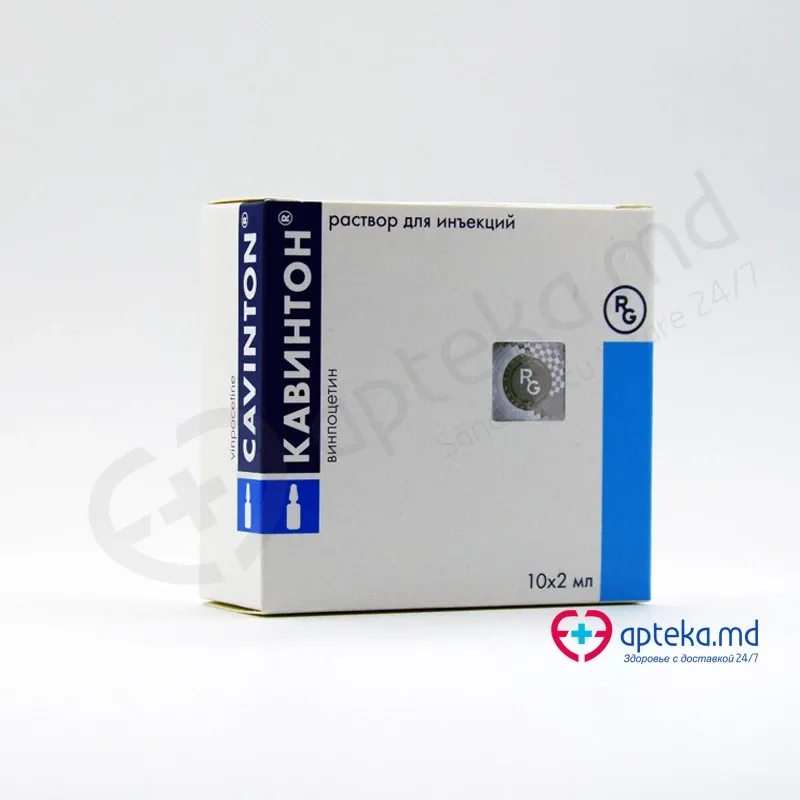
Instructions for Use
Table of Contents
Package leaflet: Information for the user
Warning! Keep the leaflet. Information on the immediate packaging in a foreign language.
Cavinton
5 mg/ml, concentrate for solution for infusion
Vinpocetinum
Please read the entire leaflet carefully before using the medicine, as it contains important information for the patient.
- Keep this leaflet, so that you can read it again if necessary.
- If you have any further questions, please consult your doctor or pharmacist.
- This medicine has been prescribed for a specific individual. Do not pass it on to others. The medicine may harm another person, even if their symptoms are the same.
- If the patient experiences any adverse reactions, including any not listed in this leaflet, inform your doctor, pharmacist or nurse. See section 4.
Table of contents of the leaflet:
- What Cavinton is and what it is used for
- Important information before using Cavinton
- How to use Cavinton
- Possible side effects
- How to store Cavinton
- Contents of the package and other information
1. What Cavinton is and what it is used for
Cavinton contains the active substance vinpocetine.
Vinpocetine is a compound with a complex mechanism of action, used in the treatment or alleviation of symptoms of diseases associated with cerebral circulation disorders.
Indications:
Cavinton is used in the treatment of the following conditions:
- acute cerebral ischemia: transient ischemic attack (TIA), ischemic stroke, and post-stroke states when parenteral treatment is required;
- chronic circulatory disorders in the capillaries and retina of the eye (e.g. thrombosis, obstruction of the central retinal artery or vein);
- age-related hearing loss of vascular origin or caused by toxic drug effects, or other types of age-related hearing loss (idiopathic, noise-induced), Meniere’s disease and tinnitus.
2. Important information before using Cavinton
When not to use Cavinton
- if the patient is allergic to vinpocetine or any of the other ingredients of this medicine (listed in section 6);
- during pregnancy;
- during breastfeeding;
- if the patient is of childbearing age and is not using effective contraceptive methods;
- if the patient has certain heart conditions, i.e. severe ischaemic heart disease or severe cardiac arrhythmias;
- in the acute phase of haemorrhagic stroke;
- in children, due to insufficient clinical data in this age group.
Warnings and precautions
Before starting treatment with Cavinton, discuss it with your doctor.
In patients with increased intracranial pressure, in those taking antiarrhythmic medicines (medicines used for cardiac arrhythmias), and in patients with bradycardia or long QT syndrome (an abnormality in the ECG), Cavinton should only be used after careful evaluation by the doctor of the benefit versus the potential risk of treatment.
Regular ECG monitoring (electrocardiographic examination – heart function test) is recommended in patients with long QT syndrome or in patients concurrently taking medicines that prolong the QT interval.
Cavinton and other medicines
Tell your doctor or pharmacist about all medicines you are currently taking or have recently taken, as well as any medicines you plan to take.
In clinical studies, no interactions were observed with beta-blocking agents such as:
chloranolol (used in arterial hypertension and cardiac arrhythmias), pindolol (used in arterial hypertension, coronary artery disease, and cardiac arrhythmias), and clopamide (a diuretic used in arterial hypertension and oedema associated with cardiac failure),
glibenclamide (used in diabetes), digoxin (used in cardiac failure and cardiac arrhythmias), acenocoumarol (an anticoagulant used in thromboembolic disorders and arterial embolism in heart disease), or
hydrochlorothiazide (a diuretic used in arterial hypertension and oedema associated with cardiac failure).
In isolated cases, vinpocetine may enhance the antihypertensive effect (blood pressure-lowering effect) of α-methyldopa (a medicine used in arterial hypertension). Therefore, systematic monitoring of blood pressure is recommended when these medicines are used concomitantly.
Caution is advised when using Cavinton together with medicines acting on the central nervous system, as well as with antiarrhythmic medicines (used in cardiac arrhythmias) and anticoagulants (medicines that reduce blood clotting).
Pregnancy, breastfeeding and fertility
If the patient is pregnant or breastfeeding, suspects she may be pregnant, or is planning to have a child, she should consult her doctor or pharmacist before using this medicine.
If the patient is of childbearing age, she must use an effective method of contraception during treatment with Cavinton. Otherwise, administration of vinpocetine is contraindicated.
Cavinton is contraindicated during pregnancy and breastfeeding.
Driving and operating machinery
There is no data available on the effect of vinpocetine on the ability to drive or operate machinery.
Cavinton contains sorbitol
This medicine contains 160 mg of sorbitol per ampoule. Sorbitol is a source of fructose. If the patient has previously been diagnosed with hereditary fructose intolerance, a rare genetic disorder, the patient must not take this medicine. In patients with hereditary fructose intolerance, the body cannot metabolize the fructose contained in this medicine, which may lead to severe adverse reactions.
Inform your doctor before taking this medicine if you have hereditary fructose intolerance. You should avoid sweet foods or drinks for longer periods due to possible nausea, vomiting, or other unpleasant adverse effects such as bloating, stomach cramps, or diarrhoea.
Cavinton contains benzyl alcohol
This medicine contains 20 mg of benzyl alcohol per ampoule. Benzyl alcohol may cause allergic reactions. Patients with kidney disease should consult their doctor or pharmacist before using this medicine, as large amounts of benzyl alcohol may accumulate in their body and cause adverse effects (so-called metabolic acidosis).
Cavinton contains sodium metabisulphite
This medicine contains 2 mg of sodium metabisulphite per ampoule. Sodium metabisulphite may rarely cause severe allergic reactions and bronchospasm.
The medicine contains less than 1 mmol (23 mg) of sodium per ampoule, meaning the medicine is considered "sodium-free".
3. How to use Cavinton medication
This medicine should always be used as directed by a physician. If in doubt, consult your
doctor or pharmacist.
This medicine is available only by prescription.
The medicine must be administered exclusively by slow intravenous infusion! (infusion rate must not
exceed a maximum of 80 drops/minute).
Do not administer the medicine by intramuscular injection.
Do not administer undiluted medicine intravenously.
The physician will determine the individual dose with special caution, based on the patient's
clinical condition and body weight.
After completion of intravenous therapy, continuation of treatment orally with tablets is recommended:
three times daily, one tablet of Cavinton Forte (10 mg tablets) or three times daily, two tablets of
Cavinton (5 mg tablets).
If you feel that the effect of the medicine is too strong or too weak, consult your doctor or
pharmacist.
Use in children
Cavinton is not intended for use in children. The medicine should not be used due to
lack of sufficient clinical data in this age group.
Use of Cavinton in patients with renal and/or hepatic impairment
There is no need to adjust the dosage in patients with renal or hepatic impairment,
since the medicine does not accumulate in the body.
Use of Cavinton in elderly patients
There is no need to adjust the dosage in elderly patients.
Use of a higher than recommended dose of Cavinton
If a higher than recommended dose of the medicine is taken, seek immediate advice from a doctor or
pharmacist.
Administration of vinpocetine at a dose of 1 mg/kg body weight is safe. There is no clinical experience
with doses higher than 1 mg/kg body weight, and therefore physicians should not administer
such doses to patients.
4. Possible adverse reactions
Like any medicine, this medicinal product may cause adverse reactions, although not everyone experiences them.
If any of the serious adverse reactions listed below occur,
discontinue use of the medicine immediately and contact your doctor without delay:
- sensation of rapid or irregular heartbeat,
- significant changes in blood pressure.
The adverse reactions listed below are grouped according to their frequency of occurrence.
Common adverse reactions (may affect up to 1 in 10 people):
- changes in blood pressure (mainly decrease in blood pressure),
- flushing,
- phlebitis.
Uncommon adverse reactions (may affect up to 1 in 100 people):
- sleep disturbances (insomnia, drowsiness), dizziness and headaches, weakness and sweating. These symptoms may be related to the underlying disease.
- changes in ECG findings (ST segment depression, QT interval prolongation), tachycardia and extrasystoles. These symptoms occurred spontaneously, therefore it is uncertain whether they were caused by the use of Cavinton.
- nausea, heartburn and dry mouth,
- increased liver enzyme activity,
- allergic skin reactions.
Rare adverse reactions (may affect up to 1 in 1000 people):
- leukopenia (reduction in white blood cell count),
- abdominal pain.
Reporting of adverse reactions
If any adverse reactions occur, including any adverse reactions not listed in this leaflet, inform your doctor, pharmacist or nurse. Adverse reactions can be reported directly to the Department of Monitoring Adverse Drug Reactions of the Office for Registration of Medicinal Products, Medical Devices and Biocidal Products
Al. Jerozolimskie 181C, 02-222 Warsaw
Tel.: +48 (22) 49 21 301, Fax: +48 (22) 49 21 309
Website: https://smz.ezdrowie.gov.pl
Reporting adverse reactions helps to provide more information on the safety of the medicine.
5. How to store Cavinton
Keep this medicine out of the sight and reach of children.
Do not store above 25°C. Store in the original packaging to protect from light.
The concentrate for solution for infusion must be used within 3 hours of preparation.
Do not use this medicine after the expiry date stated on the container. The expiry date refers to the last day of the stated month.
Medicines must not be disposed of via wastewater or household waste. Ask your pharmacist how to dispose of medicines no longer required. These measures will help protect the environment.
6. Contents of the packaging and other information
What the medicine Cavinton contains
- The active substance is vinpocetine.
- The other components are: benzyl alcohol, tartaric acid, sorbitol, ascorbic acid, sodium metabisulfite, water for injections.
Each 2 ml ampoule contains 10 mg of vinpocetine.
What Cavinton looks like and contents of the pack
Ampoules made of brown glass (hydrolytic class I), packed in a cardboard box.
The pack contains 10 ampoules of 2 ml each.
For further information, please contact the marketing authorisation holder or the parallel importer.
Marketing authorisation holder in Hungary, the country of export:
Richter Gedeon Nyrt.
Gyömrői út 19-21., H-1103 Budapest, Hungary
Manufacturer:
Richter Gedeon Nyrt.
Gyömrői út 19-21., H-1103 Budapest, Hungary
Parallel importer:
Delfarma Sp. z o.o.
ul. Św. Teresy od Dzieciątka Jezus 111, 91-222 Łódź
Repackaged in:
Delfarma Sp. z o.o.
ul. Św. Teresy od Dzieciątka Jezus 111, 91-222 Łódź
Marketing authorisation number in Hungary, the country of export: OGYI-T-3531/01
Parallel import authorisation number: 402/17
Information intended exclusively for medical professionals
How to administer Cavinton
Recommended dosage
The initial daily dose in intravenous infusion is usually 20 mg (2 ampoules) diluted in 500 ml of infusion solution. The dose may be increased to 1 mg/kg body weight per day within 2-3 days, depending on the patient's tolerance of the drug.
The average duration of treatment is 10-14 days, and the commonly used daily dose for a patient weighing 70 kg is 50 mg/day (5 ampoules in 500 ml of infusion solution).
There is no need for dose adjustment in patients with hepatic or renal impairment.
Cavinton concentrate for solution for infusion can be diluted with physiological infusion fluids containing sodium chloride or glucose.
The infusion solution should be used within 3 hours after preparation.
Pharmaceutical incompatibilities
Cavinton concentrate for solution for infusion is chemically incompatible with heparin; therefore, these drugs should not be mixed in the same syringe. However, concomitant treatment with anticoagulant drugs may be administered.
Due to incompatibility of Cavinton concentrate for solution for infusion with infusion solutions containing amino acids, these drugs should not be mixed.
Similar Medications
-
Cavinton
Form: solution for infusion, concentrate
Active substance Dosage Vinpocetine 5 mg/ml Manufacturer: Gedeon Richter Plc.
-
Cavinton
Form: solution for infusion, concentrate
Active substance Dosage Vinpocetine 5 mg/ml Manufacturer: Gedeon Richter Plc.
This page has been machine-translated and may contain inaccuracies. The original data is available in the manufacturing country's language.
Last data check: June 04, 2026 · Data source: Rejestr Produktów Leczniczych (URPL)