Carteol lp 2% preservative free
Poland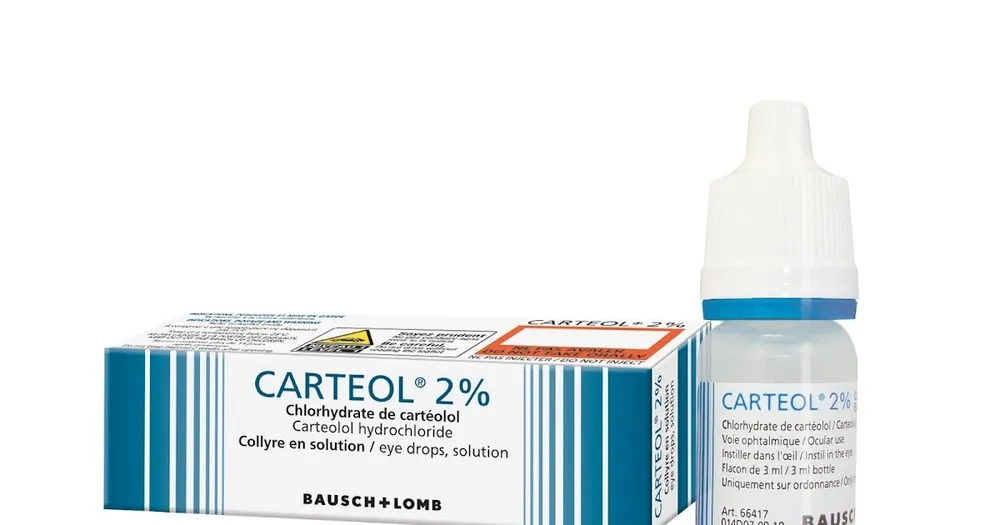
Table of Contents
- Package leaflet: Information for the user
- 1. What Carteol LP 2% Preservative Free is and what it is used for
- 2. Important information before using Carteol LP 2% Preservative Free
- 4. Possible adverse effects
- 5. How to store Carteol LP 2% Preservative Free
- 6. Contents of the pack and other information
Package leaflet: Information for the user
Carteol LP 2% Preservative Free
20 mg/ml, prolonged-release eye drops, solution
Carteololi hydrochloridum
Please read all of this leaflet carefully before using this medicine, because it contains
important information for you.
- Keep this leaflet, as you may need to read it again.
- If you have any further questions, please ask your doctor or pharmacist.
- This medicine has been prescribed for a specific individual. Do not pass it on to others. It may harm someone else, even if their symptoms are the same.
- If you experience any side effects, including any not listed in this leaflet, tell your doctor or pharmacist. See section 4.
Contents of the leaflet:
- What Carteol LP 2% Preservative Free is and what it is used for
- Important information before using Carteol LP 2% Preservative Free
- How to use Carteol LP 2% Preservative Free
- Possible side effects
- How to store Carteol LP 2% Preservative Free
- Contents of the pack and other information
1. What Carteol LP 2% Preservative Free is and what it is used for
Carteol LP 2% Preservative Free belongs to a group of medicines called beta-adrenolytics.
Carteol LP 2% Preservative Free, 20 mg/ml, eye drops, solution is indicated for use in adult patients for the symptomatic treatment of the following conditions:
- One form of glaucoma (chronic open-angle glaucoma),
- Elevated intraocular pressure (intraocular hypertension).
Carteol LP 2% Preservative Free does not contain preservatives.
2. Important information before using Carteol LP 2% Preservative Free
When not to use Carteol LP 2% Preservative Free
- if the patient is allergic to carteolol hydrochloride or any of the other ingredients of this medicine (listed in section 6),
- if the patient currently has or has previously had respiratory problems such as asthma, severe chronic obstructive pulmonary disease (a serious lung condition that may cause wheezing, difficulty breathing and/or prolonged cough), because Carteol LP 2% Preservative Free may worsen bronchospasm and exacerbate symptoms of these diseases,
- if the patient has a slow heart rate, heart failure or cardiac arrhythmias (irregular heartbeat, sick sinus syndrome, including sinoatrial block), because Carteol LP 2% Preservative Free may slow the heart rate and worsen the patient's condition,
- if the patient has second- or third-degree atrioventricular block not controlled by a cardiac pacemaker, because Carteol LP 2% Preservative Free may increase the risk of atrioventricular block,
- if the patient has bradycardia or sinus bradycardia (slower heart rate than normal, e.g. below 45–50 beats per minute), because Carteol LP 2% Preservative Free may reduce heart rate and thereby worsen these symptoms,
- if the patient has untreated phaeochromocytoma (excessive hormone production causing severe hypertension), because carteolol may increase blood pressure and worsen the patient's condition.
Warnings and precautions
Before starting treatment with Carteol LP 2% Preservative Free, consult a doctor or pharmacist if the patient currently has or has previously had:
- heart disease,
- breathing problems, asthma or chronic obstructive pulmonary disease (a lung condition that may cause wheezing, difficulty breathing and/or prolonged cough),
- circulatory disorders (such as Raynaud's disease or Raynaud's phenomenon),
- diabetes, because carteolol may mask the subjective and objective symptoms of low blood sugar (hypoglycaemia),
- hyperthyroidism, because carteolol may mask its symptoms,
- treated phaeochromocytoma, because carteolol may increase blood pressure,
- psoriasis,
- corneal disease,
- history of allergic reactions,
- kidney or liver disease.
Before undergoing surgical anaesthesia, inform the doctor about the use of Carteol LP 2% Preservative Free, as carteolol may affect the action of certain drugs used during anaesthesia.
The effectiveness of treatment should be monitored. For this purpose, the patient should be examined by an ophthalmologist at the beginning of treatment and again after approximately 4 weeks.
Additionally, in case of long-term treatment, annual examinations are necessary to confirm ongoing efficacy and absence of treatment failure.
In patients wearing contact lenses, reduced tear production, which may occur with drugs of this class, may increase the risk of contact lens intolerance.
This medicine contains 19.2 µg of phosphates per drop, equivalent to 0.509 mg/ml.
In patients with severe corneal damage, phosphates may very rarely cause corneal calcification and clouding during treatment.
Children and adolescents
This eye drop should not be used in children or adolescents. There is insufficient data on the safety and efficacy of carteolol-containing eye drops in children and adolescents.
Carteol LP 2% Preservative Free and other medicines
Inform the doctor or pharmacist about all medicines currently used, recently used, or planned for use.
Carteol LP 2% Preservative Free may affect other medicines the patient is taking, and other medicines may affect Carteol LP 2% Preservative Free; this includes other eye drops used in glaucoma treatment.
- When using other ophthalmic medicines:
- administer the other ophthalmic medicine first,
- wait 15 minutes,
- then administer Carteol LP 2% Preservative Free as the last drop.
- For the treatment of certain types of glaucoma (e.g. closed-angle glaucoma), the doctor may also recommend using miotic agents (pupil-constricting drugs).
- When using eye drops containing adrenaline/epinephrine together with Carteol LP 2% Preservative Free, continuous monitoring by an ophthalmologist is required (due to the risk of pupil dilation).
When oral beta-adrenergic blocking agents (medicines that lower blood pressure and cause slower and weaker heartbeats) are used concomitantly, dose adjustment of Carteol LP 2% Preservative Free by the doctor is often necessary.
- Although systemic absorption of topically administered beta-blockers is minimal, interactions observed with oral beta-blockers should be considered:
- Concomitant use of amiodarone (used to treat cardiac arrhythmias), certain calcium channel blockers (used to treat hypertension, such as diltiazem and verapamil), fingolimod (used in multiple sclerosis), or other beta-adrenergic blocking agents (used in heart failure) is not recommended. If use of these medicines is necessary, the doctor will closely monitor therapy.
- Inform the doctor if the patient is using or plans to use medicines that lower blood pressure, cardiac medicines, antidiabetic medicines, cholinergic agents used in Alzheimer's disease, medicines used to treat urinary disorders, multiple sclerosis, depression, psychotic disorders, cancer (e.g. when using amifostine), medicines used to treat or prevent malaria (e.g. when using mefloquine), muscle relaxants (e.g. when using baclofen), or joint diseases such as osteoarthritis (e.g. when using non-steroidal anti-inflammatory drugs such as ibuprofen or celecoxib). If necessary, the doctor will monitor the course of therapy.
Pregnancy and breastfeeding
If the patient is pregnant, breastfeeding, suspects she may be pregnant, or is planning to become pregnant, she should consult a doctor or pharmacist before using this medicine.
Pregnancy
Do not use Carteol LP 2% Preservative Free during pregnancy unless considered necessary by the doctor.
For information on methods to reduce systemic absorption of the medicine, see section 3.
Breastfeeding
Due to the low concentration and route of administration, it is unlikely that use of Carteol LP 2% Preservative Free would result in carteolol levels in breast milk high enough to harm the infant.
For information on methods to reduce systemic absorption of the medicine, see section 3.
During breastfeeding, consult a doctor before using any medicine.
Driving and using machines
Blurred vision may occur after instillation of this medicine into the eye.
Do not drive or operate machinery until normal vision is restored.
3. How to use Carteol LP 2% Preservative Free
This medicine is for ophthalmic use (in the eye[s]).
Always use this medicine exactly as prescribed by the doctor. In case of doubt, consult the doctor or pharmacist.
Recommended dose
The usual dose is one drop in the affected eye(s) once daily in the morning.
However, the doctor may decide to adjust the dose (e.g. one drop every other day), especially if the patient is also using oral beta-adrenergic blocking agents (see section 2: "Carteol LP 2% Preservative Free and other medicines").
Method and route of administration
- If using contact lenses, remove them before administering Carteol LP 2% Preservative Free and wait 15 minutes before reinserting them.
- Before opening the bottle, wash hands thoroughly and perform the following steps:
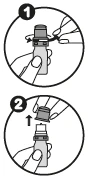
A. Before first administration of the medicine into the eye
-
Remove the security ring.
-
Remove the protective cap.

- Hold the bottle upside down. Squeeze the body of the bottle firmly enough to release 1–2 drops. If no drop appears, repeat steps A2 and A3.
B. Instilling the eye drop solution

- Look upwards, gently pull down the lower eyelid, hold the bottle over the eye, and slowly squeeze the body of the bottle until a drop appears. Avoid touching the dropper tip to the eye or eyelids.
- Blink to help spread the drop over the eye surface. With eyes closed, wipe away any excess medicine from the eyelids.
- After each administration, press with a finger on the inner corner of the closed eye near the nose for 2 minutes. This helps reduce systemic absorption of the medicine.
C. After each instillation
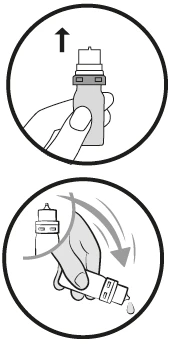
To remove residual drops:
-
Hold the bottle with the dispenser pointing upwards.
-
Quickly turn the bottle upside down to remove any remaining drops.
-
Replace the protective cap.
- If other eye drops are used simultaneously, wait 15 minutes before instilling them.
- If Carteol LP 2% Preservative Free has been prescribed as a replacement for another medicine, continue using the previous medicine until the end of the day. Begin using Carteol LP 2% Preservative Free the following day, as directed by the doctor. Carteol LP 2% Preservative Free may also be used as an adjunct to ongoing therapy.
- If the effect of Carteol LP 2% Preservative Free seems too weak or too strong, inform the treating doctor or pharmacist.
Duration of treatment
Follow the doctor's instructions. The doctor will advise how long to use Carteol LP 2% Preservative Free.
Use of more than the recommended dose of Carteol LP 2% Preservative Free
If more drops than recommended are instilled into the eye(s), rinse the eye(s) with sterile 0.9% sodium chloride solution (9 mg/ml). If sterile sodium chloride solution is not available, clean water may be used.
In case of accidental ingestion of the container contents, contact a doctor or pharmacist immediately.
Missed dose of Carteol LP 2% Preservative Free
Do not use a double dose to make up for a missed dose.
Discontinuing Carteol LP 2% Preservative Free
Stopping treatment may lead to increased intraocular pressure, which may result in visual disturbances.
Never discontinue treatment with Carteol LP 2% Preservative Free without prior consultation with a doctor or pharmacist.
In case of any further doubts regarding the use of this medicine, consult a doctor or pharmacist.
4. Possible adverse effects
Like all medicines, this medicine can cause adverse effects, although not everyone will experience them.
You can usually continue using the eye drops unless the adverse effects are severe. If in doubt, consult your doctor or pharmacist. Do not stop using Carteol LP 2% Preservative Free without consulting your doctor.
Common adverse effects (may affect up to 1 in 10 people)
- Subjective and objective signs of eye irritation (e.g. burning sensation), eye pain (e.g. stinging), itching, tearing, eye redness, conjunctival hyperaemia, conjunctivitis, eye irritation or sensation of foreign body in the eye (keratitis)
- Taste disturbances
Uncommon adverse effects (may affect up to 1 in 100 people)
- Dizziness
- Muscle weakness or muscle pain not caused by physical activity (myalgia), muscle cramps
In very rare cases, in some patients with serious damage to the outer transparent layer of the eyeball (cornea), hazy spots caused by calcium deposits have appeared on the cornea during treatment.
Frequency unknown (cannot be estimated from the available data)
- Allergic reactions, including sudden swelling of the face, lips, mouth, tongue or throat, which may cause difficulty in swallowing or breathing, urticaria, localised or generalised rash, itching, sudden life-threatening allergic reaction.
- Low blood glucose levels.
- Difficulty sleeping (insomnia), depression, nightmares, decreased libido.
- Fainting, stroke, reduced blood flow to parts of the brain, worsening of subjective and objective symptoms of myasthenia (muscle disorders), tingling and stinging sensations in hands and feet, numbness, headache, memory loss.
- Eyelid swelling (blepharitis), blurred vision, visual disturbances after eye surgery (retinal detachment following filtering surgery), reduced corneal sensitivity, dry eyes, damage to the outer layer of the eyeball (corneal erosion), drooping of the upper or lower eyelid, double vision, refractive changes.
- Slow heart rate, palpitations, changes in heart rhythm and rate, heart disease with shortness of breath, swelling of the feet and legs due to fluid retention (congestive heart failure), heart disorders (atrioventricular block), heart attack, heart failure.
- Low blood pressure, Raynaud's phenomenon, cold hands, cold feet, leg cramps and/or leg pain during walking (claudication).
- Bronchospasm, shortness of breath (dyspnoea), cough.
- Nausea, dyspepsia, diarrhoea, dry mouth, abdominal pain, vomiting.
- Hair loss, psoriasis-like rash (rash with white and silvery plaques) or worsening of psoriasis, rashes.
- Systemic lupus erythematosus (an autoimmune disease in which the immune system attacks the body's own tissues, causing widespread inflammation and tissue damage in affected organs. It may affect joints, skin, brain, lungs, kidneys and blood vessels).
- Sexual dysfunction, impotence.
- Asthenia (unexplained muscle weakness), myalgia (muscle pain not caused by physical activity) or fatigue, chest pain, fluid retention (oedema).
Reporting of adverse effects
If any adverse effects occur, including any not listed in this leaflet, inform your doctor or pharmacist. Adverse effects can be reported directly to the Department of Monitoring Adverse Drug Reactions, Office for Registration of Medicinal Products, Medical Devices and Biocidal Products, Al. Jerozolimskie 181 C,
02-222 Warsaw,
Tel.: +48 22 49 21 301,
Fax: +48 22 49 21 309,
Website: https://smz.ezdrowie.gov.pl
Adverse effects can also be reported to the marketing authorisation holder.
Reporting adverse effects helps provide more information on the safety of this medicine.
5. How to store Carteol LP 2% Preservative Free
Keep this medicine out of the sight and reach of children.
Do not use this medicine after the expiry date stated on the bottle following EXP. The expiry date refers to the last day of the stated month.
No special temperature storage requirements for this medicine.
Store in the original cardboard packaging to protect from light.
The shelf life after first opening the container is 2 months. The date of opening should be recorded on the packaging.
Do not use this medicine if the packaging is damaged.
Medicines must not be disposed of via wastewater or household waste. Ask your pharmacist how to dispose of medicines no longer required. This will help protect the environment.
6. Contents of the pack and other information
What Carteol LP 2% Preservative Free contains
- The active substance is carteolol hydrochloride. 1 ml of Carteol LP 2% Preservative Free prolonged-release eye drops solution contains 20 mg of carteolol hydrochloride.
- Other ingredients are: alginic acid (E 400), disodium phosphate dodecahydrate (E 339), sodium dihydrogen phosphate dihydrate (E 339), sodium chloride, sodium hydroxide (for pH adjustment), purified water.
What Carteol LP 2% Preservative Free looks like and contents of the pack
This medicine is a beta-adrenolytic agent for ophthalmic use.
Carteol LP 2% Preservative Free is a prolonged-release eye drop solution, clear, with a slightly brownish-yellow tint, available in an 8 ml bottle. The complete package is contained in a cardboard box.
Marketing Authorisation Holder:
Bausch+Lomb Ireland Limited
3013 Lake Drive
Citywest Business Campus
Dublin 24, D24PPT3
Ireland
[email protected]
Manufacturer:
Laboratoire Chauvin
Zone Industrielle de Ripotier
50 Avenue Jean Monnet
07200 Aubenas
France
This medicinal product is authorised in the European Economic Area countries under the following names:
Netherlands: Arteoptic zonder conserveermiddel 20 mg/ml, oogdruppels, oplossing met verlengde afgifte
Belgium: Arteoptic LA Sine Conservans 20 mg/ml Oogdruppels, oplossing met verlengde afgifte / Collyre en solution à libération prolongée / Augentropfen mit verlängerter Wirkungsdauer
Luxembourg: Arteoptic LA Sine Conservans 20 mg/ml Oogdruppels, oplossing met verlengde afgifte / Collyre en solution à libération prolongée / Augentropfen mit verlängerter Wirkungsdauer
France: Carteol L.P. 2% sans conservateur, collyre en solution à libération prolongée
Italy: Fortisoc, 20 mg/ml, collirio, soluzione a rilascio prolungato
Spain: Arteoptic PF 2% Colirio de liberación prolongada
Portugal: Physioglau PF 2%
Croatia: Cartelomb 20 mg/ml, kapi za oko otopina s produljenim oslobađanjem
Slovenia: Cartelomb 20 mg/ml kapljice za oko, raztopina s podaljšanim sproščanjem
Poland: Carteol LP 2% Preservative Free