Carteol lp 2%
Poland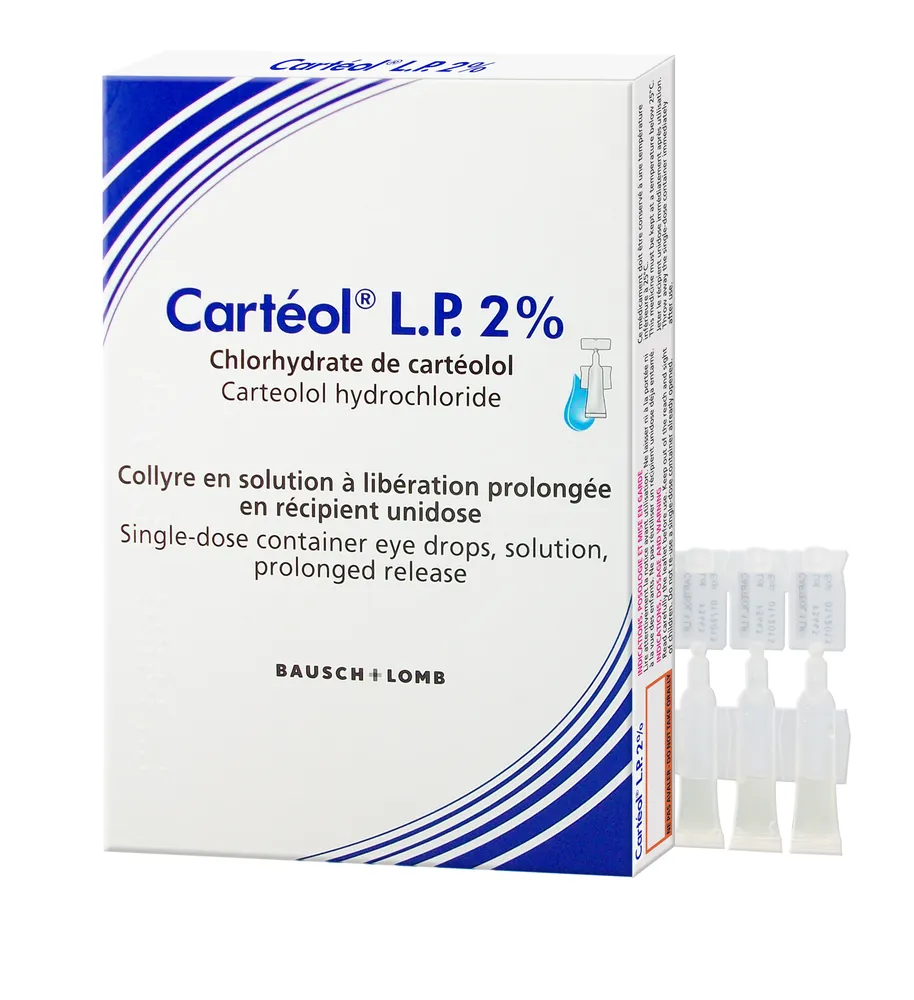
Table of Contents
Package leaflet: Information for the user
Warning! Keep the package leaflet, information on the outer packaging in a foreign language!
Carteol LP 2%
20 mg/ml, prolonged-release eye drops
Carteololi hydrochloridum
Please read the entire leaflet carefully before using the medicine, as it contains
important information for the patient.
- Keep this leaflet, as you may need to read it again.
- If you have any questions, consult your doctor or pharmacist.
- This medicine has been prescribed for a specific individual. Do not pass it on to others. The medicine may harm other people, even if their symptoms are the same.
- If the patient experiences any adverse reactions, including any adverse reactions not listed in this leaflet, inform the doctor or pharmacist. See section 4.
Table of contents of the leaflet:
- What Carteol LP 2% is and what it is used for
- Important information before using Carteol LP 2%
- How to use Carteol LP 2%
- Possible side effects
- How to store Carteol LP 2%
- Contents of the pack and other information
1. What Carteol LP 2% is and what it is used for
Carteol LP 2% belongs to a group of medicines called beta-adrenolytics.
Carteol LP 2% is used locally in the eye for the following conditions:
- One form of glaucoma (chronic open-angle glaucoma),
- Increased intraocular pressure (pressure in the eye).
2. Important information before using Carteol LP 2%
When not to use Carteol LP 2%
- if the patient is allergic to carteolol hydrochloride or any of the other ingredients of Carteol LP 2% (listed in section 6),
- if the patient currently has or has previously had respiratory problems such as asthma, severe chronic obstructive pulmonary disease (a serious lung disease which may cause wheezing, difficulty breathing and/or long-term cough),
- if the patient currently has slow heart rate, heart failure or cardiac arrhythmia (irregular heartbeat),
- if the patient has bradycardia (slower heartbeat than normal, e.g. below 45–50 beats per minute),
- if the patient has untreated pheochromocytoma (excessive hormone production causing severe hypertension).
Warnings and precautions
Before starting treatment with Carteol LP 2%, consult a doctor or pharmacist if the patient currently has or has previously had:
- coronary heart disease (symptoms may include chest pain or tightness, shortness of breath, coughing), heart failure, low blood pressure,
- cardiac arrhythmias such as bradycardia (slow heart rate),
- breathing problems, asthma or chronic obstructive pulmonary disease (a lung disease which may cause wheezing, difficulty breathing and/or long-term cough),
- diseases associated with impaired blood circulation (such as Raynaud's disease or Raynaud's syndrome),
- diabetes, because carteolol may mask objective and subjective symptoms of low blood sugar (hypoglycaemia),
- hyperthyroidism, because carteolol may mask its objective and subjective symptoms,
- treated pheochromocytoma,
- psoriasis,
- corneal disease,
- history of allergic reactions,
- kidney or liver disease.
Before undergoing surgical anaesthesia, inform the doctor about the use of Carteol LP 2%, as carteolol may alter the effects of certain drugs used during anaesthesia.
Monitor for the development of resistance to the drug. For this purpose, during treatment with this medicine, the patient should be examined by an ophthalmologist at the beginning of therapy and then approximately every 4 weeks. Additionally, in case of long-term treatment, these examinations will help confirm possible treatment failure (i.e. loss of drug efficacy).
In patients wearing contact lenses, reduced tear production, which may occur with drugs of this class, may lead to contact lens intolerance.
Also, the preservative contained in the medicine (benzalkonium chloride) may be absorbed by soft contact lenses and may alter their colour. Contact lenses should be removed before instillation and at least 15 minutes should elapse before reinsertion.
Benzalkonium chloride may also cause eye irritation, especially in patients with dry eye syndrome or corneal disorders (the transparent layer at the front of the eye). If abnormal sensations, stinging or eye pain occur after using the medicine, consult a doctor.
In patients with severe damage to the transparent, front part of the eye (cornea), phosphates may very rarely cause corneal opacification due to calcium deposition during treatment.
The active substance contained in this medicine may give a positive result in anti-doping tests.
Children and adolescents
Carteol LP 2% should not be used in premature infants, newborns, children or adolescents.
Carteol LP 2% and other medicines
Tell the doctor or pharmacist about all medicines the patient is currently taking or has recently taken, as well as any medicines the patient plans to use.
Carteol LP 2% may affect other medicines the patient is taking, and other medicines may affect Carteol LP 2%; this includes other eye drops used in the treatment of glaucoma.
- When using other ophthalmic medicines:
- administer the other ophthalmic medicine first,
- wait 15 minutes,
- then administer Carteol LP 2% last.
- In the treatment of certain types of glaucoma (such as closed-angle glaucoma), the doctor may also recommend using medicines that constrict the pupil.
- When using eye drops containing adrenaline/epinephrine together with Carteol LP 2%, continuous monitoring by an ophthalmologist is required (due to the risk of pupil dilation).
- When concomitantly using oral beta-blockers, dose adjustment of Carteol LP 2% by the doctor may often be necessary. Although the medicine is absorbed into the bloodstream in small amounts, interactions observed with oral beta-blockers should be considered:
- Concomitant use of amiodarone (used to treat cardiac arrhythmias), certain calcium channel blockers (used to treat hypertension, such as diltiazem, fingolimod, ozanimod and verapamil), or other beta-blockers (used to treat heart failure) is not recommended.
- All beta-blockers may mask some symptoms of hypoglycaemia: palpitations and tachycardia.
- Increased blood concentration of lidocaine (administered intravenously) may occur, increasing the risk of cardiovascular and neurological adverse effects.
When using more than one ophthalmic medicinal product for local application, administration should be separated by at least 15 minutes. Ocular ointments should be administered last.
Inform the doctor if the patient is taking or plans to take medicines that lower blood pressure, medicines used for heart conditions, or medicines used to treat diabetes or multiple sclerosis.
Tell the doctor about all medicines the patient is currently taking or has recently taken, including those available without a prescription. The doctor may then monitor the patient during treatment if necessary.
Pregnancy and breastfeeding
If the patient is pregnant or breastfeeding, suspects she may be pregnant, or is planning to have a baby, she should consult a doctor or pharmacist before using this medicine.
Pregnancy
Do not use Carteol LP 2% if the patient is pregnant unless the doctor considers it necessary. There is insufficient data on the use of carteolol hydrochloride in pregnant women. Information on methods to reduce systemic absorption of the medicine is provided in section 3.
Breastfeeding
Do not use Carteol LP 2% if the patient is breastfeeding. Carteolol hydrochloride may pass into breast milk.
Beta-blockers are excreted in breast milk. However, when carteolol hydrochloride is administered as eye drops at therapeutic doses, it is unlikely that concentrations in breast milk will be sufficient to cause clinical signs of beta-blockade in the infant. Information on methods to reduce systemic absorption of the medicine is provided in section 3.
During breastfeeding, consult a doctor before using any medicine.
Driving and using machines
Blurred vision may occur after instillation of this medicine into the eye.
Do not drive or operate machinery until normal vision is restored.
Carteol LP 2% contains benzalkonium chloride
Preservative: benzalkonium chloride – see section 2 "Warnings and precautions".
This medicine contains 0.00165 mg of benzalkonium chloride per drop, equivalent to 0.05 mg/ml.
Carteol LP 2% contains phosphate buffers
This medicine contains 0.046 mg of phosphates per drop, equivalent to 1.4 mg/ml.
3. How to use Carteol LP 2%
This medicine is intended for ophthalmic use (in the eye[s]).
Always use this medicine exactly as prescribed by your doctor. If in doubt, consult your doctor or pharmacist.
Recommended dose
Carteol LP 2% contains a special component that allows the medicine to be administered once daily.
The usual dose is 1 drop in the affected eye(s) once daily, in the morning.
However, your doctor may decide to adjust the dose, especially if you are also taking oral beta-blockers (see section 2 "Carteol LP 2% and other medicines").
Method and route of administration
- If you wear contact lenses, remove them before using Carteol LP 2% and wait 15 minutes before reinserting them.
- To properly administer Carteol LP 2%:
- Wash your hands thoroughly before instilling the drops.
- Avoid touching the tip of the dropper to the eye or eyelids.
- Look upwards, gently pull down the lower eyelid and instill one drop into the eye.
- Close the eye for a few seconds after instillation.
- After applying Carteol LP 2%, press with your finger on the inner corner of the eye near the nose for 2 minutes. This helps prevent the active substance (carteolol) from being absorbed into the body.
- Without opening the eye, wipe away any excess medicine from the eyelids.
- Close the container immediately after use.
- If your doctor prescribes other eye drops, you should:
- Apply the other ophthalmic medicine first.
- Wait 15 minutes.
- Then apply Carteol LP 2% last.
- If Carteol LP 2% has been prescribed as a replacement for another medicine, continue using the previous medicine until the end of the day. Begin using Carteol LP 2% the following day, as directed by your doctor.
- If the effect of Carteol LP 2% seems too weak or too strong, inform your doctor or pharmacist.
Do not inject or swallow this medicine.
Duration of treatment
Follow your doctor's instructions. Your doctor will inform you how long to use Carteol LP 2%. Do not stop treatment prematurely.
Use of a higher than recommended dose of Carteol LP 2%
If more than the recommended number of drops has been instilled into the eye(s), rinse the eye(s) with clean water.
If the contents of the container are accidentally swallowed, adverse effects such as a feeling of emptiness in the head, breathing difficulties, or a sensation of reduced heart rate may occur. Seek immediate medical advice from a doctor or pharmacist.
Missed dose of Carteol LP 2%
Do not use a double dose to make up for a missed dose.
Stopping Carteol LP 2%
Discontinuing treatment may lead to increased intraocular pressure, which may result in visual disturbances.
Do not stop treatment without first consulting your doctor.
If you have any further questions about the use of this medicine, consult your doctor or pharmacist.
4. Possible adverse effects
Like all medicines, this medicine can cause adverse effects, although not everyone will experience them.
You can usually continue using the eye drops unless the adverse effects are severe. If in doubt, consult
your doctor or pharmacist. Do not stop using Carteol LP 2% without consulting your doctor.
As with other ophthalmic medicines (locally applied ophthalmic drugs), carteolol hydrochloride is
absorbed into the bloodstream. This may lead to adverse effects similar to those observed with
systemically acting beta-adrenolytic medicines. The frequency of adverse effects with eye drop
medicines is lower than with medicines taken orally or by injection.
The listed adverse effects include reactions observed across the entire group of beta-adrenolytic
medicines used in the treatment of eye diseases.
Common adverse effects (may affect up to 1 in 10 people)
- Subjective and objective symptoms of eye irritation (e.g. burning), eye pain (e.g. stinging), itching, tearing, eye redness, conjunctival hyperaemia, conjunctivitis, eye irritation or sensation of a foreign body in the eye (keratitis),
- taste disturbances.
Uncommon adverse effects (may affect up to 1 in 100 people)
- dizziness,
- muscle weakness or non-exercise-related muscle pain (myalgia), muscle cramps.
Rare adverse effects (may affect up to 1 in 1,000 people)
- positive test result for antinuclear antibodies.
In very rare cases, in some patients with serious damage to the outer transparent layer of the eyeball (cornea), corneal opacities due to calcium deposits have occurred during treatment.
Frequency unknown (cannot be estimated from available data)
- allergic reactions, including sudden swelling of the face, lips, mouth, tongue or throat, which may cause difficulty in swallowing or breathing, urticaria, localised or generalised rash, itching, sudden life-threatening allergic reaction (anaphylaxis),
- low blood glucose levels,
- difficulty sleeping (insomnia), depression, nightmares, decreased libido,
- fainting, stroke, reduced blood flow to parts of the brain, worsening of subjective and objective symptoms of severe myasthenia (muscle disorders), tingling and pricking sensations in hands and feet, numbness, headache, memory loss,
- eyelid swelling (blepharitis), blurred vision, visual disturbances after eye surgery (retinal detachment following filtration surgery), decreased corneal sensitivity, dry eyes, damage to the outer layer of the eyeball (corneal erosion), drooping of the upper or lower eyelid (ptosis), double vision, refractive changes (in some cases due to discontinuation of miotic drugs),
- slow heart rate, palpitations, changes in heart rhythm and rate, heart disease with shortness of breath, swelling of feet and legs due to fluid retention (congestive heart failure), heart disorders (atrioventricular block), heart attack, heart failure,
- low blood pressure, Raynaud's phenomenon, cold hands, cold feet, leg cramps and (or) leg pain during walking (claudication),
- bronchospasm (wheezing, difficulty breathing – most commonly in patients with pre-existing bronchospastic disease), shortness of breath (dyspnoea), cough,
- nausea, dyspepsia, diarrhoea, dry mouth, abdominal pain, vomiting,
- hair loss, rash with white and silvery lesions (psoriasiform rash) or exacerbation of psoriasis, rashes,
- systemic lupus erythematosus,
- sexual dysfunction, impotence,
- unexplained muscle weakness or non-exercise-related muscle pain (asthenia) or fatigue, chest pain, fluid retention (oedema).
Reporting of adverse effects
If any adverse effects occur, including any not listed in this leaflet, inform your doctor or pharmacist.
Adverse effects can be reported directly to the Department of Monitoring Adverse Drug Reactions,
Office for Registration of Medicinal Products, Medical Devices and Biocidal Products,
Al. Jerozolimskie 181 C, 02-222 Warsaw, Tel.: +48 22 49 21 301, Fax: +48 22 49 21 309,
Website: https://smz.ezdrowie.gov.pl
Reporting adverse effects helps provide more information on the safety of this medicine.
5. How to store Carteol LP 2%
- Do not use this medicine after the expiry date stated on the packaging. The expiry date refers to the last day of the stated month.
- Translation of abbreviations on the immediate packaging: Lote - batch number, Fecha fab. - manufacturing date, Cad. - expiry date.
- No special storage instructions apply.
- Shelf life after first opening the bottle: 28 days.
- Do not use this medicine if the packaging is damaged.
- Keep the medicine out of sight and reach of children.
Medicines must not be disposed of via wastewater or household waste. Ask your pharmacist how to dispose of medicines no longer required. These measures will help protect the environment.
6. Contents of the package and other information
What Carteol LP 2% contains
- The active substance is carteolol hydrochloride. 1 ml of prolonged-release Carteol LP 2% eye drops contains 20 mg of carteolol hydrochloride.
- Excipients: benzalkonium chloride, solution, alginic acid (E 400), disodium dihydrogen phosphate dihydrate (E 339), disodium phosphate dodecahydrate (E 339), sodium chloride, sodium hydroxide, purified water.
What Carteol LP 2% looks like and contents of the pack
Carteol LP 2% is a prolonged-release eye drop solution, clear, with a slightly brownish-yellow tint, available in a 3 ml bottle.
This medicine is a beta-blocker for ophthalmic use.
Packaging:
A PE bottle with dropper and PP screw cap containing 3 ml of prolonged-release eye drops.
For more detailed information, please contact the Marketing Authorisation Holder or the Parallel Importer.
Marketing Authorisation Holder in Spain, country of export:
Bausch Health Ireland Limited
3013 Lake Drive
Citywest Business Campus
Dublin 24, D24PPT3
Ireland
Manufacturer:
Laboratoire CHAUVIN S.A.
48/56 Boulevard Jean Mathon
Zone Industrielle Ripotier Haut
07200 Aubenas
France
Parallel Importer:
Medezin Sp. z o.o.
ul. Zbąszyńska 3
91-342 Łódź
Repackaged in:
Medezin Sp. z o.o.
ul. Zbąszyńska 3
91-342 Łódź
SHIRAZ PRODUCTIONS Sp. z o.o.
ul. Tymiankowa 24/28
95-054 Ksawerów
CANPOLAND SPÓŁKA AKCYJNA
ul. Beskidzka 190
91-610 Łódź
Marketing Authorisation number in Spain, country of export: 650195.5
Parallel Import Licence number: 246/18
This medicinal product is authorised in the European Economic Area countries under the following names:
France: Carteol L.P. 2%
Belgium, Luxembourg: Arteoptic LA 2%
Portugal: Physioglau 2%
Spain: Arteoptic 2%
Poland, Czech Republic, Slovakia: Carteol LP 2%
Italy: FORTINOL 2 %
Romania: Fortinol EP 2%