Carmustine zentiva
Poland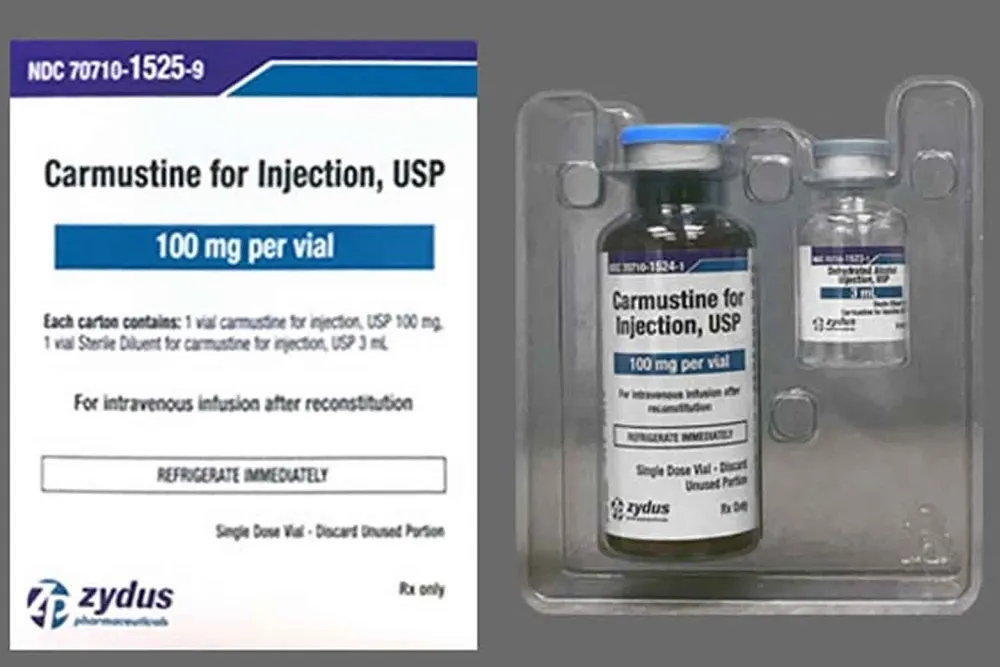
Table of Contents
- Patient Information Leaflet
- 1. What Carmustine Zentiva is and what it is used for
- 2. Important information before using Carmustine Zentiva
- 3. How to use Carmustine Zentiva
- 4. Possible side effects
- 5. How to store Carmustine Zentiva
- 6. Contents of the package and other information
- Information intended exclusively for healthcare professionals:
Patient Information Leaflet
Carmustine Zentiva, 100 mg, powder and solvent for concentrate for solution for infusion
carmustine
Please read all of this leaflet carefully before you are given this medicine because it contains
important information for you.
- Keep this leaflet. You may need to read it again.
- If you have any further questions, ask your doctor, pharmacist, or nurse.
- If you experience any side effects, including any not listed in this leaflet, tell your doctor or nurse. See section 4.
Leaflet Contents
- What Carmustine Zentiva is and what it is used for
- What you need to know before you are given Carmustine Zentiva
- How Carmustine Zentiva is given
- Possible side effects
- How to store Carmustine Zentiva
- Contents of the pack and other information
1. What Carmustine Zentiva is and what it is used for
Carmustine Zentiva, 100 mg, powder and solvent for concentrate for solution for infusion, is a medicine containing carmustine. Carmustine belongs to a group of anticancer medicines called nitrosourea derivatives, which work by slowing the growth of cancer cells.
Carmustine Zentiva is used in palliative treatment (to relieve symptoms of disease and prevent patient suffering) as monotherapy or in combination with other approved anticancer medicines for certain types of cancer, such as:
- Brain tumours – glioma, medulloblastoma, astrocytoma, and brain metastases
- Multiple myeloma (a malignant disease originating in the bone marrow)
- Hodgkin’s disease (lymphoma)
- Non-Hodgkin’s lymphomas (lymphoma)
- Gastrointestinal tract cancers
- Malignant melanoma (skin cancer)
Carmustine is also used as conditioning treatment prior to autologous haematopoietic stem cell transplantation (autologous stem cell transplant) in malignant lymphatic haematological diseases (Hodgkin’s lymphoma and non-Hodgkin’s lymphoma).
2. Important information before using Carmustine Zentiva
When not to use Carmustine Zentiva:
- if the patient is allergic to carmustine or any of the other ingredients of this medicine
(listed in section 6);
- Do not use Carmustine Zentiva in patients who have reduced numbers of platelets (thrombocytes), white blood cells (leukocytes), or red blood cells (erythrocytes) due to chemotherapy or other causes;
- if the patient has severe kidney function impairment;
- in children and adolescents under 18 years of age;
- in breastfeeding women.
Warnings and precautions
Before starting treatment with Carmustine Zentiva, discuss this with your doctor, pharmacist, or
nurse.
The main adverse effect of this medicine is delayed bone marrow suppression; therefore, your doctor will monitor your blood counts weekly for at least 6 weeks after each dose. Treatment courses with Carmustine Zentiva should not be administered more frequently than every 6 weeks. Your doctor will check your blood counts before each dose.
Inform your doctor immediately if any of the following symptoms occur:
- Signs of infection (fever, persistent sore throat)
- Increased tendency to bruise and/or bleed
- Unusual tiredness
- Rapid and/or irregular heartbeat
Prior to starting treatment, liver, lung, and kidney function tests will be performed and repeated regularly during treatment.
Gastrointestinal symptoms such as nausea and vomiting may occur during treatment.
Because treatment with Carmustine Zentiva may lead to lung damage, a chest X-ray and lung function tests will be performed before starting treatment (see also section "Possible side effects").
High-dose carmustine treatment (up to 600 mg/m²) is used exclusively in combination with subsequent stem cell transplantation. High doses may increase the risk and severity of toxic effects on the lungs, kidneys, liver, heart, and gastrointestinal tract, as well as increase the risk of infections and electrolyte imbalances (low blood levels of potassium, magnesium, and phosphorus).
Abdominal pain (neutropenic enterocolitis) may occur as an adverse reaction associated with therapy following administration of chemotherapeutic agents.
Patients with multiple comorbidities and poor clinical status are at higher risk of adverse reactions. This is particularly important in elderly patients.
Your doctor will inform you about the possibility of lung damage and allergic reactions, and their symptoms. If such symptoms occur, contact your doctor immediately (see section 4).
Men and women of reproductive age should use effective contraception during treatment and for at least 6 months after treatment (please read the subsection "Pregnancy, breastfeeding, and fertility").
Carmustine Zentiva with other medicines
Tell your doctor or pharmacist about all medicines you are currently taking, have recently taken, or plan to take, including over-the-counter medicines such as:
- Phenytoin used for epilepsy
- Cimetidine used for stomach problems such as indigestion
- Digoxin used for irregular heart rhythm
- Melphalan – an anticancer medicine
- Dexamethasone used as an anti-inflammatory and immunosuppressant
- Methotrexate, cyclophosphamide, procarbazine, chlorambucil (nitrogen mustard), fluorouracil, vinblastine, actinomycin (daunorubicin), bleomycin, doxorubicin (adriamycin) used in the treatment of various types of cancer.
Pregnancy, breastfeeding, and effects on fertility
If you are pregnant or breastfeeding, think you may be pregnant, or are planning to become pregnant, consult your doctor or pharmacist before using this medicine.
Pregnancy and fertility
Carmustine Zentiva must not be used during pregnancy because it may harm the unborn child. Therefore, this medicine should generally not be given to pregnant women. If used during pregnancy, the patient must be aware of the potential risks to the unborn child. Women of childbearing potential should avoid becoming pregnant during treatment with this medicine. Women capable of becoming pregnant must be advised to use effective contraception to prevent pregnancy during treatment with this medicine and for at least 6 months after completion of treatment.
Men should use appropriate contraceptive measures during treatment with Carmustine Zentiva and for at least 6 months after treatment ends to prevent pregnancy in their partners. Carmustine Zentiva may impair fertility in men. Patients should be advised to seek counseling regarding fertility/family planning before starting treatment with Carmustine Zentiva.
Breastfeeding
Breastfeeding is not allowed during treatment with this medicine and for 7 days after treatment. A risk to newborns/infants cannot be excluded.
Driving and operating machinery
The effect of this medicine on the ability to drive or operate machinery is unknown. You should consult your doctor before driving or operating any tools or machinery, as dizziness is a reported adverse effect of this medicine, which may impair your ability to drive or operate machinery.
Carmustine Zentiva contains propylene glycol
The propylene glycol contained in this medicine may have effects similar to alcohol consumption and may increase the likelihood of adverse reactions.
Do not use this medicine in children under 5 years of age.
Use this medicine only when prescribed by a doctor. Your doctor may perform additional tests during treatment with this medicine.
3. How to use Carmustine Zentiva
Carmustine Zentiva will always be administered by medical personnel experienced in the use of anticancer drugs.
Adults
The dose depends on the patient's health status, body surface area, and response to treatment. The drug is usually administered no more frequently than every 6 weeks. The recommended dose of Carmustine Zentiva used as monotherapy in previously untreated patients is 150 to 200 mg/m² of body surface area (BSA) given intravenously every 6 weeks. The drug may be given as a single dose or divided into daily infusions of 75 to 100 mg/m² BSA on two consecutive days. Dosing also depends on whether Carmustine Zentiva is administered together with other anticancer drugs.
Doses may be adjusted according to the patient's response to treatment.
The recommended dose of carmustine administered intravenously in combination with other chemotherapeutic agents prior to hematopoietic stem cell transplantation is 300–600 mg/m².
To avoid toxic effects on the bone marrow, blood counts will be monitored frequently, and the dose will be adjusted if necessary.
Route of administration
After reconstitution and dilution, Carmustine Zentiva is administered intravenously by infusion (intravenous drip) over one to two hours. The infusion duration should not be less than one hour—otherwise, burning and pain at the injection site may occur. The infusion site will be monitored during administration.
The duration of treatment will be determined by the physician and may vary between individual patients.
Use in children and adolescents (under 18 years of age)
Carmustine Zentiva must not be used in children and adolescents due to the high risk of pulmonary toxicity.
Use in elderly patients
Carmustine Zentiva may be used in elderly patients with caution. Renal function will be monitored.
Administration of a higher than recommended dose of Carmustine Zentiva
Since the drug will be administered by a physician or nurse, incorrect dosing is unlikely. However, inform your doctor or nurse if you have any doubts regarding the amount of drug received.
If you have any further questions about the use of this medicine, consult your doctor, pharmacist, or nurse.
4. Possible side effects
Like all medicines, this medicine can cause side effects, although not everybody will get them.
You must immediately inform your doctor or nurse if any of the following symptoms occur:
wheezing, difficulty breathing, swelling of the eyelids, face or lips, rash or itching
(especially if affecting the whole body), or a feeling of fainting. These may be
symptoms of a severe allergic reaction.
Carmustine Zentiva may cause the following side effects:
Very common (may affect more than 1 in 10 people)
- Delayed myelosuppression (reduction in the number of blood cells produced by the bone marrow);
- Ataxia (lack of voluntary coordination of muscle movements);
- Dizziness;
- Headache;
- Transient eye redness, blurred vision, retinal haemorrhage, iritis and optic neuritis;
- Hypotension (low blood pressure) when treated with high doses;
- Phlebitis associated with pain, swelling, redness and tenderness;
- Respiratory disorders (lung-related disorders) associated with difficulty breathing. This medicine may cause severe (potentially fatal) lung damage. Lung damage may occur several years after treatment. You must inform your doctor immediately if any of the following symptoms occur: shortness of breath, persistent cough, chest pain, persistent weakness/fatigue;
- Severe nausea and vomiting; occurring within 2–4 hours after administration and lasting 4–6 hours;
- In case of contact with skin: skin inflammation;
- Accidental skin contact may cause transient skin or nail discoloration (darkening of the skin area or nails).
Common (may affect up to 1 in 10 people)
- Acute leukaemias (blood cancer), bone marrow dysplasias (abnormal bone marrow development) due to long-term use. Possible symptoms include: bleeding gums, bone pain, fever, frequent infections, frequent or severe nosebleeds, lumps caused by swollen lymph nodes in the neck, forearm, abdomen or groin, pale skin, shortness of breath, weakness, fatigue or general lack of energy;
- Anaemia (reduced number of red blood cells in the blood);
- Encephalopathy (brain disease) when treated with high doses; possible symptoms include: muscle weakness in one area of the body, inability to make decisions or concentrate, involuntary muscle twitching, tremor, difficulty speaking or swallowing, seizures;
- Loss of appetite (anorexia);
- Constipation;
- Diarrhoea;
- Inflammation of the mouth and lips;
- Reversible hepatotoxicity when treated with high doses, delayed up to 60 days after administration. This disorder may lead to increased liver enzyme activity and bilirubin concentration (parameters measured in blood tests);
- Alopecia (hair loss);
- Skin redness;
- Reactions at the injection site.
Uncommon (may affect up to 1 in 1,000 people)
-
Veno-occlusive disease (progressive blockage of veins), occurring with high-dose treatment, in which very small veins in the liver become blocked. Possible symptoms include: fluid accumulation in the abdominal cavity, enlarged spleen, severe bleeding from the oesophagus, yellowing of the skin and whites of the eyes;
-
Breathing difficulties due to a lung disease in which lung tissue becomes scarred
(interstitial pulmonary fibrosis) (with low-dose treatment); symptoms include:
dry cough, shortness of breath, fatigue, weight loss; -
Kidney disorders;
-
Gynaecomastia (enlargement of breasts in males);
-
Gastrointestinal bleeding;
-
Optic neuritis and adjacent retinal inflammation.
Rare (may affect up to 1 in 10,000 people)
- Inflammation of the vein wall with accompanying thrombosis (thrombophlebitis).
Unknown frequency (frequency cannot be estimated from available data)
- Muscle pain;
- Secondary tumours (cancers caused by radiotherapy or chemotherapy);
- Seizures, including status epilepticus;
- Tissue damage due to leakage at the site of administration;
- Infertility;
- Impaired embryonic and/or fetal development in pregnant women;
- Any signs of infection;
- Rapid heartbeat, chest pain;
- Allergic reactions;
- Electrolyte imbalance (low levels of potassium, magnesium, phosphates in blood);
- Abdominal pain (neutropenic enterocolitis);
- Following administration of high cumulative doses and prolonged treatment with Carmustine Zentiva and other nitrosourea derivatives, reduced kidney function, progressive accumulation of certain metabolic products in the blood (azotaemia), and kidney failure have been observed. Kidney damage has also been observed following lower total doses.
Reporting of side effects
If any side effects occur in the patient, including any side effects not listed
in this leaflet, inform your doctor or nurse. Side effects can be reported directly to:
Department of Monitoring of Adverse Drug Reactions, Office for Registration of Medicinal Products, Medical Devices and Biocidal Products
Al. Jerozolimskie 181C
PL-02 222 Warsaw
Tel.: +48 22 49 21 301
Fax: +48 22 49 21 309
Website: https://smz.ezdrowie.gov.pl
Side effects can also be reported to the marketing authorisation holder or its representative in Poland.
Reporting side effects helps provide more information on the safety of the medicine.
5. How to store Carmustine Zentiva
Keep this medicine out of sight and reach of children.
Store and transport refrigerated (2°C–8°C).
Do not use this medicine after the expiry date stated on the label and carton after: EXP. The expiry date refers to the last day of the specified month.
This medicine will be stored by a doctor or other healthcare professional.
After reconstitution according to instructions, Carmustine for injection is stable for 480 hours when refrigerated (2°C–8°C) and for 24 hours at room temperature (25°C ±2°C) in a glass container. Before use, inspect reconstituted vials for crystal formation. If crystals are observed, they may be redissolved by warming the vial to room temperature with gentle mixing.
From a microbiological standpoint, the solution should be used immediately after reconstitution.
Keep the vial in its outer packaging to protect it from light.
The prepared concentrate must then be diluted to 500 ml with either sodium chloride injection solution or 5% dextrose injection solution, in glass or polypropylene containers. The diluted solution remains physically and chemically stable for 8 hours at 25°C±2°C, provided it is protected from light. These solutions are also stable for up to 48 hours when stored refrigerated (2°C–8°C) and for an additional 6 hours at 25°C±2°C, provided they are protected from light.
The solution must be protected from light until the end of administration.
Medicines must not be disposed of via wastewater or household waste. Ask your pharmacist how to dispose of medicines no longer required. This will help protect the environment.
6. Contents of the package and other information
What Carmustine Zentiva contains
The active substance is carmustine.
One vial of powder for preparation of concentrate for infusion solution contains 100 mg of carmustine.
One vial of solvent contains 3 mL of propylene glycol.
After reconstitution using the supplied solvent, one mL of solution contains 33.3 mg of carmustine.
The other ingredients (excipients) are:
- Powder: no excipients.
- Solvent: propylene glycol.
What Carmustine Zentiva looks like and contents of the pack
Carmustine Zentiva is a powder and solvent for preparation of concentrate for infusion solution.
The powder is pale yellow and supplied in a 30 mL vial made of amber type I glass, with a dark grey bromobutyl rubber stopper and a polypropylene cap.
The solvent is a clear, colourless, viscous liquid supplied in a 5 mL vial made of colourless type I glass, with a grey bromobutyl rubber stopper and a polypropylene cap.
One pack contains one vial with 100 mg of powder and one vial with 3 mL of solvent.
Marketing Authorisation Holder and Manufacturer
Marketing Authorisation Holder
Zentiva k.s.
U Kabelovny 130
Dolni Měcholupy
102 37 Prague 10
Czech Republic
Importer:
SGS Pharma Hungary Ltd.
Derkovits Gyula Utca 53,
Budapest XIX, 1193,
Hungary
Tillomed Malta Limited,
Malta Life Sciences Park,
LS2.01.06 Industrial Estate,
San Gwann, SGN 3000, Malta
This medicinal product is authorised in the member states of the European Economic Area under the following names:
Belgium: Carmustine Tillomed 100 mg powder and solvent for solution to be diluted for infusion
Czech Republic: Carmustine Zentiva
Denmark: Carmustin Macure
Finland: Carmustine Macure 100 mg kuiva-aine ja liuotin välikonsentraatiksi infuusionestettä varten, liuos
Greece: Carmustine/Tillomed 100 mg κόνις και διαλύτης για συμπύκνωμα για διάλυμα προς έγχυση
Hungary: Carmustine Tillomed 100 mg por és oldószer oldatos infúzióhoz való koncentrátumhoz
Ireland: Carmustine 100 mg powder and solvent for concentrate for solution for infusion
Italy: BICNU
Lithuania: Carmustine Zentiva 100 mg milteliai ir tirpiklis koncentratui infuziniam tirpalui
Netherlands: Carmustine Glenmark 100 mg, powder and solvent for concentrate for solution for infusion
Norway: Carmustine Macure
Poland: Carmustine Zentiva
Portugal: Carmustine Tillomed 100 mg pó e solvente para concentrado para solução para perfusão
Slovakia: Carmustine Zentiva
Slovenia: Karmustin Tillomed 100 mg prašek in vehikel za raztopino za infundiranje
Sweden: Carmustine Macure
Information intended exclusively for healthcare professionals:
Below is a brief description of the preparation and (or) administration methods,
pharmaceutical incompatibilities, dosing, overdose or required monitoring actions,
as well as laboratory tests, based on the current Summary of Product Characteristics.
The lyophilisate for preparation of concentrate for infusion solution does not contain preservatives and is not intended for use in multidose vials. The medicinal product is intended for single use only. Care must be taken when handling the product to avoid contact with the skin. Reconstitution and further dilution must be performed under aseptic conditions.
By adhering to the recommended storage conditions, degradation of the substances contained in the unopened vial can be avoided until the expiry date stated on the packaging.
Storage of carmustine at temperatures of 27°C or higher may lead to melting of the substance, as carmustine has a low melting point (approximately 30.5°C to 32.0°C). The presence of an oily layer at the bottom of the vial may indicate product degradation. Such a medicinal product must not be used. If there is any doubt whether the product has been maintained under appropriate cooling conditions, all vials in the carton should be inspected immediately. For verification, place the vial under bright light.
Reconstitution and dilution of the powder for preparation of concentrate for infusion solution should be carried out as follows:
Dissolve carmustine (100 mg of powder) in 3 mL of the supplied sterile solvent (propylene glycol for injection) to obtain a clear solution. Use the vial of propylene glycol for reconstitution only after it has reached room temperature, and use a needle with a larger pore size (below 22 gauge) to transfer the solvent from the vial.
Below is a detailed instruction for reconstitution.
Step 1: Remove both vials from the packaging and allow them to reach room temperature. (Minimum 10 minutes).
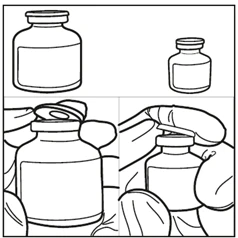
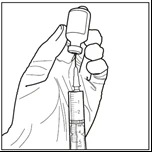
Step 2: Aseptically withdraw 3 mL of sterile solvent from the solvent vial using a sterile syringe. Ensure that the entire volume (3 mL) of sterile solvent has been withdrawn into the syringe.
Step 3: Inject the sterile solvent into the vial containing 100 mg of carmustine and allow the product to soak for at least 10 minutes.
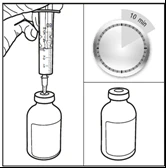
Step 4: Mix (by swirling motion) continuously for at least 60 seconds without interruption to obtain a clear solution.
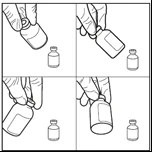
Step 5: Hold the vial inverted for 5 minutes before withdrawing the reconstituted solution.
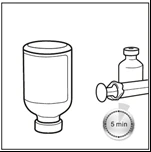
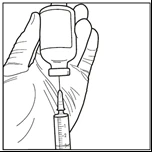
Step 6: Aseptically withdraw the prepared solution only while the vial is in an inverted position, then further dilute to prepare the infusion solution.
Each milliliter of the reconstituted stock solution contains 33.3 mg of carmustine.
The solution prepared according to instructions is yellowish in color.
The stock solution should be diluted immediately with 500 mL of 0.9% sodium chloride injection or 5% dextrose injection. The resulting solution contains a final concentration of 0.2 mg/mL carmustine and must be protected from light.
Before use, inspect reconstituted vials for crystal formation. If crystals are observed, they may be redissolved by warming the vial to room temperature with gentle mixing. Reconstituted vials should be visually inspected for the presence of particulate matter and discoloration prior to administration.
Method of administration:
Carmustine is intended for intravenous administration after reconstitution and further dilution.
The solution obtained after reconstitution and dilution should be administered immediately as an intravenous infusion over 1–2 hours, protecting the solution from light. The duration of the infusion should not be less than 1 hour, as administering the infusion over a shorter period may cause severe pain and burning at the injection site. The infusion site should be monitored during administration. Administration of the product should be completed within 3 hours of reconstitution/dilution.
The infusion should be administered using a polyethylene (PE) infusion set that does not contain PVC.
Appropriate safety precautions for handling and disposal of cytotoxic anticancer drugs must be followed.
Dosing and laboratory tests
Initial doses
The recommended dose of the medicinal product Carmustine Zentiva when used as monotherapy in previously untreated patients is 150 to 200 mg/m² administered intravenously every 6 weeks. The medicinal product may be given as a single dose or divided into daily infusions of 75 to 100 mg/m² on two consecutive days.
When the medicinal product Carmustine Zentiva is used in combination with other myelosuppressive medicinal products or in patients with reduced bone marrow reserve, doses should be adjusted according to the patient's hematological profile, as described below.
Monitoring and subsequent doses
The next course of treatment with the medicinal product Carmustine Zentiva may only be administered once blood parameters have returned to acceptable levels (platelet count above 100,000/mm³, white blood cell count above 4,000/mm³), which usually occurs within six weeks. Blood counts should be monitored frequently, and a subsequent treatment course should not be administered before six weeks have elapsed due to the risk of delayed hematological toxicity.
After the initial dose, subsequent doses should be adjusted according to the patient's hematological response to the previous dose, both in monotherapy and in combination therapy with other myelosuppressive medicinal products. The following is a suggested guideline for dose adjustment:
Table 1
| Lowest value after previous dose | Percentage of previous dose to administer | |
| Leukocytes/mm3 | Platelets/mm3 | |
| >4000 | >100 000 | 100% |
| 3000 – 3999 | 75 000 – 99 999 | 100% |
| 2000 – 2999 | 25 000 – 74 999 | 70% |
| <2000 | <25 000 | 50% |
In cases where the lowest value after administration of the initial dose does not fall within the same row for leukocytes and platelets (e.g., leukocyte count >4000 and platelet count <25,000), the dose corresponding to the lower percentage of the previous dose should be used (e.g., platelet count <25,000 – maximum 50% of the previous dose should be administered).
Conditioning treatment prior to hematopoietic stem cell transplantation
Carmustine is administered intravenously at a dose of 300–600 mg/m² in combination with other chemotherapeutic agents to patients with malignant hematological disorders prior to hematopoietic stem cell transplantation.
Special patient groups
Patients with renal impairment
In patients with impaired renal function, the dose of the medicinal product Carmustine Zentiva should be reduced if a decreased glomerular filtration rate is observed.
Elderly patients
In elderly patients, doses should generally be selected cautiously, particularly starting at the lower end of the dosing range, due to the higher prevalence of impaired hepatic, renal, or cardiac function; concomitant diseases and concomitant medications should also be taken into account.
Since elderly patients have a higher likelihood of impaired renal function, caution should be exercised when selecting the dose, renal function should be monitored, and the dose should be adjusted accordingly.
Children and adolescents
Carmustine is contraindicated in children and adolescents under 18 years of age (see section 4.3) due to the high risk of developing pulmonary toxicity (see section 4.4).
Compatibility/incompatibility with containers
The infusion solution is unstable in containers made of polyvinyl chloride (PVC). Carmustine solution should be administered only from glass or polypropylene containers.
Do not mix the medicinal product with other medicinal products except those mentioned in section 6.6.