Cardioxane
Poland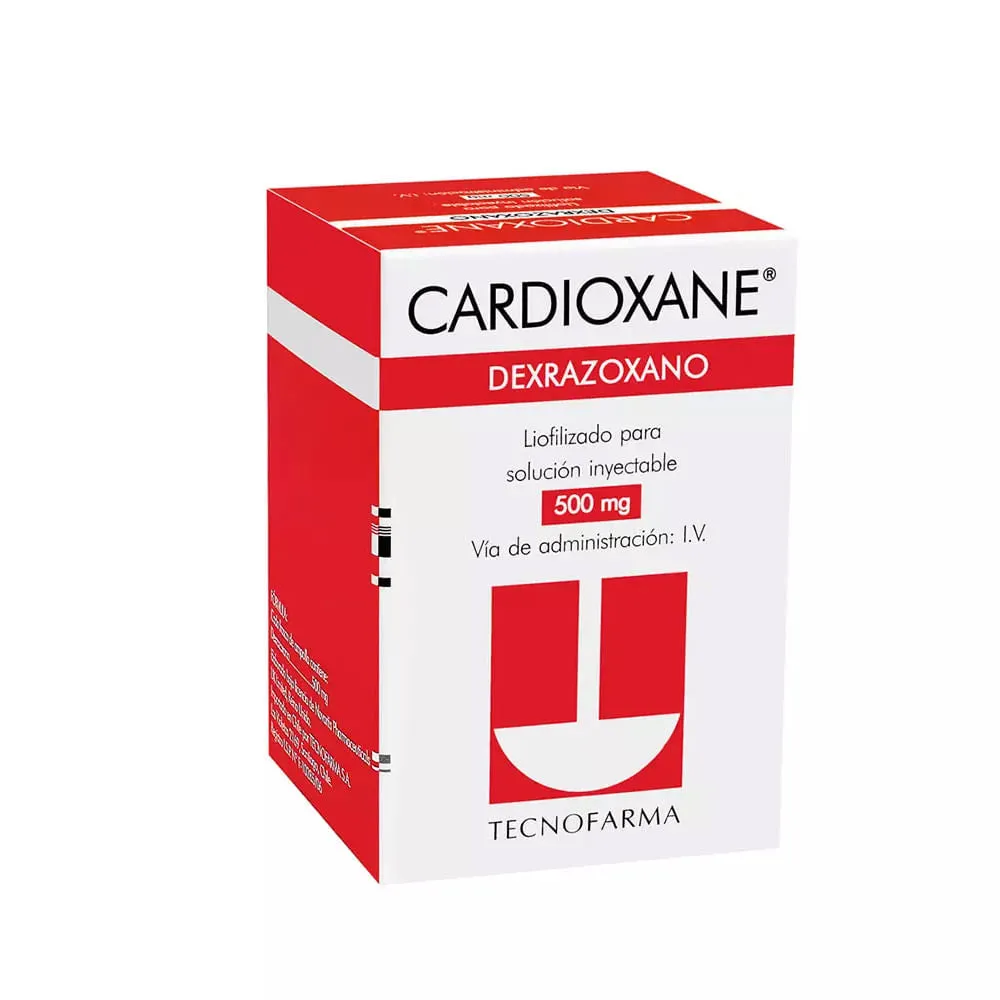
Table of Contents
- Package leaflet: Information for the patient
- 1. What Cardioxane is and what it is used for
- 2. Information before using Cardioxane
- 3. How to use Cardioxane
- 4. Possible adverse reactions
- 5. How to store Cardioxane
- 6. Contents of the package and other information
- INFORMATION INTENDED EXCLUSIVELY FOR PROFESSIONAL MEDICAL PERSONNEL
Package leaflet: Information for the patient
Cardioxane, 500 mg, powder for solution for infusion
Dexrazoxanum
Please read all of this leaflet carefully before using this medicine, because it contains
important information for the patient.
- Keep this leaflet, as you may need to read it again.
- If you have any further questions, please consult your doctor, pharmacist, or nurse.
- If you experience any adverse reactions, including any not listed in this leaflet, inform your doctor, pharmacist, or nurse. See section 4.
Leaflet contents:
- What Cardioxane is and what it is used for
- What you need to know before using Cardioxane
- How to use Cardioxane
- Possible side effects
- How to store Cardioxane
- Contents of the pack and other information
1. What Cardioxane is and what it is used for
Cardioxane contains an active substance called dexrazoxane. This substance belongs to a group of medicines with cardioprotective properties (cardioprotective agents).
Cardioxane is used to prevent heart damage in adult patients with breast cancer who are being treated with anthracyclines (doxorubicin or epirubicin) for this condition.
2. Information before using Cardioxane
When not to use Cardioxane
- if the patient is under 18 years of age and the planned anthracycline dose is considered low – discuss this with the doctor;
- if the patient is allergic (hypersensitive) to dexrazoxane;
- if the patient is breastfeeding (see also "Pregnancy and breastfeeding");
- if the patient has received a yellow fever vaccine.
If any of these situations apply, the patient must not receive this medicine.
Warnings and precautions
Before starting treatment with Cardioxane, discuss with the doctor:
- if the patient has or has had liver or kidney disease;
- if the patient has or has had a heart attack, heart failure, untreated chest pain (angina), or heart valve disease;
- if the patient is pregnant or planning to become pregnant (see also "Pregnancy and breastfeeding");
- if the patient is allergic to dexrazoxane.
Please be aware that:
- the doctor may order tests before or during treatment with Cardioxane to monitor treatment effectiveness and the function of certain organs such as the heart, kidneys, or liver;
- the doctor may order blood tests during treatment with Cardioxane to monitor bone marrow function. If the patient is receiving high doses of anticancer drugs (e.g. chemotherapy or radiotherapy), as well as high doses of Cardioxane, bone marrow function may be impaired. This condition may affect the production of red blood cells, white blood cells, and platelets;
- Cardioxane may increase the risk of developing leukaemia (blood cancer);
- during treatment with Cardioxane, women of childbearing potential and men should use effective contraception. Women and men should continue using contraception for at least six months after completion of treatment with Cardioxane (see also "Pregnancy and breastfeeding");
- combined treatment with Cardioxane and anticancer drugs may increase the risk of blood clots;
- if Cardioxane in powder form or solution comes into contact with the skin, inform the doctor immediately. The patient or doctor should immediately rinse the affected area thoroughly with water.
Children and adolescents
The long-term benefits and risks of using this medicine in children and adolescents are not yet clear. The treating doctor will discuss the benefits and risks associated with using this medicine.
Elderly patients (over 65 years of age)
The doctor may adjust treatment with Cardioxane depending on the patient's health status (in case of heart, liver, or kidney disease).
Cardioxane and other medicines
Tell the doctor or pharmacist about all medicines the patient is currently taking, has recently taken, or plans to take.
The use of other medicines without consulting the treating doctor is not recommended due to the potential for interactions between Cardioxane and other medicines:
- vaccines: Cardioxane must not be used if a yellow fever vaccine is to be administered, and its use is not recommended if a vaccine containing live virus particles is to be given;
- phenytoin: an anticonvulsant treatment;
- cyclosporine or tacrolimus: immunosuppressive drugs used to prevent organ transplant rejection after organ transplantation;
- myelosuppressive drugs: medicines that reduce the production of red blood cells, white blood cells, and platelets.
Pregnancy and breastfeeding
- Patients who are pregnant or planning to become pregnant will not receive Cardioxane unless the doctor decides it is necessary.
- Women of childbearing potential and men should use effective contraception during treatment with Cardioxane and for at least six months after treatment ends.
- Breastfeeding must be discontinued during treatment with Cardioxane. If the patient is pregnant or breastfeeding, suspects she may be pregnant, or plans to have a child, she should consult her doctor or pharmacist before receiving this medicine.
Driving and operating machinery
Fatigue has been reported during treatment with Cardioxane. Therefore, if the patient feels tired or drowsy, he or she should not drive or operate machinery.
3. How to use Cardioxane
How Cardioxane is administered to the patient
This medicine will be prepared and then administered to the patient by a doctor or other healthcare professional. The dose to be given to the patient is determined by the doctor.
- Cardioxane is administered as an intravenous infusion lasting approximately 15 minutes. This infusion is started about 30 minutes before the administration of the anticancer drug (doxorubicin and (or) epirubicin).
Possibility of receiving a higher than recommended dose of Cardioxane
If the patient receives too much Cardioxane, inform the doctor or nurse immediately. Some of the adverse reactions listed in section 4, “Possible side effects”, may then occur.
4. Possible adverse reactions
Like all medicines, this medicine can cause adverse reactions, although not everyone will experience them.
Some adverse reactions may be serious and require immediate medical attention:
Very common (may affect more than 1 in 10 patients):
- Frequent infections, fever, sore throat, unexpected bruising and bleeding (symptoms of blood disorders such as low red blood cell count, low white blood cell count, low platelet count and low granulocyte count. However, after each treatment cycle, blood test results may return to normal)
Common (may affect less than 1 in 10 patients): - Swelling and redness of the vein
Uncommon (may affect less than 1 in 100 patients): - Leukemia (blood cancer)
- Sudden loss of consciousness
- Swelling and pain in one part of the body, which may be caused by a blood clot in a vein
- Swelling of limb tissues
During treatment with Cardioxane, the following adverse reactions have been reported in very few patients:
- Allergic reactions, including itching, rash, facial/throat swelling, wheezing, breathlessness or difficulty breathing, changes in consciousness, hypotension
- Sudden attack of breathlessness, coughing up blood and chest pain (symptoms of a pulmonary embolism)
If any of the above symptoms occur, inform your doctor immediately or go to the emergency department of the nearest hospital.
Other adverse reactions include:
Very common (may affect more than 1 in 10 patients):
- Hair loss
- Vomiting, mouth ulcers, nausea
- Weakness
Common (may affect less than 1 in 10 patients): - Diarrhoea, abdominal pain, constipation, feeling of stomach fullness and loss of appetite
- Impaired heart muscle function, rapid heartbeat
- Pain, redness and swelling of the moist lining of internal passages such as airways or oesophagus
- Nail disorders such as blackening
- Skin reaction such as swelling, redness, pain, burning sensation, itching at the site of drug administration
- Tingling and numbness of hands or feet, dizziness, headache
- Feeling of fatigue, general malaise
- Slight increase in body temperature, chest pain and (or) increased heart rate, shortness of breath or sudden gasping for air
- Abnormal liver function test results
Uncommon (may affect less than 1 in 100 patients): - Increase in blood cell count
- Dizziness, ear infections
- Bleeding, sensitivity or enlargement of gums, thrush
- Thirst
- Redness, excessive warmth and tenderness due to subcutaneous inflammation
Reporting of adverse reactions
If any adverse reactions occur, including any not listed in this leaflet, inform your doctor, pharmacist or nurse.
Adverse reactions can be reported directly to:
Department for Monitoring of Adverse Drug Reactions
Office for Registration of Medicinal Products, Medical Devices and Biocidal Products
Al. Jerozolimskie 181C
PL-02 222 Warsaw
Tel.: + 48 22 49 21 301
Fax: + 48 22 49 21 309
e-mail: [email protected]
Adverse reactions can also be reported to the marketing authorization holder.
Reporting adverse reactions helps to provide more information on the safety of the medicine.
5. How to store Cardioxane
- Keep this medicine out of the sight and reach of children.
- Do not store above 25 °C. Store in the original packaging to protect from light.
- Do not use this medicine after the expiry date stated on the container.
- Medicines should not be disposed of via wastewater or household waste. Ask your pharmacist how to dispose of medicines you no longer use or need. This will help protect the environment.
6. Contents of the package and other information
What Cardioxane contains
- The active substance is dexrazoxane (in the form of dexrazoxane hydrochloride).
- Each vial contains 500 mg of dexrazoxane. Cardioxane does not contain any other ingredients.
What Cardioxane looks like and contents of the pack
Cardioxane is available as a white or almost white lyophilised powder,
in a pack containing one vial.
Marketing Authorisation Holder
Clinigen Healthcare B.V.
Schiphol Boulevard 359
WTC Schiphol Airport, D Tower 11th floor
1118BJ Schiphol
The Netherlands
Manufacturer
Cenexi Laboratoires Thissen S.A.
Rue de la Papyrée 2-4-6
B - 1420 Braine-l’Alleud
Belgium
11/2018
INFORMATION INTENDED EXCLUSIVELY FOR PROFESSIONAL MEDICAL PERSONNEL
Cardioxane, 500 mg, powder for solution for infusion
Dexrazoxanum
DOSAGE AND ADMINISTRATION
Cardioxane is administered as a short-term intravenous infusion (15 minutes) approximately 30 minutes before administration of anthracyclines, at a dose equivalent to 10 times the dose of doxorubicin or 10 times the dose of epirubicin.
The recommended dose of Cardioxane is 500 mg/m² in the commonly used doxorubicin dosing regimen of 50 mg/m², or 600 mg/m² in the commonly used epirubicin dosing regimen of 60 mg/m².
Children and adolescents
The safety and efficacy of Cardioxane have not been established in children aged 0 to 18 years.
Cardioxane is contraindicated in children aged 0 to 18 years who are planned to receive a cumulative dose of doxorubicin less than 300 mg/m² or an equivalent cumulative dose of another anthracycline.
Patients with renal impairment
In cases of moderate to severe renal impairment (creatinine clearance < 40 ml/min), the dose of dexrazoxane should be reduced by 50%.
Patients with hepatic impairment
In these patients, appropriate dose ratios between drugs should be maintained; for example, reduce the dexrazoxane dose proportionally to the reduction in anthracycline dose.
Elderly patients (over 65 years of age)
Dosage adjustment may be considered when treating with Cardioxane depending on the patient's health status (in case of heart, liver, or kidney problems).
In case of overdose, symptomatic treatment should be administered.
INSTRUCTIONS FOR PREPARING CARDIOXANE FOR ADMINISTRATION
General safety handling instructions
The drug should be reconstituted only by trained personnel in a specifically designated area. This procedure should not be performed by pregnant women. Protective gloves and other protective clothing should be worn to protect the skin. Skin reactions following contact with Cardioxane powder or solution have been reported. If Cardioxane powder or solution comes into contact with skin or mucous membranes, the affected area should be immediately and thoroughly rinsed with water.
Preparation of infusion solution for intravenous administration
Reconstitution of Cardioxane
To reconstitute, dissolve the contents of the vial in 25 ml of water for injections. The contents dissolve within a few minutes with gentle shaking. The resulting solution has a pH of approximately 1.6. This solution must be diluted before administration to the patient.
Dilution of Cardioxane
To avoid the risk of thrombotic phlebitis at the injection site, the solution must be diluted prior to infusion using one of the following diluents. Use of solutions with higher pH is recommended. The final volume of fluid is proportional to the number of Cardioxane vials and the volume of diluent used, ranging from 25 ml to 100 ml per vial.
The table below summarizes the final volume and approximate pH of reconstituted and diluted Cardioxane depending on the use of 1 or 4 vials. The following diluents are recommended:
| Fluid | Volume of fluid used to dilute 1 vial of reconstituted Cardioxane medicinal product | Final fluid volume from 1 vial of Cardioxane | Final fluid volume obtained from 4 vials of Cardioxane | Approximate pH |
| Lactated Ringer's solution | 25 ml 100 ml | 50 ml 125 ml | 200 ml 500 ml | 2.2 3.3 |
| 0.16 M sodium lactate solution* | 25 ml 100 ml | 50 ml 125 ml | 200 ml 500 ml | 2.9 4.2 |
* 11.2% sodium lactate solution should be diluted six-fold to obtain a concentration of 0.16 M.
To increase the pH of Cardioxane medicinal product, it is recommended to use a larger volume of diluent (up to
100 ml of diluent per 25 ml of reconstituted Cardioxane). If necessary and depending on the patient's
haemodynamic status, smaller volumes of diluent may be used (at least 25 ml of diluent
per 25 ml of reconstituted Cardioxane).
The reconstituted and diluted Cardioxane medicinal product is intended for single use. After
reconstitution and dilution, the Cardioxane medicinal product should be used immediately or within 4
hours if stored at 2°C to 8°C.
Medicinal products intended for parenteral administration should be inspected visually for the presence of
particulate matter and discoloration prior to administration. Immediately after reconstitution, the Cardioxane solution should be colorless to yellow; however, the color may change over time, which does not necessarily indicate loss of activity if the product has been stored properly. Nevertheless, if after dissolution the solution has a different color than described above, it should be discarded.
Pharmaceutical incompatibilities
Cardioxane should not be mixed with other medicinal products and solvents except those mentioned above.
Storage
Do not use Cardioxane after the expiry date stated on the container.
Before opening
Do not store above 25°C. Store in the original packaging to protect from light.
After reconstitution and dilution
Cardioxane, after dissolution in water for injections and subsequent dilution, remains stable for 4 hours at temperatures below 25°C.
From a microbiological point of view, Cardioxane should be used immediately after reconstitution and dilution.
If Cardioxane is not used immediately, it may be stored without access to light at 2°C to 8°C (in a refrigerator), but no longer than 4 hours – the responsibility for this lies with the person administering the drug.
Disposal of unused product and waste materials
Any unused residues of the medicinal product or waste materials should be disposed of in accordance with
local regulations. Particular care and appropriate precautions should be taken during disposal of materials used for reconstitution and dilution of Cardioxane.