Cardiopirin
Poland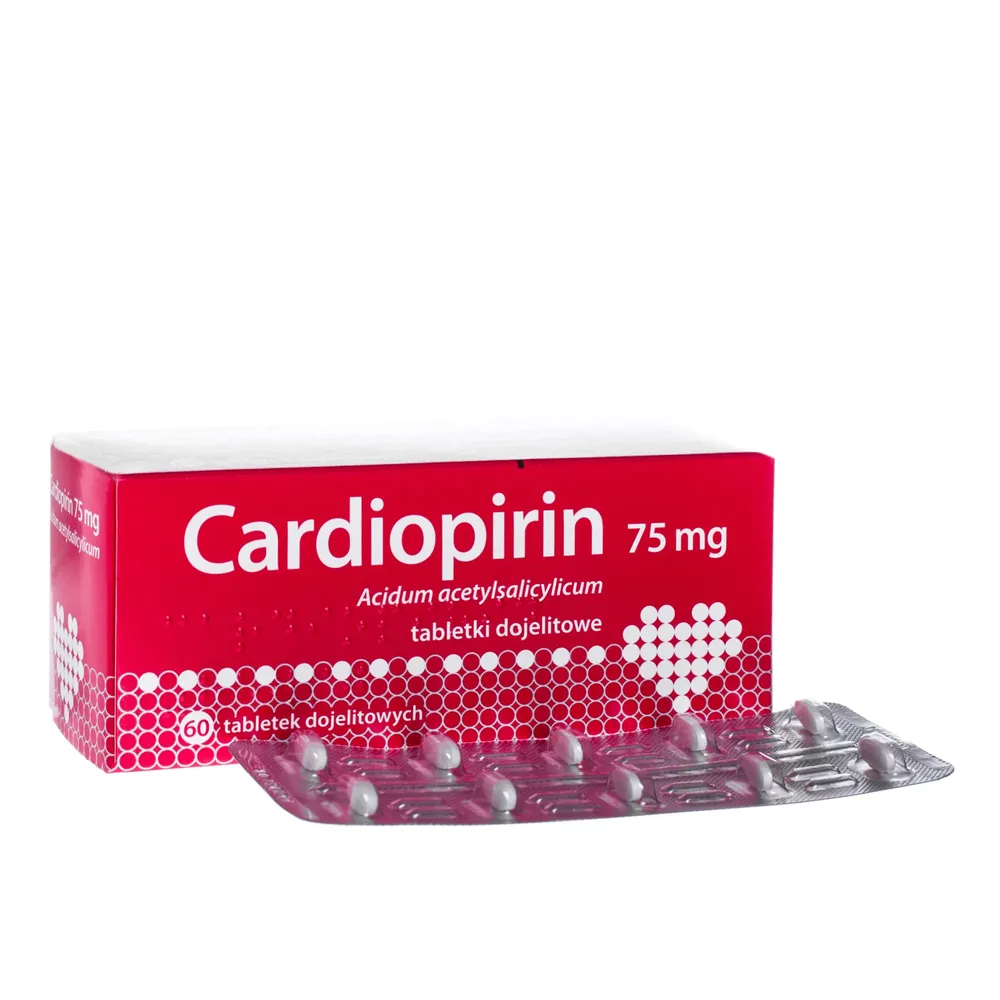
Table of Contents
Package leaflet: Information for the patient
Cardiopirin, 75 mg, enteric-coated tablets
Cardiopirin, 100 mg, enteric-coated tablets
Acetylsalicylic acid
Please read this leaflet carefully before taking the medicine, as it contains
important information for the patient.
This medicine should always be taken exactly as described in this patient leaflet or as prescribed by
your doctor or pharmacist.
- Keep this leaflet, as you may need to read it again.
- If you need advice or further information, please consult your pharmacist.
- If you experience any adverse reactions, including any not listed in this leaflet, inform your doctor or pharmacist. See section 4.
- If there is no improvement or if you feel worse, contact your doctor.
Contents of the leaflet
- What Cardiopirin is and what it is used for
- Important information before taking Cardiopirin
- How to take Cardiopirin
- Possible side effects
- How to store Cardiopirin
- Contents of the pack and other information
1. What Cardiopirin is and what it is used for
Cardiopirin contains acetylsalicylic acid, which in low doses belongs to a group of medicines known as antiplatelet agents. Platelets are small blood cells involved in blood clot formation and thrombosis. When a clot forms in an artery, it blocks blood flow and reduces oxygen supply to tissues. If this occurs in the heart, it may lead to a heart attack or angina; in the brain, it may cause a stroke.
Cardiopirin is used to reduce the risk of blood clot formation and thereby prevent:
- heart attacks;
- strokes;
- cardiovascular disorders in patients with stable or unstable angina (a type of chest pain).
Cardiopirin is also used to prevent blood clots after certain heart procedures aimed at widening or unblocking blood vessels.
This medicine is not recommended for emergency use. It may only be used as preventive treatment.
2. Important information before using Cardiopirin
When not to use Cardiopirin:
- if the patient is allergic to acetylsalicylic acid or to any of the other ingredients of this medicine (listed in section 6);
- if the patient has previously experienced asthma attacks induced by salicylates or substances with similar effects, particularly non-steroidal anti-inflammatory drugs (NSAIDs);
- if the patient currently has or has ever had a stomach or duodenal ulcer, or any other type of bleeding, such as bleeding in the brain;
- if the patient has ever had blood clotting disorders;
- if the patient has severe kidney or liver problems;
- if the patient is in the last three months of pregnancy, doses higher than 100 mg per day must not be used (see section "Pregnancy, breastfeeding and fertility");
- if the patient is taking a medicine called methotrexate (e.g. used in the treatment of cancer or rheumatoid arthritis) in doses exceeding 15 mg per week.
Warnings and precautions
Before starting treatment with Cardiopirin, consult a doctor or pharmacist if:
- the patient is taking other salicylates or other non-steroidal anti-inflammatory drugs (painkillers, antipyretics, anti-rheumatic drugs);
- the patient has severe heart muscle weakness that is not adequately controlled with medication (heart failure);
- the patient has kidney, liver or heart problems;
- the patient has or has ever had diseases of the stomach or small intestine, or inflammation of the stomach lining;
- the patient has high blood pressure;
- the patient has bronchial asthma, allergy to other medicines, especially other salicylates or non-steroidal anti-inflammatory drugs (NSAIDs), hay fever, nasal polyps or other chronic respiratory diseases; acetylsalicylic acid may trigger an asthma attack;
- the patient has ever had gout;
- the patient has heavy menstrual bleeding.
The patient must immediately consult a doctor if symptoms worsen or if serious or unexpected side effects occur, such as unusual bleeding, severe skin reactions or other signs of severe allergy (see section "Possible side effects").
Inform the doctor about any planned procedures (even minor ones, such as tooth extraction), or if the patient is taking medicines that may increase the risk of bleeding (e.g. anticoagulants, thrombolytics), because acetylsalicylic acid "thins" the blood and may increase the risk of bleeding or prolong bleeding time.
Children and adolescents
Acetylsalicylic acid may cause Reye's syndrome in children. Reye's syndrome is a very rare disease affecting the brain and liver, which may be life-threatening. Therefore, Cardiopirin must not be given to children under 16 years of age, unless otherwise advised by a doctor.
Salicylate-containing medicines must not be taken for long periods or in high doses without medical advice.
The patient should ensure adequate hydration (symptoms include thirst and dryness of the mouth), as concomitant use of acetylsalicylic acid may worsen kidney function.
This medicine is not suitable for use as a painkiller or antipyretic.
If any of the above warnings apply to the patient or if the patient has any doubts, medical advice should be sought from a doctor or pharmacist.
Cardiopirin and other medicines
Tell your doctor or pharmacist about all medicines currently taken or recently taken, as well as any medicines the patient plans to take.
The effect of treatment may be influenced by concomitant use of acetylsalicylic acid with other medicines:
- those that "thin" the blood or prevent blood clots (e.g. warfarin, heparin, clopidogrel);
- those used to prevent rejection of transplanted organs (cyclosporine, tacrolimus);
- those used to treat high blood pressure (e.g. diuretics and ACE inhibitors);
- those regulating heart function (digoxin);
- those used in the treatment of bipolar affective disorder (lithium);
- painkillers and anti-inflammatory drugs (e.g. non-steroidal anti-inflammatory drugs such as ibuprofen, or steroids or metamizole). Metamizole (a substance with analgesic and antipyretic effects) may reduce the effect of acetylsalicylic acid on platelet aggregation (clumping of blood cells and clot formation) when these medicines are used together. Therefore, caution is required when using metamizole in patients receiving low-dose acetylsalicylic acid for cardiovascular protection.
- those used to treat gout (e.g. probenecid, sulfinpyrazone);
- those used to treat epilepsy (valproate, phenytoin);
- those used to treat glaucoma (acetazolamide);
- those used to treat cancer or rheumatoid arthritis (methotrexate in doses < 15 mg per week);
- those used to treat diabetes (e.g. glibenclamide);
- those used to treat depression (selective serotonin reuptake inhibitors (SSRIs), such as sertraline or paroxetine);
- those used in hormone replacement therapy when the adrenal glands or pituitary gland have been destroyed or removed, or those used to treat inflammatory conditions, including rheumatic diseases and inflammatory bowel disease (corticosteroids).
Cardiopirin with food, drink and alcohol
Enteric-coated tablets may be taken with or without food. Alcohol consumption may increase the risk of gastrointestinal bleeding and prolong bleeding time.
Pregnancy, breastfeeding and fertility
If the patient is pregnant or breastfeeding, suspects she may be pregnant, or is planning to have a baby, she should consult a doctor or pharmacist before using this medicine.
If the patient continues or starts treatment with Cardiopirin during pregnancy on medical advice, she should take Cardiopirin exactly as prescribed by the doctor and must not exceed the recommended dose.
Third trimester of pregnancy
Do not take Cardiopirin in doses exceeding 100 mg per day during the last three months of pregnancy, as it may harm the unborn child or cause complications during delivery. The medicine may cause kidney and heart function disorders in the unborn child. It may also affect the tendency of both mother and child to bleed and may delay or prolong labour.
If the patient takes Cardiopirin in low doses (up to 100 mg per day inclusive), she should be under strict obstetric supervision as advised by the doctor.
First and second trimesters of pregnancy
Do not use Cardiopirin during the first six months of pregnancy unless absolutely necessary and prescribed by a doctor. If treatment is required during this period or if the patient is trying to become pregnant, the lowest possible dose should be used for the shortest possible duration. If Cardiopirin is taken for longer than a few days after the 20th week of pregnancy, it may cause kidney function disorders in the unborn child, which may lead to reduced amniotic fluid volume surrounding the fetus (oligohydramnios), or narrowing of the blood vessel (ductus arteriosus) in the child's heart. If prolonged treatment is necessary, the doctor may recommend additional monitoring.
Breastfeeding
Women who are breastfeeding should not take acetylsalicylic acid unless advised by a doctor.
Driving and operating machinery
Cardiopirin is not expected to affect the ability to drive or operate machinery.
Cardiopirin contains sodium
This medicine contains less than 1 mmol (23 mg) of sodium per tablet, meaning it is considered "sodium-free".
3. How to take Cardiopirin
This medicine should always be taken exactly as described in this patient leaflet or as directed by
your doctor or pharmacist. If in doubt, consult your doctor or pharmacist.
Adults
Prevention of myocardial infarction:
The recommended dose is 75–150 mg once daily.
Prevention of strokes:
The recommended dose is 75–300 mg once daily.
Prevention of cardiovascular diseases in patients with stable or unstable angina pectoris (chest pain):
The recommended dose is 75–150 mg once daily.
Prevention of blood clots after certain heart surgeries:
The recommended dose is 75–150 mg once daily.
Elderly patients
As for adult patients. In general, acetylsalicylic acid should be used with caution in elderly patients,
who are more susceptible to adverse effects. Treatment should be regularly monitored.
Use in children and adolescents
Acetylsalicylic acid must not be used in children and adolescents under 16 years of age, unless
prescribed by a doctor (see section "Warnings and precautions").
Method of administration
For oral use.
Tablets should be swallowed whole with a sufficient amount of liquid (half a glass of water). The tablets
have an enteric coating designed to prevent irritation to the intestines; therefore, they must not be crushed,
broken, or chewed.
Taking more Cardiopirin than recommended
If you (or anyone else) accidentally take too many tablets, contact your doctor immediately or go to the
nearest hospital emergency department without delay. Show the doctor the unused medicine or empty
packaging.
Symptoms of overdose may include ringing in the ears, hearing disturbances, headache, dizziness,
disorientation, nausea, vomiting, and abdominal pain. Severe overdose may be characterized by rapid
breathing (hyperventilation), fever, excessive sweating, restlessness, decreased blood potassium levels
(leading to weakness, fatigue, muscle cramps, and/or irregular heartbeat), gastrointestinal bleeding
(resulting in vomiting blood and/or black, tarry stools), dizziness, drowsiness with difficulty concentrating,
confusion with agitation, reduced alertness and motivation, shallow breathing, kidney dysfunction,
shortness of breath and difficulty breathing with expectoration of frothy sputum, seizures, hallucinations,
low blood glucose levels, coma, and shock.
If you forget to take Cardiopirin
If you forget to take a dose, wait until it is time for your next dose and then continue as before.
Do not take a double dose to make up for a missed dose of Cardiopirin.
If you have any further questions about the use of this medicine, consult your doctor or pharmacist.
4. Possible adverse reactions
Like all medicines, this medicine may cause adverse reactions, although not everyone experiences them.
If the patient notices any of the following serious adverse reactions, they should stop taking
Cardiopirin immediately and contact their doctor without delay:
- sudden wheezing, swelling of the lips, face or body, rash, fainting or difficulty swallowing (severe allergic reactions) (rare);
- skin redness with blisters or peeling, which may be associated with high fever and joint pain. These may be symptoms of erythema multiforme, Stevens-Johnson syndrome or Lyell's syndrome (rare);
- a characteristic skin allergic reaction known as fixed drug eruption, which usually recurs in the same location(s) upon re-exposure to the drug and may appear as round or oval areas of redness and swelling of the skin, blisters (urticaria), itching (frequency not known);
- unusual bleeding, such as coughing up blood, vomiting blood or blood in the urine, or tarry stools (frequency not known);
- mouth ulcers, fever and infections (agranulocyt游戏副本) (rare).
The possible adverse reactions listed below are classified according to their frequency of occurrence as follows:
Common adverse reactions (occur in 1 to 10 out of 100 patients):
- indigestion;
- increased tendency to bleed.
Uncommon adverse reactions (occur in 1 to 10 out of 1,000 patients):
- urticaria;
- rhinitis;
- breathing difficulties.
Rare adverse reactions (occur in 1 to 10 out of 10,000 patients):
- severe bleeding from the stomach or intestines, bleeding within the brain, changes in blood cell counts;
- nausea and vomiting;
- constriction of the lower airways, bronchial asthma attack;
- vasculitis;
- bruising with purplish spots (bleeding into the skin);
- severe allergic reactions, such as erythema multiforme rash and its life-threatening forms: Stevens-Johnson syndrome and Lyell's syndrome;
- hypersensitivity reactions, such as swelling e.g. of the lips, face or body, or shock;
- irregular, heavy or prolonged menstrual bleeding.
Frequency not known adverse reactions (frequency cannot be determined from available data):
- ringing in the ears (tinnitus);
- headache;
- dizziness;
- gastric or duodenal ulceration and perforation;
- prolonged bleeding time;
- kidney function impairment;
- liver function impairment;
- elevated blood uric acid levels;
- itching, rash;
- increased liver enzyme levels.
Reporting of adverse reactions
If any adverse reactions occur, including any not listed in this leaflet, inform a doctor or pharmacist. Adverse reactions can be reported directly to the Department of Monitoring of Adverse Drug Reactions of the Office for Registration of Medicinal Products, Medical Devices and Biocidal Products:
Al. Jerozolimskie 181C, 02-222 Warsaw, tel.: +48 22 49-21-301, fax: +48 22 49-21-309,
website: https://smz.ezdrowie.gov.pl
Adverse reactions can also be reported to the marketing authorization holder.
Reporting adverse reactions helps provide more information on the safety of this medicine.
5. How to store Cardiopirin
Keep this medicine out of sight and reach of children.
Store below 25°C.
Keep in the original packaging to protect from moisture.
Do not use this medicine after the expiry date stated on the cardboard box, container, or blister pack following: EXP. The expiry date refers to the last day of the stated month.
Medicines should not be disposed of via wastewater or household waste. Ask your pharmacist how to dispose of medicines no longer in use. This will help protect the environment.
6. Package contents and other information
What Cardiopirin contains
- The active substance is acetylsalicylic acid. Each enteric-coated tablet contains 75 mg or 100 mg of acetylsalicylic acid.
- Other ingredients are: tablet core: microcrystalline cellulose, maize starch, colloidal anhydrous silica, stearic acid; tablet coating: methacrylic acid-ethyl acrylate copolymer (1:1) dispersion 30%, polysorbate 80, sodium lauryl sulfate, triethyl citrate, talc.
What Cardiopirin looks like and contents of the pack
Cardiopirin 75 mg, enteric-coated tablets: oval, white, biconvex tablets measuring 9.2 x 5.2 mm.
Cardiopirin 100 mg, enteric-coated tablets: round, white, biconvex tablets with a diameter of 7.2 mm.
Pack sizes:
10, 20, 28, 30, 50, 56, 60, 90, 100 enteric-coated tablets.
Not all pack sizes may be marketed.
Marketing Authorisation Holder
Bausch Health Ireland Limited
3013 Lake Drive
Citywest Business Campus
Dublin 24, D24PPT3
Ireland
Tel.: +48 17 865 51 00
Manufacturer
ICN Polfa Rzeszów S.A.
Przemysłowa 2 Street
35-105 Rzeszów
Poland
This medicinal product is authorised in the European Economic Area countries under the following names:
Sweden Esteprin
Bulgaria Cardiopirin 100 mg stomashno-ustoychiva tableka
Czech Republic Vasopirin 100 mg
Poland Cardiopirin
Slovakia Vasopirin 100 mg
Slovenia Provapirin 100 mg gastrorezistentne tablete