Carboplatin eugia
Poland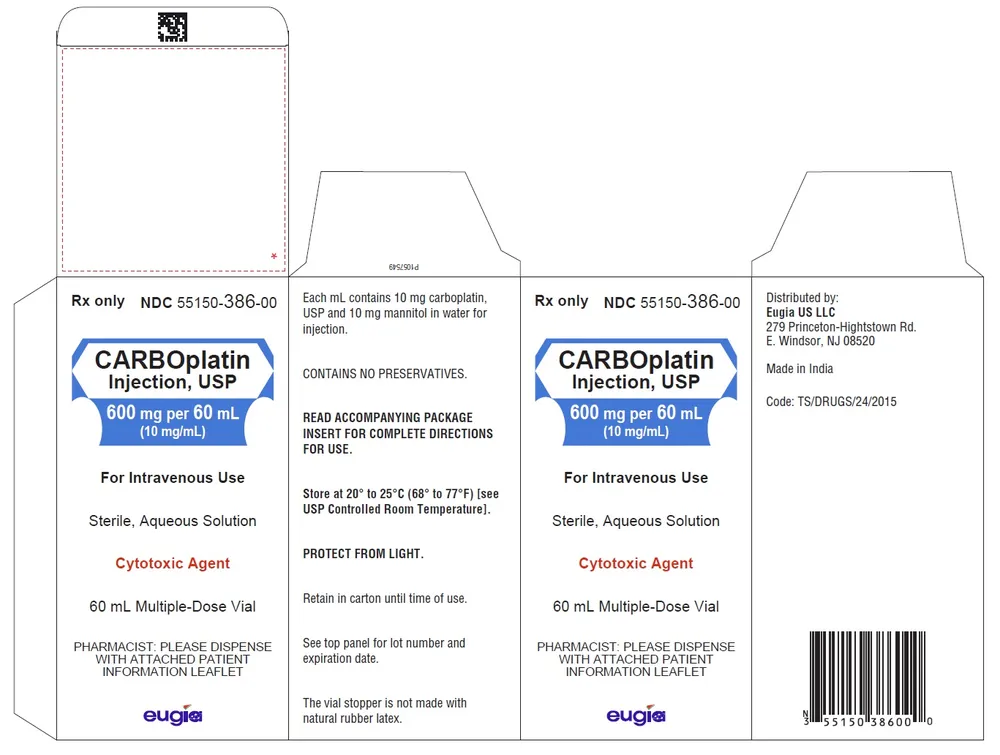
Table of Contents
- Package leaflet: Information for the user
- 1. What Carboplatin Eugia is and what it is used for
- 2. Important information before using Carboplatin Eugia
- 3. How to use Carboplatin Eugia
- 4. Possible side effects
- 6. Contents of the package and other information
- Information intended exclusively for medical professionals:
Package leaflet: Information for the user
Carboplatin Eugia, 10 mg/mL, concentrate for solution for infusion
Carboplatinum
Please read all of this leaflet carefully before using this medicine because it contains important information for you.
Keep this leaflet. You may need to read it again.
If you have any further questions, ask your doctor, pharmacist or nurse.
This medicine has been prescribed for you personally. Do not pass it on to others. It may harm them, even if their symptoms are the same as yours.
If you experience any side effects, including any not listed in this leaflet, tell your doctor, pharmacist or nurse.
See section 4.
Contents of the leaflet
- What Carboplatin Eugia is and what it is used for
- What you need to know before you use Carboplatin Eugia
- How to use Carboplatin Eugia
- Possible side effects
- How to store Carboplatin Eugia
- Contents of the pack and other information
1. What Carboplatin Eugia is and what it is used for
What Carboplatin Eugia is
This medicine contains the active substance carboplatin, which belongs to a group of medicines known as platinum coordination complexes used in the treatment of cancer.
What Carboplatin Eugia is used for
This medicine is used to treat advanced ovarian cancer and small cell lung cancer.
2. Important information before using Carboplatin Eugia
When not to use Carboplatin Eugia
- if the patient is allergic to carboplatin or to any of the other ingredients of this medicine (listed in section 6)
- if the patient has severe kidney function impairment (creatinine clearance equal to or less than 30 mL/min)
- if the patient has lower than normal blood cell counts (severe myelosuppression)
- if the patient has a bleeding tumour
- concurrently with the yellow fever vaccine.
If any of the above apply to the patient and this has not already been discussed with the doctor or
nurse, it is recommended to inform the doctor or nurse as soon as possible before receiving the
infusion.
Carboplatin Eugia is usually administered to patients in a hospital setting. Under normal circumstances, the patient
does not come into direct contact with the medicine. The doctor or nurse will administer the medicine and will closely and frequently
monitor the patient's condition during and after administration. Usually, a blood test will be performed before each dose.
Warnings and precautions:
Discuss the following with your doctor or nurse before starting treatment with Carboplatin Eugia.
- If the patient is pregnant or suspects she may be pregnant.
- If the patient is breastfeeding.
- If there is a possibility that the patient will consume alcohol during treatment.
- If the patient experiences headache, altered consciousness, seizures, or vision disturbances ranging from blurred vision to loss of vision, inform the doctor.
- If the patient experiences extreme fatigue, shortness of breath due to reduced red blood cells (symptoms of haemolytic anaemia), alone or in combination with low platelet count, unusual bruising (thrombocytopenia), and kidney disease with reduced urine output or anuria (symptoms of haemolytic-uraemic syndrome), inform the doctor.
- If the patient develops fever (temperature greater than or equal to 38°C) or chills, which may be signs of infection, inform the doctor immediately. The patient may develop blood infection (septicaemia).
In patients with impaired kidney function, the effect of Carboplatin Eugia on the blood (haematopoietic system) is increased and prolonged compared to patients with normal kidney function.
In case of impaired kidney function, the doctor will monitor the patient's health more frequently.
During treatment with Carboplatin Eugia, the patient may be given additional medicines to help reduce the risk of a potentially life-threatening complication known as tumour lysis syndrome, caused by biochemical disturbances in the blood due to the breakdown of dying tumour cells releasing their contents into the bloodstream.
If any of the above apply to the patient and this has not already been discussed with the doctor or
nurse, it is recommended to inform the doctor or nurse as soon as possible before receiving this medicine.
Before administration, this medicine may be diluted with another solution. Discuss this with the doctor
and ensure it is appropriate for the patient.
Carboplatin Eugia and other medicines
Tell your doctor, pharmacist or nurse about all medicines the patient is currently taking, has recently taken, or plans to take.
Inform the doctor if the patient is taking any of the following medicines, as they may interact with Carboplatin Eugia:
- other medicines known to have kidney-toxic effects (e.g. aminoglycoside antibiotics)
- other medicines known to cause hearing or balance disturbances (e.g. aminoglycoside antibiotics, furosemide used in the treatment of heart failure and oedema)
- other medicines that suppress the immune system (e.g. cyclosporine, tacrolimus, sirolimus, and other anticancer medicines)
- yellow fever vaccine and other vaccines containing live microorganisms
- anticoagulant medicines, e.g. warfarin
- phenytoin and fosphenytoin (medicines used to treat various types of seizures and epileptic fits)
- chelating agents (substances capable of binding Carboplatin Eugia and thereby reducing its effectiveness)
- loop diuretics (medicines used to treat high blood pressure and oedema).
Carboplatin Eugia with food, drink or alcohol
The interaction between Carboplatin Eugia and alcohol is not known. However, consult the doctor, as Carboplatin Eugia may affect the liver's ability to process alcohol.
Pregnancy, breastfeeding and fertility
If the patient is pregnant or breastfeeding, suspects she may be pregnant, or is planning to have a child, she should consult the doctor before using this medicine.
If any of the above situations apply to the patient and have not been previously discussed with the doctor or nurse, it is recommended to inform the doctor or nurse as soon as possible before receiving this medicine.
Pregnancy
Carboplatin Eugia must not be used during pregnancy unless clearly indicated by the doctor.
Animal studies have shown a possible risk of abnormalities in the developing foetus. If the patient is treated with Carboplatin Eugia during pregnancy, she should discuss with the doctor the potential risks of the medicine on the unborn child. Women of childbearing potential must use an effective method of contraception both before and during treatment with Carboplatin Eugia. Because Carboplatin Eugia may cause genetic damage, genetic counselling is recommended if pregnancy occurs during treatment with Carboplatin Eugia. Genetic counselling is also recommended for patients who wish to have children after completing treatment with Carboplatin Eugia.
Breastfeeding
It is not known whether Carboplatin Eugia passes into human milk. Therefore, breastfeeding must be discontinued during treatment with Carboplatin Eugia.
Fertility
Carboplatin Eugia may cause genetic damage. Women are advised to avoid pregnancy by using an effective method of contraception before and during treatment. Women who are pregnant or become pregnant during treatment should be offered genetic counselling.
Men treated with Carboplatin Eugia are advised not to plan fathering a child during treatment and for 6 months after its completion. They should also seek advice before treatment regarding sperm storage due to the risk of irreversible infertility.
Consult the doctor or nurse before using any medicine.
Driving and using machines
Carboplatin Eugia has no influence on the ability to drive or operate machinery.
However, particular caution should be exercised after the first administration of Carboplatin Eugia, especially if the patient experiences dizziness or does not feel well enough.
3. How to use Carboplatin Eugia
This medicine will always be administered by a nurse or doctor. The medicine is usually given as an intravenous infusion, which typically takes between 15 and 60 minutes. If further information is needed, please consult the doctor or nurse who will be administering or has administered the infusion. The dose of the medicine will depend on the patient's height and body weight, hematopoietic function, and kidney function. The doctor will determine the most appropriate dose for the patient. Generally, the medicine must be diluted before use.
Adults
The usual dose is 400 mg/m² of body surface area (calculated based on height and body weight).
Elderly patients
The usual adult doses may be used, although the doctor may decide to use a different dose.
Impaired kidney function
The dose may vary depending on the patient's kidney function. If the patient has impaired kidney function, the doctor may reduce the dose and perform blood tests more frequently, as well as monitor kidney function. This medicine will be administered by a doctor experienced in the treatment of cancer.
Children and adolescents
There are insufficient data on the use of Carboplatin Eugia in children to recommend a specific dose.
Nausea may occur during treatment with Carboplatin Eugia. Before starting treatment with this medicine, the doctor may administer another medicine to reduce these symptoms.
A four-week interval is usually observed between consecutive doses of Carboplatin Eugia. The doctor will perform weekly blood tests after administration of this medicine. This allows the doctor to decide whether the next dose should be adjusted for the patient.
Overdose of Carboplatin Eugia
It is unlikely that a patient would receive an excessive dose of Carboplatin Eugia. Nevertheless, in such a case, impaired kidney and liver function, vision and hearing disturbances, and low white blood cell count may occur. If there is any suspicion of overdose or if there are any questions regarding the administered dose, consult the doctor administering the medicine.
Missed dose of Carboplatin Eugia
It is highly unlikely that a patient would miss a dose, as the doctor will have instructions on when to administer the medicine. However, if a patient suspects that a dose has been missed, they should inform their doctor or nurse.
If there are any further doubts regarding the use of this medicine, consult the doctor or nurse.
4. Possible side effects
Like all medicines, this medicine can cause side effects, although not everybody will experience them.
You should contact your doctor immediately if you experience any of the following symptoms:
- Unusual bruising, bleeding, or signs of infection such as sore throat and high temperature.
- Persistent itching of the skin (with raised lumps) or swelling of the face, lips, tongue, and (or) throat, which may cause difficulty in swallowing or breathing (angioedema), and chest pain, which may be symptoms of a potentially serious allergic reaction called
Kounis syndrome, or a feeling of fainting.
- Inflammation of the mouth or mucositis (e.g. sore lips or mouth ulcers).
Very common: may affect more than 1 in 10 people
- Bone marrow suppression characterized by a significant decrease in white blood cells, increasing the risk of infections (leukopenia, neutropenia)
- Decreased platelet count, increasing the risk of bruising and bleeding (thrombocytopenia)
- Anaemia (a condition in which there is a reduction in red blood cells leading to fatigue)
- Impaired kidney function (increased blood creatinine and urea levels). Your doctor will monitor your condition.
- Mild hearing loss (loss of hearing at high frequencies)
- Abnormal liver enzyme activity and abnormal liver function test results. Your doctor will monitor your condition.
- Increased blood uric acid levels, which may lead to gout (hyperuricemia)
- Nausea or vomiting
- Abdominal pain and cramps
- Unusual feeling of tiredness or weakness
- Decreased blood salt levels (sodium, potassium, calcium, and magnesium). Your doctor will monitor your condition.
Common: may affect up to 1 in 10 people
- Unusual bruising or bleeding (haemorrhagic complications)
- Diarrhoea, constipation, sore lips or mouth ulcers (mucositis)
- Allergic reactions including rash, urticaria, skin redness, itching, high temperature
- Ringing in the ears (tinnitus), hearing disturbances and hearing loss
- Tingling sensation (peripheral neuropathy), weakness, numbness or tingling
- Hair loss
- Malaise
- Flu-like symptoms
- Loss of or lack of strength
- Lung disorders, lung scarring and thickening causing breathing difficulties, sometimes fatal (interstitial lung disease), difficulty breathing
- Reduced bone and joint reflexes
- Infections
- Sensory disturbances
- Taste disturbances
- Vision disorders, including transient loss of vision
- Cardiovascular disorders
- Skin disorders
- Itchy skin rash (urticaria)
- Itching sensation (pruritus)
- Red rash (erythematous rash)
- Musculoskeletal disorders
- Urinary and genital disorders (urogenital disorders)
- Increased blood levels of creatinine, bilirubin and uric acid. Your doctor will monitor your condition.
Uncommon: may affect up to 1 in 100 people
- Tumours caused by chemotherapy or radiotherapy (secondary tumours)
- Fever and chills without visible signs of infection
- Redness, swelling, pain or necrosis of the skin around the injection site (injection site reaction).
Rare: may affect up to 1 in 1,000 people
- Malaise with high temperature due to low white blood cell count (febrile neutropenia)
- Loss of appetite (anorexia)
- Severe liver function disorders, liver cell damage or necrosis. Your doctor will monitor your condition.
- Optic neuritis, which may cause complete or partial loss of vision. Your doctor will monitor your condition.
- Severe allergic reactions (anaphylaxis/anaphylactic reactions)
- Symptoms of severe allergic reactions include sudden wheezing or chest tightness, eyelid, facial or lip swelling, facial redness, hypotension, tachycardia, urticaria, shortness of breath, dizziness and anaphylactic shock
- Low blood sodium levels (hyponatremia)
Very rare: may affect up to 1 in 10,000 people
- Heart failure
- Bleeding in the brain, which may lead to stroke or loss of consciousness
- Sudden arterial blockage (embolism), high blood pressure, low blood pressure.
Side effects of unknown frequency (frequency cannot be estimated from the available data):
- Haemolytic uraemic syndrome (a condition characterized by acute kidney failure, low urine output or absence of urine excretion, reduced red blood cells with extreme fatigue, and low platelet count)
- Unusual bruising or bleeding and signs of infection
- Dehydration
- Sore lips or mouth ulcers (stomatitis)
- Muscle cramps, muscle weakness, confusion, vision loss or visual disturbances, irregular heartbeat, kidney failure or abnormal blood test results (symptoms of tumour lysis syndrome, which may be caused by rapid breakdown of tumour cells) (see section 2)
- A group of symptoms such as headache, altered consciousness, seizures and visual disturbances ranging from blurred vision to vision loss (symptoms of reversible posterior leukoencephalopathy syndrome, a rare neurological disorder)
- Pancreatitis
- Lung infection.
Reporting of side effects
If any side effects occur, including any not listed in this leaflet, tell your doctor, pharmacist, or nurse. Side effects can be reported directly to the Department of Monitoring of Adverse Drug Reactions, Office for Registration of Medicinal Products, Medical Devices and Biocidal Products, Al. Jerozolimskie 181C, 02-222 Warsaw, phone: +48 22 49 21 301, fax: +48 22 49 21 309, website: https://smz.ezdrowie.gov.pl
Side effects can also be reported to the marketing authorization holder.
Reporting side effects helps provide more information on the safety of this medicine.
5. How to store Carboplatin Eugia
Keep this medicine out of the sight and reach of children.
Do not use this medicine after the expiry date stated on the carton and vials after: EXP.
The expiry date refers to the last day of the stated month.
Store below 30°C.
Keep vials in the outer packaging to protect from light.
Avoid contact of carboplatin with eyes or skin. In case of accidental spillage, inform the doctor or nurse immediately.
After completion of the infusion, Carboplatin Eugia will be safely disposed of by the doctor or nurse.
Medicines must not be disposed of via the sewage system or household waste. Ask your pharmacist how to dispose of medicines no longer required. This will help protect the environment.
6. Contents of the package and other information
What Carbolpatin Eugia contains
The active substance is carboplatin. 1 mL of concentrate for solution for infusion contains
10 mg of carboplatin. The medicine is also available in doses of 50 mg, 150 mg, 450 mg and 600 mg
of carboplatin.
The other ingredients are mannitol and water for injections.
What Carbolpatin Eugia looks like and contents of the pack
Concentrate for solution for infusion.
A clear, colourless to pale yellow solution, free from visible solid particles.
Each vial contains 5 mL, 15 mL, 45 mL or 60 mL of concentrate for solution for infusion, respectively.
Pack sizes: 1 vial and 10 vials in a cardboard box.
Not all pack sizes may be marketed.
Marketing Authorisation Holder:
Eugia Pharma (Malta) Ltd.
Vault 14, level 2
Valletta Waterfront
Floriana, FRN 1914
Malta
e-mail: [email protected]
Manufacturer/Importer:
APL Swift Services (Malta) Ltd.
HF26, Hal Far Industrial Estate, Hal Far
Birzebbugia, BBG 3000
Malta
Generis Farmacêutica, S.A.
Rua João de Deus 19, Venda Nova
2700-487 Amadora
Portugal
Arrow Génériques
26 Avenue Tony Garnier
69007 Lyon
France
This medicinal product is authorised in the following European Economic Area countries under the following names:
Belgium: Carboplatin Eugia 10 mg/ml concentrate for solution for infusion / solution à diluer pour perfusion / Konzentrat zur Herstellung einer Infusionslösung
France: Carboplatine Arrow Lab 10 mg/ml, solution à diluer pour perfusion
Germany: Carboplatin PUREN 10 mg/ml Konzentrat zur Herstellung einer Infusionslösung
Italy: Carbolpatino Aurobindo Italia
Poland: Carboplatin Eugia
Portugal: Carbolpatina Generis
Spain: Carboplatino Aurovitas 10 mg/ml concentrado para solución para perfusión EFG
Information intended exclusively for medical professionals:
This medicinal product is intended for single use only. Any unused portions of the solution must be discarded.
Dilution instructions
Carboplatin may react with aluminium, forming a black precipitate and/or loss of potency.
Do not use needles, syringes, catheters, or intravenous administration sets containing aluminium components when preparing or administering this medicinal product, as carboplatin reacts with aluminium.
Prior to infusion, the medicinal product must be diluted with 5% glucose solution for injection or 0.9% sodium chloride solution for injection to achieve a concentration as low as 0.5 mg/mL (500 micrograms/mL).
The medicinal product Carboplatin Eugia may be further diluted in 5% glucose solution and administered by intravenous infusion. Chemical and physical stability of the infusion solution has been demonstrated for 56 days at final concentrations of 0.2 mg/mL and 3.5 mg/mL when stored at 2°C–8°C in non-PVC infusion bags (polyolefin), provided the solution is protected from light.
Carboplatin Eugia may also be further diluted in 0.9% sodium chloride and administered by intravenous infusion. Chemical and physical stability of the infusion solution has been demonstrated at final concentrations of 0.2 mg/mL and 3.5 mg/mL for 24 hours when stored at 2°C–8°C and for up to 8 hours at 22°C in non-PVC infusion bags (polyolefin), provided the solution is protected from light.
However, from a microbiological standpoint, the medicinal product should be used immediately. If not used immediately, the duration and conditions of storage prior to use are the responsibility of the user. Generally, storage should not exceed 24 hours at 2°C–8°C, unless dilution has been performed under controlled and validated aseptic conditions.
Prior to administration, the solution should be inspected for visible particulate matter and discoloration. The solution should be used only if it is clear and free of particulate matter.
Safe handling guidelines for antineoplastic agents:
- Carboplatin should be prepared for administration only by personnel trained in the safe handling of chemotherapy.
- Preparation of the medicinal product should be performed in a designated area.
- Appropriate protective gloves, face mask, and protective clothing must be worn.
- Adequate precautions should be taken to avoid accidental contact of the medicinal product with the eyes. In case of contact with the eyes, flush thoroughly with water and/or physiological saline solution.
- Cytotoxic drugs should not be administered by pregnant women.
- Appropriate care and precautions must be taken when disposing of waste materials (e.g., syringes, needles) used in the reconstitution of cytotoxic drugs. Excess materials and biological waste should be discarded in double-sealed polyethylene bags and incinerated at 1000°C.
- The work surface should be covered with disposable absorbent paper with an underlying plastic-backed absorbent pad.
- Luer-lock fittings should be used for all syringes and administration sets. Large-bore needles are recommended to minimize pressure and potential aerosol formation. Aerosol formation may also be reduced by using a venting needle.
Disposal
“All unused remnants of the medicinal product and all materials used during reconstitution, dilution, and administration must be disposed of in accordance with standard hospital procedures for antineoplastic agents, taking into account applicable regulations for the disposal of hazardous waste.”