Carboplatin-ebewe
Poland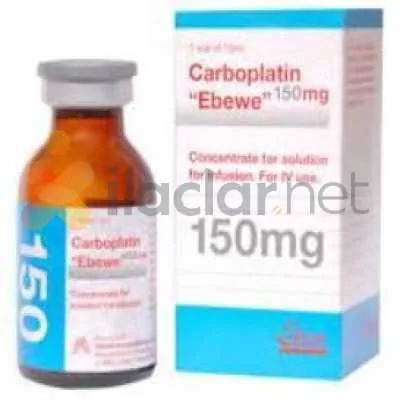
Table of Contents
- Package leaflet: Information for the patient
- 1. What Carboplatin-Ebewe is and what it is used for
- 2. Important information before using Carboplatin-Ebewe
- 3. How to use Carboplatin-Ebewe
- 4. Possible adverse reactions
- 5. How to store Carboplatin-Ebewe
- 6. Contents of the pack and other information
- Information intended exclusively for healthcare professionals:
Package leaflet: Information for the patient
Carboplatin-Ebewe, 10 mg/ml, concentrate for solution for infusion
Carboplatinum
Please read all of this leaflet carefully before using this medicine because it contains
important information for you.
- Keep this leaflet as you may need to read it again.
- If you have any further questions, ask your doctor, pharmacist or nurse.
- If you experience any side effects, including any not listed in this leaflet, tell your doctor, pharmacist or nurse. See section 4.
Contents of the leaflet:
- What Carboplatin-Ebewe is and what it is used for
- What you need to know before receiving Carboplatin-Ebewe
- How to use Carboplatin-Ebewe
- Possible side effects
- How to store Carboplatin-Ebewe
- Contents of the pack and other information
1. What Carboplatin-Ebewe is and what it is used for
Carboplatin is used in the treatment of advanced epithelial ovarian cancer as first-line therapy or when other treatments have failed, and in the treatment of small cell lung cancer.
2. Important information before using Carboplatin-Ebewe
When not to use Carboplatin-Ebewe
- if the patient is allergic to carboplatin or to other platinum-containing medicines;
- in patients with severe bone marrow suppression;
- in patients with severe renal impairment (unless, in the physician's opinion, treatment with the medicine is necessary);
- in patients with bleeding tumours;
- in patients with hearing disorders;
- in patients simultaneously vaccinated against yellow fever;
- in women who are pregnant or breastfeeding.
Warnings and precautions
Before using Carboplatin-Ebewe, discuss this with your doctor.
Carboplatin should be administered only under the supervision of a physician experienced in the use of chemotherapy, in specialized departments, under conditions ensuring appropriate monitoring and observation of the patient.
Carboplatin administration may cause kidney function disorders.
Before and during treatment with carboplatin, the physician will order tests to assess kidney and liver function. The physician will also order regular neurological examinations and tests to evaluate hearing.
Due to the possible decrease in platelet count—thrombocytopenia (especially in elderly patients)—white blood cell count (leukopenia), and red blood cell count (anaemia), the physician will recommend regular blood tests during carboplatin treatment (weekly during the first treatment cycle) and after its completion.
If the patient develops fever (temperature of 38°C or higher) or chills, which may indicate infection, the physician must be notified immediately due to the possible risk of developing sepsis.
Blood transfusions may be necessary in patients with severe bone marrow suppression, especially during combination therapy with other drugs having similar effects on the bone marrow.
Concurrent use of carboplatin and chemotherapy in these patients may lead to life-threatening infectious complications, including death.
In case of severe fatigue and shortness of breath associated with a reduced number of red blood cells (symptoms of haemolytic anaemia) and/or reduced platelet count, abnormal bruising (thrombocytopenia), and kidney disease with reduced or absent urine output (symptoms of haemolytic-uraemic syndrome), the physician must be informed immediately.
Carboplatin-Ebewe may cause allergic reactions, even those that are life-threatening.
If the patient experiences shortness of breath, rash, rapid heartbeat, or facial swelling, this must be reported immediately to the physician or nurse.
Carboplatin-Ebewe, especially when administered in high doses, may cause visual disturbances and/or hearing disorders. Any observed visual or hearing disturbances during treatment must be reported immediately to the physician or nurse.
If the patient experiences headaches, psychiatric disturbances, seizures, or visual disturbances (from blurred vision to loss of vision), inform the physician.
If the patient plans to receive any vaccination, they must inform the physician before receiving Carboplatin-Ebewe. Live vaccines administered to patients with chemotherapy-induced immunosuppression may cause severe infections.
It has been shown that administration of antiemetic medicines before carboplatin treatment reduces the frequency and severity of nausea and vomiting.
During carboplatin treatment, medicines will be administered to help reduce the likelihood of a life-threatening complication known as tumour lysis syndrome, caused by biochemical disturbances in the blood due to the breakdown of dying cancer cells releasing their contents into the bloodstream.
Effect on fertility: see section "Pregnancy, breastfeeding and effect on fertility".
Carboplatin-Ebewe and other medicines
Inform your doctor or nurse about all medicines currently or recently taken, as well as any medicines the patient plans to take. It is particularly important to inform the doctor about radiotherapy and the following medicines:
- anticoagulants (medicines that inhibit blood clotting)
- antiepileptic medicines (such as phenytoin)
- other medicines that suppress bone marrow function
- medicines that suppress the immune system (such as cyclosporine, tacrolimus, sirolimus)
- aminoglycoside antibiotics
- diuretics.
Pregnancy, breastfeeding and effect on fertility
Women who are pregnant or breastfeeding, suspect they may be pregnant, or are planning to have a child, should consult their doctor, pharmacist, or nurse before using this medicine.
Carboplatin-Ebewe must not be used during pregnancy unless specifically recommended by a physician. Animal studies have shown a possible risk of fetal abnormalities. If a patient is treated with carboplatin during pregnancy, they should discuss the possible risks to the unborn child with their doctor. Women of childbearing potential must use effective contraception during carboplatin treatment and for at least 6 months after treatment ends. Because carboplatin may cause genetic damage, genetic counselling is recommended if pregnancy occurs during carboplatin treatment. Genetic counselling is also recommended for patients planning to have children after treatment.
The use of Carboplatin-Ebewe during pregnancy and breastfeeding is contraindicated.
Men are advised to use effective contraceptive methods and to avoid fathering a child during carboplatin treatment and for at least 3 months after treatment ends.
Carboplatin treatment may cause irreversible infertility; therefore, men should consider sperm banking.
Driving and operating machinery
Carboplatin may cause nausea, vomiting, visual and hearing disturbances, and concentration difficulties.
Patients experiencing any side effects that could impair their ability to drive or operate machinery should avoid performing such activities.
3. How to use Carboplatin-Ebewe
Carboplatin-Ebewe must only be administered under the supervision of a specialist physician in the field of clinical oncology who has experience in the use of anticancer chemotherapy.
The treating physician determines the duration of treatment and the daily dose.
The duration of treatment depends on the patient's condition. The physician will monitor the patient's response to treatment, health status, and the length of therapy.
Overdose of Carboplatin-Ebewe
Expected complications of overdose may include bone marrow suppression, liver and kidney dysfunction, and hearing and vision disturbances.
If the patient suspects having received a higher than recommended dose of Carboplatin-Ebewe, they must immediately inform the physician or nurse.
4. Possible adverse reactions
Like all medicines, this medicine may cause adverse reactions, although not everybody will experience them.
Allergic reactions
Inform the doctor immediately if the patient experiences any symptoms that may indicate a severe allergic reaction, including chest pain, which may be a sign of a potentially serious allergic reaction known as Kounis syndrome.
Very common adverse reactions (occurring in more than 1 in 10 people):
reduction in platelet count (thrombocytopenia), reduction in neutrophil granulocytes (neutropenia), reduction in white blood cell count (leukopenia), anemia, vomiting, nausea, abdominal pain, abnormal kidney function test results (reduced creatinine clearance), increased blood urea levels, increased alkaline phosphatase activity, increased AspAT activity, abnormal liver function tests, decreased blood concentrations of sodium, potassium, calcium, and magnesium.
Common adverse reactions (occurring in 1 to 10 in 100 people):
infections, hemorrhage, allergic reactions (including severe reactions), peripheral neuropathy, tingling, diminished tendon reflexes, sensory disturbances, taste disturbances, visual disturbances, hearing disturbances, respiratory disorders, interstitial lung disease, bronchospasm, diarrhea, constipation, mucosal disorders, alopecia, skin disorders, musculoskeletal disorders, urogenital disorders, fatigue, increased blood levels of bilirubin, creatinine, and uric acid.
Adverse reactions with unknown frequency (frequency cannot be estimated from available data):
secondary malignancy, bone marrow failure, febrile neutropenia, hemolytic-uremic syndrome, dehydration, loss of appetite, hyponatremia, stroke, heart failure, embolism, arterial hypertension, hypotension, a group of symptoms such as headache, psychiatric disorders, seizures, and visual disturbances (from blurred vision to loss of vision); inform the doctor about these symptoms (symptoms of reversible posterior leukoencephalopathy syndrome, a rare neurological disorder), pancreatitis, pneumonia, mucositis, urticaria, rash, erythema, pruritus, necrosis at injection site, reaction at injection site, phlebitis at injection site, erythema at injection site, malaise, muscle cramps, muscle weakness, confusion, loss of vision or visual disturbances, irregular heartbeat, kidney failure or abnormal blood test results (symptoms of tumor lysis syndrome, which may result from rapid breakdown of tumor cells) (see section 2).
Reporting of adverse reactions
If any adverse reactions occur, including any adverse reactions not listed in this leaflet, inform a doctor, pharmacist, or nurse. Adverse reactions can be reported directly to the Department of Monitoring of Adverse Drug Reactions at the Office for Registration of Medicinal Products, Medical Devices and Biocidal Products: Al. Jerozolimskie 181C, 02-222 Warsaw
Tel.: +48 22 49 21 301 / Fax: +48 22 49 21 309 / Website: https://smz.ezdrowie.gov.pl
Adverse reactions can also be reported to the marketing authorization holder.
Reporting adverse reactions helps provide more information on the safety of the medicine.
5. How to store Carboplatin-Ebewe
Keep this medicine out of sight and reach of children.
Do not use this medicine after the expiry date stated on the label and carton following EXP.
The expiry date refers to the last day of the stated month.
The batch number on the packaging is marked as "Lot".
Store below 25°C.
Store in the original packaging to protect from light.
Medicines should not be disposed of via wastewater or household waste. Ask your pharmacist how to dispose of medicines no longer required. These measures will help protect the environment.
6. Contents of the pack and other information
What Carboplatin-Ebewe contains
The active substance is carboplatin. 1 ml of concentrate contains 10 mg of carboplatin.
5 ml vial contains 50 mg of carboplatin.
15 ml vial contains 150 mg of carboplatin.
45 ml vial contains 450 mg of carboplatin.
60 ml vial contains 600 mg of carboplatin.
100 ml vial contains 1000 mg of carboplatin.
The other component is water for injections.
What Carboplatin-Ebewe looks like and contents of the pack
Carboplatin-Ebewe is a clear, colourless or almost colourless solution in a type I glass vial with a halobutyl rubber stopper and aluminium cap, packed in a cardboard box.
Vials may be placed in protective packaging made of plastic (ONKO-Safe or Sleeving).
Pack sizes:
1 vial containing 5 ml concentrate for solution for infusion
1 vial containing 15 ml concentrate for solution for infusion
1 vial containing 45 ml concentrate for solution for infusion
1 vial containing 60 ml concentrate for solution for infusion
1 vial containing 100 ml concentrate for solution for infusion
Marketing Authorisation Holder
EBEWE Pharma Ges.m.b.H. Nfg. KG
Mondseestrasse 11
A-4866 Unterach, Austria
Manufacturer
Fareva Unterach GmbH
Mondseestraße 11
4866 Unterach, Austria
For further information, please contact:
Sandoz Polska Sp. z o.o.
ul. Domaniewska 50 C
02-672 Warszawa
tel. +48 22 209 70 00
< Company logo >
__________________________________________________________________________
Information intended exclusively for healthcare professionals:
The medicinal product is intended only for intravenous administration.
Dosage information
Untreated adult patients with normal renal function receive carboplatin
at a dose of 400 mg/m² as a short intravenous infusion (administered over 15 to 60 minutes).
Individual treatment cycles may be repeated after a four-week interval and (or) when the neutrophil granulocyte count is at least 2000 cells/mm³ and the platelet count is at least 100,000 cells/mm³.
Bone marrow dysfunction
To adjust the dose, it is recommended to determine the nadir of hematological parameters during carboplatin treatment. In patients who develop moderate or severe hematological toxicity, a dose reduction by 25% or treatment interruption should be considered—both in monotherapy and in combination treatment regimens.
In patients with risk factors such as prior myelosuppressive therapy and (or) radiotherapy, or poor general condition (2–4 on the Zubrod-ECOG scale or below 80 on the Karnofsky scale), the initial dose should be reduced by 20–25% (to 300–320 mg/m²).
During initial cycles of carboplatin treatment, weekly blood counts are recommended to determine the lowest blood cell count (nadir) and to adjust the dose in subsequent treatment cycles.
Renal dysfunction
In patients with creatinine clearance below 60 ml/min, there is an increased risk of significant bone marrow suppression. The incidence of severe leukopenia, neutropenia, or thrombocytopenia was approximately 25% when the following recommended doses were administered:
| Baseline creatinine clearance 41-59 ml/min 16-40 ml/min | Initial dose (Day 1) 250 mg/m2 iv. 200 mg/m2 iv. |
There are insufficient data regarding the use of carboplatin in patients with creatinine clearance of 15 ml/min or less to allow determination of recommended dosing.
The above recommendations apply to the initial treatment cycle. Subsequent doses should be adjusted according to patient tolerance to treatment and acceptable level of myelosuppression.
In patients with renal function impairment, the carboplatin dose should be reduced and appropriately adjusted according to glomerular filtration rate.
Recommended dosing in these patients depends on creatinine clearance values and should be calculated using the Calvert formula, which takes into account the patient's glomerular filtration rate (GFR in ml/min) and the target area under the concentration-time curve for carboplatin (AUC in mg/ml × min):
| Dose (mg) = target AUC (mg/ml x min) x (GFR ml/min + 25) | ||
| Target AUC | Planned chemotherapy | Patient's treatment status |
| 5-7 mg/ml min | carboplatin monotherapy | previously untreated |
| 4-6 mg/ml min | carboplatin monotherapy | previously treated |
| 4-6 mg/ml min | carboplatin + cyclophosphamide | previously untreated |
Note: According to the Calvert formula, the total dose of carboplatin is calculated in mg, not in mg/m².
Combination therapy
Carboplatin is used in combination with other antineoplastic agents, with dosing depending on the chosen treatment regimen. Dosing should be adjusted according to the specific treatment regimen and blood laboratory test results.
Specific dosage recommendations for pediatric patients cannot be provided due to insufficient data on the use of carboplatin in this age group.
For patients over 65 years of age, the dose of carboplatin should be adjusted during initial and subsequent treatment cycles based on the patient's overall health status.
Storage information after first opening and after dilution
After opening
The concentrate should be withdrawn from the vial immediately before use. From a microbiological standpoint, the product should be used immediately. If not used immediately, the user is responsible for the storage conditions and duration of the remaining product in the vial.
The remaining product in the vial after first withdrawal should not be stored for longer than 24 hours at a temperature of 2°C to 8°C, unless the withdrawal was performed under controlled, validated aseptic conditions. In such cases, the concentrate stored refrigerated or at room temperature, protected from light, maintains physico-chemical stability for up to 28 days.
After dilution
From a microbiological standpoint, the product should be used immediately. If not used immediately, the user is responsible for the storage conditions and duration of the prepared solution. Prepared solutions should not be stored for longer than 24 hours at a temperature of 2°C to 8°C, unless dilution was performed under controlled, validated aseptic conditions.
Physical and chemical stability has been demonstrated for up to 28 days for solutions diluted to concentrations of 0.4 mg/ml and 4 mg/ml with 5% glucose solution, stored refrigerated (at 2°C to 8°C) or at 20°C to 25°C, protected from light. If the infusion solution is stored at room temperature without protection from light, it should be used immediately after preparation.
Instructions for preparation of the medicinal product for administration and disposal of unused portions
Carboplatin is administered as an intravenous infusion solution prepared for short-term infusion lasting 15 to 60 minutes.
The concentrate may be diluted with 5% glucose solution to a concentration of 0.4 mg/ml (400 micrograms/ml).
Due to the toxic properties of the substance, the following safety precautions must be observed:
- Preparation, administration, and disposal of unused portions of the product must be performed only by trained personnel. As with all cytotoxic drugs, precautions must be taken to avoid exposure to pregnant women; pregnant women should not come into contact with cytotoxic agents.
- Personnel preparing carboplatin should wear protective clothing: safety goggles, protective gowns, disposable gloves, and disposable masks.
- All equipment and materials used in the preparation of the drug or cleaning of the preparation area, including gloves, must be placed in hazardous waste bags and incinerated at high temperature (1000°C).
- Chemical neutralization of residual solution involves dilution with a large amount of water and storage for 48 hours.
In case of accidental skin contact, wash thoroughly with large amounts of water. Seek medical advice.
All materials used for cleaning must be disposed of as described above.
Incompatibilities
Do not use needles or infusion sets containing aluminum components that may come into contact with carboplatin. Aluminum reacts with carboplatin, leading to inactivation and/or precipitation of the drug.