Carboplatin
Poland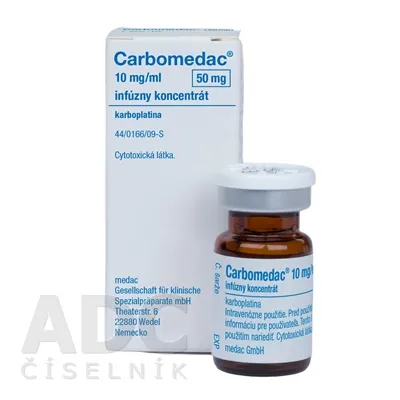
Table of Contents
- Package leaflet: Information for the user
- 1. What Carbomedac is and what it is used for
- 2. Important information before using Carbomedac
- 3. How to use Carbomedac
- 4. Possible adverse reactions
- 5. How to store Carbomedac
- 6. Contents of the package and other information
- Information intended exclusively for medical professionals:
Package leaflet: Information for the user
Carbomedac, 10 mg/ml, concentrate for solution for infusion
Carboplatinum
Please read all of this leaflet carefully before you are given this medicine because it contains important information for you.
- Keep this leaflet. You may need to read it again.
- If you have any further questions, ask your doctor, pharmacist, or nurse.
- If you get any side effects, talk to your doctor, pharmacist, or nurse. This includes any side effects not listed in this leaflet. See section 4.
Contents of the leaflet
- What Carbomedac is and what it is used for
- What you need to know before you are given Carbomedac
- How Carbomedac is given
- Possible side effects
- How to store Carbomedac
- Contents of the pack and other information
1. What Carbomedac is and what it is used for
The name "Carbomedac, 10 mg/ml, concentrate for solution for infusion" includes the name, strength, and pharmaceutical form, but in the remainder of this leaflet, the medicine will be referred to as "Carbomedac".
What Carbomedac is
Carbomedac contains carboplatin, which belongs to a group of medicines called platinum compounds used in the treatment of cancer.
The medicine will normally be administered to the patient in a hospital setting.
Indications for Carbomedac
Carbomedac is used in the treatment of certain types of ovarian and lung cancer (epithelial ovarian cancer, small cell lung cancer).
2. Important information before using Carbomedac
When not to use Carbomedac
if the patient is allergic to carboplatin or any of the other ingredients of this
medicine (listed in section 6).
if the patient is allergic to another medicine belonging to the group of drugs containing platinum compounds.
if the patient is breastfeeding.
if the patient has severe kidney problems.
if the patient has a severe imbalance in blood cells (severe myelosuppression).
if the patient has a bleeding tumour.
if the patient is simultaneously receiving the yellow fever vaccine.
If any of the above apply to the patient and have not yet been discussed with the doctor or pharmacist,
this should be done as soon as possible before receiving the injection.
Carbomedac is usually administered to patients in hospital. Under normal circumstances, the patient does not
have direct contact with the medicine. The doctor will administer the medicine and will closely and frequently monitor the patient’s condition
during and after administration. Usually, a blood test will be performed before each dose.
Warnings and precautions
Before starting treatment with Carbomedac, discuss the following with the doctor, pharmacist, or nurse:
- if the patient has ever had an allergic reaction to platinum-containing compounds, such as oxaliplatin.
- if the patient has impaired kidney function. In such cases, the doctor may monitor the patient more frequently.
- if the patient is pregnant or there is a possibility of becoming pregnant. See section "Pregnancy, breastfeeding and fertility" below.
- if the patient experiences headaches, confusion, seizures, or visual disturbances including blurred vision or loss of vision.
- if the patient develops extreme fatigue and shortness of breath due to a reduced number of red blood cells, either alone or in combination with a low platelet count, abnormal bruising, and kidney disease characterised by reduced urine output or absence of urine (symptoms of haemolytic uraemic syndrome).
- if the patient has fever (temperature ≥38°C) or chills, which may indicate infection. In such cases, the doctor must be notified immediately. The patient may be at risk of developing blood infection.
- if the patient develops visual disturbances.
- if the patient experiences abnormal skin sensations such as tingling, prickling, or numbness.
- if the patient experiences vomiting. In such cases, the doctor may prescribe antiemetic medicines.
- if the patient develops any hearing disturbances.
- if the patient has recently received or plans to receive any vaccinations. During treatment with carboplatin, live or attenuated vaccines, such as the yellow fever vaccine, should not be administered.
During carboplatin treatment, the patient will receive medicines to help reduce the risk of a life-threatening complication known as tumour lysis syndrome, caused by biochemical imbalances in the blood due to the breakdown of dying tumour cells releasing their contents into the bloodstream.
If any of the above apply to the patient and have not yet been discussed with the doctor or pharmacist, this should be done as soon as possible before receiving the injection.
Carbomedac and other medicines
Inform the doctor or pharmacist about all medicines currently or recently taken, as well as any medicines the patient plans to take.
Inform the doctor if the patient is taking any of the following medicines, as they may interact with Carbomedac:
- Medicines that may affect blood cell counts.
- Medicines known to have nephrotoxic (toxic to the kidneys) effects.
- Yellow fever vaccine must not be administered during carboplatin treatment (see also section "When not to use Carbomedac") due to increased risk of yellow fever infection, which may lead to death.
- Vaccines containing live viruses should not be administered during carboplatin treatment, as there is a risk of developing the diseases the vaccines are intended to prevent, which may lead to death.
- Carboplatin may reduce the effectiveness of antiepileptic drugs (e.g. phenytoin and fosphenytoin).
- Carboplatin may reduce the effectiveness of anticoagulant medicines (anticoagulants). Therefore, blood clotting should be monitored more frequently when these medicines are used together.
- Concurrent use of carboplatin with chelating agents (substances capable of chemically binding carboplatin) may reduce the antitumour effect of carboplatin.
- The toxic effects of carboplatin may be increased when administered together with medicines that damage the kidneys and hearing, such as antibiotics known as aminoglycosides (medicines used to prevent/treat certain infections) or loop diuretics (diuretics), potentially leading to serious kidney and hearing damage.
- Concurrent administration of carboplatin with cyclosporine, tacrolimus, and sirolimus (used to suppress the immune system in autoimmune diseases or organ transplantation) may weaken the immune system, increasing the risk of infections. A weakened immune system may also lead to increased production of white blood cells.
Pregnancy, breastfeeding and fertility
If the patient is pregnant, breastfeeding, suspects she may be pregnant, or plans to have a child, she should consult her doctor or pharmacist before using this medicine.
Pregnancy
Carbomedac must not be used during pregnancy unless specifically recommended by a doctor. If a patient is treated with Carbomedac during pregnancy, she should discuss with her doctor the potential risks to the unborn child.
Women of childbearing potential must use effective contraception during treatment and for at least 6 months after completion of treatment. If a patient becomes pregnant during treatment with Carbomedac, she should speak with her doctor about genetic counselling, as Carbomedac may cause harm to the unborn child.
Breastfeeding
It is not known whether carboplatin passes into human milk; therefore, breastfeeding must not be undertaken during treatment with Carbomedac. If the doctor considers treatment with Carbomedac absolutely necessary, breastfeeding must be discontinued.
Fertility
Carbomedac may cause genetic damage, such as sperm cell mutations. It is recommended that men undergoing carboplatin treatment refrain from procreation during treatment and for at least 3 months after treatment ends, and seek advice regarding sperm cryopreservation due to the possibility of irreversible infertility associated with treatment.
Driving and operating machinery
Carboplatin may cause nausea, vomiting, and disturbances in vision and hearing, which may impair the patient’s ability to drive or operate machinery. If any of these symptoms occur, the patient should not drive or operate machinery.
3. How to use Carbomedac
The administration of Carbomedac injections will always be performed by a physician. The medicine is usually given as an intravenous infusion lasting from 15 to 60 minutes. If the patient requires further information, they should consult their treating physician.
The dose administered to the patient depends on their body weight and height, blood test results, and kidney function tests. The physician will determine the appropriate dose for the patient. Before administration, the medicine must be diluted.
Use in adults
The recommended dose is 400 mg/m² of body surface area (calculated based on height and body weight).
Kidney disease
If the patient has kidney disease, the physician may reduce the dose and recommend frequent blood tests and monitoring of kidney function.
During treatment with Carbomedac, the patient may experience nausea or vomiting. The physician may administer another medicine prior to Carbomedac to help prevent these side effects.
A four-week interval is usually observed between consecutive doses of Carbomedac. Weekly blood tests may be performed by the physician after each dose to determine the appropriate subsequent dose.
Accidental overdose of Carbomedac
Receiving more than the recommended dose of Carbomedac is unlikely. However, if an overdose occurs, myelosuppression may develop (the bone marrow may be unable to produce new blood cells), which could, for example, lead to easy bruising. Kidney and liver function disorders as well as hearing problems may also occur. If the patient suspects they have received too high a dose, or if they have any questions regarding the dose, they should contact the physician administering the medicine.
Missed dose of Carbomedac
A missed dose is unlikely, as the physician follows established treatment protocols for administering the medicine. If the patient believes a dose has been missed, they should discuss it with their physician.
Discontinuation of Carbomedac treatment
The decision to discontinue treatment with Carbomedac is usually made by the physician.
If there are any further doubts concerning the use of this medicine, the patient should consult their physician, pharmacist, or nurse.
4. Possible adverse reactions
Like all medicines, this medicine can cause adverse reactions, although not everyone will experience them.
Important adverse reactions or symptoms to be aware of – and what to do if they occur
If the patient thinks they have experienced any of the adverse reactions or symptoms listed below,
they should contact a doctor immediately.
Very common (may affect more than 1 in 10 people)
- decrease in the number of white blood cells (increasing the risk of infections)
- decrease in the number of red blood cells, which may cause paleness of the skin, weakness or breathlessness (anaemia)
- decrease in the number of platelets (increases the risk of bleeding or blood spots)
Common (may affect less than 1 in 10 people)
- infections (possible signs of infection include sore throat, fever, chills)
- unusual bleeding or bruising (e.g. bleeding gums, blood in urine or vomit, or unexpected bruises or blood vessel damage [broken capillaries])
- allergic reactions including rash, redness, urticaria, itching, high temperature
- severe allergic reactions (anaphylaxis). These reactions are most likely to occur within minutes of taking Carbomedac. Symptoms of severe allergic reaction include sudden breathing difficulties or chest tightness, swelling of the eyelids, face or lips, rash, itching and high temperature
- reduced deep tendon reflexes (reduced muscle reflex response when tendons are tapped)
- sensory disturbances of the skin such as tingling and numbness
- visual disturbances
- hearing damage (ototoxicity), e.g. ringing in the ears, hearing loss
- cardiovascular disorders (adverse reactions affecting the circulatory system)
- lung disease
- serious lung disease with accompanying shortness of breath, difficulty breathing and/or scarring in the lungs (interstitial lung disease)
- difficulty breathing or wheezing
Uncommon (may affect less than 1 in 100 people)
- central nervous system symptoms often related to anti-nausea and anti-vomiting medication
- fever and chills without confirmed infection
Rare (may affect less than 1 in 1,000 people)
- loss of vision
- feeling unwell with fever due to low white blood cell count (febrile neutropenia)
- severe, life-threatening infection of the body and bloodstream with organ dysfunction, commonly known as blood poisoning (sepsis/septic shock)
- skin inflammation with skin peeling
Frequency not known (frequency cannot be estimated from available data)
- stroke, optic neuritis
- heart failure
- chest pain, which may be a sign of a potentially serious allergic reaction called Kounis syndrome
- blockage of an artery (embolism)
- redness, swelling, pain or dead skin around the injection site (injection site reactions)
- leakage into surrounding tissue at the injection site (extravasation at injection site)
- a group of symptoms such as headache, mental function disturbances, seizures and visual disturbances ranging from blurred vision to loss of vision (symptoms of reversible posterior leukoencephalopathy syndrome – a rare neurological disorder)
- brain dysfunction caused by a toxic substance or infection (encephalopathy)
- pancreatitis
- muscle cramps, muscle weakness, confusion, loss of vision or visual disturbances, irregular heartbeat, kidney failure or abnormal blood test results (symptoms of tumour lysis syndrome, which may result from rapid breakdown of tumour cells, see section 2)
- coronary artery diseases
Other possible adverse reactions
If the patient thinks they have experienced any of the adverse reactions or symptoms listed below,
they should contact a doctor as soon as possible.
Very common (may affect more than 1 in 10 people)
- nausea or vomiting
- abdominal pain
Common (may affect less than 1 in 10 people)
- altered sense of taste
- diarrhoea, constipation, inflammation of mucous membranes
- hair loss
- skin disorders
- musculoskeletal disorders (affecting muscles, joints, tendons and nerves)
- unusual feeling of tiredness or weakness (asthenia)
Uncommon (may affect less than 1 in 100 people)
- muscle pain, joint pain
Frequency not known (frequency cannot be estimated from available data)
- insufficient body fluid (dehydration)
- loss of appetite
- low blood pressure
- high blood pressure
- inflammation of the lining (mucosa) of the mouth
- urticaria (skin allergy with itching and welts)
- rash
- redness of the skin
- itching
- feeling of general discomfort (malaise)
Some adverse reactions may only be detected by a doctor and include:
Very common (may affect more than 1 in 10 people)
- impaired kidney function
- reduced creatinine clearance (creatinine clearance indicates how well the kidneys are working)
- increased blood urea levels
- abnormal liver enzyme levels
- reduced blood salt levels, which usually do not cause obvious symptoms or signs
Common (may affect less than 1 in 10 people)
- disorders of the urinary and reproductive system
- increased blood bilirubin levels
- increased blood creatinine levels
- increased blood uric acid levels, which may lead to gout
Very rare (may affect less than 1 in 10,000 people)
- acute promyelocytic leukaemia has been reported, occurring for the first time 6 years after treatment with carboplatin monotherapy and prior radiotherapy.
Frequency not known (frequency cannot be estimated from available data)
- impaired liver function, liver damage or necrosis of liver cells
- chemotherapy-induced malignancy
- reduced blood cell production in the bone marrow (bone marrow damage)
- acute kidney failure, reduced number of red blood cells [microangiopathic haemolytic anaemia], and low platelet count (haemolytic uraemic syndrome)
- low sodium levels in the blood, which may cause confusion, muscle cramps or irregular heartbeat (hyponatraemia)
- lung infection
Reporting of adverse reactions
If any adverse symptoms occur, including any adverse symptoms not listed
in this leaflet, the patient should inform their doctor, pharmacist or nurse. Adverse reactions
can be reported directly to the Department of Monitoring Adverse Reactions of Medicinal Products at the Office for Registration of Medicinal Products, Medical Devices and Biocidal Products:
Al. Jerozolimskie 181C, PL-02-222 Warsaw, tel.: +48 22 49-21-301, fax: +48 22 49-21-309,
website: https://smz.ezdrowie.gov.pl .
Adverse reactions can also be reported to the marketing authorisation holder.
Reporting adverse reactions helps provide more information on the safety of this medicine.
5. How to store Carbomedac
The medicine should be stored out of sight and reach of children.
The patient will not store the medicine. The medicine will be prepared immediately before administration to the patient.
There are no special storage instructions for this medicine during administration.
The doctor or pharmacist is responsible for ensuring that the patient is not given Carbomedac after the expiry date stated on the label following “Expiry date” or “EXP”. The expiry date refers to the last day of the stated month. The doctor or pharmacist is responsible for ensuring that the vial is stored in its outer packaging to protect it from light, at a temperature below 25°C. The medicine must not be frozen.
After mixing with other solutions, the solution should be used immediately or may be stored for no longer than 24 hours at 2°C – 8°C. The doctor or pharmacist will ensure that such storage conditions are met.
Medicines must not be disposed of via wastewater or household waste. Unused medicines will be disposed of by the doctor or pharmacist. This will help protect the environment.
6. Contents of the package and other information
What Carbomedac contains
- The active substance is carboplatin.
- The other ingredient is water for injections.
What Carbomedac looks like and contents of the pack
Carbomedac is a colourless or pale yellow clear concentrate for solution for infusion.
One ml of concentrate contains 10 mg of carboplatin.
A 5 ml vial contains 50 mg of carboplatin.
A 15 ml vial contains 150 mg of carboplatin.
A 45 ml vial contains 450 mg of carboplatin.
A 60 ml vial contains 600 mg of carboplatin.
A 100 ml vial contains 1 000 mg of carboplatin.
Pack sizes contain 1 or 10 vials.
Not all pack sizes may be marketed.
Marketing Authorisation Holder and Manufacturer
medac
Gesellschaft für klinische
Spezialpräparate mbH
Theaterstr. 6
22880 Wedel
Germany
Telephone: +49 4103 8006-0
Fax: +49 4103 8006-100
This medicinal product is authorised in the European Economic Area countries under the following names:
Denmark Carbomedac
France Carboplatine medac 10 mg/mL solution à diluer pour perfusion
Germany Carbomedac 10 mg/ml Konzentrat zur Herstellung einer Infusionslösung
Norway Carbomedac 10 mg/ml konsentrat til infusjonsvæske, oppløsning
Poland Carbomedac
Slovakia Carbomedac 10 mg/ml koncentrát na infúzny roztok
Slovenia Karboplatin medac 10 mg/ml koncentrat za raztopino za infundiranje
Sweden Carbomedac 10 mg/ml koncentrat till infusionsvätska, lösning
Italy Carboplatino medac
Information intended exclusively for medical professionals:
Preparation of the medicinal product
Carboplatin is a mutagenic and potentially carcinogenic substance. Appropriate precautions indicated for handling hazardous substances should be observed during preparation and administration. The medicinal product should be prepared by trained personnel wearing protective gloves, disposable gowns, and masks.
Carboplatin must not be administered using infusion sets, syringes, or injection needles containing components made of aluminium, since carboplatin reacts with aluminium. This may lead to precipitation and reduced antineoplastic activity.
Shelf life after opening the container and preparing the infusion solution
The ready-to-use infusion solution has been shown to remain chemically and physically stable in 5% glucose infusion solution (50 mg/mL) for 72 hours at room temperature, and in 0.9% sodium chloride infusion solution (9 mg/mL) for 24 hours at 2°C to 8°C, provided it is protected from light. However, it is recommended to use the infusion solution diluted in 0.9% sodium chloride infusion solution (9 mg/mL) as soon as possible after preparation.
From a microbiological standpoint, the product should be used immediately. If the preparation is not used immediately, the user is responsible for the storage duration and conditions prior to use, which generally should not exceed 24 hours at 2°C to 8°C, unless reconstitution/dilution has been performed under controlled and validated aseptic conditions.
Dilution
The product should be diluted with 5% glucose infusion solution (50 mg/mL) to a concentration between 0.4 mg/mL and 2 mg/mL, or with 0.9% sodium chloride infusion solution (9 mg/mL) to a concentration of 2 mg/mL.
Disposal
Any unused medicinal product or waste material should be disposed of in accordance with local regulations.