Caramlo
Poland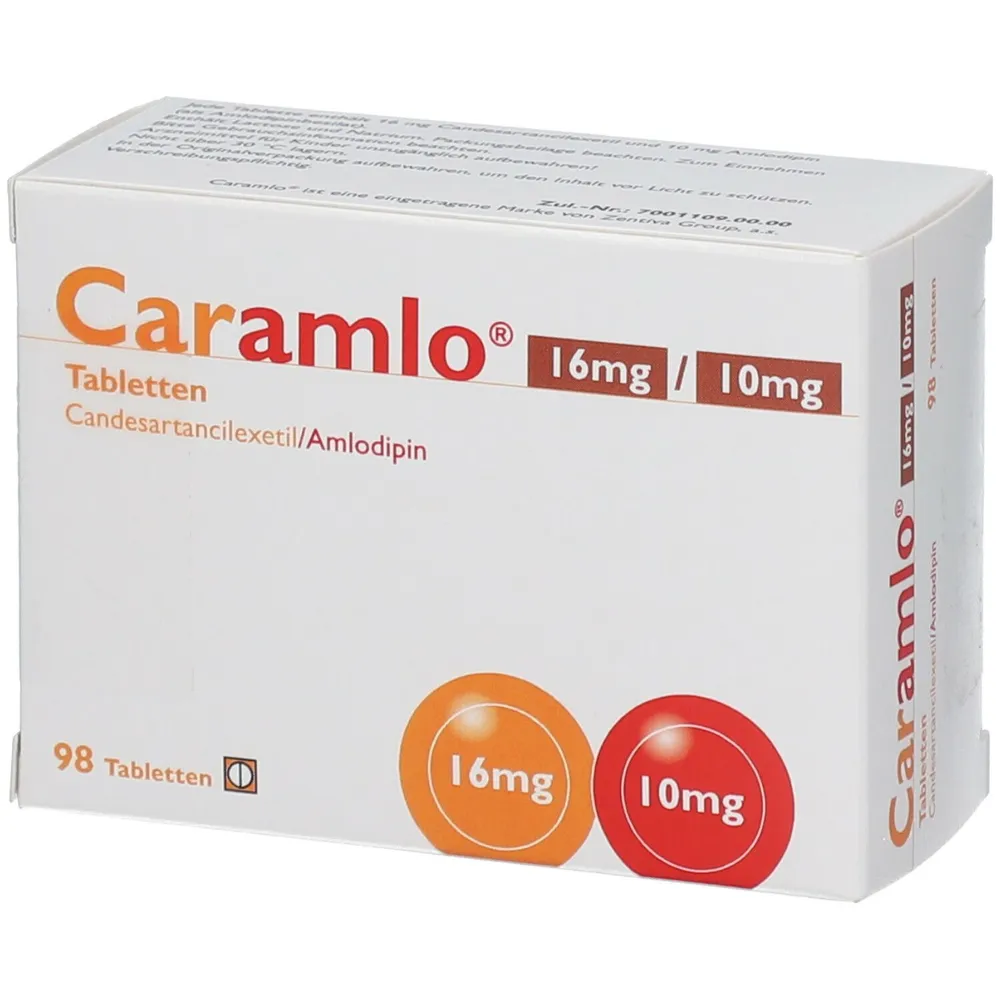
Table of Contents
Package leaflet: Information for the patient
Caramlo, 16 mg + 5 mg, tablets
Candesartan cilexetil + Amlodipine
Please read carefully the entire leaflet before taking this medicine, as it contains
important information for the patient.
- Keep this leaflet, so that you can read it again if necessary.
- If you have any questions, please consult your doctor or pharmacist.
- This medicine has been prescribed for a specific individual. Do not pass it on to others. This medicine may harm others, even if their symptoms are the same.
- If you experience any adverse reactions, including any not listed in this leaflet, inform your doctor or pharmacist. See section 4.
Table of contents
- What Caramlo is and what it is used for
- Important information before taking Caramlo
- How to take Caramlo
- Possible side effects
- How to store Caramlo
- Contents of the pack and other information
1. What Caramlo is and what it is used for
Caramlo contains two active substances: candesartan and amlodipine. Both of these substances help reduce high blood pressure.
- Amlodipine belongs to a group of substances called calcium channel blockers. Amlodipine inhibits calcium from entering the walls of blood vessels, thereby preventing blood vessel constriction.
- Candesartan belongs to a group of substances called angiotensin II receptor antagonists. Angiotensin II is produced in the body and causes blood vessel constriction, thus increasing blood pressure. Candesartan works by blocking the effects of angiotensin II. This means that both substances help prevent blood vessel constriction. As a result, blood vessels relax and blood pressure is lowered.
Caramlo is used for the treatment of high blood pressure in patients whose blood pressure is already adequately controlled by taking candesartan and amlodipine as separate tablets, at the same doses as those in Caramlo.
2. Important information before using Caramlo
When not to use Caramlo
- if the patient is allergic to amlodipine or to other medicines in the group of calcium antagonists, candesartan cilexetil, or to any of the other ingredients of this medicine (listed in section 6);
- if the patient has significantly low blood pressure (hypotension);
- if the patient has aortic valve stenosis (narrowing of the aortic valve in the heart) or cardiogenic shock (a condition in which the heart is unable to deliver sufficient blood to the body);
- if the patient has heart failure following a heart attack;
- if the patient is in pregnancy beyond the 3rd month (It is also advisable to avoid using Caramlo in early pregnancy - see section "Pregnancy and breastfeeding");
- if the patient has severe liver disease or biliary obstruction (impaired bile outflow from the gallbladder);
- if the patient has diabetes or kidney function impairment and is being treated with a blood pressure-lowering medicine containing aliskiren.
Warnings and precautions
Before starting treatment with Caramlo, consult your doctor or pharmacist if any of the following conditions apply:
- recent heart attack;
- heart failure;
- a sudden, severe increase in blood pressure (hypertensive crisis);
- low blood pressure (hypotension);
- if dose escalation is required and the patient is elderly;
- impaired liver or kidney function, or if the patient is undergoing dialysis;
- if the patient has recently received a kidney transplant;
- if the patient is vomiting, has recently experienced severe vomiting, or has had diarrhoea;
- if the patient has an adrenal gland disorder called Conn's syndrome (also known as primary hyperaldosteronism);
- if the patient has ever had a stroke;
- if the patient is to receive an anaesthetic agent. Such agents may be used during surgery or any dental treatment;
- if the patient is taking any of the following medicines for high blood pressure:
- an ACE inhibitor (e.g. enalapril, lisinopril, ramipril), especially if the patient has kidney problems related to diabetes;
- aliskiren.
Your doctor may recommend regular monitoring of kidney function, blood pressure, and blood levels of electrolytes (e.g. potassium).
See also the section "When not to use Caramlo".
If the patient experiences abdominal pain, nausea, vomiting, or diarrhoea after taking Caramlo, discuss this with the doctor. The doctor will decide on further treatment. Do not independently decide to stop taking Caramlo.
If the patient suspects she may be pregnant (or is planning to become pregnant), she must inform her doctor. Caramlo is not recommended during early pregnancy and must not be used after the 3rd month of pregnancy, as it may cause severe harm to the unborn baby (see section "Pregnancy and breastfeeding").
Children and adolescents
There is no experience with the use of Caramlo in children (under 18 years of age). Therefore, Caramlo should not be given to children or adolescents.
Caramlo with other medicines
Inform your doctor or pharmacist about all medicines currently taken or recently used, as well as any medicines the patient plans to take.
Caramlo may affect the action of other medicines, and other medicines may affect the action of Caramlo. Your doctor may recommend adjusting the dose and/or taking other precautions if the patient is taking any of the following medicines:
- ketoconazole, itraconazole (antifungal medicines);
- ritonavir, indinavir, nelfinavir (protease inhibitors used in the treatment of HIV infection);
- rifampicin, erythromycin, clarithromycin (antibiotics used to treat bacterial infections);
- St John's wort (Hypericum perforatum);
- verapamil, diltiazem (medicines used for heart conditions);
- dantrolene (intravenous infusion for severe disturbances in body temperature);
- tacrolimus, sirolimus, temsirolimus, and everolimus (used to suppress the immune response, allowing the body to accept a transplanted organ);
- simvastatin (a medicine that lowers cholesterol levels);
- cyclosporine (an immunosuppressive medicine);
- other medicines that help lower blood pressure, including beta-blockers and diazoxide;
- an ACE inhibitor or aliskiren (see also sections "When not to use Caramlo" and "Warnings and precautions");
- non-steroidal anti-inflammatory drugs (NSAIDs), such as: ibuprofen, naproxen, diclofenac, celecoxib or etoricoxib (medicines used to reduce pain and inflammation);
- acetylsalicylic acid (a medicine used to reduce pain and inflammation), at doses exceeding 3 g per day;
- potassium supplements or salt substitutes containing potassium (medicines that increase blood potassium levels);
- heparin (a blood-thinning medicine);
- co-trimoxazole (an antibiotic combination of trimethoprim and sulfamethoxazole);
- diuretics (water tablets);
- lithium (a medicine used to treat psychiatric disorders).
Taking Caramlo with food and drink
While taking Caramlo, do not drink grapefruit juice or eat grapefruits. Grapefruits and grapefruit juice may increase blood levels of the active ingredient amlodipine, which could lead to unpredictable intensification of the blood pressure-lowering effect of Caramlo.
Pregnancy and breastfeeding
If the patient is pregnant or breastfeeding, suspects she may be pregnant, or is planning to become pregnant, she should consult her doctor or pharmacist before using this medicine.
Pregnancy
The patient must inform her doctor if she suspects she may be pregnant (or is planning to become pregnant). The doctor will usually advise stopping Caramlo before planning pregnancy or immediately after pregnancy is confirmed, and will recommend an alternative medicine. Caramlo is not recommended during early pregnancy and must not be used after the 3rd month of pregnancy, as it may cause severe harm to the unborn baby if used beyond the third month of pregnancy.
Breastfeeding
It has been shown that small amounts of amlodipine pass into human milk. If the patient is breastfeeding or planning to breastfeed, she should inform her doctor before starting Caramlo. Caramlo is not recommended for breastfeeding women. If a woman wishes to breastfeed, her doctor may choose an alternative treatment, especially if breastfeeding a newborn or a premature infant.
Driving and using machines
Caramlo may have a moderate effect on the ability to drive or operate machinery. If the tablets cause discomfort, dizziness, fatigue, or headache, the patient should not drive or operate machinery and should contact their doctor immediately.
Caramlo contains monohydrate lactose
If the patient has previously been diagnosed with an intolerance to certain sugars, the patient should consult their doctor before taking this medicine.
3. How to use Caramlo
This medicine should always be used as directed by a doctor or pharmacist. If in doubt,
consult a doctor or pharmacist.
The recommended dose of Caramlo 16 mg + 5 mg is 1 tablet per day.
Caramlo may be taken with or without food.
Taking more than the recommended dose of Caramlo
Taking too many tablets may cause blood pressure to become low or even dangerously low.
The patient may experience dizziness, lightheadedness, fainting, or weakness. If the drop in blood pressure is very severe, shock may occur.
The skin may become cold and clammy, and the patient may lose consciousness.
Breathing difficulties due to excess fluid accumulating in the lungs (pulmonary edema) may occur even 24–48 hours after taking the medicine.
If too many tablets have been taken, seek medical help immediately.
Missing a dose of Caramlo
If a patient forgets to take a tablet, that dose should be completely omitted. Take the next dose at the scheduled time. Do not take a double dose to make up for a missed dose.
Stopping Caramlo treatment
The doctor will inform the patient how long the treatment should continue. Stopping treatment may cause symptoms of the disease to return. Therefore, do not stop taking Caramlo without first discussing it with the doctor.
If there are any further doubts regarding the use of this medicine, consult a doctor or pharmacist.
4. Possible adverse effects
Like all medicines, this medicine can cause adverse effects, although not everybody will experience them.
Immediately consult a doctor if, after taking this medicine, the patient experiences any of the following very rare, serious adverse effects (may occur in up to 1 in 10,000 people):
- sudden wheezing, chest pain, shortness of breath, or difficulty breathing;
- swelling of the eyelids, face, or lips;
- swelling of the tongue and throat causing severe breathing difficulties;
- severe skin reactions, including severe skin rash, urticaria, redness of the skin all over the body, intense itching, blistering, peeling and swelling of the skin, mucosal inflammation (Stevens-Johnson syndrome, toxic epidermal necrolysis), or other allergic reactions;
- heart attack, cardiac arrhythmias;
- pancreatitis, which may cause severe abdominal and back pain accompanied by a very poor general condition.
Candesartan may cause a reduction in the number of white blood cells. The patient's resistance to infections may decrease, and symptoms such as fatigue, infection, or fever may occur. In such a case, contact a doctor. The doctor may order periodic blood tests to check whether Caramlo affects blood composition (agranulocytosis).
Other possible adverse effects:
Since Caramlo contains two active substances, the reported adverse effects are associated with the use of amlodipine or candesartan.
Adverse effects associated with amlodipine
Very common (may occur in at least 1 out of 10 people):
- swelling (fluid retention).
Common (may occur in up to 1 out of 10 people):
- headache, dizziness, drowsiness (especially at the beginning of treatment),
- palpitations (awareness of heartbeat), facial flushing,
- abdominal pain, nausea,
- changes in bowel rhythm, diarrhoea, constipation, indigestion,
- fatigue, weakness,
- visual disturbances, double vision,
- painful muscle cramps,
- swelling around the ankles.
Uncommon (may occur in less than 1 out of 100 people):
- mood changes, anxiety, depression, insomnia,
- tremor, taste disturbances, fainting,
- tingling or numbness in the limbs; lack of pain sensation,
- tinnitus,
- low blood pressure,
- sneezing and/or nasal congestion due to inflammation of the nasal mucosa,
- cough,
- dry mouth, vomiting (nausea),
- hair loss, excessive sweating, skin itching, red spots on the skin, skin discoloration,
- urinary disorders, increased need to urinate at night, increased frequency of urination,
- inability to achieve erection; discomfort or enlargement of breast glands in men,
- pain, malaise,
- joint or muscle pain, back pain,
- increase or decrease in body weight.
Rare (may occur in less than 1 out of 1,000 people):
- disorientation.
Very rare (may occur in less than 1 out of 10,000 people):
- decrease in the number of white blood cells, decrease in the number of platelets, which may lead to unusual bruising and easier bleeding,
- excess glucose (sugar) in the blood (hyperglycaemia),
- nerve disorders, which may cause muscle weakness, tingling or numbness,
- gum swelling,
- abdominal bloating (gastritis),
- liver function abnormalities, liver inflammation (hepatitis), jaundice (yellowing of the skin), increased liver enzyme activity, which may affect certain medical test results,
- increased muscle tension,
- vasculitis, often with skin rash,
- photosensitivity.
Frequency unknown (cannot be determined from available data):
- tremor, rigidity, mask-like facial expression, slowed movements and shuffling gait, unsteady gait.
Adverse effects associated with candesartan
Common (may occur in up to 1 out of 10 people):
- dizziness and/or vertigo,
- headache,
- respiratory tract infection,
- low blood pressure. This may cause a feeling of faintness or dizziness,
- changes in blood test results: increased potassium levels in the blood, especially in patients with impaired kidney function or heart failure. If the increase is significant, the patient may experience fatigue, weakness, irregular heartbeat, or tingling sensations,
- effects on kidney function, particularly in patients with pre-existing kidney disorders or heart failure. In very rare cases, kidney failure may occur.
Very rare (may occur in less than 1 out of 10,000 people):
- swelling of the face, lips, tongue, and/or throat,
- angioedema of the intestine: intestinal swelling with symptoms such as abdominal pain, nausea, vomiting, and diarrhoea,
- decrease in the number of red or white blood cells. Fatigue, infection, or fever may occur,
- skin rash, nodular rash (urticaria),
- itching,
- back pain, joint and muscle pain,
- changes in liver function, including liver inflammation (hepatitis). Fatigue, yellowing of the skin and whites of the eyes, and flu-like symptoms may occur,
- cough,
- nausea,
- changes in blood test results: decreased sodium levels in the blood. If the decrease is significant, weakness, lack of energy, or painful muscle cramps may occur.
Frequency unknown (frequency cannot be determined from available data):
- diarrhoea.
Reporting of adverse effects
If any adverse symptoms occur, including any adverse effects not listed in this leaflet, inform a doctor or pharmacist. Adverse effects can be reported directly to the Department of Monitoring Adverse Drug Reactions of the Office for Registration of Medicinal Products, Medical Devices and Biocidal Products,
Al. Jerozolimskie 181C, 02-222 Warsaw,
tel.: + 48 22 49 21 301, fax: + 48 22 49 21 309, website: https://smz.ezdrowie.gov.pl
Adverse effects can also be reported to the marketing authorization holder or its representative in Poland.
Reporting adverse effects helps to gather more information on the safety of the medicine.
5. How to store Caramlo
Keep this medicine out of sight and reach of children.
Do not use this medicine after the expiry date stated on the carton and/or blister pack following EXP. The expiry date refers to the last day of the stated month.
Store below 30°C.
Store in the original packaging to protect from light.
Medicines should not be disposed of via wastewater or household waste. Ask your pharmacist how to dispose of medicines no longer required. Doing so helps protect the environment.
6. Contents of the pack and other information
What Caramlo contains
- The active substances are candesartan cilexetil and amlodipine. Each tablet contains 16 mg of candesartan cilexetil and 5 mg of amlodipine (as amlodipine besylate).
- Other ingredients are: lactose monohydrate, mannitol, corn starch, calcium carboxymethylcellulose, hydroxypropylcellulose, polyethylene glycol 8000, stearic acid, magnesium stearate, colloidal anhydrous silica.
What Caramlo looks like and contents of the pack
White to light beige, round, two-layered tablets with a diameter of 8 ± 0.3 mm, embossed with
"16" on one side and "5" on the other.
Pack sizes: 14, 28, 30, 56, 84, 90, 91 or 98 tablets.
Not all pack sizes may be marketed.
Marketing Authorisation Holder
Zentiva k.s.
U Kabelovny 130
Dolní Měcholupy
102 37 Prague 10
Czech Republic
Manufacturer
Zentiva k.s.
U Kabelovny 130
Dolní Měcholupy
102 37 Prague 10
Czech Republic
For further information about this medicinal product and its names in the countries of the
European Economic Area, please contact the representative of the marketing authorisation
holder in Poland:
Zentiva Polska Sp. z o.o.
ul. Bonifraterska 17
00-203 Warsaw
tel.: +48 22 375 92 00