Canesten
Poland
Table of Contents
Package leaflet: Information for the user
Canesten, 500 mg, vaginal tablet
Clotrimazolum
Please read the entire leaflet carefully before using this medicine, as it contains
important information for the patient.
This medicine should always be used exactly as described in this patient leaflet or as directed by
your doctor or pharmacist.
- Keep this leaflet so that you can read it again if necessary.
- If you need advice or further information, please consult your pharmacist.
- If you experience any adverse reactions, including any adverse reactions not listed in this leaflet, inform your doctor or pharmacist. See section 4.
- If there is no improvement after 7 days of treatment, or if symptoms worsen, consult your doctor.
Leaflet contents
- What Canesten is and what it is used for
- What you need to know before using Canesten
- How to use Canesten
- Possible side effects
- How to store Canesten
- Contents of the pack and other information
1. What Canesten is and what it is used for
The active substance in Canesten is clotrimazole, which belongs to a group of medicines called
imidazoles. It has a broad antifungal spectrum, meaning it kills fungi and inhibits their
growth. It is effective against microorganisms such as dermatophytes, yeasts and moulds.
Canesten is used for the treatment of vaginal and external female genital infections caused by
microorganisms such as fungi (usually Candida ) that are sensitive to clotrimazole.
Symptoms include itching, burning, vaginal discharge (thick, white to yellowish, odourless discharge resembling cottage cheese), redness, swelling and pain.
Only a doctor can reliably diagnose fungal infection and confirm microorganism sensitivity to clotrimazole. Please refer to section 2 of this leaflet for information on when to speak with your doctor before using Canesten.
This medicine is intended for use in adults and adolescents aged 16 years and older.
2. Important information before using Canesten
When not to use Canesten:
- if the patient is allergic to clotrimazole or to any of the other ingredients of this medicine (listed in section 6).
Warnings and precautions
Before starting treatment with Canesten, consult your doctor:
- when vaginal infection occurs for the first time,
- when vaginal infection occurs during the first trimester of pregnancy,
- in case of recurrent infections, when at least 2 episodes have occurred within the past 6 months,
- if fever of 38°C or higher is present,
- if the patient experiences pain in the lower abdomen or back pain,
- in case of foul-smelling vaginal discharge,
- if nausea occurs,
- if vaginal bleeding and/or shoulder pain occur.
Do not use Canesten during menstruation. Treatment with this medicine should be discontinued before menstrual bleeding begins.
During treatment with Canesten, do not use tampons, vaginal douches, spermicides, or other vaginal products.
Avoid sexual intercourse during treatment with Canesten and while the vaginal infection persists, as the infection may be transmitted to the sexual partner.
The sexual partner should also receive concurrent local treatment if symptoms of fungal infection are present. Treating sexual partners may help prevent reinfection.
The contraceptive effectiveness of latex-based barrier methods, such as condoms and diaphragms, may be reduced.
Canesten must not be swallowed.
Children and adolescents
Do not use Canesten in girls under 16 years of age without consulting a doctor.
Canesten and other medicines
Tell your doctor or pharmacist about all medicines you are currently taking or have recently taken, as well as any medicines you plan to use.
Inform your doctor if you are taking tacrolimus or sirolimus, medicines used to control the immune response after organ transplantation.
The blood concentration of certain medicines may increase if used concomitantly with Canesten. However, this is unlikely when a single 500 mg dose is used. If you have any doubts about using another medicine together with Canesten, consult your doctor.
Pregnancy and breastfeeding
If you are pregnant or breastfeeding, think you may be pregnant, or are planning to have a baby, consult your doctor or pharmacist before using this medicine.
- Pregnancy During the first 3 months of pregnancy, consult your doctor before using clotrimazole. If using Canesten during pregnancy, do not use the applicator provided in the package. The tablet should be inserted into the vagina with a finger to avoid injury to the cervix.
- Breastfeeding Canesten may be used during breastfeeding. If in doubt, consult your doctor or pharmacist.
Driving and operating machinery
Canesten does not affect the ability to drive or operate machinery.
3. How to use Canesten
This medicine should always be used exactly as described in this patient leaflet or as directed by your doctor. If in doubt, consult your doctor or pharmacist.
Recommended dose
Adults and adolescents aged 16 years and older
- one vaginal tablet, inserted deeply into the vagina, as a single dose, in the evening.
A moist vaginal environment should be ensured so that the tablet dissolves completely. Otherwise, undissolved parts of the tablet may be expelled from the vagina.
Treatment may be repeated. However, recurrent infections may indicate another underlying condition causing the symptoms. If symptoms recur, the patient should consult her doctor.
Instructions for use
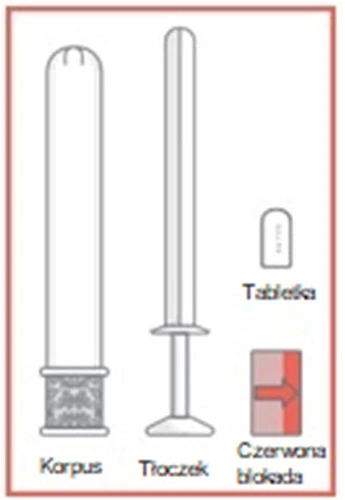
The vaginal tablet should be placed as deeply as possible into the vagina using the applicator provided, preferably while lying down, in the evening before going to sleep.
Wash your hands before removing the vaginal tablet and applicator from the packaging, and again after using the applicator.
- Remove the applicator from the packaging and pull out the plunger and red safety lock from the barrel.
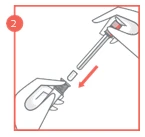
- Place the vaginal tablet into the barrel of the applicator with the rounded end facing inward. Insert the plunger and safety lock into the barrel until a click is felt.
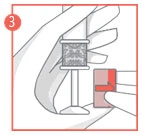
- After feeling the click, remove the safety lock from the plunger, then carefully insert the applicator into the vagina up to the marked zone on the handle.
- Hold the applicator barrel at the level of the marked zone on the handle and gently push the plunger fully in until it stops, to release the vaginal tablet.
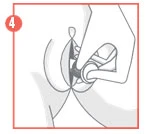
After use, dispose of the applicator safely, out of the reach of children. Do not flush the applicator down the toilet.
Method of using vaginal tablets without the applicator:
If the patient is pregnant, the vaginal tablet should be inserted into the vagina using a finger.
Duration of treatment
Canesten is used as a single-dose treatment.
If there is no significant improvement after 7 days of treatment, consult your doctor to confirm the cause of the infection. If symptoms worsen, contact your doctor.
Use in children and adolescents
Canesten should not be used in girls under 16 years of age without consulting a doctor.
If you have any further doubts regarding the use of this medicine, consult your doctor.
4. Possible adverse effects
Like all medicines, this medicine can cause adverse effects, although not everyone will experience them.
Adverse effects have been observed with the following frequencies:
Common, occurring in more than 1 in 100 people:
- burning sensation
Uncommon, occurring in more than 1 in 1,000 people:
- abdominal pain
- itching
- redness of the skin and (or) irritation
Rare, occurring in more than 1 in 10,000 people:
- allergic reactions
- swelling
- skin rash
- vaginal bleeding
Frequency unknown, based on available data:
- vaginal desquamation
- vaginal discomfort
- vaginal pain
- nausea
- urticaria
- hot flushes
- pain
The medicine should be discontinued if the patient experiences local adverse effects or
allergic reactions (including anaphylactic reaction, angioedema (swelling), low blood pressure,
breathing difficulties, and (or) fainting).
Local adverse effects may resemble symptoms of the disease. Therefore, distinguishing between symptoms of infection and adverse effects caused by the medicine may be difficult.
Reporting of adverse effects
If any adverse symptoms occur, including any adverse effects not listed in this leaflet, inform your doctor, pharmacist, or nurse. Adverse effects can be reported directly to the Department of Monitoring Adverse Drug Reactions at the Office for Registration of Medicinal Products, Medical Devices and Biocidal Products:
Al. Jerozolimskie 181C, 02-222 Warsaw, tel.: 22 49-21-301, fax: 22 49-21-309, website:
https://smz.ezdrowie.gov.pl
Adverse effects can also be reported to the marketing authorization holder.
Reporting adverse effects helps to collect further information on the safety of the medicine.
5. How to store CANESTEN
Keep this medicine out of sight and reach of children.
Do not store above 25°C.
Do not use this medicine after the expiry date stated on the carton and blister after: EXP.
The expiry date refers to the last day of the stated month.
Medicines must not be disposed of via wastewater or household waste. Ask your pharmacist how to dispose of medicines no longer required. This will help protect the environment.
6. Contents of the packaging and other information
What the medicine contains Canesten
- The active substance is clotrimazole.
- The other ingredients (excipients) are: calcium lactate pentahydrate; microcrystalline cellulose; hypromellose 15 cP; lactic acid; lactose monohydrate; maize starch; magnesium stearate; colloidal anhydrous silica; crospovidone.
What Canesten looks like and contents of the pack
A white vaginal tablet marked with "MU" and "Bayer".
One vaginal tablet, in a blister and with an applicator, in a cardboard box.
Marketing Authorisation Holder
Bayer Sp. z o.o.
Al. Jerozolimskie 158
02-326 Warsaw
tel. +48 22 5723500
Manufacturer
Bayer AG
Kaiser-Wilhelm Allee
D-51368 Leverkusen
Germany
GP Grenzach Produktions GmbH
Emil-Barell-Strasse 7
79639 Grenzach-Wyhlen
Germany
This medicinal product is authorised in the Member States of the European Economic Area under the following names:
Finland: Canesten, 500 mg vaginal tablet
Poland: Canesten, 500 mg, vaginal tablet