Calpol 6 plus
Poland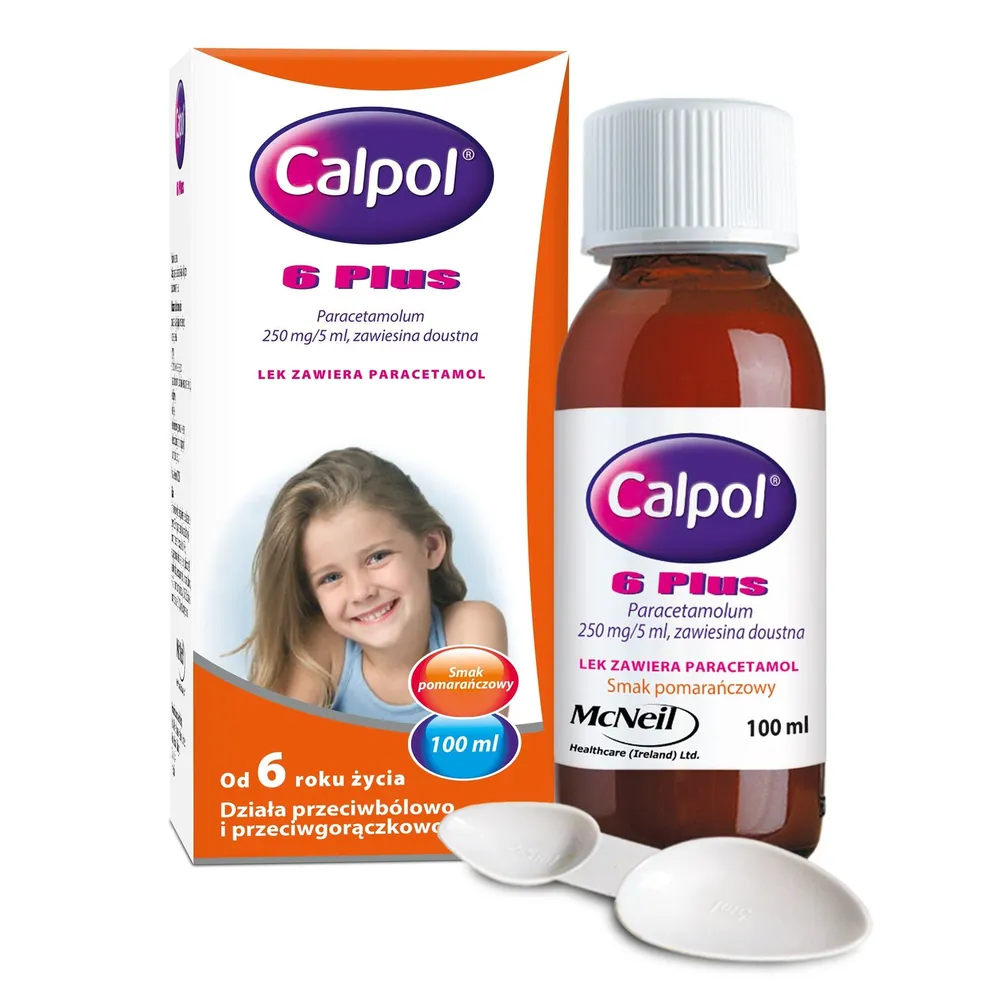
Table of Contents
Patient Information Leaflet
Calpol 6 Plus, 250 mg/5 ml, oral suspension
Paracetamolum
Read the entire leaflet carefully before using this medicine, as it contains
important information for the patient.
This medicine should always be used exactly as described in this patient leaflet or as directed by a
doctor or pharmacist.
- Keep this leaflet for future reference.
- If you need advice or further information, consult your pharmacist.
- If you experience any adverse reactions, including any possible side effects not listed in this leaflet, inform your doctor or pharmacist. See section 4.
- If there is no improvement after 3 days or if your condition worsens, contact your doctor.
Table of Contents
- What Calpol 6 Plus is and what it is used for
- Important information before taking Calpol 6 Plus
- How to take Calpol 6 Plus
- Possible side effects
- How to store Calpol 6 Plus
- Contents of the pack and other information
1. What Calpol 6 Plus is and what it is used for
Calpol 6 Plus oral suspension contains paracetamol as the active substance.
Paracetamol has antipyretic and analgesic properties.
Calpol 6 Plus is intended for children aged 6 years and older, as well as adults.
Indications for Calpol 6 Plus:
fever associated with:
- colds,
- influenza,
- childhood illnesses, and mild to moderate pain, such as:
- headache,
- toothache,
- muscle, joint, and bone pain,
- pain following surgical and dental procedures.
If there is no improvement after 3 days or if your condition worsens, contact your doctor.
2. Information before using Calpol 6 Plus
When not to use Calpol 6 Plus:
- if the patient is allergic to paracetamol or any of the other ingredients of this medicine
(listed in section 6),
- do not use in children under 6 years of age.
Warnings and precautions
Before starting to use Calpol 6 Plus, consult a doctor or pharmacist.
During treatment with Calpol 6 Plus, do not take other medicines containing paracetamol due to the risk of overdose.
Taking higher than recommended doses (overdose) may cause life-threatening liver damage. In case of overdose, seek immediate medical help. Prompt medical assistance is particularly important in both adults and children, even if no signs or symptoms of overdose are observed.
Exercise caution when using paracetamol in patients with glucose-6-phosphate dehydrogenase (G-6-PD) deficiency.
Patients with impaired liver function should consult a doctor before taking paracetamol.
Use paracetamol with caution in patients with impaired kidney function.
In patients with chronic renal insufficiency, it is recommended to extend the intervals between doses of paracetamol.
In patients undergoing hemodialysis, the doctor may consider administering additional doses to maintain therapeutic plasma concentrations of paracetamol (hemodialysis may reduce paracetamol plasma levels).
Do not consume alcohol during treatment with paracetamol, as it increases the risk of toxic liver damage. The risk of liver damage is particularly high in fasting individuals and those who regularly consume alcohol.
Severe skin reactions, such as acute generalized exanthematous pustulosis, Stevens-Johnson syndrome, and toxic epidermal necrolysis, have been reported in patients treated with paracetamol (see section 4). Symptoms may include skin redness, rash, blisters, and erosions on the skin, in the mouth, eyes, and genital organs, ruptured large subcutaneous blisters, extensive skin erosions, sloughing of large sheets of epidermis, and fever. If skin reactions occur or existing symptoms worsen, discontinue the medicine immediately and seek urgent medical help.
During treatment with Calpol 6 Plus, inform the doctor immediately if the patient has severe illnesses, including severe kidney disorders or sepsis (when bacteria and their toxins circulate in the blood, leading to organ damage), malnutrition, chronic alcoholism, or if the patient is also taking flucloxacillin (an antibiotic). In these situations, patients have been reported to develop a serious condition called metabolic acidosis (an abnormality in blood and body fluids) when taking paracetamol regularly over a prolonged period or when taking paracetamol together with flucloxacillin. Symptoms of metabolic acidosis may include: severe breathing difficulties, including rapid deep breathing, drowsiness, nausea, and vomiting.
Discontinue the medicine and consult a doctor if symptoms do not improve or worsen, or if new symptoms appear.
Calpol 6 Plus and other medicines
Inform your doctor or pharmacist about all medicines currently used, recently used, or planned to be used.
Medicines that accelerate gastric emptying (e.g. metoclopramide) increase the absorption of paracetamol, whereas medicines that delay gastric emptying (e.g. propantheline) may delay paracetamol absorption.
Concomitant use of paracetamol and drugs that enhance hepatic metabolism, such as certain sedatives or antiepileptics (e.g. phenobarbital, phenytoin, carbamazepine), as well as rifampicin (a medicine used in tuberculosis treatment), may lead to liver damage, even when recommended doses of paracetamol are used.
Consuming alcohol during paracetamol treatment may lead to liver failure caused by necrosis of liver cells.
Concomitant use of paracetamol and zidovudine (AZT – an antiviral drug used in HIV infection) may enhance the toxic effect of zidovudine on bone marrow.
Regular, daily use of paracetamol may enhance the effect of anticoagulant drugs (warfarin and other coumarin derivatives); occasional doses have no significant effect.
Paracetamol used concomitantly with MAO inhibitors (medicines used, among others, in depression) may cause a state of excitation and high fever.
Paracetamol use may cause false results in certain laboratory tests performed using redox methods (e.g. glucose measurement).
Concomitant administration of paracetamol may increase chloramphenicol (a broad-spectrum antibiotic) plasma concentrations.
Concomitant use of paracetamol and non-steroidal anti-inflammatory drugs may increase the risk of kidney function disorders.
Prolonged concomitant use of paracetamol and aspirin or other salicylates may increase the risk of kidney damage (such as analgesic nephropathy or necrosis of renal papillae).
Inform your doctor or pharmacist if the patient is taking flucloxacillin (an antibiotic) due to the serious risk of blood and body fluid disorders (called metabolic acidosis), which must be urgently treated (see section 2).
Pregnancy and breastfeeding
If the patient is pregnant or breastfeeding, suspects she may be pregnant, or plans to have a child, she should consult a doctor or pharmacist before using this medicine.
Calpol 6 Plus may be used during pregnancy if clinically justified. The lowest effective dose that reduces pain and/or fever should be taken for the shortest possible duration and as infrequently as possible.
Consult a doctor if pain and/or fever do not subside or if the patient needs to take the medicine more frequently.
Paracetamol passes into breast milk in small amounts. When used at recommended doses, it does not pose a risk to the breastfed infant.
Driving and operating machinery
Calpol 6 Plus has no effect or negligible effect on the ability to drive or operate machinery.
Calpol 6 Plus contains 1894.687 mg of sorbitol (E420) (70% solution) in 5 ml
Sorbitol is a source of fructose. If intolerance to certain sugars has previously been diagnosed in the patient (or their child), or if hereditary fructose intolerance, a rare genetic disorder in which the patient's body does not break down fructose, has been diagnosed, the patient should contact a doctor before taking the medicine or giving it to a child.
Sorbitol may cause gastrointestinal discomfort and may have a mild laxative effect.
Calpol 6 Plus contains 2.1 g of sucrose in 5 ml
This should be taken into account in patients with diabetes.
If intolerance to certain sugars has previously been diagnosed in the patient, the patient should contact a doctor before taking the medicine.
Calpol 6 Plus contains methyl parahydroxybenzoate (E218)
This medicine may cause allergic reactions (including delayed-type reactions).
Calpol 6 Plus contains sunset yellow (E110)
This medicine may cause allergic reactions.
| Calpol 6 Plus contains 9.6144 mg of propylene glycol (E1520) (derived from sugar and orange flavours) in 5 ml | ||
| Calpol 6 Plus contains 0.00397 mg of alcohol (ethanol) (derived from orange flavour) in 5 ml | ||
| Calpol 6 Plus contains 0.00397 mg of alcohol (ethanol) (derived from orange flavour) in 5 ml | ||
| The amount of alcohol in 5 ml of this medicine is equivalent to less than 1 ml of beer or 1 ml of wine. | ||
| The small amount of alcohol in this medicine will not cause noticeable effects. | ||
| Calpol 6 Plus contains 0.0397 mg of benzyl alcohol (E1519) (derived from orange flavour) in 5 ml | ||
| Benzyl alcohol may cause allergic reactions. | ||
| Pregnant or breastfeeding women should consult a doctor before using this medicinal product, as large amounts of benzyl alcohol may accumulate in their body and cause adverse effects (so-called metabolic acidosis). | ||
| Patients with liver or kidney disease should consult a doctor before using this medicine, as large amounts of benzyl alcohol may accumulate in their body and cause adverse effects (so-called metabolic acidosis). | ||
| This medicine contains less than 1 mmol (23 mg) of sodium per 5 ml, meaning the medicine is considered "sodium-free". | ||
| ||
| This medicine should always be used exactly as described in the patient leaflet or as advised by the doctor or pharmacist. If in doubt, consult a doctor or pharmacist. | ||
| Do not dilute Calpol 6 Plus. Shake well before use. The provided dosing device facilitates accurate dose measurement. | ||
| After each opening, wipe the bottle neck clean. Close the bottle tightly, taking care not to damage the cap. | ||
| Dosage for children aged 6 to 12 years: | ||
| Child's age | Dose | Dosing frequency (within 24 hours) |
| 6 – 8 years | 5 ml | 4 times |
| 8 – 10 years | 7.5 ml (5 ml + 2.5 ml) | 4 times |
| 10 – 12 years | 10 ml (5 ml + 5 ml) | 4 times |
| ||
| Dosage for adolescents aged 12–16 years: 10–15 ml up to 4 times daily. | ||
| Dosage for adults and adolescents aged over 16 years: 10–20 ml up to 4 times daily. | ||
| Use of a higher than recommended dose of Calpol 6 Plus | ||
| If more than the recommended dose is taken, seek medical advice immediately, even if the patient feels well. Early signs of potentially hepatotoxic overdose may include: loss of appetite, nausea, vomiting, excessive sweating, pallor and general malaise. These symptoms may resolve the next day, even though liver damage may be beginning to develop, which subsequently becomes evident as upper abdominal discomfort, return of nausea and jaundice, and may ultimately result in death. | ||
In patients with glucose-6-phosphate dehydrogenase (G-6-PD) deficiency, cases of hemolytic anemia associated with paracetamol overdose have been reported.
Missed dose of Calpol 6 Plus
The medicine is used for short-term treatment. If a dose is missed and symptoms persist, the next dose should be taken.
Do not use a double dose to make up for a missed dose.
4. Possible adverse effects
Like all medicines, this medicine can cause adverse effects, although not everyone will experience them.
The frequency of adverse effects is presented according to the following classification:
Very rare: occurs in not more than 1 in 10,000 patients
Frequency not known: cannot be estimated from the available data
Very rare
Reported adverse effects include persistent redness, rash, itchy rash, urticaria, severe skin reactions (see section 2 "Warnings and precautions"), hypersensitivity (allergy), anaphylactic reaction (swelling of the face, lips, tongue or throat, sometimes associated with breathing difficulties), increased aminotransferase activity (enzymes involved in protein metabolism).
Frequency not known
A serious condition which may cause blood acidification (so-called metabolic acidosis) in patients with severe disease taking paracetamol (see section 2).
Reporting of adverse effects
If any adverse effects occur, including any possible adverse effects not listed in this leaflet, inform your doctor, pharmacist, or nurse.
Adverse effects can be reported directly to the Department of Monitoring Adverse Drug Reactions at the Office for Registration of Medicinal Products, Medical Devices and Biocidal Products:
Al. Jerozolimskie 181C, 02-222 Warsaw, phone: +48 22 49-21-301, fax: +48 22 49-21-309,
website: https://smz.ezdrowie.gov.pl
Adverse effects may also be reported to the marketing authorisation holder.
Reporting adverse effects helps to provide more information on the safety of the medicine.
5. How to store Calpol 6 Plus
Keep this medicine out of the sight and reach of children.
Store at a temperature not exceeding 25°C, protected from light.
Do not use this medicine after the expiry date stated on the packaging. The expiry date refers to the last day of the stated month.
Medicines must not be disposed of via wastewater or household waste. Ask your pharmacist how to dispose of medicines you no longer use. This will help protect the environment.
6. Contents of the pack and other information
What Calpol 6 Plus contains
- The active substance is paracetamol. 5 ml of oral suspension contains 250 mg of paracetamol.
- The other ingredients are: sucrose, sorbitol (E420) 70% (non-crystallising), glycerol (E422), microcrystalline cellulose and sodium carmellose, polysorbate 80, methyl 4-hydroxybenzoate (E218), sugar flavour DA 13780 (contains: propylene glycol (E1520) and anise alcohol), orange flavour 510652E (contains: benzyl alcohol (E1519), butylhydroxyanisole (E320), ethanol, propylene glycol (E1520), citral, citronellol, d-limonene, geraniol and linalool), sunset yellow (E110), purified water.
What Calpol 6 Plus looks like and contents of the pack
Calpol 6 Plus is an oral suspension presented in a 100 ml amber glass bottle, placed in a cardboard box with a measuring device included in the pack.
Marketing Authorisation Holder and Manufacturer
Marketing Authorisation Holder:
McNeil Healthcare (Ireland) Limited
Office 5, 6 & 7, Block 5
High Street, Tallaght
Dublin 24, D24 YK8N
Ireland
Manufacturer:
Delpharm Orléans
5, avenue de Concyr
45071 Orléans Cedex 2
France
For further information, please contact:
email: [email protected]