Calperos vita-d3
Poland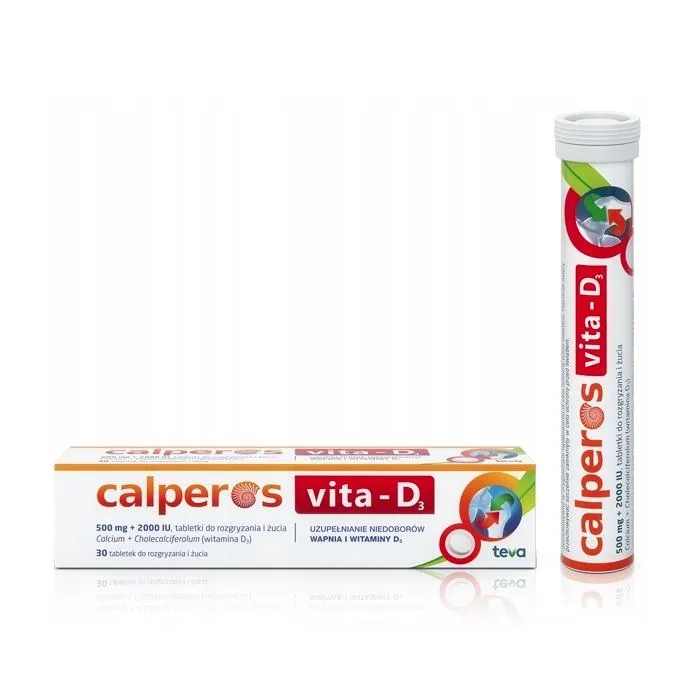
Table of Contents
Patient Information Leaflet
Calperos Vita-D, 500 mg + 2000 IU, chewable tablets
Calcium + Cholecalciferolum (vitamin D )
Please read all of this leaflet carefully before taking this medicine, because it contains
important information for you.
This medicine should always be taken exactly as described in this patient leaflet or as directed by
your doctor or pharmacist.
- Keep this leaflet so that you can read it again if necessary.
- If you need advice or further information, please consult your pharmacist.
- If you experience any adverse reactions, including any not listed in this leaflet, inform your doctor or pharmacist. See section 4.
- If your symptoms do not improve or worsen, you should contact your doctor.
Leaflet Contents
- What Calperos Vita-D is and what it is used for
- Important information before taking Calperos Vita-D
- How to take Calperos Vita-D
- Possible side effects
- How to store Calperos Vita-D
- Contents of the pack and other information
1. What Calperos Vita-D is and what it is used for
Calperos Vita-D is a combination of calcium, a mineral, and cholecalciferol, also known as vitamin D . These substances are important in the process of bone formation.
This medicine is used for the treatment of calcium and vitamin D deficiency in adults.
2. Important information before using Calperos Vita-D
When not to use Calperos Vita-D
if the patient is allergic to calcium, vitamin D, or any of the other ingredients of this
medicine (listed in section 6),
if the patient has high levels of calcium in the blood (hypercalcemia),
if the patient has high levels of calcium in the urine (hypercalciuria),
if the patient has been diagnosed with hyperparathyroidism,
if the patient suffers from multiple myeloma (a type of bone marrow cancer),
if the patient suffers from cancer that has spread to the bones,
if the patient has limited limb mobility (prolonged immobilization) associated with
hypercalcemia and (or) hypercalciuria,
if the patient has been diagnosed with kidney stones (nephrolithiasis),
if calcium deposits (nephrocalcinosis) have been detected in the patient's kidneys,
if the patient is taking excessive amounts of vitamin D (hypervitaminosis D),
if the patient has severe kidney function disorders.
Warnings and precautions
Before starting treatment with Calperos Vita-D, discuss this with your doctor or pharmacist:
If the patient suffers from phenylketonuria (see also section "Calperos Vita-D contains aspartame").
During long-term treatment, calcium levels in blood and urine should be regularly monitored, and kidney function should be assessed. This is particularly important for patients prone to developing kidney stones. Depending on test results, the doctor may reduce the dose or discontinue treatment.
If the patient is concurrently taking cardiac glycosides (digoxin, digitoxin) or thiazide diuretics due to heart problems, calcium levels in blood and urine should be regularly monitored, and kidney function should be assessed. Depending on test results, the doctor may reduce the dose or discontinue treatment.
Calperos Vita-D should be used with particular caution in patients with kidney function disorders. Calcium levels in blood and urine should be monitored. Patients with severe kidney function disorders should take vitamin D in a form other than vitamin D3.
Additional products containing calcium and vitamin D should only be taken under medical supervision. Your doctor will recommend frequent monitoring of calcium levels in blood and urine.
Calperos Vita-D should be used with particular caution in patients with sarcoidosis (an immune system disorder that may affect the liver, lungs, skin, or lymph nodes). There is a risk of excessive drug effect and consequently calcium overdose. Monitoring of calcium levels in blood and urine is necessary.
If Calperos Vita-D is used in an immobilized patient with osteoporosis, particular caution is required. Increased calcium levels in blood may occur.
Before taking Calperos Vita-D, consider the amount of calcium and alkaline substances (e.g. carbonates) taken from other sources (e.g. food, dietary supplements, and other medicines). Concurrent intake of calcium-rich products together with alkaline substances such as carbonates may lead to the occurrence of the Burnett syndrome (hypercalcemia and metabolic alkalosis). This is a calcium metabolism disorder characterized by elevated calcium levels in blood (hypercalcemia), increased blood pH (metabolic alkalosis), kidney failure, and calcification of soft tissues. Therefore, additional intake of Calperos Vita-D requires strict medical supervision and frequent monitoring of calcium levels in blood and urine.
Children and adolescents
Calperos Vita-D is not intended for use in children and adolescents under 18 years of age.
Calperos Vita-D and other medicines
Inform your doctor or pharmacist about all medicines currently taken or recently taken, as well as any medicines you plan to take.
If the patient is concurrently treated with cardiac glycosides (digoxin, digitoxin), heart rhythm disorders (arrhythmias) may occur. Therefore, close monitoring of the patient is required, including ECG and measurement of calcium levels in blood.
If the patient is concurrently taking thiazide diuretics, calcium levels in blood should be regularly monitored, as these drugs reduce calcium excretion in urine.
The use of Calperos Vita-D may reduce the absorption and thus the effectiveness of certain antibiotics (tetracyclines) taken simultaneously. These medicines should be taken at least 2 hours before or 4 to 6 hours after taking Calperos Vita-D.
The effect of other medicines, such as sodium fluoride (used to strengthen tooth enamel or treat osteoporosis) and bisphosphonates (used in the treatment of osteoporosis), may also be altered due to interactions. For this reason, these medicines should be taken at least 3 hours before taking Calperos Vita-D.
A maximum possible interval should be maintained between the administration of cholestyramine (a medicine used to reduce elevated cholesterol levels) or laxatives such as liquid paraffin, and the use of Calperos Vita-D, due to the risk of impaired absorption of vitamin D.
Concurrent use of Calperos Vita-D and phenytoin (used to treat epilepsy) or barbiturates (sleeping pills) may weaken the effect of vitamin D.
Concurrent use of Calperos Vita-D and glucocorticosteroids (e.g. cortisone) may weaken the effect of vitamin D and reduce calcium levels in blood.
Additional supplementation with calcium and vitamin D requires strict medical supervision and frequent monitoring of calcium levels in blood and urine.
Calcium may reduce the effectiveness of levothyroxine (used to treat hypothyroidism). Therefore, levothyroxine should be taken at least 4 hours before or 4 hours after taking Calperos Vita-D.
The effect of fluoroquinolone antibiotics may be weakened by concurrent intake of calcium. Fluoroquinolone antibiotics should be taken 2 hours before taking Calperos Vita-D.
Calcium may reduce the absorption of iron, zinc, and strontium ranelate. Therefore, iron, zinc, or strontium ranelate preparations should be taken at least 2 hours before or after taking Calperos Vita-D.
Taking Calperos Vita-D with food and drink
Calperos Vita-D may be taken at any time of day, preferably with a meal.
Note that oxalic acid (found in spinach and rhubarb) and phytic acid (found in whole grain products) may reduce the amount of calcium absorbed in the intestine.
Calcium-containing medicines should be taken with a 2-hour interval from consuming foods high in oxalic or phytic acid.
Pregnancy and breastfeeding
If the patient is pregnant or breastfeeding, suspects she may be pregnant, or plans to become pregnant, she should consult her doctor or pharmacist before using this medicine.
Pregnancy
Calperos Vita-D should not be used during pregnancy.
During pregnancy, the total daily intake of calcium should not exceed 1500 mg, and the total daily intake of vitamin D should not exceed 600 IU (international units).
Prolonged overdose of calcium and vitamin D during pregnancy should be avoided, as it may lead to high calcium levels in blood and may adversely affect the unborn child.
Breastfeeding
Calperos Vita-D should not be used during breastfeeding. Due to the high vitamin D content in Calperos Vita-D, a risk to the infant cannot be excluded.
Both calcium and vitamin D pass into breast milk; therefore, it is necessary to consult with a doctor whether to discontinue breastfeeding or stop using Calperos Vita-D.
Alternatively, treatment may be changed to other calcium and vitamin D medicines containing lower doses of vitamin D.
Driving and operating machinery
Calperos Vita-D does not affect the ability to drive or operate machinery.
Calperos Vita-D contains aspartame
This medicine contains 0.5 mg of aspartame in each chewable tablet. Aspartame is a source of phenylalanine. It may be harmful to patients with phenylketonuria. This is a rare genetic disorder in which phenylalanine accumulates in the body due to improper excretion.
Calperos Vita-D contains sorbitol, isomalt, and sucrose
This medicine contains up to 49.42 mg of sorbitol, 185 mg of isomalt, and 3.85 mg of sucrose in each chewable tablet. If the patient has previously been diagnosed with intolerance to certain sugars, the patient should consult a doctor before taking this medicine. The medicine may have a harmful effect on teeth.
Calperos Vita-D contains sodium
This medicine contains less than 1 mmol (23 mg) of sodium per chewable tablet, meaning the medicine is considered "sodium-free".
Calperos Vita-D contains benzyl alcohol
This medicine contains 0.016 mg of benzyl alcohol in each chewable tablet. Benzyl alcohol may cause allergic reactions. Pregnant or breastfeeding women and patients with liver or kidney disease should consult a doctor before using this medicine, as large amounts of benzyl alcohol may accumulate in their bodies and cause adverse effects (so-called metabolic acidosis).
3. How to use Calperos Vita-D
This medicine should always be taken exactly as described in this patient information leaflet or as directed by your doctor or pharmacist. If in doubt, consult your doctor or pharmacist.
Recommended dosage
Adults, including elderly patients, should take 1 chewable tablet per day, providing 500 mg of calcium and 2000 IU (international units) of vitamin D.
Before starting Calperos Vita-D, your doctor may first prescribe a medicine containing a higher dose of vitamin D without calcium, depending on the severity of the condition and the patient's response to treatment, in order to achieve the desired vitamin D levels.
Children and adolescents
Due to its high vitamin D content, Calperos Vita-D is not intended for use in children and adolescents under 18 years of age.
Method of administration
The tablet should be chewed and then swallowed. It can be taken at any time of day, preferably with a meal.
Take into account adequate daily dietary calcium intake (e.g. from dairy products, vegetables, and mineral water), as Calperos Vita-D provides only about half of the required daily calcium intake.
Duration of treatment
Calperos Vita-D should be taken for a prolonged period. Consult your doctor regarding the duration of treatment (see also section 2 "Warnings and precautions").
Overdose of Calperos Vita-D
Taking more than the recommended dose of Calperos Vita-D may cause symptoms such as nausea, vomiting, increased thirst, increased urination, dehydration, or constipation.
If overdose is suspected, contact your doctor or pharmacist immediately.
Missed dose of Calperos Vita-D
If a patient forgets to take a tablet, they should take it as soon as they remember.
Do not take a double dose to make up for the missed tablet.
Stopping Calperos Vita-D treatment
If a patient plans to stop or discontinue treatment prematurely, they should discuss this with their doctor or pharmacist.
If you have any further questions about the use of this medicine, consult your doctor or pharmacist.
4. Possible adverse reactions
Like all medicines, this medicine can cause adverse reactions, although not everybody will experience them.
The assessment of adverse reactions is based on the following frequency categories:
Very common: may affect more than 1 in 10 people
Common: may affect up to 1 in 10 people
Uncommon: may affect up to 1 in 100 people
Rare: may affect up to 1 in 1,000 people
Very rare: may affect up to 1 in 10,000 people
Frequency not known: frequency cannot be estimated from available data
Treatment with Calperos Vita-D must be discontinued immediately and medical advice should be sought
if the following allergic reaction occurs (frequency not known): facial, lip, tongue or throat swelling with sudden breathing difficulties and severe rash.
Other reported adverse reactions:
Uncommon:
- High levels of calcium in the blood (hypercalcaemia) or in the urine (hypercalciuria).
Rare:
- Nausea, diarrhoea, abdominal pain, constipation, flatulence, bloating (feeling of abdominal distension).
- Rash, itching, urticaria.
Frequency not known:
- Burnett's syndrome (hypercalcaemia and metabolic alkalosis).
If the patient has impaired kidney function, they may be at increased risk of elevated blood phosphate levels, kidney stone formation, and increased calcium deposition in the kidneys.
Reporting of adverse reactions
If any adverse reactions occur, including any adverse reactions not listed in this leaflet, inform a doctor or pharmacist. Adverse reactions can be reported directly to the Department of Monitoring of Adverse Drug Reactions, Office for Registration of Medicinal Products, Medical Devices and Biocidal Products:
Al. Jerozolimskie 181C, 02-222 Warsaw
Tel.: +48 22 49 21 301
Fax: +48 22 49 21 309
Website: https://smz.ezdrowie.gov.pl
Adverse reactions can also be reported to the marketing authorization holder.
Reporting adverse reactions enables continued monitoring of the medicine's safety and helps provide more information on its safe use.
5. How to store Calperos Vita-D
Keep the medicine out of the sight and reach of children.
Do not use this medicine after the expiry date stated on the carton and container for tablets after: "Expiry date (EXP):". The expiry date refers to the last day of the stated month.
Tablets should be stored in the original packaging to protect from light.
The container should be kept tightly closed to protect from light.
Medicines must not be disposed of via wastewater or household waste. Ask your pharmacist how to dispose of medicines no longer required. Such measures will help protect the environment.
6. Contents of the pack and other information
What Calperos Vita-D contains
The active substances in this medicine are calcium and cholecalciferol (vitamin D).
Each chewable tablet contains 500 mg of calcium (in the form of carbonate) and
50 micrograms of cholecalciferol equivalent to 2000 IU vitamin D (as a concentrate
of cholecalciferol in powder form).
The other ingredients are: isomalt (E 953), xylitol (E 967), sorbitol (E 420), citric acid, monosodium
citrate, magnesium stearate, sodium carmellose, orange flavour “CPB” (containing natural flavouring substances, mannitol, maltodextrin, gluconolactone, sorbitol, propylene glycol, benzyl alcohol), orange flavour “CVT” (containing flavouring substances, mannitol, maltodextrin, gluconolactone, sorbitol and medium-chain triglycerides), colloidal hydrated silica,
aspartame (E 951), acesulfame potassium (E 950), sodium ascorbate, all-rac-α-tocopherol, modified corn starch, sucrose, medium-chain triglycerides, anhydrous colloidal silica.
What Calperos Vita-D looks like and contents of the pack
Calperos Vita-D is a round, white chewable tablet with a diameter of 18 mm.
The chewable tablets are available in polypropylene tablet containers with polyethylene caps containing a desiccant, in the following pack sizes: 30 chewable tablets.
Marketing Authorisation Holder and Manufacturer
Marketing Authorisation Holder
Teva B.V.
Swensweg 5
2031 GA Haarlem
The Netherlands
For further information about this medicine, please contact the local representative of the Marketing Authorisation Holder:
Teva Pharmaceuticals Polska Sp. z o.o.
Emilii Plater 53,
00-113 Warsaw
Poland
Tel.: (22) 345 93 00
Manufacturer
Hermes Pharma GmbH
Hans-Urmiller Ring 52
82515 Wolfratshausen
Germany