Calgel
Poland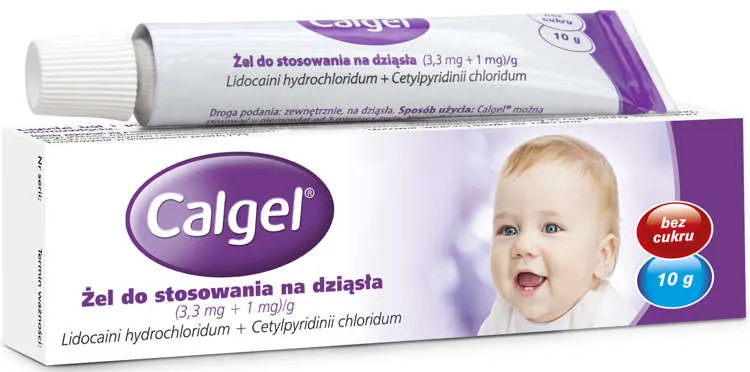
Table of Contents
Package leaflet: Information for the user
Warning! Keep this leaflet! Information on the immediate packaging is in a foreign language.
Calgel
(3.3 mg + 1 mg)/g, gel for application to the gums
Lidocaini hydrochloridum + Cetylpyridinii chloridum
Please read all of this leaflet carefully before using the medicine, because it contains
important information for the patient.
This medicine should always be used exactly as described in this patient leaflet or as advised by
a doctor or pharmacist.
- Keep this leaflet, so that you can read it again if necessary.
- If you need advice or further information, please consult your pharmacist.
- If the patient experiences any adverse reactions, including any not listed in this leaflet, inform a doctor or pharmacist. See section 4.
- If there is no improvement or if the patient feels worse, contact a doctor.
Table of contents of the leaflet:
- What Calgel is and what it is used for
- Important information before using Calgel
- How to use Calgel
- Possible side effects
- How to store Calgel
- Contents of the pack and other information
1. What Calgel is and what it is used for
Calgel is a combination medicine with local action. Lidocaine is a local anaesthetic. Cetylpyridinium chloride has mild antiseptic properties.
Calgel is indicated for inflammatory conditions associated with teething. Calgel acts quickly, reducing teething pain and soothing irritation of the infant's gums.
2. Important information before using Calgel
When not to use Calgel
Do not use Calgel if the patient is allergic to lidocaine hydrochloride, cetylpyridinium chloride, or any of the other ingredients of this medicine (listed in section 6), including chamomile.
Warnings and precautions
Before starting to use Calgel, discuss this with your doctor or pharmacist.
Do not use a higher dose than recommended (see section 3).
If any adverse effects occur (see section 4) or in case of overdose, the patient should stop using the medicine and seek medical advice.
If the patient has been diagnosed with intolerance to certain sugars, they should contact their doctor before taking this medicine (see below).
Calgel and other medicines
Tell your doctor or pharmacist about all medicines currently used or recently used, as well as any medicines the patient plans to use.
Interactions have been reported between intravenous lidocaine and oral procainamide (an antiarrhythmic medicine), oral phenytoin (an anticonvulsant medicine) administered alone or in combination with phenobarbital (a sedative and hypnotic), primidone (an anticonvulsant), carbamazepine (used in the treatment of epilepsy or certain psychiatric conditions), oral propranolol (a blood pressure-lowering medicine used in heart rhythm disorders and as a sedative), and diuretics (water pills) (bumetanide, furosemide, thiazides).
No interactions between Calgel and other medicines are known.
Pregnancy and breastfeeding
If the patient is pregnant or breastfeeding, suspects she may be pregnant, or is planning to have a child, she should consult her doctor or pharmacist before using this medicine.
This medicine is intended for use in children and infants.
Driving and operating machinery
Calgel has no effect on the ability to drive or operate machinery.
Calgel contains macrogolglycerol hydroxystearate (polyoxylated hydrogenated castor oil)
This medicine may cause skin reactions.
Calgel contains benzoic acid (from herbal flavour)
The medicine contains 0.004 mg of benzoic acid per gram of gel.
Benzoic acid may cause local irritation.
Calgel contains benzyl alcohol (from herbal flavour)
The medicine contains 0.00096 mg of benzyl alcohol per gram of gel.
Benzyl alcohol may cause allergic reactions. The medicine may cause mild local irritation.
Important information in case of ingestion
Calgel contains sorbitol (E 420)
The medicine contains 147 mg of 70% sorbitol per gram. Sorbitol is a source of fructose. If the patient (or their child) has previously been diagnosed with intolerance to certain sugars or hereditary fructose intolerance, a rare genetic disorder in which the body cannot break down fructose, the patient should contact their doctor before taking the medicine or giving it to a child.
Calgel contains ethanol
The medicine contains 91.46 mg of alcohol (ethanol) per gram. The amount of alcohol in 1 gram of this medicine is equivalent to less than 3 ml of beer or 1 ml of wine.
The small amount of alcohol in this medicine will not cause noticeable effects.
Calgel contains macrogolglycerol hydroxystearate (polyoxylated hydrogenated castor oil)
This medicine may cause indigestion and diarrhoea.
Calgel contains less than 1 mmol (23 mg) of sodium per dose, meaning the medicine is considered "sodium-free".
Calgel contains benzyl alcohol (from herbal flavour)
The medicine contains 0.00096 mg of benzyl alcohol per gram of gel.
Do not administer to young children (under 3 years of age) for longer than one week without medical or pharmacist advice. Patients with liver or kidney disease should contact their doctor before using this medicine, as large amounts of benzyl alcohol may accumulate in their body and cause adverse effects (so-called metabolic acidosis).
3. How to use Calgel
This medicine should always be used exactly as described in this patient information leaflet, or as directed by a doctor or pharmacist. If in doubt, consult a doctor or pharmacist.
This medicine is intended for local application to irritated gums.
Do not use Calgel in infants below 3 months of age.
| Age | Dosage |
| Infants from 3 months of age | Squeeze a small amount of gel (7.5 mm) onto the tip of a clean finger and gently rub into the gums at the site of tooth eruption. |
| If necessary, the procedure may be repeated. Wait at least 2 hours before reapplying the product. Do not use more than 6 times within 24 hours. | |
Do not use a higher dose than recommended.
Use of a higher than recommended dose of Calgel
If a higher than recommended dose is used or a large amount of Calgel is swallowed, stop using the medicine and consult a doctor.
Missed use of Calgel
Do not use a double dose to make up for a missed dose.
4. Possible adverse reactions
Like any medicine, this product may cause adverse reactions, although not everyone experiences them.
Allergic reactions (including skin inflammation) and reactions at the application site (including erythema) have been reported very rarely (occurring in fewer than 1 in 10,000 patients).
Chamomile, present in trace amounts as a component of the herbal flavouring, may cause allergic reactions. Hypersensitivity to chamomile typically manifests as breathing difficulties or anaphylactic reactions after drinking herbal infusions containing chamomile (herbal tea for asthma) or as allergic skin reactions to products containing chamomile.
Reporting of adverse reactions
If any adverse effects occur, including any adverse effects not listed in this leaflet, inform a doctor or pharmacist. Adverse reactions can be reported directly to the Department of Monitoring Adverse Drug Reactions of the Office for Registration of Medicinal Products, Medical Devices and Biocidal Products, Al. Jerozolimskie 181C, 02-222 Warsaw, phone: + 48 22 49 21 301, fax: + 48 22 49 21 309, website: https://smz.ezdrowie.gov.pl.
Reporting adverse reactions enables continuous monitoring of the medicine's safety and helps provide more information on its safe use.
5. How to store Calgel
Store below 25°C.
Keep Calgel out of the sight and reach of children.
Shelf life after first opening of the tube: 1 month.
Do not use Calgel after the expiry date stated on the packaging. The expiry date refers to the last day of the stated month.
Medicines should not be disposed of via wastewater or household waste. Ask your pharmacist how to dispose of medicines no longer in use. This will help protect the environment.
6. Contents of the pack and other information
What Calgel contains
- The active substances in Calgel are lidocaine hydrochloride and cetalkonium chloride. 1 gram of gel contains 3.3 mg of lidocaine hydrochloride and 1 mg of cetalkonium chloride.
- The other ingredients are: sorbitol 70% solution (E 420), xylitol (E 967), ethanol 96%, glycerol (E 422), hydroxyethylcellulose 5000, macrogol glycerol hydroxystearate, macrogol lauryl ether, macrogol 300, sodium saccharin (E 954), levomenthol, herbal flavour, caramel (E 150c), citric acid monohydrate, disodium citrate dihydrate (E 331), purified water.
What Calgel looks like and contents of the pack
Calgel is a yellowish-brown gel with a characteristic odour.
The packaging consists of an aluminium tube with a PP cap containing 10 g of gel, placed in a cardboard box.
For further information, please contact the responsible party or the parallel importer.
Responsible party in Latvia, country of export:
McNeil Healthcare (Ireland) Limited
Office 5, 6 & 7, Block 5, High Street, Tallaght
Dublin 24, Ireland
Manufacturer:
Delpharm Orléans
5, avenue de Concyr
45 071 Orléans Cedex 2
France
Parallel importer:
InPharm Sp. z o.o.
ul. Strumykowa 28/11
03-138 Warsaw
Repackaged by:
InPharm Sp. z o.o. Services sp. k.
ul. Chełmżyńska 249
04-458 Warsaw
Marketing authorisation number in Latvia, country of export: 00-0249
Parallel import authorisation number: 296/16