Calcium + cholecalciferol béres
Poland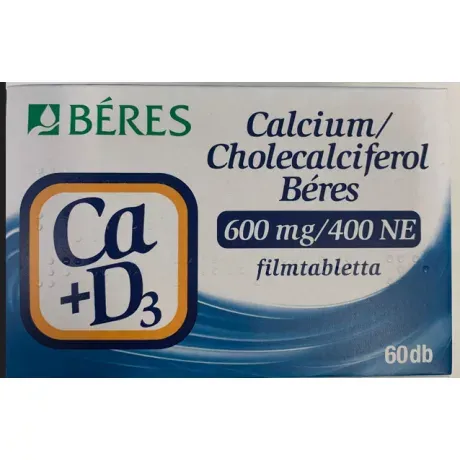
Table of Contents
- 1. What is Calcium + Cholecalciferol Béres and what is it used for
- 2. Important information before using Calcium + Cholecalciferol Béres
- 3. How to use Calcium + Cholecalciferol Béres
- 4. Possible side effects
- 5. How to store Calcium + Cholecalciferol Béres
- 6. Contents of the package and other information
Calcium + Cholecalciferol Béres, 600 mg + 800 IU, film-coated tablets
Calcium + Cholecalciferolum
Please read the following instructions carefully before taking this medicine, as they contain
important information for the patient.
- Keep this leaflet for future reference.
- If you have any questions, consult your doctor or pharmacist.
- This medicine has been prescribed for a specific individual. Do not share it with others. This medicine may harm other people, even if their symptoms are similar.
- If you experience any adverse reactions, including any not listed in this leaflet, inform your doctor or pharmacist. See section 4.
Table of contents:
- What is Calcium + Cholecalciferol Béres and what is it used for
- Important information before taking Calcium + Cholecalciferol Béres
- How to take Calcium + Cholecalciferol Béres
- Possible side effects
- How to store Calcium + Cholecalciferol Béres
- Contents of the package and other information
1. What is Calcium + Cholecalciferol Béres and what is it used for
This medicine contains calcium (in the form of calcium carbonate) and cholecalciferol (vitamin D), which are important in the process of bone formation.
Calcium + Cholecalciferol Béres may be used to prevent and treat calcium and vitamin D deficiency in patients at risk of such deficiencies, and as an adjunct in the treatment of osteoporosis.
2. Important information before using Calcium + Cholecalciferol Béres
When not to use Calcium + Cholecalciferol Béres:
- if the patient is allergic to the active substances or any of the other ingredients of this medicine (listed in section 6);
- if the patient has kidney stones or calcium deposits in kidney tissue;
- if the patient has kidney failure or impaired kidney function;
- if the patient has high levels of vitamin D in the blood;
- if the patient has chronically elevated levels of calcium in the urine or elevated calcium levels in the blood, or a disease that may cause this (e.g. malignant tumour affecting the bones);
- Calcium + Cholecalciferol Béres contains hydrogenated soybean oil. If the patient is allergic to soy or peanuts, this medicine should not be used.
Warnings and precautions
Before starting treatment with Calcium + Cholecalciferol Béres, discuss with the doctor:
- if the patient has kidney disease or impaired kidney function;
- if the patient has sarcoidosis (a disease diagnosed by a physician, characterised by formation of nodules and swelling in various organs);
- if the patient is prone to developing kidney stones;
- if the patient is immobilised and suffers from osteoporosis.
The doctor should decide whether calcium and (or) vitamin D can be administered in such cases.
Before initiating osteoporosis treatment with Calcium + Cholecalciferol Béres, the doctor may check the calcium level in the blood.
In cases of long-term use of Calcium + Cholecalciferol Béres and impaired kidney function, calcium levels in the blood and kidney function should be monitored regularly. Depending on the results, the doctor may decide to discontinue treatment.
Children and adolescents
Calcium + Cholecalciferol Béres coated tablets are not intended for use in children and adolescents.
Calcium + Cholecalciferol Béres with other medicines
Inform the doctor or pharmacist about all medicines currently or recently taken, as well as any medicines planned for future use.
Be sure to discuss with the treating physician if the patient is taking the following medicines:
- other medicines containing calcium or vitamin D, because concomitant use of such products with Calcium + Cholecalciferol Béres may lead to harmful increases in blood calcium levels. During treatment with Calcium + Cholecalciferol Béres, other products containing calcium or vitamin D should not be taken without medical advice;
- thiazide diuretics;
- systemic corticosteroids (anti-inflammatory medicines taken orally or intravenously);
- cardiac glycosides (digitalis-containing preparations used in the treatment of heart failure).
Medicines that should be used with special caution:
- ion-exchange resins such as cholestyramine, or laxatives such as liquid paraffin, as these medicines reduce the absorption of vitamin D;
- medicines containing tetracyclines and quinolones (antibiotics), because calcium carbonate may affect their absorption. Therefore, tetracyclines and quinolones should be taken at least 2 hours before or 4–6 hours after taking Calcium + Cholecalciferol Béres;
- if the patient is taking Calcium + Cholecalciferol Béres together with sodium fluoride or bisphosphonates (used in the treatment of osteoporosis), these medicines should be taken at least 3 hours before taking Calcium + Cholecalciferol Béres;
- rifampicin (a medicine used in the treatment of tuberculosis), actinomycin (an antibiotic used in cancer treatment), imidazole derivatives (antifungal medicines), phenytoin (an antiepileptic medicine), and barbiturates (antiepileptic and sedative medicines), as they may reduce the effectiveness of vitamin D;
- medicines containing estramustine (used in chemotherapy), thyroid hormones, or iron, zinc, or strontium, as their absorption may be reduced. These medicines should be taken at least 2 hours before or after taking Calcium + Cholecalciferol Béres.
Calcium + Cholecalciferol Béres with food and drink
Oxalic acid (found in spinach, sorrel, and rhubarb) and phytic acid (present in whole-grain cereal products) may inhibit calcium absorption. Calcium + Cholecalciferol Béres should not be taken within 2 hours of consuming foods rich in oxalic and phytic acids.
Pregnancy, breastfeeding and fertility
During pregnancy, daily calcium intake should not exceed 2500 mg, and vitamin D intake should not exceed 4000 IU (international units). Use of Calcium + Cholecalciferol Béres is generally not recommended during pregnancy, but the doctor may prescribe it in cases of calcium or vitamin D deficiency.
Calcium + Cholecalciferol Béres may be taken during breastfeeding, but medical advice should be sought before starting treatment.
Before taking any medicine, consult a doctor or pharmacist.
Driving and using machines
There is no data available on the effect of this medicine on the ability to drive or operate machinery.
Calcium + Cholecalciferol Béres contains hydrogenated soybean oil and sucrose
Calcium + Cholecalciferol Béres contains hydrogenated soybean oil. This medicine should not be taken if the patient is allergic to peanuts or soy.
Calcium + Cholecalciferol Béres contains a small amount of sucrose. If the patient has previously been diagnosed with intolerance to certain sugars, the patient should consult the doctor before taking this medicine.
3. How to use Calcium + Cholecalciferol Béres
This medicine should always be used exactly as described in the patient leaflet or as directed by your doctor. If in doubt, consult your doctor or pharmacist.
Adults and elderly people
Recommended dose: one coated tablet per day.
Use in children and adolescents
Calcium + Cholecalciferol Béres is not intended for use in children and adolescents.
It is recommended to take the coated tablet within one and a half hours after a meal, without chewing, with a glass of water or juice. The break line on the tablet is intended only to facilitate splitting if the tablet cannot be swallowed whole. If necessary, the tablet may be divided in half.
If this medicine is used as supplementary treatment for osteoporosis, discuss the duration of treatment with your doctor.
Since dietary habits significantly affect the need for and extent of calcium supplementation, inform your doctor of any major changes in your diet.
Taking more Calcium + Cholecalciferol Béres than recommended
If you have taken too many tablets, contact your doctor immediately. Taking more than the recommended dose may cause unwanted and harmful side effects. Symptoms of overdose may include: loss of appetite, increased thirst, nausea, vomiting, constipation, abdominal pain, muscle weakness, fatigue, confusion, increased urination, bone pain, and in severe cases, heart rhythm disturbances. In extreme cases, calcium overdose may lead to coma and even death. Persistently high calcium levels in the blood may result in irreversible kidney damage and calcium deposition in body tissues.
Missed dose of Calcium + Cholecalciferol Béres
Do not take a double dose to make up for a missed tablet, as this may pose a risk of overdose.
Continue taking the medicine as previously scheduled.
If you have any further questions about the use of this medicine, consult your doctor or pharmacist.
4. Possible side effects
Like all medicines, this medicine can cause side effects, although not everybody will get them.
Not common (may affect no more than 1 in 100 people):
marked increase in calcium levels in the blood (hypercalcaemia).
Symptoms include: nausea, vomiting, loss of appetite, constipation, stomach pain, bone pain, excessive thirst, frequent urination, muscle weakness, drowsiness, confusion.
Excessive increase in calcium levels in the urine (hypercalciuria). If the patient takes this medicine long-term, the attending physician may periodically monitor calcium levels in blood and urine, as well as kidney function.
Rare (may affect no more than 1 in 1,000 people):
Constipation, bloating, nausea, abdominal pain, diarrhoea, itching, rash, urticaria.
Very rare (may affect no more than 1 in 10,000 people):
Milk-alkali syndrome (may occur after ingestion of large amounts of calcium together with highly absorbable alkaline compounds (e.g. bicarbonates), with symptoms such as frequent urge to urinate, persistent headaches, loss of appetite, nausea or vomiting, unusual tiredness or weakness, marked increase in calcium levels in the blood, alkalosis (increased bicarbonate levels in blood), and kidney failure).
Patients with kidney impairment may be at increased risk of elevated phosphate levels in the blood, kidney stone formation, and calcium deposition in the kidneys.
Reporting of side effects
If any side effects occur, including any not listed in this leaflet, patients should inform their doctor, pharmacist, or nurse. Side effects can be reported directly to the Department of Monitoring Adverse Drug Reactions of the Office for Registration of Medicinal Products, Medical Devices and Biocidal Products:
Al. Jerozolimskie 181C,
02-222 Warsaw
Phone: +48 22 49 21 301
Fax: +48 22 49 21 309
Website: https://smz.ezdrowie.gov.pl
Side effects can also be reported to the marketing authorisation holder.
Reporting side effects helps provide more information on the safety of this medicine.
5. How to store Calcium + Cholecalciferol Béres
Do not store above 25°C.
Store in the original packaging to protect from moisture.
Keep the medicine out of sight and reach of children.
Do not use this medicine after the expiry date stated on the packaging after: EXP.
The expiry date refers to the last day of the stated month.
Medicines must not be disposed of via wastewater or household waste. Ask your pharmacist how to dispose of medicines no longer required. This will help protect the environment.
6. Contents of the package and other information
What Calcium + Cholecalciferol Béres contains
Active substances:
600 mg calcium (as 1500 mg calcium carbonate) and
20 micrograms cholecalciferol (equivalent to 800 IU vitamin D).
The medicine also contains:
Tablet core:
magnesium stearate, crospovidone (type A), copovidone, microcrystalline cellulose (type 102),
sucrose, gelatin, all-rac-α-tocopherol (E 307), hydrogenated soybean oil, corn starch,
colloidal silicon dioxide.
Coating:
yellow iron oxide (E 172), red iron oxide (E 172), hypromellose 15 cps, titanium dioxide (E 171),
macrogol 3350, talc.
What Calcium + Cholecalciferol Béres looks like and contents of the pack
Light orange, oval film-coated tablet with a score line on one side.
The break surface is white.
The score line on the tablet is intended only to facilitate breaking the tablet for easier swallowing and does not guarantee equal division into doses.
30, 60, 90, 120 film-coated tablets in colourless PVC/aluminium blisters in a cardboard box.
Not all pack sizes may be marketed.
Marketing Authorisation Holder and Manufacturer:
Béres Pharmaceuticals Ltd.
H-1037 Budapest, Mikoviny utca 2-4, Hungary
Tel: +36-1-430-5500
Fax: +36-1-250-7251
E-mail: [email protected]
Manufacturer:
Béres Pharmaceuticals Ltd.
5000 Szolnok, Nagysándor József út 39
Hungary
This medicinal product is authorised in the Member States of the European Economic Area under the following names:
Hungary: Calcium/Cholecalciferol Béres 600 mg/800 NE
Czech Republic: Videmel Forte
Estonia: Calcium/Colecalciferol Béres
Latvia: Calcium/Colecalciferol Beres 600 mg/800 SV apvalkotās tablets
Poland: Calcium + Cholecalciferol Béres
Romania: CalciviD 600 mg/800 UI
Slovakia: Kalcizen Forte