Butapirazol
Poland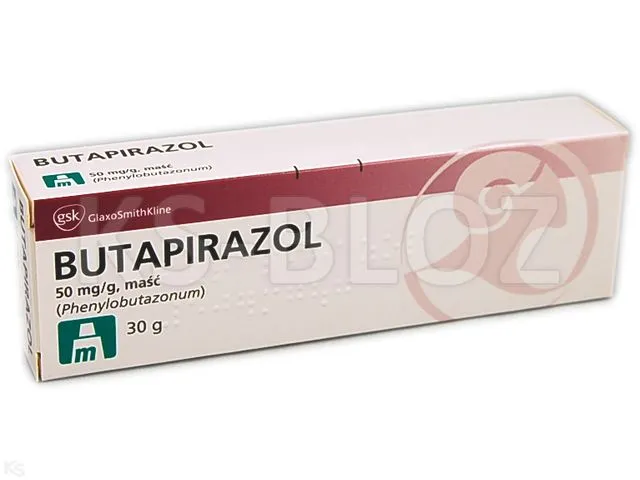
Table of Contents
Package leaflet: Information for the user
Butapirazol, 50 mg/g, ointment
Phenylobutazone
Please read all of this leaflet carefully before using this medicine, because it contains
important information for the patient.
- Keep this leaflet, as you may need to read it again.
- If you have any questions, consult your doctor or pharmacist.
- This medicine has been prescribed for a specific individual. Do not pass it on to others. It may harm other people, even if their symptoms are the same.
- If you experience any adverse reactions, including any not listed in this leaflet, inform your doctor or pharmacist. See section 4.
Leaflet contents:
- What Butapirazol is and what it is used for
- Important information before using Butapirazol
- How to use Butapirazol
- Possible side effects
- How to store Butapirazol
- Contents of the pack and other information
1. What Butapirazol is and what it is used for
Butapirazol ointment has the following actions:
- anti-inflammatory,
- analgesic.
Butapirazol ointment is used as supportive treatment for inflammatory conditions and pain in:
- rheumatoid arthritis,
- ankylosing spondylitis,
- periarticular tissue inflammation,
- discopathies,
- acute gout attack,
- thrombophlebitis.
2. Important information before using Butapirazol
When not to use Butapirazol
- if the patient is allergic to phenylbutazone or any of the other ingredients of this medicine (listed in section 6),
- do not use in children under 14 years of age,
- if the patient is concurrently using medicines called chemotherapeutics or other medicines affecting bone marrow function,
- do not apply to damaged skin.
Warnings and precautions
Before using Butapirazol, tell your doctor if the patient has:
- gastrointestinal mucosal inflammation,
- gastric or duodenal ulcer disease,
- salivary gland enlargement,
- circulatory failure,
- hypertension,
- oedema,
- liver failure,
- renal failure,
- thyroid disorders,
- changes in blood morphology parameters,
- bronchial asthma.
Also discuss with your doctor if the patient:
- is elderly,
- is concurrently using insulin or sulfonylurea derivatives, anticoagulants, or other non-steroidal anti-inflammatory drugs (NSAIDs).
If the medicine enters the bloodstream due to improper application, the same adverse effects may occur as after using Butapirazol with systemic action (e.g. suppositories).
Butapirazol and other medicines
Tell your doctor or pharmacist about all medicines the patient is currently taking or has recently taken, as well as any medicines the patient plans to take. This includes medicines available without a prescription.
During intensive, prolonged (over 7 days) use of Butapirazol ointment, interactions may occur as with systemic Butapirazol (e.g. suppositories).
Butapirazol ointment may enhance the effect of:
- oral anticoagulants of the coumarin group,
- oral antidiabetic drugs of the sulfonylurea group,
- insulin,
- sulfonamides.
Concurrent alcohol consumption and treatment with glucocorticosteroids increase the risk of gastrointestinal disorders, bleeding, and perforation (rupture of the wall) of the gastrointestinal tract. Butapirazol increases the toxic effect of methotrexate (a medicine used in cancer treatment) and reduces the effect of spironolactone (a medicine used in the treatment of hypertension and heart diseases). Probenecid (a medicine used in the treatment of gout), sulfinpyrazone (an anti-inflammatory and analgesic medicine), and barbiturates (sleeping medicines) reduce the effectiveness of Butapirazol. Concurrent use of Butapirazol and other non-steroidal anti-inflammatory drugs may lead to allergic reactions and increase the risk of other adverse effects. Do not use Butapirazol concurrently with gold salts (medicines used in the treatment of rheumatoid arthritis).
Use of Butapirazol with food, drink and alcohol
Butapirazol can be used regardless of meals.
Alcohol consumption during treatment with Butapirazol increases the risk of gastrointestinal disorders, bleeding and perforation of the gastrointestinal tract.
Pregnancy, breastfeeding and fertility
If the patient is pregnant or breastfeeding, suspects she may be pregnant, or is planning to have a child, she should consult a doctor or pharmacist before using this medicine.
Do not use during pregnancy.
Do not use during breastfeeding.
The medicine may impair fertility. If the patient is planning pregnancy or has difficulty becoming pregnant, she should inform her doctor.
Driving and operating machinery
Butapirazol does not impair psycho-motor performance, ability to drive or operate machinery.
Butapirazol contains butylated hydroxytoluene
Butapirazol contains butylated hydroxytoluene and may cause local skin reactions (e.g. contact dermatitis) or irritation of the eyes and mucous membranes.
Protect the eyes from contact with the medicine.
3. How to use Butapirazol
For topical use only.
This medicine should always be used according to the doctor's instructions. If in doubt, consult a
doctor or pharmacist.
Before applying Butapirazol to patients with sensitive skin, a test with a minimal amount of ointment should be performed.
Squeeze out a strip of ointment approximately 5 cm long. The painful area should usually be coated 2 or 3 times a day with a thin layer of ointment. To enhance the therapeutic effect, the ointment may be gently rubbed into the skin. However, intensive rubbing should be avoided in cases of phlebitis.
Butapirazol ointment should not be used for longer than 7 days. During treatment lasting more than 5 days, consult a doctor and monitor blood morphology parameters.
Use in children and adolescents
Butapirazol should not be used in children and adolescents under 14 years of age.
Use of a higher than recommended dose of Butapirazol
If more medicine is used than recommended, contact a doctor or pharmacist immediately.
Missed dose of Butapirazol
Do not use a double dose to make up for a missed dose.
Continue using the medicine as prescribed.
4. Possible adverse reactions
Like all medicines, this medicine can cause adverse reactions, although not everyone experiences them.
Butapirazol ointment may cause local irritation and inflammatory reactions at the site of application.
If Butapirazol ointment is used incorrectly and significant amounts are absorbed into the bloodstream, symptoms may occur similar to those observed after administration of the drug with systemic action (e.g. suppositories).
Frequent adverse reactions
May occur in not more than 1 in 10 patients:
- nausea, vomiting, epigastric pain, diarrhoea.
Other adverse reactions may also occur, but their frequency is unknown:
- hypersensitivity reactions,
- oedema,
- skin rashes,
- generalized reactions such as: erythema multiforme, Stevens-Johnson syndrome, Lyell syndrome
- toxic epidermal necrolysis, exfoliative dermatitis,
- dizziness and headache,
- optic neuritis,
- visual disturbances,
- gastrointestinal ulceration (with bleeding),
- salivary gland enlargement,
- kidney inflammation and kidney failure,
- haematuria,
- circulatory failure,
- arterial hypertension,
- increased blood glucose concentration,
- hepatitis,
- jaundice,
- benign prostatic hyperplasia,
- reduced blood coagulation,
- agranulocytosis (reduction in certain white blood cells, which may manifest as inflammatory conditions of mucous membranes (oral cavity and pharynx, anus and rectum, genital organs), pharyngitis, fever, and haemorrhages),
- thrombocytopenia (reduction in platelet count, which may manifest as increased tendency to bleeding and petechiae on the skin and mucous membranes),
- bone marrow dysfunction.
Systemic use of drugs such as Butapirazol may be associated with a small increased risk of heart attack (myocardial infarction) or stroke.
With the use of NSAIDs having systemic action, cases of oedema, hypertension, and heart failure have been reported.
If Butapirazol ointment is used incorrectly and significant amounts are absorbed into the bloodstream, adverse reactions may occur similar to those observed after administration of the drug with systemic action (e.g. suppositories).
Reporting of adverse reactions
If any adverse reactions occur, including those not listed in this leaflet, inform your doctor, pharmacist, or nurse. Adverse reactions can be reported directly to the Department of Monitoring Adverse Drug Reactions of the Office for Registration of Medicinal Products, Medical Devices and Biocidal Products, Al. Jerozolimskie 181C, 02-222 Warsaw, Tel.: +48 22 49 21 301, Fax: +48 22 49 21 309, website: https://smz.ezdrowie.gov.pl
Adverse reactions can also be reported to the marketing authorization holder.
Reporting adverse reactions enables better assessment of the safety of the medicine.
5. How to store Butapirazol
Store below 25 °C.
Keep the medicine in a place invisible and inaccessible to children.
Do not use this medicine after the expiry date stated on the carton and tube after: EXP.
The expiry date refers to the last day of the stated month.
The batch number of the medicine is shown on the carton and tube after: Lot.
Medicines must not be disposed of via wastewater or household waste. Ask your pharmacist
how to dispose of medicines no longer required. This will help protect the environment.
6. Contents of the pack and other information
What Butapirazol contains
The active substance is phenylbutazone.
Each gram of cream contains 50 mg of phenylbutazone.
The other ingredients are: ascorbyl palmitate, butylhydroxytoluene, polyethylene
low molecular weight, liquid paraffin.
What Butapirazol looks like and contents of the pack
Butapirazol cream is a greasy mass, white to cream-coloured, of uniform consistency and free from perceptible solid particles.
The pack contains 30 grams of cream.
Marketing Authorisation Holder
GSK PSC Poland sp. z o.o.
ul. Grunwaldzka 189
60-322 Poznań
Manufacturer
Delpharm Poznań Spółka Akcyjna
ul. Grunwaldzka 189
60-322 Poznań
For further information, please contact the representative of the Marketing Authorisation Holder.