Bupivacaine hydrochloride wzf 0,5%
Poland
Table of Contents
- Package leaflet: Information for the patient
- 1. What Bupivacainum hydrochloricum WZF 0.5% is and what it is used for
- 2. Important information before using Bupivacainum hydrochloricum WZF 0.5%
- 3. How to use Bupivacainum hydrochloricum WZF 0.5%
- 4. Possible adverse reactions
- 5. How to store Bupivacainum hydrochloricum WZF 0,5%
- 6. Contents of the pack and other information
- INFORMATION INTENDED EXCLUSIVELY FOR PROFESSIONAL MEDICAL PERSONNEL
Package leaflet: Information for the patient
BUPIVACAINUM HYDROCHLORICUM WZF 0.5%, 5 mg/ml, solution for injection
Bupivacaini hydrochloridum
Please read the entire leaflet carefully before use, as it contains important information for the patient.
- Keep this leaflet for future reference.
- Consult your doctor, pharmacist, or nurse if you have any questions.
- This medicine has been prescribed for a specific individual. Do not pass it on to others. It may harm someone else, even if their symptoms are similar.
- If any adverse reactions occur, including any possible adverse reactions not listed in this leaflet, inform your doctor, pharmacist, or nurse. See section 4.
Table of contents
- What Bupivacainum hydrochloricum WZF 0.5% is and what it is used for
- Important information before using Bupivacainum hydrochloricum WZF 0.5%
- How to use Bupivacainum hydrochloricum WZF 0.5%
- Possible side effects
- How to store Bupivacainum hydrochloricum WZF 0.5%
- Contents of the pack and other information
1. What Bupivacainum hydrochloricum WZF 0.5% is and what it is used for
This medicine contains bupivacaine hydrochloride, which belongs to a group of local anaesthetics of the amide type. It provides long-lasting anaesthetic and analgesic effects. After administration, specific parts of the body become anaesthetized, so the patient does not feel pain.
This medicine is used:
- during surgery and procedures under local anaesthesia (infiltration, peripheral nerve blocks, and epidural anaesthesia) – in adults and children over 12 years of age;
- for the treatment of acute pain in adults, infants, and children from 1 year of age.
2. Important information before using Bupivacainum hydrochloricum WZF 0.5%
When not to use Bupivacainum hydrochloricum WZF 0.5%:
- if the patient is allergic to bupivacaine hydrochloride, other local anaesthetics of amide type, or any of the other ingredients of this medicine (listed in section 6.); symptoms of allergy may include rash, facial and throat swelling, shortness of breath.
- in the anaesthetic technique known as Bier’s block (administration of bupivacaine into a vein of a limb to induce anaesthesia).
Warnings and precautions
Before starting treatment with Bupivacainum hydrochloricum WZF 0.5%, consult a
physician or nurse.
It is very important to inform the physician about all health conditions, especially:
- if the patient has hypovolemia (reduced circulating blood volume due to, for example, dehydration or bleeding);
- if the patient has serious heart problems known as heart block (the heart does not beat rhythmically, significant slowing and disorganization of heart function occur);
- if the patient has had or currently has impaired kidney or liver function (severe kidney or liver failure);
- if the patient has suffered joint trauma or undergone joint surgery. Elderly and weakened patients in poor general condition should be under special medical supervision.
Administration of the medicine near the eye may cause permanent dysfunction of the eye muscles.
Bupivacainum hydrochloricum WZF 0.5% is administered by anaesthesiologists. During treatment,
they will ensure appropriate care for the patient and, if complications occur, will provide
oxygen therapy (oxygen administration) and undertake other appropriate measures to maintain
vital functions.
The safety and efficacy of Bupivacainum hydrochloricum WZF 0.5% have not been established
in children under 12 years of age for regional anaesthesia during surgical procedures.
The safety and efficacy of the medicine have not been established in children under 1 year of age.
Other medicines and Bupivacainum hydrochloricum WZF 0.5%
Inform the physician about all medicines currently used or recently used, as well as any medicines
the patient plans to use.
In particular, inform the physician if the patient is taking medicines for heart rhythm disorders, e.g.
amiodarone. Other anaesthetic medicines (e.g. lidocaine) may intensify the effect of bupivacaine.
Pregnancy and breastfeeding
During pregnancy, breastfeeding, or if pregnancy is suspected, or if the patient plans to become pregnant,
consult a physician before using this medicine.
The decision on using this medicine during pregnancy or breastfeeding will be made by the physician.
Driving and operating machinery
Depending on the dose administered, local anaesthetics may have a minor influence on the ability to drive or operate machinery. Therefore, such activities are not recommended on the day when anaesthesia was performed.
Bupivacainum hydrochloricum WZF 0.5% contains sodium
The medicine contains 3.15 mg of sodium per ml of solution.
10 ml ampoules: the medicine contains 31.5 mg of sodium (main component of table salt) in 10 ml/ampoule.
This corresponds to 1.58% of the maximum recommended daily dietary intake of sodium for adults.
20 ml vials: the medicine contains 63 mg of sodium (main component of table salt) in 20 ml/vial. This corresponds to 3.15% of the maximum recommended daily dietary intake of sodium for adults.
The medicine may be diluted – see below “Preparation and administration of Bupivacainum
hydrochloricum WZF 0.5%”. The sodium content originating from the diluent should be taken into account when calculating the total sodium content in the prepared diluted solution. For accurate information on sodium content in the diluent used, refer to the package leaflet of the diluent used.
Patients with impaired kidney function or those on a controlled sodium diet should inform their physician about this.
3. How to use Bupivacainum hydrochloricum WZF 0.5%
- The medicine is administered by a doctor, usually an anaesthesiologist.
- The dose of the medicine may vary between individual patients. The doctor will determine the dose according to the patient's age, body weight, health status, and duration of surgery. The doctor will provide detailed information regarding dosing.
- Bupivacainum hydrochloricum WZF 0.5% is intended for adults and children over 12 years of age for:
- infiltration anaesthesia (injection of the medicine into the specific site where surgery will be performed);
- peripheral nerve block (administration of the medicine near the nerve responsible for sensation at the surgical site);
- epidural anaesthesia (administration of the medicine into the so-called epidural space at a specific segment of the spine, when anaesthesia of the lower part of the body is required).
- Bupivacainum hydrochloricum WZF 0.5% is intended for adults, infants, and children from 1 year of age for pain treatment.
Use of a higher than recommended dose of Bupivacainum hydrochloricum WZF 0.5%
The medicine is administered by a doctor; therefore, it is unlikely that a patient would receive more than the intended dose.
If symptoms of overdose occur, the doctor will initiate appropriate treatment.
Initial symptoms of overdose include:
- numbness of the mouth and around the mouth;
- tongue numbness;
- dizziness;
- tinnitus, increased auditory sensitivity (auditory hyperesthesia);
- visual disturbances;
- speech disturbances;
- muscle twitching.
Severe symptoms of overdose (which are very rare) include: seizures, loss of consciousness, marked decrease in arterial blood pressure, bradycardia, cardiac arrhythmias, cardiac arrest, respiratory arrest. Due to increased muscular activity and respiratory disturbances during seizures, hypoxia (reduced tissue oxygenation) and hypercapnia (increased carbon dioxide concentration in blood) develop rapidly. Acid-base imbalances, increased blood potassium concentration, and reduced tissue oxygenation intensify the toxic effects of local anaesthetics. Appropriate management will be undertaken by medical personnel.
4. Possible adverse reactions
Like all medicines, this medicine can cause adverse reactions, although not everyone will experience them.
Adverse reactions to bupivacaine most commonly occur as a result of overdose or accidental intravascular administration.
If the patient experiences first signs of hypersensitivity (e.g. facial swelling, lips, tongue, throat, causing difficulty in breathing or swallowing), inform the doctor immediately. Such symptoms are rare. The doctor will then assess the severity of the symptoms and decide on further management.
Very common (occurring in more than 1 in 10 people):
- Hypotension (significant decrease in blood pressure);
- Nausea.
Common (occurring in less than 1 in 10 people):
- Paresthesia (tingling, pricking, burning sensation);
- Dizziness;
- Bradycardia (slowing of the heart rate);
- Arterial hypertension (increase in blood pressure);
- Vomiting;
- Urinary retention.
Uncommon (occurring in less than 1 in 100 people):
- Central nervous system toxicity symptoms (seizures, numbness around the mouth, tongue numbness, increased hearing acuity, visual disturbances, loss of consciousness, muscle tremors, dizziness, tinnitus, speech disturbances).
Rare (occurring in less than 1 in 1,000 people):
- Neuropathy (symptoms: tingling, numbness, muscle weakness in innervated muscles);
- Peripheral nerve injury (sensory disturbances);
- Meningitis (inflammation of one of the meninges);
- Diplopia (double vision);
- Cardiac arrest, cardiac arrhythmias (irregular heartbeat);
- Respiratory depression (severe difficulty in breathing).
Reporting of adverse reactions
If any adverse reactions occur, including any adverse reactions not listed in this leaflet, inform a doctor, pharmacist, or nurse. Adverse reactions can be reported directly to the Department of Monitoring of Adverse Drug Reactions of the Office for Registration of Medicinal Products, Medical Devices and Biocidal Products, Al. Jerozolimskie 181C, 02-222 Warsaw, Tel.: +48 22 4921301, Fax: +48 22 4921309, Website: https://smz.ezdrowie.gov.pl
Adverse reactions can also be reported to the marketing authorization holder.
Reporting adverse reactions helps to provide more information on the safety of the medicine.
5. How to store Bupivacainum hydrochloricum WZF 0,5%
Store ampoules and vials in the outer packaging to protect from light,
at a temperature below 25°C. Do not freeze.
Keep the medicine out of sight and reach of children.
Do not use this medicine after the expiry date stated on the carton, ampoule, or vial.
The expiry date refers to the last day of the stated month.
The marking on the packaging following "EXP" indicates the expiry date, and following "Lot" indicates the batch number.
The medicine does not contain preservatives. After the first dose has been withdrawn, any unused contents of the vial must be discarded within 24 hours.
After withdrawing a dose from an ampoule, any remaining contents of the ampoule must be immediately discarded.
Medicines must not be disposed of via wastewater or household waste. Ask your pharmacist how to dispose of medicines no longer in use. This will help protect the environment.
6. Contents of the pack and other information
What Bupivacainum hydrochloricum WZF 0,5% contains
- The active substance is bupivacaine hydrochloride. Each ml of injection solution contains 5 mg of bupivacaine hydrochloride.
- Other ingredients are: sodium chloride, hydrochloric acid 10% (for pH adjustment), water for injections.
What Bupivacainum hydrochloricum WZF 0,5% looks like and contents of the pack
Bupivacainum hydrochloricum WZF 0,5% is a clear, colourless liquid.
Colourless glass ampoules of 10 ml – 10 pieces in a cardboard box.
Colourless glass vials of 20 ml closed with a rubber stopper and aluminium cap – 5 pieces in a cardboard box.
Marketing Authorisation Holder and Manufacturer
Marketing Authorisation Holder
POLPHARMA Pharmaceutical Works S.A.
Pelplińska Street 19, 83-200 Starogard Gdański
tel. +48 22 364 61 01
{vials}
Manufacturer
Warsaw Pharmaceutical Works Polfa S.A.
Karolkowa Street 22/24; 01-207 Warsaw
{ampoules}
Manufacturer
POLPHARMA Pharmaceutical Works S.A.
Pelplińska Street 19, 83-200 Starogard Gdański
INFORMATION INTENDED EXCLUSIVELY FOR PROFESSIONAL MEDICAL PERSONNEL
BUPIVACAINUM HYDROCHLORICUM WZF 0.5% 5 mg/ml, solution for injection
Bupivacaini hydrochloridum
Preparation and administration instructions for Bupivacainum hydrochloricum WZF 0.5%
- The medicinal product does not contain preservatives.
- Bupivacainum hydrochloricum WZF 0.5% is intended for infiltration anaesthesia, peripheral nerve blocks, epidural anaesthesia, and the treatment of acute pain.
- All procedures involving dilution or mixing with other medicinal products must be carried out under controlled and validated aseptic conditions.
- The product may be diluted with 0.9% sodium chloride solution or 5% glucose solution. After dilution with 0.9% NaCl or 5% glucose solution, chemical and physical stability has been demonstrated for 24 hours at a temperature of 2°C to 8°C (refrigerator). From a microbiological standpoint, the diluted product should be used immediately. If not used immediately, the user is responsible for the conditions and duration of storage.
- After withdrawal of the first dose, any unused content of the vial must be discarded within 24 hours. After withdrawing the dose from the ampoule, the remaining content of the ampoule must be immediately destroyed.
- Bupivacainum hydrochloricum WZF 0.5% must not be mixed with alkaline solutions, e.g. bicarbonates, as precipitation may occur.
- It has been demonstrated that Bupivacainum hydrochloricum WZF 0.5% can be mixed in the same syringe with fentanyl, morphine sulfate, and sufentanil. The mixture should be administered immediately after preparation. Any residual solution in the syringe must be discarded.
- This medicinal product must not be mixed with other drugs except those mentioned above.
- The product contains sodium, which should be taken into consideration in patients with impaired renal function and in patients on a sodium-restricted diet (see also section "Bupivacainum hydrochloricum WZF 0.5% contains sodium").
Instructions for opening the ampoule
Before opening the ampoule, ensure that the entire solution is located in the lower part of the ampoule.
Gently shake the ampoule or tap it with a finger to help the solution flow down.
Each ampoule has a coloured dot (see Figure 1) indicating the score line located beneath it.
- To open the ampoule, hold it vertically in both hands, with the coloured dot facing towards you – see Figure 2. The upper part of the ampoule should be gripped so that the thumb is positioned above the coloured dot.
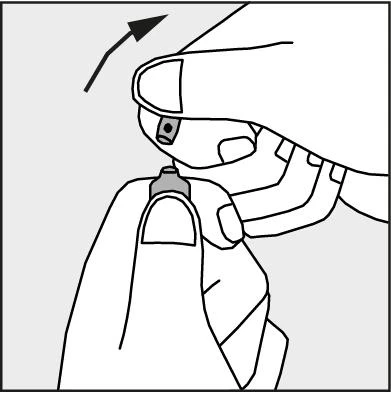
- Apply pressure as indicated by the arrow in Figure 3. Ampoules are intended for single use only and should be opened immediately before use. Any unused portion of the product must be destroyed in accordance with applicable regulations.
Figure 1.
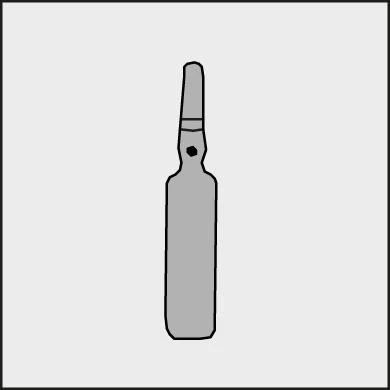
Figure 2.
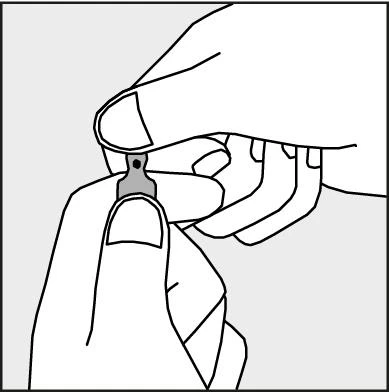
Figure 3.
Warnings and precautions
Special caution is required when using Bupivacainum hydrochloricum WZF 0.5% in:
- patients with hypovolemia;
- patients with severe renal or hepatic impairment;
- patients following joint trauma or surgery;
- elderly patients or those in poor general condition.
Cases of cardiac arrest and fatalities have been reported during the use of bupivacaine for epidural anaesthesia or peripheral nerve blocks.
Intravascular injection of bupivacaine must be strictly avoided, as it may result in central nervous system and cardiovascular toxicity.
Hypotension and bradycardia may occur during epidural anaesthesia.
The risk of these effects can be reduced by administering electrolyte or colloid solutions intravenously prior to anaesthesia or by using vasoconstrictive agents.
When performing regional anaesthesia, access to monitoring and resuscitation equipment and medications must be ensured.
The risk of intravascular injection or systemic absorption increases when blocking large nerve trunks.
During regional anaesthesia of the head and neck region, inadvertent intra-arterial administration may occur.
Rarely, extraconal administration may result in the drug penetrating into the subarachnoid space of the brain, leading to transient blindness, cardiac arrest, apnoea, and seizures.
With peribulbar and retrobulbar anaesthesia, there is a risk of persistent ophthalmic muscle dysfunction; therefore, the lowest effective concentrations and doses should be used.
Cervical plexus block may lead to bradycardia or tachycardia in the fetus; therefore, close monitoring of fetal heart rate is essential.
Regional anaesthesia should be performed only by physicians experienced in the relevant techniques and trained in the diagnosis and management of bupivacaine overdose.
Dosage
Children aged 1 to 12 years
Regional anaesthesia procedures in children should be performed by qualified clinicians experienced with this patient group and familiar with the anaesthetic techniques involved.
The doses listed in the table below are recommended for use in children.
Individual variation exists. In children with high body weight, dose reduction is often necessary and should be based on ideal body weight.
Factors influencing specific block techniques and individual patient requirements are described in anaesthesiology textbooks. The smallest effective dose required to achieve adequate anaesthesia should always be used.
Recommended dosing in children
| Concentration (mg/ml) | Volume (ml/kg) | Dose (mg/kg) | Onset of action (minutes) | Duration of action (hours) | |
| Treatment of acute pain (in the peri- and postoperative period) | |||||
| Epidural transversal | 2.5 | 0.6-0.8 | 1.5-2 | 20-30 | 2-6 |
| Epidural lumbar | 2.5 | 0.6-0.8 | 1.5-2 | 20-30 | 2-6 |
| Epidural thoracic b) | 2.5 | 0.6-0.8 | 1.5-2 | 20-30 | 2-6 |
| Infiltration anesthesia around surgical field (e.g. small nerve blocks and infiltration) | 2.5 5.0 | 0.5-2 0.5-2 | |||
| Peripheral nerve blocks (e.g. femoral-inguinal - femoral-subumbilical) | 2.5 5.0 | 0.5-2 0.5-2 | a) a) | ||
The onset and duration of action of peripheral nerve block depend on the type of block
and the dose administered.
Thoracic epidural blocks require incremental dosing to achieve the desired level of anesthesia.
In children, the total dose should be calculated based on actual body weight, up to a maximum of
2 mg/kg body weight.
Aspiration should be repeated before and during injection of each dose to avoid intravascular administration. The required dose should be injected slowly in divided portions, especially
when administering epidurally into the lumbar and thoracic segments, with continuous and careful monitoring of the patient's vital functions.
Peritonsillar infiltration anesthesia has been performed in children over 2 years of age using bupivacaine at a concentration of 2.5 mg/ml, administered at a dose of 7.5 to 12.5 mg per tonsil.
Femoral-sciatic or femoral-subinguinal blocks have been performed in children aged 1 year or older using bupivacaine at a concentration of 2.5 mg/ml at a dose of 0.1–0.5 ml/kg body weight, corresponding to 0.25–1.25 mg/kg body weight. Children aged 5 years or older received bupivacaine at a concentration of 5 mg/ml at a dose of 1.25–2 mg/kg body weight.
To perform penile block, bupivacaine at a concentration of 5 mg/ml was used at a total dose of
0.2–0.5 ml/kg body weight, corresponding to 1–2.5 mg/kg body weight.
The safety and efficacy of Bupivacainum hydrochloricum WZF 0.5%
in children under 1 year of age have not been established. Available data are limited.
The safety and efficacy of repeated bolus doses administered epidurally or continuous infusion have not been established. Available data are limited.
Adults and adolescents aged 12 years and older
The table below provides dosing recommendations for the drug in the most commonly used
anesthetic techniques. The individual dose should be calculated considering the physician's
experience and the patient's general condition.
When prolonged anesthesia is performed using continuous infusion techniques or repeated doses, consider the possibility of achieving toxic plasma concentrations or occurrence of local nerve damage.
Recommended dosing
| Concentration (mg/ml) | Volume (ml) | Dose (mg) | Onset of action (minutes) | Duration of action (hours) | |
| Anesthesia for surgical procedure | |||||
| Lumbar epidural for surgical procedure 1) | 5.0 | 15–30 | 75–150 | 15–30 | 2–3 |
| Lumbar epidural for cesarean section 1) | 5.0 | 15–30 | 75–150 | 15–30 | 2–3 |
| Thoracic epidural for surgical procedure 1) | 2.5 5.0 | 5–15 5–10 | 12.5–37.5 25–50 | 10–15 10–15 | 1.5–2 2–3 |
| Sacral epidural 1) | 2.5 5.0 | 20–30 20–30 | 50–75 100–150 | 20–30 15–30 | 1–2 2–3 |
| Peripheral nerve block 2) (brachial plexus, femoral, sciatic) | 5.0 | 10–35 | 50–175 | 15–30 | 4–8 |
| 2.5 | <60 | <150 | 1–3 | 3–4 | |
| Infiltration anesthesia, small nerve blocks | 5.0 | ≤30 | ≤150 | 1–10 | 3–8 |
| Acute pain treatment | |||||
| Lumbar epidural | |||||
| Single dose 3) (e.g. postoperative anesthesia) | 2.5 | 6–15 minimum interval between doses is 30 minutes | 15–37.5 minimum interval between doses is 30 minutes | 2–5 | 1–2 |
| Continuous anesthesia 4) | 1.25 2.5 | 10–15/hour 5–7.5/hour | 12.5–18.8/hour 12.5–18.8/hour | ||
| Continuous anesthesia during labor 4) | 1.25 | 5–10/hour | 6.25–12.5/hour | ||
| Thoracic epidural continuous anesthesia | 1.25 2.5 | 5–10/hour 4–7.5/hour | 6.3–12.5/hour 10–18.8/hour | ||
| Articular administration 6) (e.g. single injection after knee arthroscopy) | 2.5 | ≤40 | ≤1005) | 5–10 | 2–4 hours |
| Infiltration anesthesia, small nerve blocks | 2.5 | ≤60 | ≤150 | 1–3 | 3–4 |
The dose includes the test dose.
For nerve block anesthesia of large nerves, the dose should be adjusted according to the site of injection and the patient's general condition. Intercostal and supraclavicular brachial plexus blocks are associated with an increased incidence of severe adverse reactions, regardless of the local anesthetic used.
Total dose ≤400 mg/24 hours.
This solution is frequently used in epidural anesthesia for pain management in combination with an opioid medication. Total dose ≤400 mg/24 hours.
If bupivacaine is simultaneously administered to the patient using other regional anesthesia techniques, the total administered dose of bupivacaine should not exceed 150 mg.
Since the drug was introduced to the market, cases of chondrolysis have been reported in patients receiving postoperative continuous infusion of local anesthetics via intra-articular administration.
The doses listed in the table are considered sufficient to achieve anesthesia in an adult patient. The onset and duration of action may vary between individual patients. The values in the table represent the usual dose range required. Various factors influencing specific anesthesia techniques and individual patient requirements should be taken into account.
Unnecessary use of high doses of local anesthetics should be avoided. Higher concentrations of the drug are required to achieve complete blockade of all nerve fibers in large nerves. Lower concentrations are recommended for complete blockade of smaller nerves or for less intense anesthesia (e.g., labor analgesia).
The volume of the administered solution determines the extent of the anesthetized area.
Careful aspiration before and during injection is recommended to avoid intravascular administration. The main dose of bupivacaine should be injected slowly at a rate of 25 mg to 50 mg/min, or administered in divided doses. Continuous monitoring of physiological functions and verbal contact with the patient should be maintained.
Before administering the drug into the epidural space, it is recommended to use a test dose of 3 to 5 ml of bupivacaine solution with adrenaline. Unintentional intravascular injection may be recognized by transient tachycardia, while unintentional subarachnoid injection may be detected by signs of block. If acute toxic symptoms occur, administration of the drug must be stopped immediately.
Available observations indicate that a daily dose of 400 mg is well tolerated in the average adult.
Management in case of acute toxic symptoms
If acute toxic symptoms occur, administration of the drug must be stopped immediately.
In case of hypotension and bradycardia, administer 5 to 10 mg of ephedrine intravenously. The dose may be repeated after 2–3 minutes if necessary. The dose of ephedrine used in children depends on age and body weight. In case of cardiac arrest, prolonged resuscitation may be required.
In case of cardiac arrest, immediate cardiopulmonary resuscitation must be initiated. Ensuring adequate blood oxygenation, ventilation, and circulatory support is crucial.
Treatment of patients experiencing seizures aims primarily at maintaining ventilation and adequate oxygenation, terminating the seizure, and maintaining circulation. Oxygen should be administered; if necessary, assisted or controlled ventilation should be applied (oxygen mask, Ambu bag, or endotracheal intubation). If the seizure does not stop spontaneously within 15 to 20 seconds, an intravenous anticonvulsant should be administered. Intravenous thiopental at a dose of 1–3 mg/kg body weight rapidly terminates seizures. Intravenous diazepam at a dose of 0.1 mg/kg body weight may also be used, although seizure cessation is significantly slower. Prolonged seizures may lead to respiratory and oxygenation disturbances. In such cases, a muscle relaxant (e.g., succinylcholine at a dose of 1 mg/kg body weight) may be administered, followed by endotracheal intubation and mechanical ventilation.