Bupivacaine wzf spinal 0,5% heavy
Poland
Table of Contents
- Package leaflet: Information for the patient
- 1. What Bupivacaine WZF Spinal 0,5% Heavy is and what it is used for
- 2. Important information before using Bupivacaine WZF Spinal 0,5% Heavy
- 3. How to use Bupivacaine WZF Spinal 0,5% Heavy
- 4. Possible adverse reactions
- 5. How to store Bupivacaine WZF Spinal 0,5% Heavy
- 6. Contents of the packaging and other information
- INFORMATION INTENDED EXCLUSIVELY FOR PROFESSIONAL MEDICAL PERSONNEL
Package leaflet: Information for the patient
BUPIVACAINE WZF SPINAL 0,5% HEAVY, 5 mg/ml, solution for injection
Bupivacaini hydrochloridum
Please read this leaflet carefully before using the medicine, because it contains
important information for the patient.
- Keep this leaflet, so that you can read it again if necessary.
- If you have any doubts, please consult your doctor, pharmacist, or nurse.
- This medicine has been prescribed for a specific individual. Do not pass it on to others. The medicine may harm another person, even if their symptoms are the same.
- If you experience any adverse reactions, including any adverse reactions not listed in this leaflet, inform your doctor, pharmacist, or nurse. See section 4.
Contents of the leaflet
- What Bupivacaine WZF Spinal 0,5% Heavy is and what it is used for
- Important information before using Bupivacaine WZF Spinal 0,5% Heavy
- How to use Bupivacaine WZF Spinal 0,5% Heavy
- Possible side effects
- How to store Bupivacaine WZF Spinal 0,5% Heavy
- Contents of the pack and other information
1. What Bupivacaine WZF Spinal 0,5% Heavy is and what it is used for
The medicine contains bupivacaine, which belongs to a group of local anaesthetics of the amide type. It has a long-lasting anaesthetic effect. Bupivacaine WZF Spinal 0,5% Heavy is used for anaesthetizing parts of the body during surgery in adults and children of all ages. After administration, specific parts of the body become anaesthetized, so that the patient does not feel pain.
The medicine is used:
- for spinal anaesthesia (also known as intrathecal anaesthesia) during urological surgery, surgery on the lower limbs, and surgery within the abdominal cavity. Spinal anaesthesia involves administering the medicine into the spinal canal of the spine.
2. Important information before using Bupivacaine WZF Spinal 0,5% Heavy
When not to use Bupivacaine WZF Spinal 0,5% Heavy
- If the patient is allergic (symptoms such as rash, facial and throat swelling, difficulty breathing) to bupivacaine, other locally acting anaesthetic medicines of amide-type structure, or any of the other ingredients of this medicine (listed in section 6.).
- If the patient has been diagnosed with diseases such as meningitis, myelitis, intracranial haemorrhage, or brain and spinal cord tumours.
- If the patient has been diagnosed with spinal canal stenosis, inflammatory conditions, spinal tuberculosis, or spinal injuries.
- If the patient has blood infection (sepsis).
- If the patient has spinal cord changes caused by a specific type of anaemia due to vitamin B deficiency (subacute combined degeneration of the spinal cord in pernicious anaemia).
- If the patient has a skin infection at the site where the anaesthetic is to be administered or in its vicinity.
- If the patient has experienced cardiogenic shock (sudden drop in blood pressure and reduced blood flow through body tissues).
- If the patient has experienced hypovolemic shock (caused by reduced circulating blood volume due to, for example, dehydration or bleeding).
- If the patient has blood clotting disorders or is taking anticoagulant medicines (for "blood thinning").
Warnings and precautions
Before starting treatment with this medicine, discuss it with your doctor, pharmacist, or nurse.
Bupivacaine WZF Spinal 0,5% Heavy is administered by anaesthesiologists. During administration,
they will ensure the patient receives appropriate care and, if complications occur, will provide oxygen therapy
(administration of oxygen) and take other appropriate actions to maintain vital functions.
Therefore, it is very important to inform the doctor about all health conditions, particularly:
- if the patient has hypovolemia (reduced circulating blood volume caused by, for example, dehydration or bleeding);
- if the patient has serious heart problems known as heart block (the heart does not beat rhythmically, with significant slowing and disorganized heart function);
- if the patient has had or currently has impaired kidney or liver function (severe renal or hepatic insufficiency);
- if the patient has neurological disorders such as multiple sclerosis or neuromuscular disorders. Elderly patients and those in poor general health require special medical supervision. In elderly patients or women with advanced pregnancy, there is an increased risk of developing total spinal anaesthesia (manifesting as respiratory arrest) after administration of Bupivacaine WZF Spinal 0,5% Heavy. In such patients, the doctor will use a lower dose of the medicine to reduce the risk of total spinal anaesthesia. Spinal anaesthesia may cause paralysis of the intercostal muscles, and patients with pleural effusion may experience respiratory complications. Blood infection may increase the risk of developing intraspinal abscess in the postoperative period.
Bupivacaine WZF Spinal 0,5% Heavy and other medicines
Inform your doctor about all medicines currently used, recently used, or planned for use.
In particular, inform your doctor if the patient is taking medicines for heart rhythm disorders, such as
amiodarone or mexiletine.
Concomitant use of other medicines with a similar structure to bupivacaine (e.g. lidocaine – a local anaesthetic and antiarrhythmic agent) and bupivacaine may increase the toxic effects of each of these medicines on the human body.
Pregnancy and breastfeeding
If the patient is pregnant or breastfeeding, suspects she may be pregnant, or is planning to have a child, she should consult a doctor or pharmacist before using this medicine.
The decision on using this medicine during pregnancy or breastfeeding will be made by the doctor.
Driving and operating machinery
Depending on the dose administered, local anaesthetics may have a slight effect on the ability to drive and operate machinery. Therefore, it is not recommended to perform these activities on the day when anaesthesia was administered.
Bupivacaine WZF Spinal 0,5% Heavy contains glucose and sodium
The medicine contains 72.72 mg of glucose (equivalent to 80 mg of monohydrate glucose) in 1 ml of injection solution. This should be taken into account in diabetic patients.
The medicine contains less than 1 mmol (23 mg) of sodium per dose, meaning the medicine is considered "sodium-free".
3. How to use Bupivacaine WZF Spinal 0,5% Heavy
- The medicine is administered by a doctor, usually an anaesthesiologist.
- The dose of the medicine may vary between individual patients. The doctor will determine the dose according to the patient's age, body weight, health status, and duration of surgery. The doctor will provide detailed information regarding dosage.
- Bupivacaine WZF Spinal 0,5% Heavy is intended for intrathecal anaesthesia.
Use in children and adolescents
Bupivacaine WZF Spinal 0,5% Heavy is slowly injected into the spinal canal (part of the spine) by an anaesthesiologist experienced in performing anaesthetic techniques in children.
The dose depends on the patient's age and body weight and will be determined by the anaesthesiologist.
Administration of a higher than recommended dose of Bupivacaine WZF Spinal 0,5% Heavy
Since the medicine is administered by a doctor, it is unlikely that a patient will receive more medicine than intended.
If symptoms of overdose occur, the doctor will initiate appropriate treatment.
Initially, the following symptoms of overdose may be observed:
- numbness of the tongue;
- a feeling of emptiness in the head;
- dizziness;
- muscle tremors.
Severe symptoms of overdose (which occur very rarely) include: seizures and circulatory failure (the heart is unable to maintain adequate blood circulation and oxygen delivery to meet the body's needs), significant drop in arterial blood pressure, and respiratory arrest.
4. Possible adverse reactions
Like all medicines, this medicine can cause adverse reactions, although not everybody gets them.
If the patient experiences first signs of hypersensitivity (e.g. swelling of the face, lips, tongue,
throat, causing difficulty in breathing or swallowing), inform the doctor immediately.
Such symptoms are rare. The doctor will assess the severity of the symptoms and decide on further management.
Very common (occur in more than 1 in 10 patients):
- hypotension (significant decrease in blood pressure), slowing of the heart rate;
- nausea.
Common (occur in 1 to 10 in 100 patients):
- headache;
- vomiting;
- urinary retention, urinary incontinence.
Uncommon (occur in 1 to 10 in 1,000 patients):
- paraesthesia (tingling, pricking, burning sensation);
- paresis;
- abnormal sensation (dysesthesia);
- muscle weakness, back pain.
Rare (occur in fewer than 1 in 1,000 patients):
- cardiac arrest;
- allergic reactions, anaphylactic shock – see information provided at the beginning of section 4;
- unintentional total spinal anaesthesia (manifested by respiratory arrest), paralysis (e.g. of lower limbs);
- neuropathies (symptoms: tingling, numbness, muscle weakness in innervated muscles);
- meningitis (inflammation of the meninges);
- respiratory depression (severe difficulty in breathing).
Adverse reactions in children and adolescents
Adverse reactions in children are similar to those observed in adults.
Reporting of adverse reactions
If any adverse reactions occur, including any adverse reactions not listed in this leaflet, inform a doctor, pharmacist, or nurse.
Adverse reactions can be reported directly to the Department of Monitoring Adverse Drug Reactions of the Office for Registration of Medicinal Products, Medical Devices and Biocidal Products
Al. Jerozolimskie 181C
02-222 Warsaw
Phone: +48 22 49 21 301
Fax: +48 22 49 21 309
Website: https://smz.ezdrowie.gov.pl
Adverse reactions can also be reported to the Marketing Authorisation Holder.
Reporting adverse reactions helps to provide more information on the safety of the medicine.
5. How to store Bupivacaine WZF Spinal 0,5% Heavy
There are no special storage requirements for this medicinal product.
The medicine should be stored out of sight and reach of children.
Do not use this medicine after the expiry date stated on the ampoule and carton. The expiry date refers to the last day of the stated month.
The label on the packaging shows EXP followed by the expiry date, and Lot followed by the batch number.
This medicine does not contain preservatives. The solution should be used immediately after opening the ampoule.
Any unused portion of the solution should be discarded.
Re-sterilisation of the solution is not recommended.
Medicines must not be disposed of via wastewater or household waste. Ask your pharmacist how to dispose of medicines no longer required. This will help protect the environment.
6. Contents of the packaging and other information
What Bupivacaine WZF Spinal 0,5% Heavy contains
- The active substance is bupivacaine hydrochloride. Each ml of injection solution contains 5 mg of bupivacaine hydrochloride.
- The other ingredients are: glucose 72.72 mg (equivalent to 80 mg monohydrate glucose), sodium hydroxide (for pH adjustment), water for injections.
What Bupivacaine WZF Spinal 0,5% Heavy looks like and contents of the pack
Bupivacaine WZF Spinal 0,5% Heavy is a colourless, clear liquid.
The cardboard box contains 5 ampoules of 4 ml each.
Marketing Authorisation Holder and Manufacturer
Zakłady Farmaceutyczne POLPHARMA S.A.
ul. Pelplińska 19, 83-200 Starogard Gdański
tel. +48 22 364 61 01
INFORMATION INTENDED EXCLUSIVELY FOR PROFESSIONAL MEDICAL PERSONNEL
BUPIVACAINE WZF SPINAL 0,5% HEAVY, 5 mg/ml, solution for injection
Bupivacaine hydrochloride
Preparation and administration instructions for Bupivacaine WZF Spinal 0,5% Heavy
- Bupivacaine WZF Spinal 0,5% Heavy is intended for intrathecal administration in adults and children of all ages.
- The product does not contain preservatives. The solution should be used immediately after opening the ampoule.
- Re-sterilization of the solution is not recommended.
Ampoule opening instructions
Before opening, ensure that all the solution is in the lower part of the ampoule.
Gently shake the ampoule or tap it with a finger to help the solution flow down.
Each ampoule has a coloured dot (see Figure 1) indicating the score line located beneath it.
- To open the ampoule, hold it vertically in both hands, with the coloured dot facing towards you – see Figure 2. The upper part of the ampoule should be held so that the thumb is positioned above the coloured dot.
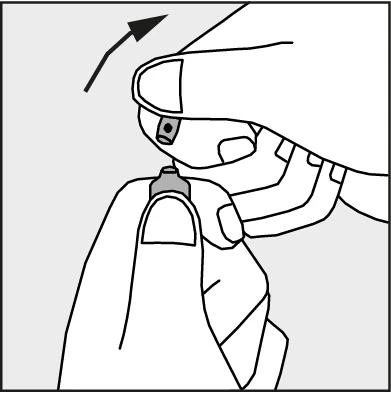
- Press in the direction of the arrow shown in Figure 3. Ampoules are intended for single use only and should be opened immediately before use. Any unused portion of the product must be discarded in accordance with applicable regulations.
Figure 1.
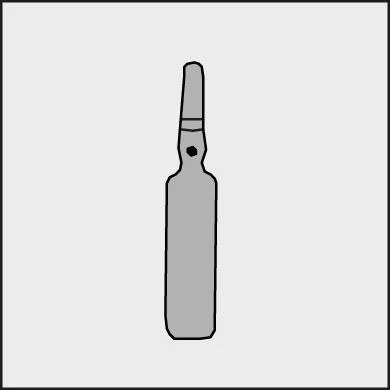
Figure 2.
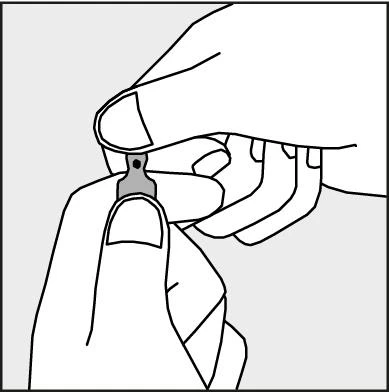
Figure 3.
Warnings and precautions
Spinal anaesthesia should be performed only in medical centres staffed with appropriately trained and experienced personnel. When using local anaesthetic agents, facilities for oxygen therapy and cardiopulmonary resuscitation must be available. Resuscitation equipment and medications must be immediately accessible.
Before initiating spinal anaesthesia, an intravenous cannula should be inserted. The physician performing the procedure must take special care to avoid intravascular injection. The physician must be adequately trained and familiar with methods for diagnosing and managing signs of toxicity and other complications. In the event of acute toxic symptoms or signs of total spinal anaesthesia, administration of the drug must be stopped immediately (see section below entitled “Management in case of overdose”).
If the serum concentration of bupivacaine increases during regional anaesthesia, symptoms of acute toxicity affecting the cardiovascular system and central nervous system may occur. Similar symptoms may occur with other local anaesthetic agents.
Elevated serum concentrations of local anaesthetics are most commonly caused by accidental intravascular injection or injection into a highly vascular area.
Cases of ventricular arrhythmias, ventricular fibrillation, sudden cardiovascular collapse and death due to elevated systemic bupivacaine concentrations have been reported. In the event of cardiac arrest, successful resuscitation may require prolonged resuscitative efforts. Elevated serum bupivacaine concentrations have not been observed following recommended doses of bupivacaine administered during spinal anaesthesia.
The risk of high or total spinal anaesthesia is greater in elderly patients or in women with advanced pregnancy – in such patients, the dose of local anaesthetic should be reduced.
High or total spinal anaesthesia is a rare but serious adverse effect that may occur following spinal anaesthesia. Total spinal anaesthesia results in cardiovascular and respiratory failure.
Cardiovascular failure is caused by extensive sympathetic blockade, manifesting as hypotension, profound bradycardia or even cardiac arrest.
Respiratory failure is caused by paralysis of respiratory muscles (due to blockade of conduction in respiratory nerves), including the diaphragm.
Spinal anaesthesia with any local anaesthetic agent may result in arterial hypotension and bradycardia, which should be anticipated and appropriate precautions taken. The risk of these effects may be reduced by intravenous administration of crystalloid or colloid solutions prior to anaesthesia. In the event of hypotension, an intravenous vasoconstrictor such as ephedrine should be administered at a dose of 10–15 mg. Severe hypotension may result from hypovolaemia due to haemorrhage or dehydration, or from compression of the inferior vena cava and aorta in patients with massive ascites, large intra-abdominal tumours or advanced pregnancy. Significant hypotension should be avoided in patients with heart failure.
In patients with hypovolaemia of any aetiology, sudden and severe hypotension may occur during spinal anaesthesia.
Spinal anaesthesia may cause paralysis of intercostal muscles, and respiratory disturbances may occur in patients with pleural effusion.
Sepsis may increase the risk of postoperative intraspinal abscess formation.
Neurological complications following spinal anaesthesia, such as sensory disturbances or loss, motor dysfunction or paralysis, are rare. Occasionally, these changes may be permanent.
It should be remembered that spinal anaesthesia may occasionally result in total spinal anaesthesia, including paralysis of intercostal muscles and the diaphragm, particularly in pregnant women.
Prior to performing spinal anaesthesia, regardless of the local anaesthetic agent used, the potential risks and benefits for the patient should be carefully considered.
Particular caution is required in elderly patients, patients in poor general condition, or those with second- or third-degree atrioventricular block, advanced liver disease or severe renal insufficiency. Regional anaesthesia is often indicated in this patient group.
Caution is advised in patients with pre-existing neurological disorders such as multiple sclerosis, hemiplegia, transverse myelitis or neuromuscular disorders, although exacerbation of these conditions has not been observed following spinal anaesthesia.
Patients receiving class III antiarrhythmic drugs (e.g. amiodarone) who are administered bupivacaine should be under close monitoring, and ECG monitoring should be considered. The effects of bupivacaine and class III antiarrhythmic drugs may be additive.
Dosage
Bupivacaine WZF Spinal 0,5% Heavy is intended for intrathecal administration.
The solution density at 20°C is 1.026 g/ml (at 37°C it is 1.021 g/ml).
Neonates, infants and children weighing up to 40 kg
Bupivacaine WZF Spinal 0,5% Heavy may be used in children.
One of the differences between young children and adults is the relatively larger volume of cerebrospinal fluid in neonates and infants, which may require relatively higher doses per kilogram of body weight to achieve the same level of block compared to adults.
Regional anaesthesia procedures in children should be performed by qualified clinicians experienced in this patient group and familiar with anaesthetic techniques.
The doses listed in the table should be considered as recommended doses for use in children.
Individual variation exists. Factors influencing specific block techniques and individual patient requirements are described in anaesthesia textbooks.
The lowest effective dose required to achieve adequate anaesthesia should be used.
Table: Recommended dosing in neonates, infants and children
| Body weight (kg) | Dose (mg/kg b.w.) |
| <5 | 0.40-0.50 mg/kg b.w. |
| 5 to 15 | 0.30-0.40 mg/kg b.w. |
| 15 to 40 | 0.25-0.30 mg/kg b.w. |
Adults and children over 12 years of age
The experience of the physician performing the anesthesia and knowledge of the patient's physical condition are important when determining the dose of the medicinal product. Various factors influencing individual anesthetic techniques and patient-specific requirements should be considered. The smallest effective dose required to achieve adequate anesthesia should be used. Individual differences exist among patients regarding onset and duration of anesthesia, and the extent of the block may be difficult to predict, particularly with an isobaric (plain) solution.
The doses given below refer to adult patients of standard body build. In elderly patients and in women with advanced pregnancy, the dose of the product should be reduced.
Spinal anesthesia for surgical procedures on the lower limbs and hip joint, and in the abdominal cavity (including cesarean section)
2 to 4 ml of Bupivacaine WZF Spinal 0.5% Heavy (10 to 20 mg of bupivacaine hydrochloride).
The anesthetic effect appears within 5 to 8 minutes after administration and lasts for 2 to 3 hours in procedures involving the lower limbs and hip joint, and for 45 to 60 minutes in abdominal procedures.
Spinal anesthesia for urological procedures
The recommended dose is 1.5 ml to 3 ml of Bupivacaine WZF Spinal 0.5% Heavy (7.5 mg to 15 mg of bupivacaine hydrochloride). The anesthetic effect appears within 5 to 8 minutes after administration and lasts for 2 to 3 hours.
The extent of anesthesia following administration of the product depends on several factors, such as the volume of drug administered, the patient's position during anesthesia, and positioning after drug administration.
After administration of 3 ml of solution into the subarachnoid space between L and L, different levels of anesthesia can be achieved depending on patient positioning. If the patient is seated during administration, all segments below Th-Th will be blocked. If the product is administered with the patient lying on their side, and after injection the patient is placed supine, all segments below Th-Th will be blocked. It should be emphasized that, regardless of the type of local anesthetic administered, the extent of segmental blockade is individual and, in some clinical cases, cannot be predicted prior to performing anesthesia.
Administration of the solution into the subarachnoid space below L is recommended.
No studies have been conducted on the use of Bupivacaine WZF Spinal 0.5% Heavy in volumes exceeding 4 ml; therefore, administration of doses greater than 4 ml is not recommended.
In case of failed anesthesia, a new attempt should be made by inserting the needle at a different spinal level and using a smaller volume of the product. One of the reasons for lack of anesthetic effect may be poor distribution of the product in the subarachnoid space (which may be improved by changing the patient's position).
Management in case of overdose symptoms
In the event of symptoms of toxicity or signs of total spinal anesthesia, administration of the local anesthetic should be immediately discontinued.
Management of total spinal anesthesia
Symptoms of high-level or total spinal anesthesia may include respiratory arrest and/or arterial hypotension. In such cases, adequate ventilation and blood oxygenation should be ensured by oxygen administration and application of assisted or controlled ventilation. In case of arterial hypotension, vasoconstricting agents should be administered, e.g., ephedrine 10 mg to 15 mg intravenously, repeated if necessary until the arterial pressure rises to the desired level. Rapid intravenous infusion of multi-electrolyte solutions or colloids may also be used to increase arterial pressure.
Management of general symptoms of toxicity
In mild cases of general toxicity symptoms, treatment may not be necessary. However, treatment must be initiated immediately upon occurrence of seizures. The main goals of treatment are termination of seizure activity and ensuring adequate blood oxygenation; oxygen should be administered and, if needed, assisted or controlled ventilation should be applied. If seizures do not resolve spontaneously within 15 to 30 seconds, thiopental should be administered intravenously in a dose of 100 to 150 mg or diazepam in a dose of 5 to 10 mg. Alternatively, succinylcholine may be administered intravenously in a dose of 50 to 100 mg; however, in this case, endotracheal intubation and full supportive treatment as in patients with muscle relaxation must be implemented. Adequate oxygenation, respiration, and circulation must always be ensured, and treatment of acidosis should be initiated.
Doses of drugs used in the management of overdose of Bupivacaine WZF Spinal 0.5% Heavy in children should be adjusted according to age and body weight.